Bint e Aisha
-
Posts
1761 -
Joined
-
Last visited
-
Days Won
106
Content Type
Profiles
Forums
Events
Everything posted by Bint e Aisha
-
ذُو الْجَلَالِ وَالْإِكْرَامِ Translation ذُو الْجَلَالِ وَالْإِكْرَامِ is translated as "The Lord of Majesty and Generosity". It means Allah ta'ala is Exalted in grandeur and veneration. Definition Five definitions are mentioned under this name: 1. ذُو الْجَلَالِ: Imam Zajjaj, may Allah have mercy on him, says: "He is the One worthy of being revered and considered free from every flaw." 2. Imam Khattabi, may Allah have mercy on him, says: "In 'ذُو الْجَلَالِ', the word 'جلال' is the source (root) of 'جليل', and 'إكرام' is the source from the 'افْعَال' pattern. Thus, 'ذُو الْجَلَالِ وَالْإِكْرَامِ' means that Allah, the Lord of Glory, is the One who deserves complete reverence and is considered free from all defects in such a way that He is neither denied nor rejected." Imam Khattabi, may Allah have mercy on him, further says: "It can also mean that He is the One who honors those who obey Him and raises their ranks due to their obedience in this world. 'الْجَلال' means He is exalted in glory because He accepts their deeds and elevates their ranks in Paradise." 3. Imam Haleemi, may Allah have mercy on him, says: "ذُو الْجَلَالِ وَالْإِكْرَامِ is the One to be feared due to His sovereignty and praised with words befitting His majesty." 4. Imam Qurtubi, may Allah have mercy on him, says "ذُو الْجَلَالِ وَالْإِكْرَامِ refers to the being except whom there is no greatness and generosity for anyone else; these attributes are solely appropriate for Allah. There is no nobility and honor for anyone except for that great being." 5. Sheikh Saadi, may Allah have mercy on him, says: "ذُو الْجَلَالِ وَالْإِكْرَامِ is the being with greatness and majesty, mercy and generosity, and beneficence to all, both specific and general. He is the being who shows kindness to His beloved and chosen ones, those who fully revere Him and have made Him their beloved." Praying through this blessed name: The Prophet صلی الله عليه وسلم also encouraged his Ummah to pray using these two great names. The Prophet (peace be upon him) said: "Hold fast to يَاذَا الْجَلَالِ وَالْإِكْرَامِ (means to adhere to this prayer) and frequently recite it. Make it a regular part of your prayers and needs." While praying, you should repeatedly say: 'يَاذَا الْجَلَالِ وَالْإِكْرَامِ', because it is closer to being accepted. In the first and third sections of Surah Ar-Rahman, Allah’s attribute of ذُو الْجَلَالِ وَالْإِكْرَامِ is described as: "Allah (the Exalted), is the being with grandeur and generosity, meaning He deals with His servants with beneficence and grants them favors." Supplication after Salah Narrated by Hazrat Thawban (may Allah be pleased with him): "When the Messenger of Allah (peace be upon him) finished his prayer, he would seek forgiveness three times and say: اللهمَّ أَنْتَ السَّلَامُ وَمِنْكَ السَّلَامُ تَبَارَكْتَ يَاذَا الْجَلَالِ وَالْإِكْرَامِ (O Allah, You are peace, and from You comes peace. Blessed are You, O Possessor of Glory and Honor)." Muslim Ism Adham (The Greatest Name) Narrated by Hazrat Mu'adh bin Jabal (may Allah be pleased with him): "The Prophet (peace be upon him) heard a person saying, 'يَا ذَا الْجَلَالِ وَالْإِكْرَامِ' (O Possessor of Glory and Honor). Upon hearing this, the Prophet (peace be upon him) said: 'Your prayer has been accepted, so ask.'" Tirmidhi Narrated by Hazrat Anas (may Allah be pleased with him): "I was sitting with the Prophet (peace be upon him) when a person was praying. After finishing his prayer, the person said: 'اللهم إني أسألك بأن لك الحمد، لا إله إلا أنت، المنان، يا بديع السماوات والأرض، ياذا الجلال والإكرام، يا حي يا قيوم' Translation: "O Allah! Indeed, I ask You by virtue of the fact that all praise is for You. There is no deity except You. You are the Most Generous, O Creator of the heavens and the earth without any precedent, O Possessor of Glory and Honor, O Ever-Living, O Sustainer." Musnad Ahmad Upon hearing this, the Messenger of Allah (peace be upon him) said: "He has supplicated to Allah with His Greatest Name, which, when invoked, He responds, and when asked by it, He gives." ذُو الْجَلَالِ وَالْإِكْرَامِ means that the Lord is the Possessor of Majesty and Honor. Being the Possessor of Honor can mean that He alone is truly deserving of all honor and exaltation, and it can also mean that He Himself is honorable. Despite His Majesty and Grandeur, He is not like the kings and noble ones of this world who neglect the poor and the needy. Rather, He, with His Majesty and Grandeur, also honors His creations by bestowing countless blessings upon them and listens to their requests and supplications. The next verse testifies to this second meaning. The phrase "ذُو الْجَلَالِ وَالْإِكْرَامِ" is among the special attributes of Allah; invoking these attributes in supplication leads to acceptance. Allah Almighty states: تَبَارَكَ اسْمُ رَبِّكَ ذِي الْجَلَالِ وَالْإِكْرَامِ Blessed is the name of your Lord, Owner of Majesty and Honor. Allama Ibn Kathir, may Allah have mercy on him, in his commentary states: "Allah, the Lord of Glory, is deserving of being exalted and not disobeyed, honored and worshiped, thanked and not denied, and remembered and not forgotten." Counsel 1. Anyone who establishes a connection with this blessed name should always exalt the greatness of the Lord of Majesty and Grandeur so that they become worthy of His honor. 2. One should honor the righteous servants of Allah Jalla Jalaluhu and the scholars, and never harbor disdain for anyone. 3. This blessed name is the Greatest Name, through which supplications should be made. *~~*~~*
-
- 1
-

-
The origin of the word Bak Bak (بك بك) --------- In Urdu, whenever someone is babbling around (talking foolishly), we say in Urdu to him: "bak bak na karo" (i.e. do not talk foolishly and in vain). This is normally used as a slang but it is interesting to note that a similar expression is used in the classical Arabic language. The famous companion of the Prophet SAW, 'Abd Allah bin 'Umar RA once said to the famous governor Hajjaj bin Yusuf, who was known for his tyranny and transgression when he extended the Khutbah of Jumuah to the extent that the time for prayer was about to pass: إنما نجيء للصلاة فصلِّ الصلاة لوقتها، ثم بقبق بعد ذلك ما شئت من بقبقة. أخرجه ابن سعد في الطبقات (4/149). "We only come to pray, so perform the prayer at its appointed time, then baq baq after that whatever baq baq you want to do." ~Smile Originally posted by Mugheerah Luqman
-
مَالِكُ ٱلْمُلْكُ Translation The Eternal Owner of Sovereignty, The Master of The Kingdom. Definition This name has two definitions: 1. Allah is the Owner of all things and He controls them without any hindrance or opposition. 2. Imam Laith (may Allah have mercy on him) said: "Allah, the Almighty, He is the Allah, blessed and exalted is He, He is the King of all kings, kingship belongs to Him, and He is the Owner of the Day of Judgment." So, a person who resides in a house and considers it his property without any association, think about it, nearly fifty-sixty years ago, whose property was it and where is it today? What was the outcome of his claimed ownership? Mutannabi said it well: "The one who comes to this world takes ownership of it like a usurper seizing someone else's property, and the one who leaves it, departs from the world as if someone has looted his wealth." In the Qur'an قُلِ ٱللَّهُمَّ مَـٰلِكَ ٱلْمُلْكِ تُؤْتِى ٱلْمُلْكَ مَن تَشَآءُ وَتَنزِعُ ٱلْمُلْكَ مِمَّن تَشَآءُ وَتُعِزُّ مَن تَشَآءُ وَتُذِلُّ مَن تَشَآءُ ۖ بِيَدِكَ ٱلْخَيْرُ ۖ إِنَّكَ عَلَىٰ كُلِّ شَىْءٍۢ قَدِيرٌۭ Say, ˹O Prophet,˺ “O Allah! Lord over all authorities! You give authority to whoever You please and remove it from who You please; You honour whoever You please and disgrace who You please—all good is in Your Hands. Surely You ˹alone˺ are Most Capable of everything. (Surah Ali 'Imran: 26) تُولِجُ اللَّيْلَ فِي الْنَّهَارِ وَتُولِجُ النَّهَارَ فِي اللَّيْلِ وَتُخْرِجُ الْحَيَّ مِنَ الْمَيِّتِ وَتُخْرِجُ الَمَيَّتَ مِنَ الْحَيِّ وَتَرْزُقُ مَن تَشَاء بِغَيْرِ حِسَابٍ You cause the night to pass into the day and the day into the night. You bring forth the living from the dead and the dead from the living. And You provide for whoever You will without limit.” (Surah Ali 'Imran: 27) لِّلَّهِ مُلْكُ ٱلسَّمَـٰوَٰتِ وَٱلْأَرْضِ ۚ يَخْلُقُ مَا يَشَآءُ ۚ يَهَبُ لِمَن يَشَآءُ إِنَـٰثًۭا وَيَهَبُ لِمَن يَشَآءُ ٱلذُّكُورَ To Allah ˹alone˺ belongs the kingdom of the heavens and the earth. He creates whatever He wills. He blesses whoever He wills with daughters, and blesses whoever He wills with sons (Surah Ash-Shuraa: 49) In Du'a The Virtue of Supplicating Through This Blessed Name There is a narration that if supplication is made with the Ism Azam (the Greatest Name of Allah), then that supplication is accepted. قُلِ ٱللَّهُمَّ مَـٰلِكَ ٱلْمُلْكِ تُؤْتِى ٱلْمُلْكَ مَن تَشَآءُ وَتَنزِعُ ٱلْمُلْكَ مِمَّن تَشَآءُ "Say, 'O Allah, Owner of Sovereignty, You give kingship to whom You will and take it away from whom You will.'" (Quran, Surah Al Imran, 3:26) In this verse, the boundless power and might of Allah are expressed; He can make a king into a beggar and a beggar into a king. He is the owner of all authority, and all goodness lies solely in the hands of Allah; besides Allah, there is no bestower of goodness. Imam Baghawi (may Allah have mercy on him) has narrated a hadith that the Messenger of Allah (peace be upon him) said: It is the command of Allah that whoever recites after every prayer Surah Al-Fatihah, Ayat al-Kursi, and two verses of Al-Imran, one verse: شَهِدَ ٱللَّهُ أَنَّهُۥ لَآ إِلَـٰهَ إِلَّا هُوَ until the end, and the other verse: قُلِ ٱللَّهُمَّ مَـٰلِكَ ٱلْمُلْكِ till بِغَيْرِ حِسَابٍ , then I will build a house for him in Paradise ... And I will bestow my mercy upon him every day ... And I will fulfill all his needs ... And I will grant him refuge from every envious person and enemy ..." The true King is Allah After detailing Allah's glory and His blessings upon His servants in Surah Fatir, it is stated: "That is Allah—your Lord! All authority belongs to Him. But those ˹idols˺ you invoke besides Him do not possess even the skin of a date stone. If you call upon them, they cannot hear your calls. And if they were to hear, they could not respond to you. On the Day of Judgment they will disown your worship ˹of them˺. And no one can inform you ˹O Prophet˺ like the All-Knowledgeable. O humanity! It is you who stand in need of Allah, but Allah ˹alone˺ is the Self-Sufficient, Praiseworthy. If He willed, He could eliminate you and produce a new creation. And that is not difficult for Allah ˹at all˺." (Quran, Surah Fatir) When you believe in the original Creator and Master, the one who controls and sustains the entire universe, then you should not fear anyone besides Him and should not turn back to others as objects of worship. When the True One is there, what remains after truth except falsehood? Leaving truth and indulging in false illusions, making someone else a deity besides the Creator, the Owner, the Absolute Lord, and the Sovereign is not the act of a wise person. How can someone who relies on Allah be troubled? There was once a severe drought in Balkh, to the extent that people started eating every kind of withered grass. Everyone was deeply distressed and despondent, but a servant continued to happily sell in the market. When people reproached him, he replied: Translation: "I have no sorrow because the owner of an entire village (without any partnership) is my master. (This thing has freed my heart from all kinds of worries and relieved all my sorrows)." Upon hearing this, Abu Ali Shafiq bin Ibrahim Azdi (may Allah have mercy on him) opened his eyes, feeling deeply ashamed, and turned towards Allah, saying: "O Allah, this servant belongs to a person whose possession is only one village, yet he is so happy, and we too call You our Lord and are concerned about our sustenance to such an extent that it has no bounds." So, when this thought came to his mind he turned away from the affairs of the world and futile thoughts, and adopted worldly means with moderation while engaging in religious matters. From that day on, he mentions that he never felt distressed about sustenance. Counsel (1) Those who have a connection with this blessed name should consider themselves as humble servants. The true owner of everything, the true owner of every person, is the one whose sovereignty is eternal and absolute. He who crowns the poor and makes thrones dust for kings. (2) One should repeatedly ponder that besides Allah, there is no creator, no provider of sustenance, nor does anyone have the power to grant or prevent, to give life or to cause death. Not even a particle can move without His will. Therefore, one should engage in worship and supplication only to Him. (3) One should refrain from asking anything from others, while keeping in mind the virtue of supplicating through this blessed name and make arrangements for supplication. (4) Sit alone and contemplate, and invite people in gatherings that the sole owner of the entire universe is only Allah, and whatever is in the universe, its owner is also only Allah. A person who has acquired knowledge of this name will not argue with people saying, "So and so took away my thing, so and so did not give it to me"; rather, he will believe that "I will take more of this from Malikul Mulk, if Allah intends to give it to me, no one can stop it, if Allah does not intend, no one can give it, then why complain to the creation?" And consider oneself and whatever is in one's possession as owned, that this is temporary ownership for me, so I should spend these blessings in the way of Allah. Life, time, wealth, everything, man deceives himself about these worldly blessings, thinking they are mine! Whereas, all this is entrusted by Allah. *~~*~~*
-
- 1
-
-
Holding children in prayer Answer: https://islamqa.org/hanafi/qibla-hanafi/_images/bism01.jpg Assalamu alaikum wa rahmatullah,I pray this finds you in the best of health and spirits. Najasa & Its Relation to Prayer: One of the conditions for the validity of a person’s prayer is that he must be free of filth beyond the excused amount from his body, clothes, and place of prayer (Maraqi al-Falah 291). The excused amount for the urine and feces of a human is that which does not exceed the size of one’s inner palm (Maraqi al-Falah 222). Ruling & Its Details: If during prayer, a person deliberately carries a child, and the child has more than the excused amount of filth located on his body or clothes, then the prayer is invalidated. The same ruling applies to a child that sits on the lap of one who is praying if the person holds onto them. (Hashiyat al-Tahtawi 291). However, if a child holds onto the one praying or grabs their clothes, and the one praying does not reciprocate the holding, this does not invalidate the prayer because the filth is ascribed to the child, not to the one praying (Radd al-Muhtar,1:269-270). If the person praying is reasonably sure that the child’s clothes are not soiled with filth, then it is permissible to carry the child. If the person is unsure, then they can assume purity, unless there are clear signs indicating otherwise. Playful actions, such as prostrating over the child or the child hitting the one praying, do not affect the soundness of the prayer. Helpful Suggestions: I would suggest trying to schedule your prayers during the child’s nap time, if the toddler’s actions are too disturbing. Otherwise, place him in a play pen or give him a toy to distract his attention from what you are doing. Maybe you can ask your spouse, elder children, or friends to attend to the child while you pray. If the child is old enough, it may be helpful to turn it into a game. I’ve seen many children imitate their parents praying, especially in sujud. It is important to help the child comprehend that worship entails peace and concentration. One should teach them these principles with reiteration, compassion, and patience with their young age. And Allah alone gives success. ———————————————– Ustadha Naielah Ackbarali https://islamqa.org/hanafi/qibla-hanafi/34393/holding-children-in-prayer/
-
Then it must be "aalaat" meaning "tools".
-
I think it is "judaagaana halaat" which means "different/separate circumstances". "Sifaat e Razeela" means "contemptible qualities".
-
Walaikumus Salam One correction: it is actually alam bardaar (flag bearer) "Anyone who is a flag bearer of any evil will be disrespectful."
-

-
Capital Punishment in Islam
Bint e Aisha replied to ummtaalib's topic in Answers to Misconceptions about Islam
The Arabic word for punishment is "ta'zir - support". This is "because the idea underlying punishment is to give real help to the criminal by punishing him." —Ma'ariful Qur'an V8 pg 84 with the reference of Mufradat al-Qur'an by Raghib -
💯 You're right.
-
Why do some children deviate from the right path when they grow up? :قال ابن القيم "فمَن أهمل تعليم ولده ما ينفعه ، وتركه سدى فقد أساء إليه غاية الإساءة ، وأكثر الأولاد إنما جاء فسادهم من قبَل الآباء ، وإهمالهم لهم ، وترك تعليمهم فرائض الدين وسننه ؛ فأضاعوهم صغارا فلَم ينتفعوا بأنفسهِم، ولم ينفعوا آبَاءَهُم كبارا." 📜تحفة المودود ٢٢٩ Ibn al-Qayyim said: "Whoever neglected to teach his child that which benefits him, and left him without any guidance, then he has wronged him gravely. The reason behind most children’s deviance is their parents, and their neglect and failure to teach them the Fara'idh (the duties) and the Sunan (the supererogatory acts of worship) of the religion so they neglected them as they were still small, as a result they didn't find benefit in themselves, nor did they benefit their parents when they grew up." 📜Tuhfat al-Mawdood (229)
-
On Ridhaa (Submission & Pleasure with Fate)
Bint e Aisha replied to ummtaalib's topic in Matters of the Heart
Correspondence of Hazrat Moulana Shah Hakeem Muhammad Akhtar Saheb (rahimahullah) Condition: Please explain the meaning of “radhaa bil qadhaa” to me. Answer: To abstain from objecting or complaining - either with the tongue or the heart - about the conditions that are sent by Allah Ta‘ala which are against one’s likes. Instead, one should accept that Allah Ta‘ala is both the Absolute Ruler and Absolutely Wise as well. Hence, one must consider His decree to be beneficial and one must remain pleased with it. This is the meaning of “radhaa bil qadhaa”. Nevertheless, to experience natural sorrow over a calamity and to make du‘aa for it to be alleviated does not contradict or negate “radhaa bil qadhaa”. (Solutions to Spiritual Maladies for the Lovers of Allah Ta‘ala, pg. 244) http://uswatulmuslimah.co.za/womens-issues/spiritual-maladies.html -
Sheikh Zahir Mahmood | LIGHT UPON LIGHT CONFERENCE | DEC 2017 https://m.youtube.com/watch?v=cTrmIl694ns&feature=youtu.be • Lessons on courage • Examples of social, emotional and moral courage from the life of Abu Bakr رضي الله عنه
-
-
Bridal and Baby Showers by Hazrat Maulana Yunus Patel Saheb (rahmatullah alayh) There are many customs and trends which have their affiliation with the non-Muslim culture and lifestyle. Many Muslims, due to being afflicted with what appears to be a truly insecure and inferior complex, look towards and choose the customs and trends of the non-Muslims over that of the beautiful Sunnah. It seems as if the need is to secure a kind of acceptance in a non-Muslim society and just blend in with them – so that we are not recognized as Muslims. Bridal Showers and Baby Showers have become synonymous with the Muslim lifestyle as it is with the rest of the non-Muslim lifestyle. Many may ask: What’s wrong with giving gifts, congratulating the bride-to-be or the new mother, or having a get together with friends? There is nothing wrong with giving the bride or the new mother, a gift, or congratulating the person. To give a gift and congratulate are from the teachings of Islam – and would draw rewards … but there are conditions to be met in even these noble deeds. What is extremely wrong and objectionable is the background to these good deeds. They are not within the parameters of Shari’ah. The picture of a typical bridal shower and baby shower is not typical with the Sunnah. It is typical of the non-Muslim way of life. By following suit, we fall into the sin of “Tashabbu bil Kuffaar” (emulating the disbelievers). It is aligning oneself with those who have rejected Allah Ta’ala, who live their lives in immorality and disobedience. Nikah is a great Ibaadah. Pregnancy and the birth of a child also have their requisites in Islam. However, the west has commercialized all of these noble occasions, and made them into money-making events. The sacredness of these occasions is forgotten. …Today, Nikahs have taken on a distinct mould of a Hollywood or Bollywood style wedding – where the bride is dressed to look like a Christian bride or a Bollywood actress – with no sign of Islam on her; and the groom is dressed in a suit and tie, looking like a typical Christian groom. Adding insult to injury is the extravagance and open sin at the time of the wedding and Walimah. One’s mind moves in the direction of the millions and millions who are suffering famine and starvation, who have no home, no water, no food, no clothing – but the Muslim ignores all that suffering just for some fleeting attention and praise. All those hundreds of thousands of Rands wasted on draping a hall, on dressing the chairs, on wine glasses, on musicians, photography, on wedding cards that are thrown away, etc. is money, which could have been the means of alleviating the plight of so many suffering people. One brother handed me an elaborate invitation card for his daughter’s wedding. I enquired as to the cost of the wedding card, and was told that each card cost R50. Advising him, I told him that almost all people throw away wedding cards. People generally dispose of them. So he should regard that as people throwing away hundreds of his R50 notes. Would he throw R50 notes into a bin? No. However, the throwing away of those cards is equal to throwing away R50 notes. That same money could have been used in making the Aakhirah. Even those who are known to be religious will waste thousands on halls, on décor, etc. sacrificing the pleasure of Allah Ta’ala and Rasulullah (Sallallaahu ‘alayhi wasallam). Those who were meant to set the noble example of the Sunnah, who we expect are living the Sunnah – knowingly choose to forsake the Sunnah. Simplicity, which is part of Imaan, is a rare sight in these times. Hazrat ‘Ayesha (Radhiyallahu ‘anha) related that Nabi (Sallallaahu ‘alaihi wasallam) said: ‘Verily, the most blessed Nikah is that which involves the least difficulty (expenditure).’ We have a perfect Sunnah – a perfect way of life in the life of our Nabi (Sallallaahu ‘alayhi wa-Sallam) and in the lives of his companions, men and women. We have what is superior to all other cultures yet we consider everything else. It shows great weakness if we give preference to the culture of the Christians, Jews and Idolators over the noble Sunnah of Rasulullah (Sallallaahu ‘alayhi wa-Sallam). We are exchanging diamonds for stones… and what an unprofitable exchange this is! What a great loss! Nabi (Sallallaahu ‘alayhi wa-Sallam) said: “Whoever emulates a nation is from amongst them.” In another Hadith, it is stated: “A person is with whom he loves.” Nabi (Sallallaahu ‘alayhi wa-Sallam) also said that we will be raised on the Day of Judgment with those whom we imitate in this worldly life. (May Allah Ta’ala save us from such disgrace and humiliation.) Emulating the non-Muslim culture is one downfall but there are many more that are found in the Bridal and Baby Showers. The non-Muslims have coined a novel concept of begging – especially amongst the upper-class. It seems as if some, from amongst the wealthy, have developed an art to begging. They even have a name for it. In the name of Bridal Showers, Baby Showers, Registries, people gracefully and politely extend their hands, and they ask and take from others. The bride-to-be chooses her gifts from exclusive stores that offer a “registry” or she unashamedly hands out a list of those items she wants gifted to her. In the process, she places pressure and financial difficulty and sometimes a great burden on others - to purchase those gifts that she has chosen. At the get-together, these gifts and other gifts are presented to the bride-to-be, who opens them and shows them to all present – and each person can assess the kind of money that was spent on the gift given. Let us now consider the various wrongs in this act: A person is forced to purchase gifts that the bride has chosen – which may be beyond her budget in spending. A person who gives something simple or inexpensive will feel ashamed and embarrassed, considering the manner in which gifts are being received and shown to others. The Hadith encourages giving gifts because giving gifts creates Muhabbah (love). If Muhabbah is not created then this proves that either the giver or receiver in insincere. Sometimes, people give with intentions other than expressing their Muhabbah. However, there are many who request or are desirous of receiving and there is a kind of greed from the receiving side. This request or expectation (Ishraaf) reveals insincerity from the one who is receiving. A gift must be given happily and willingly – and should be received graciously and thankfully. This is the Sunnah. However, when we ask of people, as in the case of registries, etc. – people will give, but they give unhappily and unwillingly. And if some gift is given, which is not to our liking, then we receive it without any appreciation and thanks. This is our lamentable condition. Another aspect that has also been brought to attention is the immorality and shamelessness at such gatherings – with indecent talk, shameless dressing by Muslim women, inappropriate games, music, dancing and such filthy entertainment, that we would not want to bring on to our tongues. It is not permissible for a person to attend such gatherings. The Shari'ah instructs us: ‘IT IS NOT PERMISSIBLE TO BE PRESENT IN A GATHERING WHERE ALLAH TA’ALA IS BEING DISOBEYED.’ Moreover, a person's presence is aiding in promoting and glorifying what is not permissible. We are told not to assist each other in sin; rather to assist in what is righteous: "Help each other in righteousness and piety, and do not help each other in sin and aggression." [Surah Al-Maa'idah 5 : 2] A bride-to-be is known for her modesty and shyness – but all of this is lost in adopting the culture of the non-Muslims. Their dressing and their fashion nurtures immodesty. Added to this, these sins are publicized and photographs are taken and uploaded on social media – for all and sundry to view the level of our degeneration. The heart bleeds at this miscarriage of the Sunnah. …Nay, this abortion of the Sunnah. How will we meet our Beloved Nabi (Sallallaahu ‘alayhi wasallam) on the Day of Judgment? How will we show our faces to the one whose entire life was sacrificed so that today we be the reciters of the Kalimah? May Allah Ta’ala have mercy upon us since we stand to lose by adopting this culture. If we continue in this line and direction, we will lose the pleasure of Allah Ta’ala and we will lose the great rewards for enlivening and practising the Sunnah. We also stand to lose the companionship of Rasulullah (Sallallaahu ‘alayh wasallam) at the fountain of Kauthar on the Day of Judgment and even stand to lose the success of our marriages due to having sacrificed the beautiful, noble Sunnah by means of our emulation of the Hollywood and Bollywood culture. If our allegiance is to Allah Ta’ala and His Rasul (Sallallaahu ‘alayhi wasallam), then there should be no delay in repentance and mending our ways and coming back to what is pure and beautiful – Islam and the Sunnah. In this, is the success of both worlds. May Allah Ta’ala grant us the understanding, the concern and the Taufeeq of Aml. http://yunuspatel.co.za/articles-bridal-and-baby-showers.php
-
Q: I would like to know if baby/wedding showers are permissible or not? A: The giving of gifts in Islam is meritorious and highly commendable. It is a means of creating bonds of closeness and affection between people. However, There is no basis in Islam to arrange a special occasion for the exchanging of gifts. Secondly, baby/wedding showers are from the way of life and culture of disbelievers, regarding which Rasullualh Sallallahu alayhi wasallam has stated that a person that imitates a nation is from them. Thirdly, there are many un-Islamic practices that take place at such functions details of which require no elucidation. Fourthly, many persons are placed under pressure to present an “appropriate” gift for the occasion even if they are unable to afford it. One should therefore freely give gifts but abstain from inculcating and adopting the mannerisms and practices of disbelievers. Jamiatul Ulama (Council of Muslim Theologians), Johannesburg Source
-
Surah Al-Furqan Verse 63-76 | Ibadur Rahman | Soothing Recitation | Samir Ezzat
-
Question: Asalamualaikum scholars there is a growing trend amongst young people to dye their hair in different colours like purple pink or blue. Please can you guide on the permissibility of these acts. Answer: Bismillahi Ta'ala Walaikum Assalam Warahmatullah SubhanAllah, this is the second time I have been asked this question in last week. In essence, this and many similar issues relating to clothing, beautification, adornments etc revolve around the same usool of fiqh deduced from the narration which states: من تشبه بقوم فهو منهم Whosoever emulates a qawm (a people) then he is from among them It is from this that fuqaha' establish multiple rulings of emulation in such a way that a person looses one's identity and gets aligned to those he emulates. A contemporary example I often give to the students who ask me this is the significance of Oilers wearing an Oilers uniform when playing with Flames. If an Oiler play enters the rink wearing a Flames jersey, would we assume that Oiler fans would tolerable of that behavior? If our emotions for a feeble worldly game is such that, how is it that we expect Allah Ta'ala to tolerate his servants, his worshipers to emulate others who have nothing to do with Allah!? This simple example should indicate the importance of one's outlook, ones mannerisms, one's traditions and one's behavior. Whosoever abandons the general decorum of islamic behavior and mannerisms, and aligns with that of non muslims, then surely there has to be some rebuke in it. This life is, after all, one big test to see who will choose the best of options. Moreover, this "Tashabbuh" applies to all other "groupings" which have characteristics that counters islamic decorum. Tashabbuh bil Kuffar (Emulation of disbelievers) Tashabbuh bil Fussaq wa Fujjar (Emulation of sinners and trangressors) Tashabbuh bil Nisaa' (Emulation of women for men Tashabbuh bil Rijaal (Emulation of men for women) etc. This applies to emulation in acts, dressing, mannerism etc. etc. such that one would not be able to identify you as a decent Muslim upon fitrah (natural disposition). Once the concept is understood, then lets look at your question. Dying of hair for men is acceptable when it is done for the right reason (white hair etc) through hina' etc. However, in generality, this is "Mubah". It is not permissible to use "black dye" as that has been prohibited by Rasulullah ﷺ. I cannot fathom a reason for boys to dye their hair for any reason except as a form of tazyeen and beautification. Hence the action inherently will have emulation of fashion trend or taking influence from others within it. It will thus not be permissible to dye one's hair. But, for hypothetical sake, should someone dye their hair with coloring which is not out of emulation of non muslims, sinners, transgressors or immoral individuals, then inherently the action will be permissible. This rule of emulation also applies to women folk as well (i.e. with the intent of emulating fussaq etc.). However, if she does so as a means of beautification for her husband, void of elements of tashabbuh, then she will have a leeway. She must keep in mind not to expose her tazyeen (beautification) for public or non maharim in all cases. Wallahu A'lam Mufti Faisal al-Mahmudi
-
-
Pakistan Cricket Team's Dedication to Prayer Impresses Australian Coach https://youtu.be/uNX3UEqJUJA
-
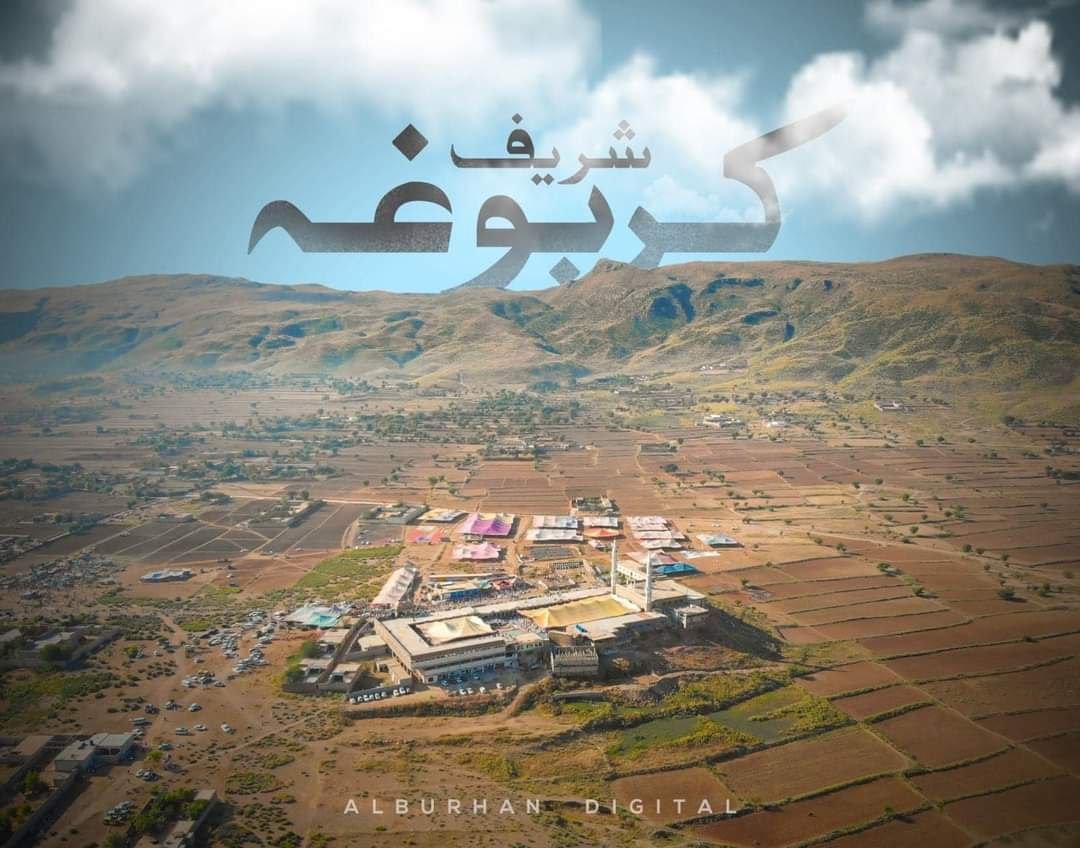
Muhammad Rizwan visits khanqah of Karbogha Shareef as well. Mufti Syed Adnan Kakakhail mentioned this in one of his tweets that he had met him there.