
ummtaalib
-
Posts
8,472 -
Joined
-
Days Won
773
Content Type
Profiles
Forums
Events
Everything posted by ummtaalib
-
by Dr Mohammad Makram Balawi I had written an article about the belief among a large section of the Palestinians that the second half of the eight decade of the State of Israel would be the beginning of the end, but it became clear to me that the Israelis also hold, in one way or another, this belief, especially the leaders of the Israeli political elite who take this belief/obsession seriously. Perhaps the first one who spoke in this sense and invoked it from among the prime ministers of Israel was Benjamin Netanyahu, who claimed that his stay as the Prime Minister is the only guarantee for Israel’s continuity after its eighth decade and exceeding a century, unlike the history of the Jews who did not have a State that lasted more than eight decades. Then, the speech of Naftali Bennett, the current Prime Minister of Israel, in his 2020 election campaign, in which he echoed the same sentiments and urged Jewish voters to stand behind the Blue and White coalition that he leads, in order to surmount the eighth decade safely and ensure the continuation of the State of Israel after its eightieth year. Ehud Barak, the former Prime Minister of Israel, writes to confirm the same complex, the complex of fear for survival. It is important to keep in mind that the people mentioned are not just some rabbis who believe in religious superstitions that have no connection to reality but, rather, they are the political leaders of Israel. The important question here is why this fear of the future, despite all the manifestations of force that Israel has been keen to display, directly or indirectly? Why this fear, despite all the American and European financial, military and legal support, which has made Israel an entity above the law and above criticism, and protected it in international institutions, including the Security Council and the global mainstream media? Israel has obtained American weapon systems that exist only in the United States of America and has the largest American weapons store at its disposal, while it also enjoys a military advantage that no country in the region enjoys, which is the nuclear weapon. Israel’s leaders have long bragged about Israel’s penetration of the Arab political elite and its attraction to influential Arab countries such as Egypt, Morocco, the Emirates, Jordan and others, and it has also succeeded in achieving complete subjugation of the Palestinian Authority and turning it into a security tool in its hand, in addition to Israel’s role in causing unrest in the Arab countries around it, such as Iraq, Syria and Sudan. Israel has sought hard to impose a stifling economic blockade on Iran, under the pretext of its possible production of a nuclear bomb that could threaten Israel’s security, and turned it into a pariah State in the international community. Despite all this, Israel still suffers from a chronic complex of fear, a complex that is reflected in the public discourse of its intellectuals, journalists, academics, thinkers, the speeches of its prime ministers and the fear of its citizens about the future, who see in dual citizenship a lifeboat when any danger approaches. They philosophise this existential horror of the future based on Jewish history, but rather turn it into a cosmic phenomenon that transcends civilisations and centuries, as Ehud Barak did a few days ago on the pages of Yedioth Ahronoth, because – apparently – they do not see the world outside their limited subjective experience. We see them at every historical turning point, or an important event on the external or internal level, engaging in a discussion about the future of Israel and its ability to survive. It is, indeed, a rare situation, as you hardly find a country in the whole world that discusses the idea of its survival or continuity; a leader or a party may lose power, and the State may change from one regime to another or from one form to another, but it does not cross the minds of its elite or the minds of its citizens that the people, the country and the State are subject to extinction. We have seen the Soviet Union collapse, but its peoples remained, and the State was transformed into smaller entities; it was transformed from one regime to another, but it did not perish. We have seen how Yugoslavia broke into smaller pieces, but the people, the culture and the land remain. It is true that Germany suffered a huge blow in the Second World War and was divided into two parts, but it recovered in the end and achieved unity, but the situation in Israel is not like this at all. The former Prime Minister of Israel, the commander of its army and its most decorated general, Ehud Barak, put the danger of internal division before external threats, and considered it the greatest danger that awaits its survival. Even Iran’s nuclear ambitions are not an existential threat. Even if it succeeded in producing a nuclear bomb, it would not be able to use it against Israel, and this supposed nuclear weapon would be just a weapon of deterrence. There is no doubt that Ehud Barak’s concerns did not come out of nowhere, as Israel is an entity full of contradictions, which someone like Netanyahu was keen to present as a kind of benign and disciplined diversity, similar to what is happening in the United States of America. A non-homogeneous group of ethnicities, cultures, loyalties and ideologies, that even the Jewish religion, which they gather under its banner, is not able to unite. On the contrary, religion divides the Israelis, and could ignite the fire of an internal religious war that could turn Israel into ashes. We have seen the credibility of some of that through the video clips that show a argument between two rabbis, one of whom is from the Haredi sect and another of religious Zionism, when the first accused the second of being responsible for the El-Ad operation carried out by two Palestinians against a group of settlers, and said that their exploitation of religion, contrary to the Torah teaching, and their continuous provocations of the feelings of Muslims by storming Al-Aqsa Mosque is what incites the Palestinians and pushes them to take revenge and kill the Jews, and that they are the ones who pay the price of errors of religious Zionism. The state of political and religious rivalry threatens today with the fall of the Bennett government, and the holding of new elections that could deepen the state of internal division and polarisation, and the elections – in this case – will be the fourth to take place within a period of two years, which means the average lifespan of a single government is no more than six months, which is an indication of the failure of the government system in Israel and the bankruptcy of the Israeli political class. Yesterday morning, the Israeli army assassinated – as it has done countless times before – the news reporter in the West Bank, Shireen Abu Akleh, who holds American citizenship in addition to Palestinian. From the first moment, the Israelis tried to follow their usual strategy of transferring responsibility for their criminal actions to the Palestinian side, despite this being practically impossible, assuming that by claiming to investigate the incident, they would absorb popular resentment and eventually come out with a cold, multi-interpretation statement denying criminal responsibility for the occupation and its soldiers. This type of arrogant behaviour and disregard for the truth is what will push all those who support Israel to abandon it, and will gradually turn the conflict into an internal conflict as a result of holding each other’s party responsible for the chronic failure that Israel suffers from, and not the biblical prophecies, nor the arbitrary interpretation of the events of history. The obsession that the Israelis suffer from will turn into a tangible reality as a result of their reckless actions, not due to supernatural events. The curse of the eighth decade and the end of Israel – Middle East Monitor
-
 By Khalid Baig The crowd was growing in size by the minute. They were beating drums, singing, dancing, and shouting in joy. Pagan Makkah was about to kill Khubaib bin Adi Ansari RadiAllahu anhu, who had been captured through a sinister and treacherous plot, then sold in the slave market so the buyers could exact their vengeance. It started when some tribesmen from Uthul and Qara went to Madinah and requested Nabi SallAllahu alayhi wa sallam, to send some teachers with them who could educate their fellow tribesmen about Islam. The request was granted and about ten Companions were sent with them. When the group reached Raji, two hundred armed men were lying in wait for them. Khubaib and Zaid bin Adathna RadiAllahu anhuma, were captured alive, while the others were martyred. Then they were sold in exchange for a hundred heads of camel. Both had fought in the battle of Badr and their swords had killed some pagan soldiers. Now the relatives of those killed in war wanted to get even. Of course, Arab traditions did not allow revenge for war like this. But their opponents were Muslims. Then, as now, the pagan world was ready to violate its own rules and traditions when the victims were Muslims. While facing death, Khubaib, Radi-Allahu anhu, said a poem that has been recorded by history. It includes these lines: “They say if I renounce Islam, my life will be spared. But it is better to die with belief than to live with unbelief.” At the last minute, the pagans asked him: “Don’t you wish that you were spared and Muhammad SallAllahu alayhi wa sallam got this punishment? Would not you like that you were resting comfortably in your home, while he was killed in your place?” From the man who was about to die because he had accepted the Message brought by Muhammad SallAllahu alayhi wa sallam, came this reply: “By Allah, I cannot even imagine that a thorn should prick the foot of Muhammad, SallAllahu alayhi wa sallam, while I rest in my home.” Abu Sufyan, an unbeliever at the time, remarked to his associates: “See, the love of the companions for Muhammad SallAllahu alayhi wa sallam is unparalleled and unprecedented.” At another time, a similar observation was made by another Quraish leader Urwah ibn Mas’ud al Thaqafi: “I have seen Ceasar and Chosroes in their pomp, but never have I seen a man honored, as Muhammad is honored by his comrades.” The biographies of the Companions are full of stories that show their extraordinary love and devotion for the Prophet, SallAllahu alayhi wa sallam. The Qur’an itself attests to this. “The Prophet is closer to the believers than their own selves.” [Al-Ahzab 33:6] The following two Ahadith, from among the many on the subject, clarify this point further. “None of you can be a believer unless he loves me more than his parents, his children, and all the people.” [Bukhari and Muslim] “There are three signs that indicate that a person has tasted the sweetness of faith. 1) That he loves Allah and His Prophet more than anything else. 2) He loves everyone solely for the sake of Allah. 3) After accepting Islam he hates going back to unbelief as much as he hates going into the fire.” [Bukhari and Muslim] Our relationship to Nabi SallAllahu alayhi wa sallam, is at the core of our entire religion. He is human, not divine, but he is our connection to the Deity. He relays to us the Word of Allah and he explains what the Word means. He sets a personal example that we look at not just for admiration but emulation. Our relationship to him is legal as well as personal; moral as well as spiritual; intellectual as well as emotional. Allah chose him to guide us, educate us, inspire us, and purify us — and we remain indebted forever! As the Persian poet said, “You may take liberty with God, but be careful with Muhammad SallAllahu alayhi wa sallam.” Jamiatul Ulama (KZN) Council of Muslim Theologians
 -
Throughout history, mankind has always continued to progress in the field of science and technology. From the invention of the wheel to the discovery of gunpowder, the advancements were slow but steady. The last one or two centuries have been different though, as in this period, technology suddenly progressed in leaps and bounds, at a pace more rapid than ever before. In a relatively short period, travelling by horseback became nearly obsolete as thousands of passenger aircrafts took to the skies and millions of motorcars sped across highways. Science and technology not only transformed travel as mankind knew it – our entire lifestyles underwent a metamorphosis as electricity was discovered and power grids were established, leading to appliances such as microwaves, fridges, air conditioners and countless other inventions entering the scene. In short, science and technology has undoubtedly brought much ease, comfort and convenience to our lives. Furthermore, through studying science within the guidelines of Deen, a person is able to appreciate the finer aspects of the beauty and perfection of Allah Ta‘ala’s creation. When studying the minute structure of a cell under a microscope, or when observing the vastness of the universe through the lens of a telescope, one cannot help but marvel at the power of Allah Ta‘ala and the perfect design of His creation. However, we must remember that science is not a destination – it is a continuous journey. In other words, as science progresses, and as new research is conducted and old studies are re-examined, then established theories are debunked and accepted facts are disproven. Accordingly, concepts are adjusted, principles are amended and the textbooks are rewritten. Thus there are countless examples which highlight the reality that as beneficial and helpful as science may be, it is often wrong. Research is regularly flawed and statistics are regularly inaccurate. Hence, it is not unlikely that the ground-breaking discovery of today will be regarded as an error by tomorrow. It is for this reason that John Ioannidis, a professor at the Stanford School of Medicine, published a paper in which he concluded that the majority of studies in a variety of scientific fields are likely to report results that are false. Furthermore, his view is not an isolated one, as a large number of researchers have accepted his arguments. In light of this, we, as Muslims, must realize that science is unreliable. Pluto was once regarded a planet but no longer holds that status. Mercury was once prescribed by doctors as a medication, but is now banned and regarded as poisonous. X-Rays were once taken for entertainment by all and sundry at fun-fairs, but it is now known that the radiation causes cancer. If we look back at the people one hundred years ago and laugh at their facts, theories and technology, then who knows what the world will make of our scientific facts and research fifty or one hundred years from now! After all, many of the facts that we were taught in school, as children, have now been proven as false (a simple online search will provide ample examples). In contrast to science is the divine knowledge of Nubuwwah (Prophethood). While science is a journey, in which scientists are still stumbling as they discover the way, our Deen has already chalked out the entire path and shown us the destination. The Qur’an and hadeeth are 100% true and correct and will never ever be subject to improvement, amendment and rectification in the light of new ‘research’. Thus, if there is ever a clash between science and Deen, then we must set science aside and only follow the words of Allah Ta‘ala and Rasulullah (sallallahu ‘alaihi wasallam) as their words can NEVER be wrong. For instance, if science tells us that we evolved from apes, we will never accept it, as Allah Ta‘ala and Rasulullah (sallallahu ‘alaihi wasallam) informed us that Allah Ta‘ala created Nabi Aadam (‘alaihis salaam) in his human form, and it is from him that we are all descended. In conclusion, we may benefit from science – but never when it clashes with our Deen. If there is any clash, our trust, reliance and belief will ONLY be in the words of Allah Ta‘ala and Rasulullah (sallallahu ‘alaihi wasallam). uswatulmuslimah.co.za
-
Human beings, by their very nature, are apprehensive and afraid of the dark, and this has never been more evident than now – in the midst of load shedding. A person can be in the comfort and safety of his own home, yet when the lights are turned off, he instantly feels uncomfortable, uneasy and anxious. Though he is in the place with which he is most familiar, due to the darkness, he will feel reluctant to take even a few steps. Thus, he will immediately seek a source of light – even if it as a light as insignificant as the phone screen, after which he will attempt to light candles or switch on a battery-powered torch or lantern. Nevertheless, it should be borne in mind that just as a person will feel uneasy, anxious and uncomfortable in the home when it is dark and bereft of light, in the very same way, a believer’s heart and soul will feel uneasy, anxious and uncomfortable in the home when it is bereft of spiritual light – Noor. Therefore, we understand that the key to making the home a place where the heart and soul of the parents and the children will find peace, derive happiness and acquire tranquillity is to illuminate the home with Noor. In this regard, it is the various Ibaadah that one carries out in the home – specifically the recitation of the Quraan Majeed and the performance of Nafl Salaah – that are the ‘floodlights’ which will illuminate the home with Noor. In one hadeeth, Rasulullah (sallallahu ‘alaihi wasallam) said, “The house in which the Quraan Majeed is recited is enveloped in a canopy of Noor through which the inhabitants of the heavens (i.e. the angels) seek direction (and light) just as direction is sought through a shining star (by a ship sailing) in the middle of the ocean and (by a traveller) in a barren land.” (Bazzaar – Majma‘uz Zawaa-id #3571) In other words, regularly reciting the Quraan Majeed in the home causes it to be filled with so much of Noor that it becomes a beacon of light, shining to the angels in the heavens. When this is the power of the Noor – that it can be seen by the angels far away in the heavens – then we can well imagine the effect of this Noor on the hearts and lives of those living in the home itself! Among our pious predecessors who would recite the Quraan Majeed abundantly in their homes was Imaam Abu Bakr bin ‘Ayyaash (rahimahullah). This illustrious Imaam and Muhaddith was the Ustaaz of great muhadditheen, the likes of Imaam ‘Abdullah bin Mubaarak, Imaam Ahmad bin Hambal and Imaam Abu Dawood. (Siyaru Aa’laamin Nubalaa vol. 8, pg. 496) It is mentioned that when he was on his deathbed and his end approached, his sister began to weep. Seeing her sorrow and her concern for his outcome in the Hereafter, he consoled her and alleviated her worry and concern by expressing gratitude for the favour of Allah Ta‘ala upon him. He gestured towards one corner of the home and said, “Do not weep (and worry about me), for your brother (referring to himself) has completed eighteen-thousand khatams of the Quraan in that corner!” (Hilyatul Awliyaa vol. 7, pg. 44) In regard to performing nafl salaah at home, it is reported that Rasulullah (sallallahu ‘alaihi wasallam) said, “As far as a man’s (nafl) salaah in his home is concerned, then it is a (means of acquiring) noor. Thus, illuminate your homes (with noor, through performing nafl salaah in the home).” (Sunan Ibn Maajah #1375) In another narration, Rasulullah (sallallahu ‘alaihi wasallam) said, “Illuminate your homes with salaah and the recitation of the Quraan.” (Shu‘abul Imaan #1875) In today’s times, on account of the innumerable evils of the environment, our hearts and souls are surrounded by darkness. It is for this reason that we feel unhappy and depressed and fail to find peace and tranquillity in our homes and lives. Insha-Allah, if we turn on the floodlights of Noor by daily performing some Nafl Salaah and reciting some portion of the Quraan Majeed in our homes, Allah Ta‘ala will illuminate our homes. Accordingly, our homes will become sanctuaries of peace, happiness and tranquillity. May Allah Ta‘ala illuminate our homes and lives with Noor – ameen. uswatulmuslimah
-
Q. Please advise on some duas to be read for a child experiencing bad dreams while sleeping and sometimes waking up crying, or any extra bedtime duas or things one can do for the child before sleeping. (Question published as received) A. We advise you to adhere to the following: Ensure that there are no animate objects, toys, dolls or pictures displayed in the house, especially in the children’s bedroom. Such objects are a cause for the angels of mercy not to enter the home. Recite Surah Faatihah, Aayatul Kursi, and the four Quls and blow on your child before sleeping. Additionally, recite the following Du’aa and blow on your child: أُعِيْذُكَ بِكَلِمَاتِ اللهِ التَّامَّةِ ، مِنْ كُلِّ شَيْطَانٍ وَهَامَّةٍ ، وَمِنْ كُلِّ عَيْنٍ لَّامَّةٍ Transliteration: U’ee-zhu-ka Bi Kalimaa-tillaa-hit Tammah Min Kulli Shay-taanin Wa Hammah Wa Min Kulli ‘Aynil Lammah Translation: I seek refuge for you in the perfect words of Allah from every devil and poisonous creature, and from every harmful evil eye. (Bukhari #3371) And Allah Ta’ala Knows Best Mufti Moosa Salie Mufti Taahir Hansa (The answer hereby given is specifically based on the question asked and should be read together with the question asked. Islamic rulings on this Q&A newsletter are answered in accordance to the Hanafi Fiqh unless otherwise stated.) Fatwa Department Jamiatul Ulama (KZN)
-

-
The name of Salaahuddeen Ayyoobi (rahimahullah) is synonymous with Palestine and Masjidul Aqsa. It is a name which brings great joy to the heart of a Muslim even today and refreshens the memories of the conquest and liberation of Masjidul Aqsa after a barbaric eighty-eight-year rule by the Christians. This conquest, however, was a culmination and fruition of many years of effort and determination, supported by a high level of spirituality and a strong connection with Allah Ta‘ala. Not long after Salaahudden (rahimahullah) had liberated Masjidul Aqsa, the army of the Franks once came to a place named Bayt Noobah which was less than one day’s journey from Jerusalem. The spies of Salaahuddeen (rahimahullah) came to him and informed him that the disbelievers had resolved to march on Jerusalem and fight for the city. This news created fear in the hearts of many of the Muslims. Salaahuddeen (rahimahullah) summoned the various Muslim leaders, informed them of the situation and told them that he felt that the Muslims should remain in Jerusalem and defend the city. The leaders told him that they would remain in the city, but he should go out to surround the enemy and cut off their supply of provisions. From their response, Salaahuddeen (rahimahullah) gauged that they wished him to leave, as they did not want to defend the city. The lack of support of these leaders left him in a severe predicament, and he did not know what to do. He was overcome by worry and concern to the extent that he did not sleep the entire night. Finally, the following morning – which was a Friday morning – after the Fajr Salaah, an Aalim with whom he enjoyed a very close association, Ibnu Shaddaad (rahimahullah), said to him, “I have an idea that may help us solve our problem.” Ibnu Shaddaad (rahimahullah) then told Salaahuddeen (rahimahullah) that after he took the Sunnah Ghusl of Jumuah, before performing the Salaah in the Masjid, he should give some charity in secret. Thereafter, between the Azaan and Iqaamah of the Jumuah, he should perform two Rakaats of Salaah, engage in Dua in his Sajdah and beg Allah Ta‘ala to help him, (as Duas are accepted between the Azaan and Iqaamah over and above the fact that it was the occasion of Jumuah). He also advised him to beg Allah Ta‘ala thus, “O Allah, my worldly means of helping your Deen have been depleted. The only option that remains is turning to you, holding firm on Your rope and reliance on Your grace. You are sufficient for me and what an excellent Disposer of affairs (You are).” Salaahuddeen (rahimahullah) took his advice to heart and engaged in Dua, expressing such helplessness and desperation before Allah Ta‘ala that his tears flowed onto the Musalla. Allah Ta‘ala accepted his Dua and granted him divine assistance. He created dissension and disunity between the disbelievers, and as a result, by Monday morning, they all departed the area. (An-Nawaadirus Sultaaniyyah pg. 38) Lessons: 1. Whenever a believer is going through any difficulty, no matter how severe it may be, he always has a recourse – turning to Allah Ta‘ala in Dua. In fact, Dua is the greatest recourse and weapon, as Rasulullah (sallallahu ‘alaihi wasallam) said on one occasion, “Should I not show you something that will save you from your enemies and increase your sustenance? Make Dua to Allah Ta‘ala day and night. For indeed, Dua is the weapon of a believer.” (Abu Ya’laa – Majma‘uz Zawaaid #17153) Hence, whenever we are faced with any difficulty, especially the current plight of the Ummah in Palestine and worldwide, we should turn to Allah Ta‘ala in Dua as this is the most effective weapon and recourse of a believer. How unfortunate it is nowadays, that we involve ourselves in unnecessary discussions regarding the plight of the Ummah, spend multiple hours in following the latest news updates, and we knock on every other door, before realizing that there is only one door and there is only One Being whose attention we need – Allah Ta‘ala. 2. Keeping in close contact with pious ‘Ulama and taking their advice seriously is a means of getting the divine closeness of Allah Ta‘ala and protecting oneself from making incorrect decisions. This aspect was found to a great extent in the life of Salaahuddeen (rahimahullah), as well as in many other upright leaders of the Muslim Ummah. We too should keep in contact with our pious ‘Ulama by listening to their talks and taking their advice. 3. Whilst Salaahuddeen (rahimahullah) possessed great leadership skills and military expertise, the secret to his success was undoubtedly the special connection with Allah Ta‘ala which he enjoyed. Hence, at a time when his army did not offer him the support which he desired, and he had no other recourse, begging and imploring Allah Ta‘ala once was sufficient to turn the tide in his favour and chase away the disbelievers. UswatulMuslimah
-
-
-
-
-
Message from Abu Ubaida, the Izzideen al-Qassam Brigades spokesperson Speaking live on Saturday, Abu Ubaida, the Izzideen al-Qassam Brigades spokesperson, said that “Israeli bombing has killed 50 of their captives so far”, and that “Israel knows the cost of freeing their hostages”. “The cost of the hostages is to free all Palestinians from Israeli jails,” he said. Abu Ubaida said that the war was a “turning point in history and in the freedom of Palestine”. “We reiterate to Israel, who are threatening daily about a ground invasion, we wait for you, we will teach you and the world what true strength looks like. We will meet you with strength you cannot imagine, we have embarrassed you in front of the world.” www.instagram.com/p/Cy8tnxiIqqS/
-
-
-
Growing up, as young children aged six or seven, we had the run of the home. Since we were still small, we felt that the laws of purdah between strange males and females did not pertain to us, and hence if there were visitors at home, we could enter both the men’s and women’s section of the house. In fact, this was quite convenient as we could then help to serve the visitors, assist with clearing up, etc. However, as time passed, we grew up and eventually crossed the threshold of puberty and maturity. Now, we were no longer small children, but were regarded as adults in regard to the laws of the Sharee‘ah. The problem though is that many of the old men and women before whom we grew up still claimed to view us as children. If we attempted to make purdah from them – as we rightfully should – they would protest and say, “But he/she grew up in front of me! I saw him/her when he/she was still in diapers!” They themselves gave the answer to their objection but failed to see it - the child GREW UP and is no longer a child. This situation, where an older person feels that there is no need to observe purdah as the child grew up in front of him (or her), is common with elder cousins, the wives of maternal or paternal uncles (from whom the uncle’s nephews should adopt purdah), and with the husbands of paternal and maternal aunts (from whom the nieces should adopt purdah), as well as with old family friends and acquaintances. Unfortunately, even when the young boy or girl reaches the age of fifteen or sixteen, and their bodies are already well developed, they are still sometimes called to give the ‘aunty’ or ‘uncle’ a hug – all in the name of ‘family ties’ and being ‘courteous’. Thereafter, if the boy or girl refuses or displays reluctance, then sadly, it is often their own parents who scold them and attempt to pressurise them into ‘making aunty or uncle happy’. In an attempt to justify and condone this shameful behaviour, the ‘aunty’ or ‘uncle’ will claim that their hearts are clean, and they may even attempt to pin the blame on the youngster saying, “How can you suspect me of having evil intentions?” The reality of the matter though, is that no matter how ‘clean’ the person claims his heart may be, it can never be cleaner and purer than the hearts of the Sahaabah (radhiyallahu ‘anhum) – yet they adopted this type of purdah in their lives, teaching the Ummah that the laws of purdah apply equally to one and all, and a person feeling that he has a ‘clean heart’ does not exempt him from the laws of purdah. At the time when Rasulullah (sallallahu ‘alaihi wasallam) performed Hijrah and arrived in Madeenah Munawwarah, Sayyiduna Anas (radhiyallahu ‘anhu) was a young boy, approximately eight years of age. His respected mother, Sayyidah Ummu Sulaim (radhiyallahu ‘anha), brought him to Rasulullah (sallallahu ‘alaihi wasallam) and said, “O Rasul of Allah (sallallahu ‘alaihi wasallam)! There is no man or woman of the Ansaar who has not presented you with a gift. However, I do not have anything to present to you as a gift besides my son. Therefore, (please) accept him for your service.” Rasulullah (sallallahu ‘alaihi wasallam) accepted him, and in this manner, Sayyiduna Anas (radhiyallahu ‘anhu) was blessed to remain in the close company of Rasulullah (sallallahu ‘alaihi wasallam) as his special attendant for ten years, until Rasulullah (sallallahu ‘alaihi wasallam) departed from this world. (Majma‘uz Zawaaid #1494) In the initial stages after the hijrah, the laws of purdah and hijaab had still not been revealed. Hence, while in the service of Rasulullah (sallallahu ‘alaihi wasallam) at that time, Sayyiduna Anas (radhiyallahu ‘anhu), who was still young, would enter the home of Rasulullah (sallallahu ‘alaihi wasallam) in order to serve him. However, in the year 4 A.H. or 5 A.H., on the occasion of the waleemah of Sayyidah Zainab bintu Jahsh (radhiyallahu ‘anha), the verses containing the command of purdah were revealed. Sayyiduna Anas (radhiyallahu ‘anhu), who would have been approximately 13 or 14 years old at that time, mentions that as soon as these verses were revealed, Rasulullah (sallallahu ‘alaihi wasallam) lowered the curtain at the doorway of his home and did not allow Sayyiduna Anas (radhiyallahu ‘anhu) to enter the home. (Saheeh Muslim #3502) UswatulMuslimah
-
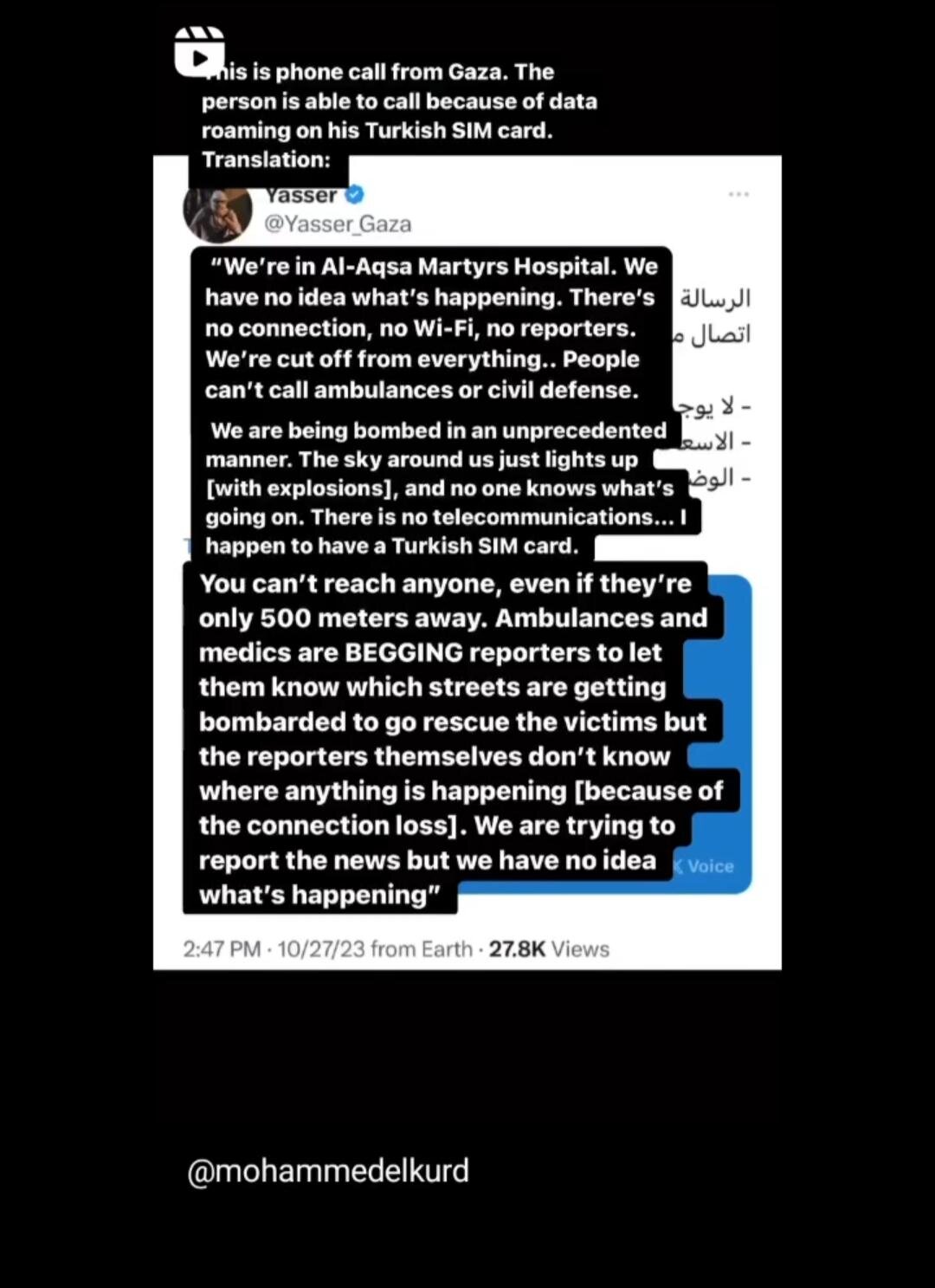
Look at these quotes by top 'islaeli' officials Shaun King (@shaunking) • Instagram photos and videos And ask yourself why these quotes, in essence with the top officials in Israel openly admitting war crimes and genocide, are not in the American media. These are Israeli government officials openly admitting ethnic cleansing and the violation of international law.
-
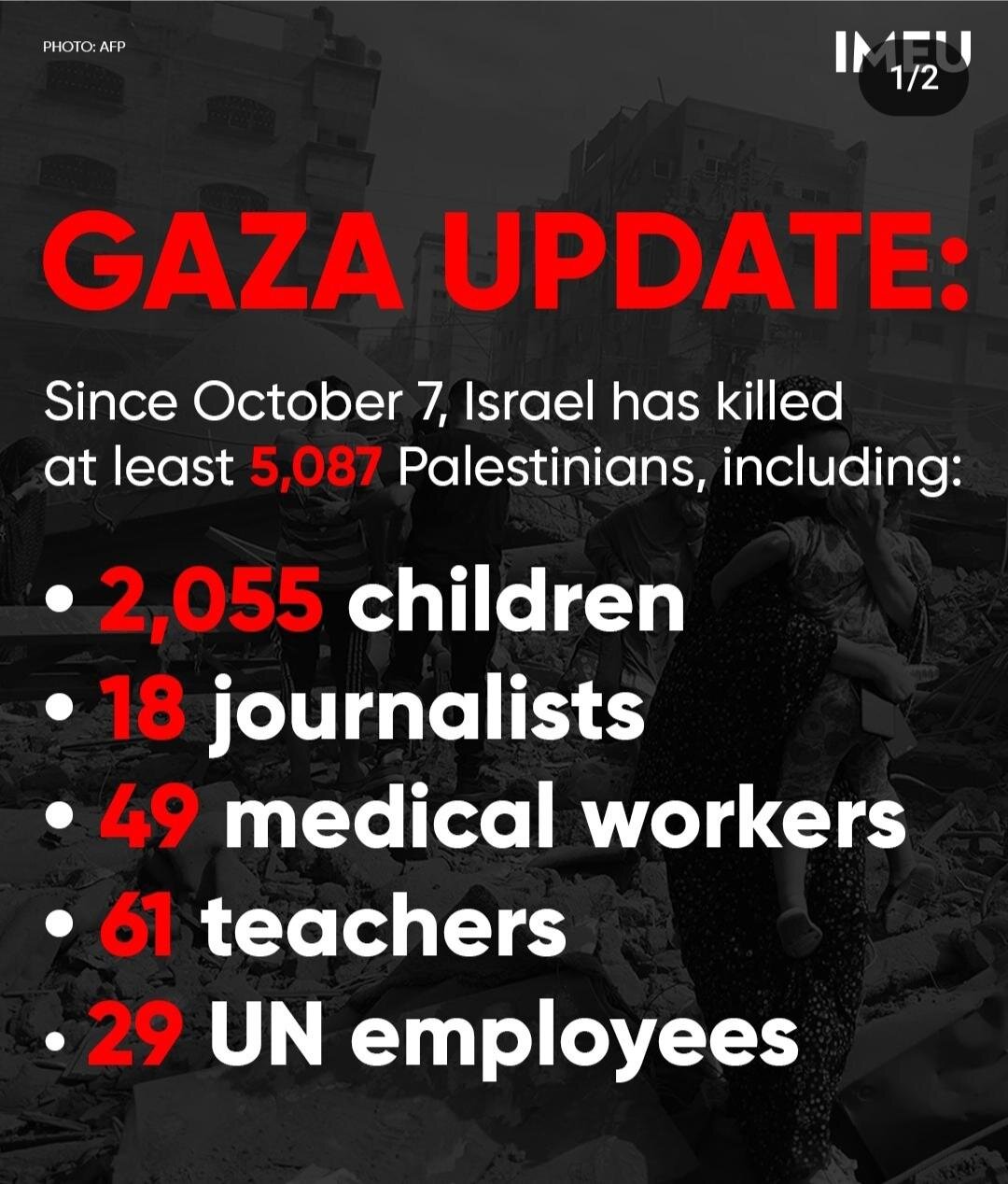
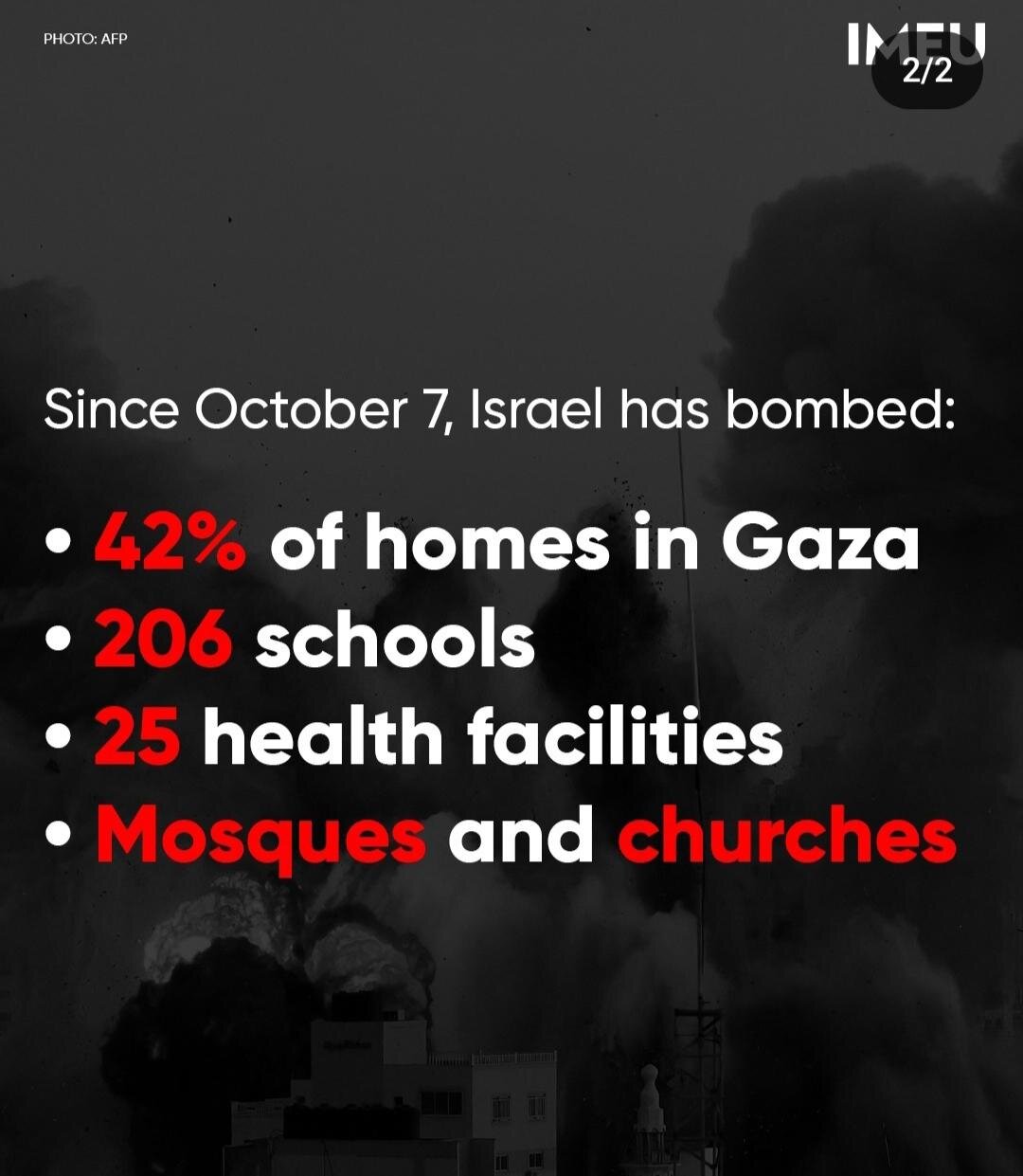
Israel has killed over 5,000 Palestinians in Gaza since October 7th, including 2,055 children. At least 1500 more Palestinians are missing, likely trapped under rubble from Israel’s indiscriminate bombings. Still, Israel continues to intensely bomb Gaza – killing and displacing Palestinians, destroying essential infrastructure, and turning Gaza to rubble. Israel is committing war crime after war crime, with the US’ full support. That needs to end, now. To take action against Israel’s violent onslaught, call your representatives to demand an immediate ceasefire, organize/attend a protest, post on social media, and speak to your friends & family.
-
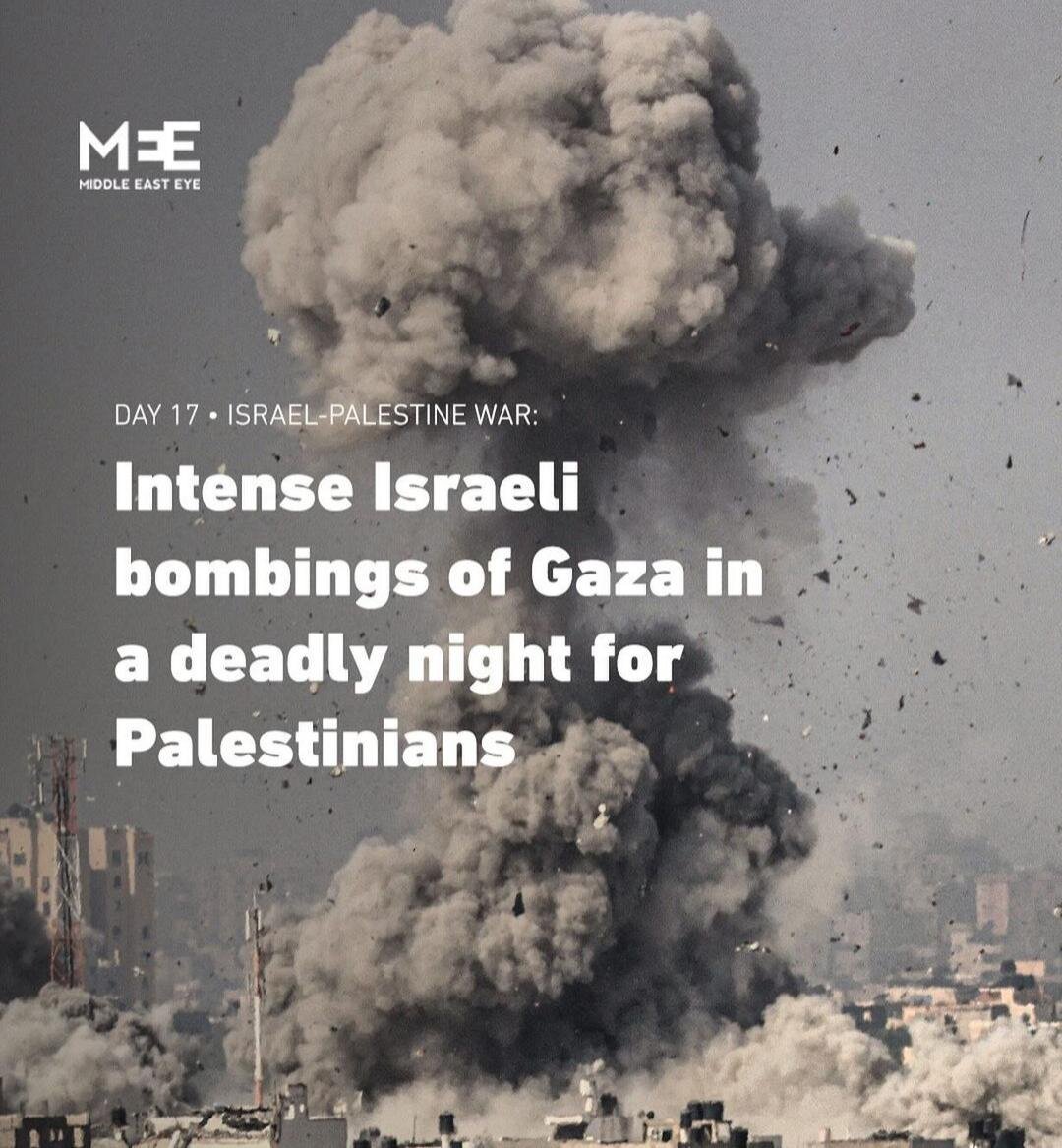
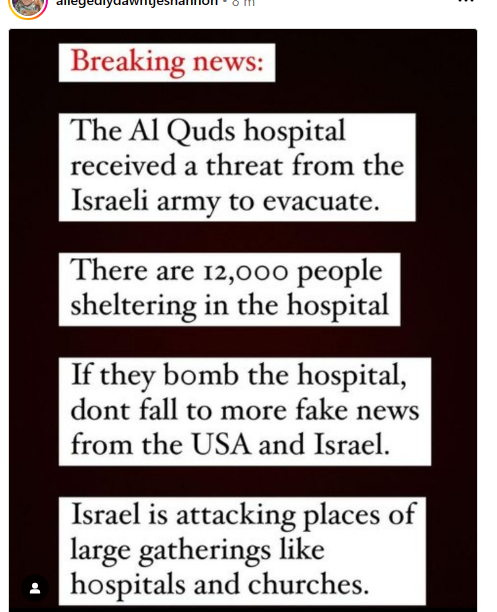
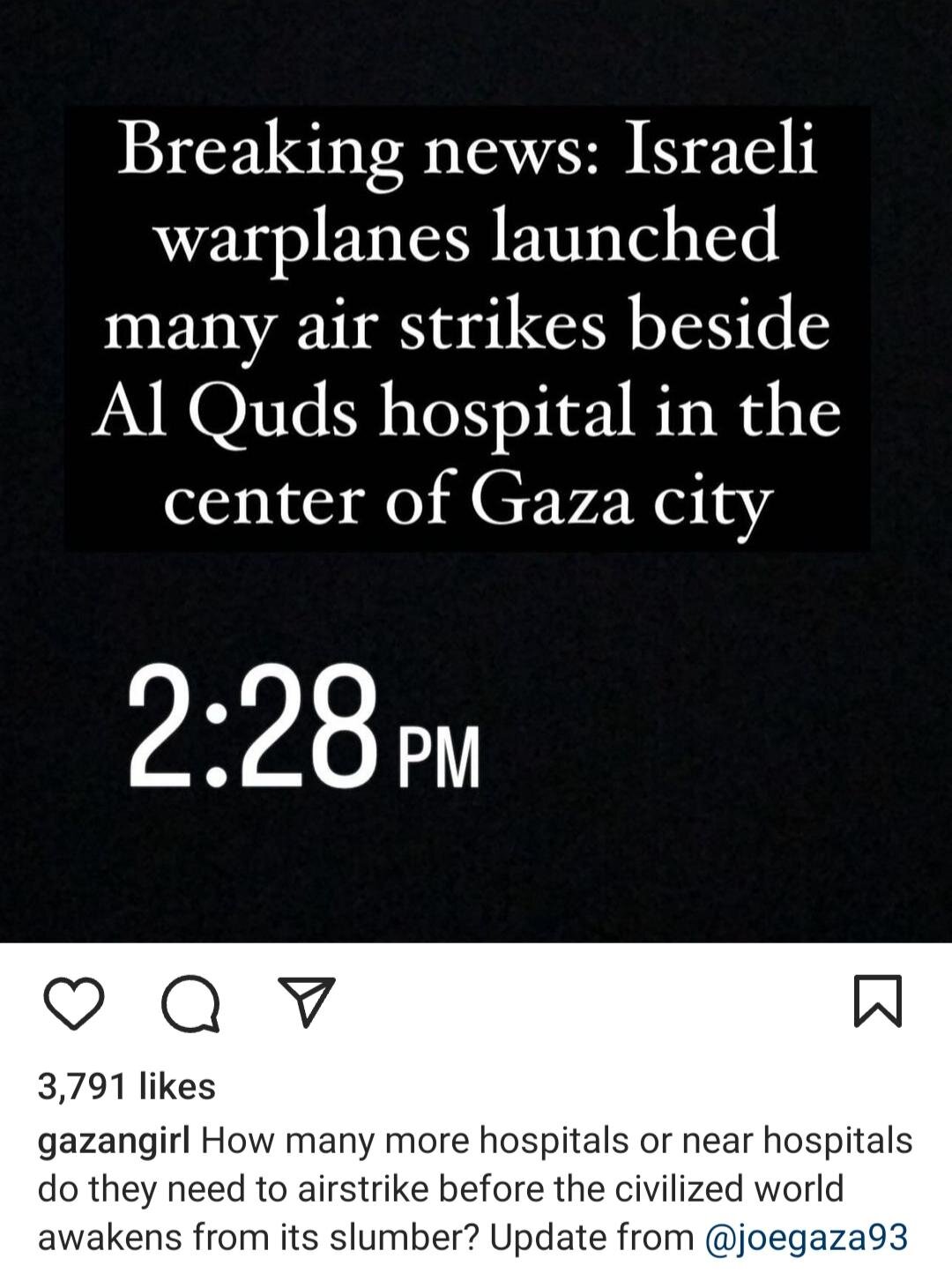
Monday morning saw some of the most intense and deadly Israeli bombings of Gaza since the latest conflict between Israel and armed Palestinian groups began on 7 October. Here’s what you may have missed over the past few hours: • So far, at least 400 Palestinians have been killed over the past 24 hours, and that number has the potential to rise as medical teams and rescue workers assess the full damage of the air strikes last night • One Israeli air strike on the Jabalia refugee camp killed around 30 Palestinians. • Dozens of Palestinians have been arrested across the occupied West Bank as Israeli forces launched a number of raids near Ramallah, Hebron, and Jericho • Western leaders, including US President Joe Biden, released a statement in which they reaffirmed Israel’s right to defend itself before going on to urge for the protection of civilians • Gaza’s hospitals are almost out of anaesthesia, in addition to fuel and other other necessary supplies • Israeli air strikes have also hit near two hospitals: al-Shifa and al-Quds Middle East Eye (@middleeasteye) • Instagram photos and videos
-
From the Horse’s Mouth Sayyiduna ‘Amr bin ‘Aas (radhiyallahu ‘anhu) narrates the following: An army of the Muslims, over whom I was appointed as a leader, once set out to fight in the path of Allah Ta‘ala. We continued to travel until we came to the city of Alexandria. On reaching Alexandria, the leader of the city announced to us, “Send someone from your army to me so that I may converse with him.” When I heard this request, I immediately said, “Nobody but I will go to him.” I thus emerged from the camp and went to meet him. The city leader and I had translators assisting us. Two pulpits were placed for us and we thus sat. The leader then asked: “Who are you people?” I replied: “We are Arabs. We are the people of thorns and Acacia trees. We are the people of the Ka’bah. We are the people who had the smallest land and the most difficult lives. We would consume carrion and some of us would attack and wage war with others. We were living the most despicable lives that people could possibly live. This continued to be our plight until a man emerged from among us, who was neither the most influential at that time nor the wealthiest. He said, ‘I am the Messenger of Allah (sallallahu ‘alaihi wasallam).’ He then began to prohibit us from the acts that we were perpetrating and those which we had found our forefathers perpetrating. Hence, we resented him, belied him and rejected his message, until another group of people, besides us, came to him. They said to him, ‘We believe in you, we will follow you and we will fight whoever fights against you.’ He thus left Makkah Mukarramah and migrated to them, and we went after him. We thereafter fought against him, resulting in him killing us, defeating us and overpowering us. The other Arabs in the nearby areas also rose against him, so he fought against them until he conquered them.” When the leader of Alexandria heard this, he began to laugh. He thereafter said: “Indeed, your messenger spoke the truth. Our messengers also came to us with messages similar to that which your messenger brought to you. We adhered firmly to their message and their teachings, until kings emerged among us. These kings did as they pleased and abandoned the teachings of the messengers. If you hold fast to the teachings of your Nabi, nobody will wage war against you except that you will defeat him, and nobody will rise against you except that you will overpower him. However, as soon as you do as we did, by abandoning the teachings of your Nabi, and you behave as we did by obeying your desires, then we will be left to each other (i.e. you will not enjoy the divine assistance of Allah Ta‘ala). In that case, you will neither be greater than us in number nor stronger or more powerful than we are.” Sayyiduna ‘Amr bin ‘Aas (radhiyallahu ‘anhu) later remarked, “I never spoke to a man (from the disbelievers) as intelligent as him.” (Tabraani – Majma‘uz Zawaaid #10437) Lessons: 1. When the leader requested to engage in discussion with a Muslim, Sayyiduna ‘Amr bin ‘Aas (radhiyallahu ‘anhu) ensured that he went to him personally. The most probable reason behind this was that the person who met and conversed with the leader would, in reality, be representing Islam. His conduct, speech and the mind-set that he portrayed would be construed as being the values and way of Islam. In a similar manner, each and every one of us is a flag bearer of Islam and a representative of Muslims at large. If we behave poorly, dishonestly, greedily, mercilessly, etc., then those who interact with us will inevitably reach the conclusion that ‘Muslims’ have these evil qualities. On the other hand, if we embrace the character of Islam, those around us will definitely be attracted to Islam and many of them will even embrace Islam. 2. The Muslim Ummah constantly faces tests and challenges of varying natures. Whether the challenge is in the form of a natural disaster, a war, xenophobia, financial troubles, political instability or civil unrest, the natural response of people is to try and find a solution to the problem. In this regard, some people feel that the solution is for the Muslims to have a strong political presence, others feel that the solution lies in empowering the youth with education, while yet others feel that the solution is for the Muslims to have military muscle and financial pull. However, the true solution can only be found when the root cause is correctly identified. In this incident, the disbelieving leader himself told the Muslims the solution – as long as they hold firmly to Islam and the sunnah of Rasulullah (sallallahu ‘alaihi wasallam), they will enjoy the divine assistance of Allah Ta‘ala and will be undefeated. However, if they abandon the teachings of Islam and Rasulullah (sallallahu ‘alaihi wasallam), remaining Muslims in name alone, they will lose the divine aid of Allah Ta‘ala. The Sahaabah (radhiyallahu anhum) enjoyed Allah Ta‘ala’s aid and achieved victory and success, even though they did not always have the apparent means. Without this vital ingredient of Allah Ta‘ala’s aid, even if we have the apparent means, it will be wishful thinking for us to hope that the Ummah can once again enjoy its former glory. UswatulMuslimah
-
-
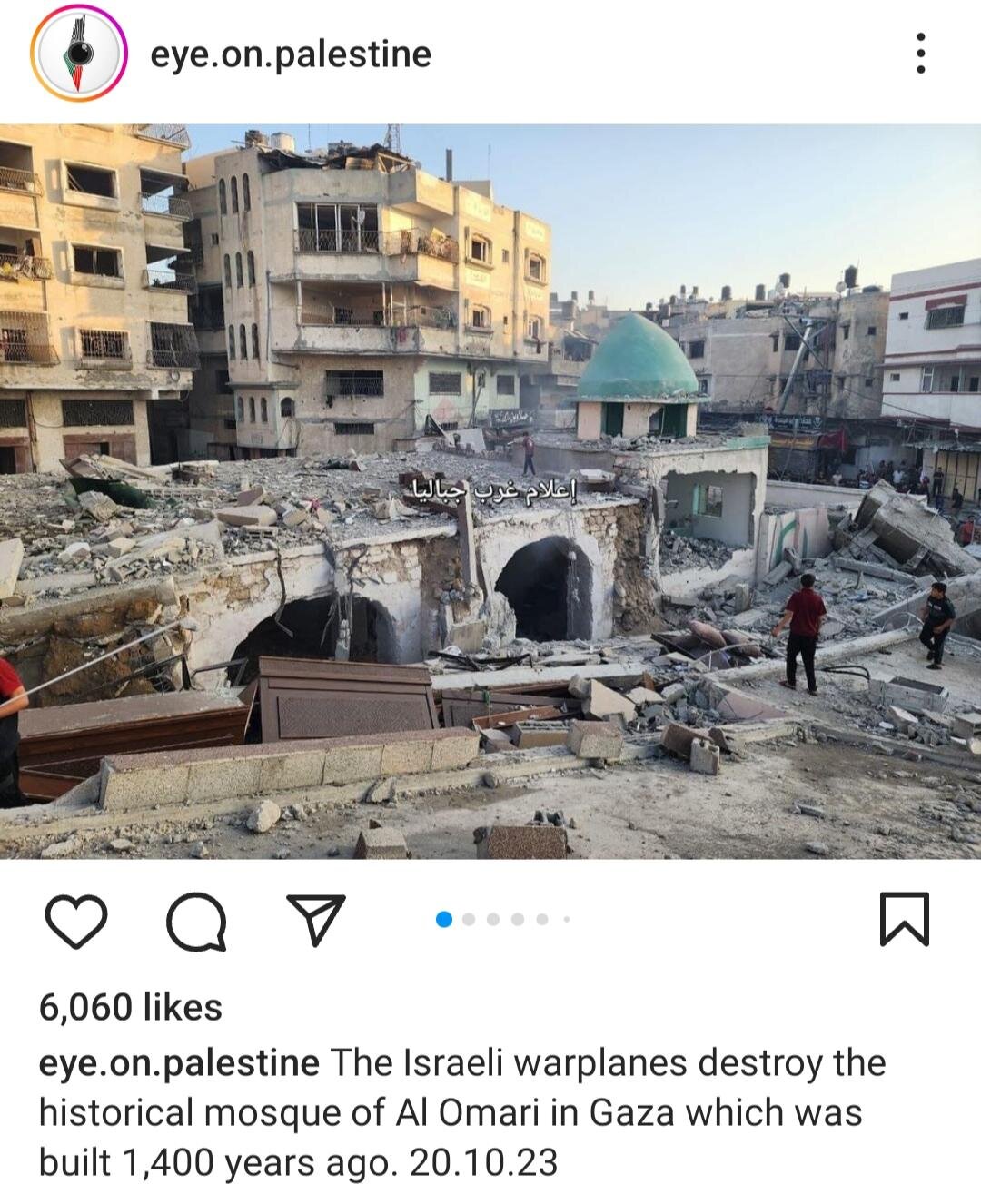
Places of worship not safe One of the oldest churches in Gaza is the "Church of St. Porphyrius," which is an ancient Orthodox Christian church. The construction of this church dates back to the Middle Ages, specifically the 15th century. The Church of St. Porphyrius is considered an important historical landmark in Gaza and a site for prayers and religious activities. www.instagram.com/p/CynGjz2IwAB/ The Israeli warplanes destroy the historical mosque of Al Omari in Gaza which was built 1,400 years ago. 20.10.23
-
-
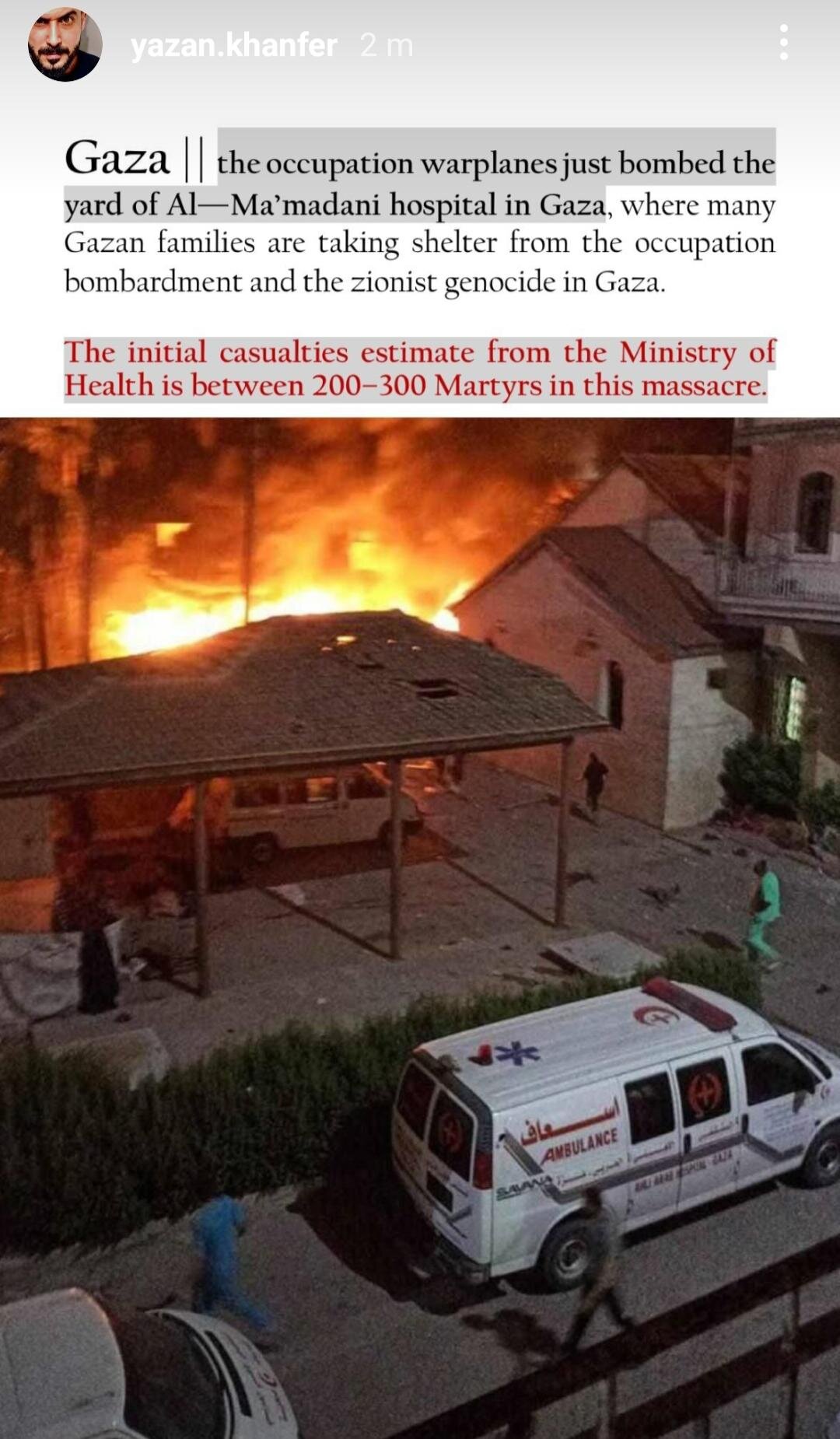
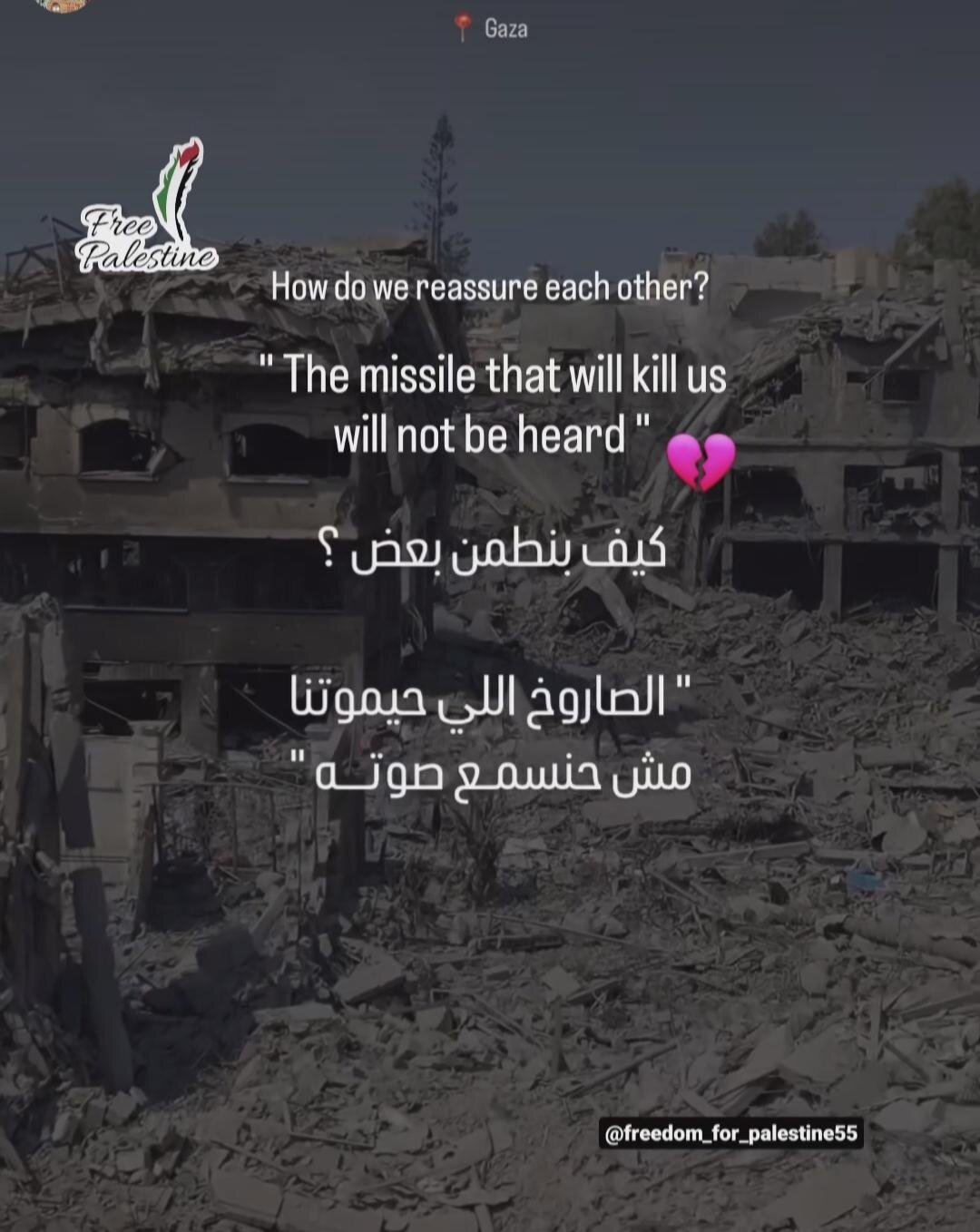
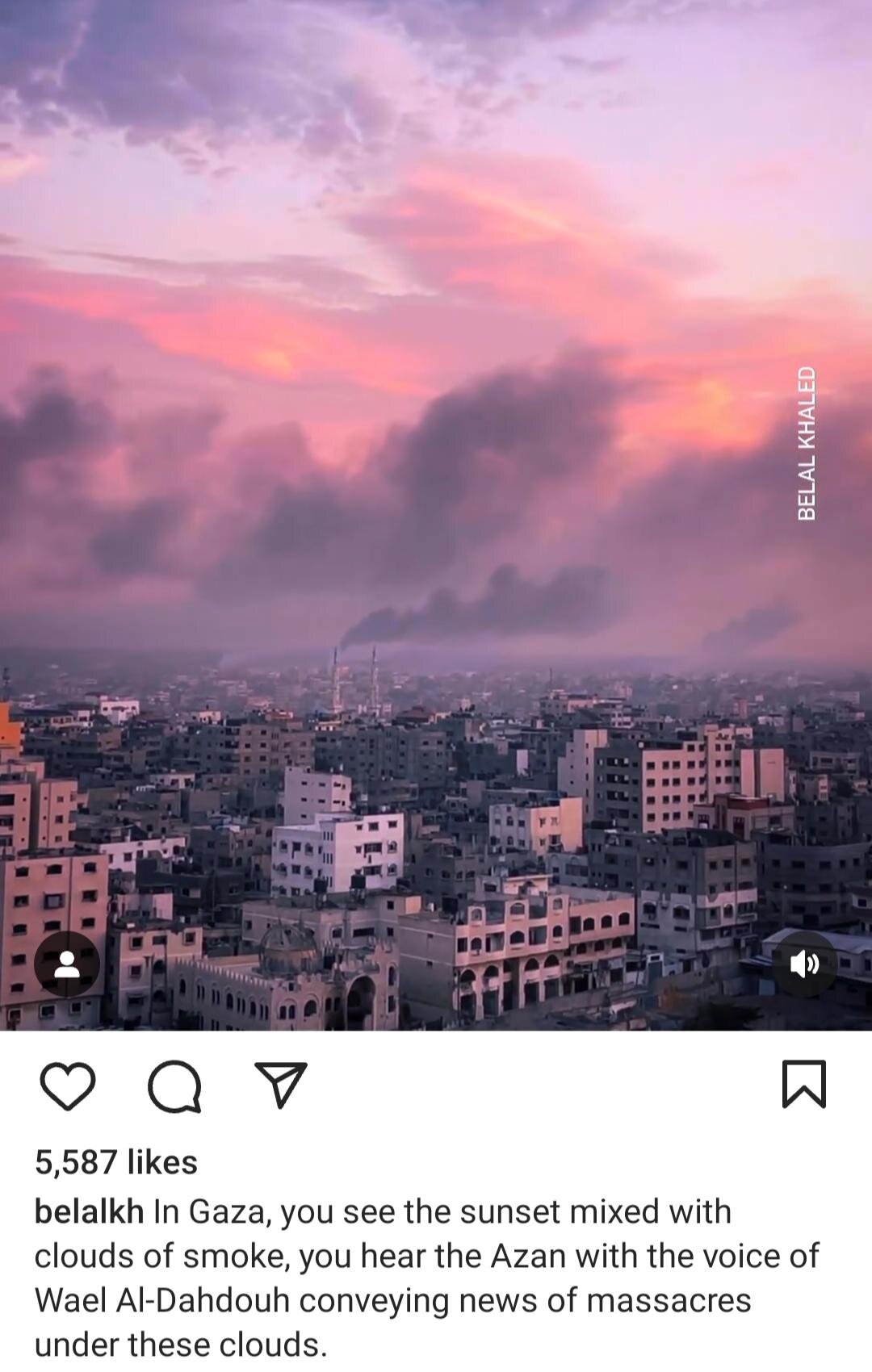
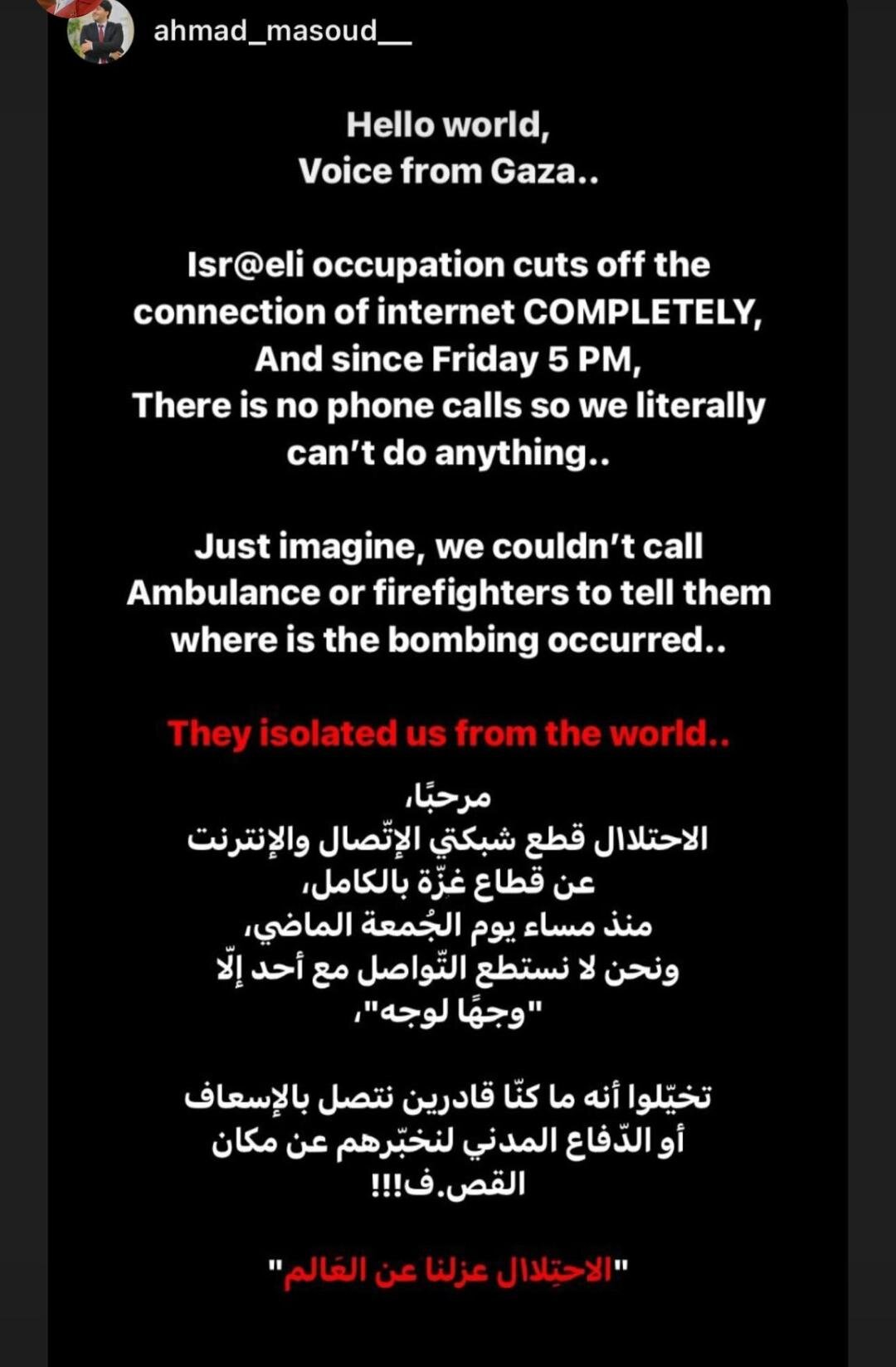
As atrocities continue in Gaza....
-
-
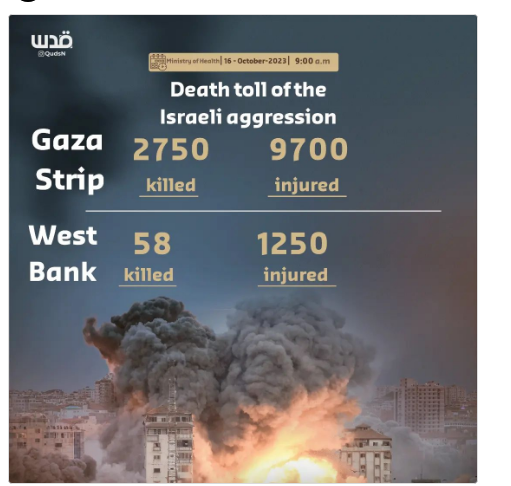
Latest updates of the casualties of the ongoing Israeli aggression across occupied Palestine


.jpg.3233725f4cce883503858ded7e6a9a35.jpg)