ummtaalib
-
Posts
8,477 -
Joined
-
Days Won
773
Content Type
Profiles
Forums
Events
Everything posted by ummtaalib
-

Beautiful Collection of Salaat & Salaam
ummtaalib replied to ummtaalib's topic in Muhammad (Sallallaahu 'alayhi wasallam)
-
Beautiful Collection of Salaat & Salaam
ummtaalib replied to ummtaalib's topic in Muhammad (Sallallaahu 'alayhi wasallam)
-
Beautiful Collection of Salaat & Salaam
ummtaalib replied to ummtaalib's topic in Muhammad (Sallallaahu 'alayhi wasallam)
-
Beautiful Collection of Salaat & Salaam
ummtaalib replied to ummtaalib's topic in Muhammad (Sallallaahu 'alayhi wasallam)
-
Beautiful Collection of Salaat & Salaam
ummtaalib replied to ummtaalib's topic in Muhammad (Sallallaahu 'alayhi wasallam)
-
Beautiful Collection of Salaat & Salaam
ummtaalib replied to ummtaalib's topic in Muhammad (Sallallaahu 'alayhi wasallam)
-
Beautiful Collection of Salaat & Salaam
ummtaalib replied to ummtaalib's topic in Muhammad (Sallallaahu 'alayhi wasallam)
-
Beautiful Collection of Salaat & Salaam
ummtaalib replied to ummtaalib's topic in Muhammad (Sallallaahu 'alayhi wasallam)
-
Beautiful Collection of Salaat & Salaam
ummtaalib replied to ummtaalib's topic in Muhammad (Sallallaahu 'alayhi wasallam)
-
Beautiful Collection of Salaat & Salaam
ummtaalib replied to ummtaalib's topic in Muhammad (Sallallaahu 'alayhi wasallam)
-
Beautiful Collection of Salaat & Salaam
ummtaalib replied to ummtaalib's topic in Muhammad (Sallallaahu 'alayhi wasallam)
-
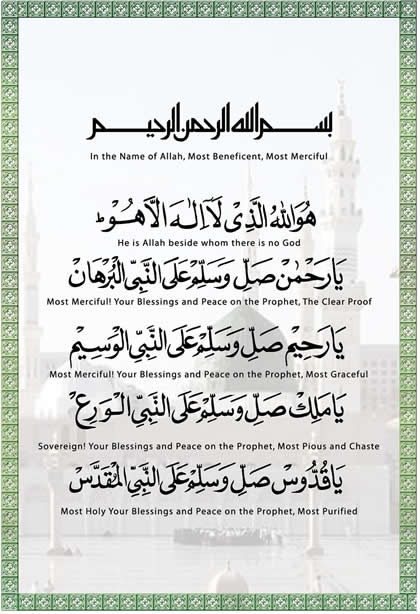
Beautiful Collection of 100 Salaat & Salaam With 99 Names of Allah (Asmaaul-Husnaa) and 99 Attributes of Prophet Muhammad - May Allah send His peace and blessings him (Alqaabe-Nabawiyyah) The Compiler Hazrat Shaykhul-Hadith Maulana Yusuf Motala Sahib Distinguished Khalifah of Hazrat Shaykhul-Hadith Maulana Muhammad Zakariyya Sahib rahmatullahi alai inter-islam Truly Beautiful! (Click of picture to enlarge)

-
Shamail Tirmidhi Urdu...Read Online
-
Aameen.....perhaps I too received same mail from the same sister!
-
-
The Obligatory Nature of Hajj By Shaykh Mawlānā Muhammad Saleem Dhorat hafizahullāh The advent of the month of Shawwāl brings with it the remembrance of Ibrāhīm ‘alayhis salām and his memorable hajj. All over the world, those who are fortunate make preparations for this great spiritual experience. Hajj is from the five pillars of Islām and is fard upon every sane and mature believer who possesses the means to perform hajj. Allāh ta‘ālā mentions in the Glorious Qur’ān: “…As a right of Allāh, it is obligatory on the people to perform hajj of the House – on everyone who has the ability to manage (his) way to it.” (3:97) The Prophet sallallāhu ‘alayhi wasallam has said: “Islām is founded on five (pillars): bearing witness that there is no deity except Allāh and that Muhammad is the Messenger of Allāh, establishing salāh, paying zakāh, performing hajj and fasting in the month of Ramadān.” (Al-Bukhārī) In another hadīth, he said: “O people! Indeed Allāh, the Mighty, the Exalted has made hajj obligatory upon you; therefore perform hajj.” (Ahmad) Virtues of Hajj The Prophet sallallāhu ‘alayhi wasallam has mentioned many virtues of hajj, encouraging the believers to fulfil this obligation: “The performers of hajj and ‘umrah are deputations of Allāh. If they call Him, He answers them; and if they seek His forgiveness, He forgives them.” (Ibn Mājah) “There is no reward for an accepted hajj except Jannah.” (Al-Bukhārī, Muslim) “Whoever performs hajj for the sake of pleasing Allāh, and therein utters no word of evil, nor commits any evil deed, shall return from it free from sin as the day on which his mother gave birth to him.” (Al-Bukhārī, Muslim) The performer of hajj becomes so pure that even that person is forgiven for whom he seeks forgiveness. The Prophet sallallāhu ‘alayhi wasallam said: “When you meet a Hajī (on his way home), then greet him, shake hands with him and ask him to beg forgiveness of Allāh on your behalf before he enters his home, for his prayer for forgiveness is accepted since he is forgiven by Allāh.” (Ahmad) Warnings for Non-performance of Hajj The Prophet sallallāhu ‘alayhi wasallam has also warned those who do not fulfil this obligation despite it becoming obligatory upon them: “He who possesses enough provisions which will suffice for him to reach the House of Allāh, and he does not perform hajj, then there is no care whether he dies as a Jew or a Christian.” (At-Tirmidhī) Hajj is fard upon every sane, adult and healthy Muslim, when he has sufficient wealth to enable him to travel to and from the Ka‘bah. This will apply when the wealth required to take him is in excess of his needs (such as house, transport, clothing, etc.). He also needs to have sufficient wealth to leave behind for the needs of those who are dependent on him. Furthermore, the journey needs to be a safe one and a woman needs to be travelling with a mahram. As can be understood from the great virtues and stern warnings above, a person upon whom hajj is fard should endeavour to perform hajj at the earliest possible opportunity – this year. The Prophet sallallāhu ‘alayhi wasallam has said: “The one who intends to go for hajj should hurry; for sometimes he can get ill, his conveyance can go missing or some other obstacle may arise (which will hinder him from travelling).” (Ahmad) Misconceptions and Lame Excuses Many people delay the performance of hajj due to misconceptions which become lame excuses for not performing hajj. Inshā’allāh, I wish to clarify a few of these misunderstandings, so that those who find themselves in these situations can repent and make preparations immediately. • Many people have enough wealth for them to go for hajj, but they wait to accrue enough wealth so that their spouse can also accompany them. If the husband has enough wealth then he should go for hajj immediately. And if the wife has enough wealth, and she has other mahārim with whom she can go for hajj, then she should go immediately too. The Sharī‘ah does not give either permission to postpone the hajj and wait for the other. • Many people think that it is necessary that they make arrangements for their parents to perform hajj before they do. This too is incorrect in light of the Sharī‘ah. Undoubtedly, to make one’s parents perform hajj is a great virtue and honour; however, if hajj is not fard on them, but it is fard upon the children, then they should not concern themselves with their parents’ hajj at this moment and fulfil their own obligation. It is possible that in the children waiting for the parents - or in the case of the husband waiting for the wife or vice versa - the one upon whom hajj is fard passes away and is questioned by Allāh ta‘ālā for its non-fulfilment. • Others delay embarking on the journey until certain worldly tasks have been completed. Remember! The targets of the world will never end. If it is one worldly target that is the excuse this year, then it will be another next year. The Prophet sallallāhu ‘alayhi wasallam has said: “No servant leaves hajj for some worldly objective but that he will see the people returning from hajj before his worldly objective is fulfilled.” (At-Tabrānī) Therefore, one should put aside any worldly goals he has in mind and fulfil the obligation of Allāh ta‘ālā first. It is also noteworthy to remember that it is from the ploys of Shaytān that he will never say, ‘Don’t perform hajj’, rather, he will make you defer its performance, year after year, until it’s too late. • Similarly, many delay their hajj because of this hadīth: “He who performs forty salāh in my masjid in such a way that he does not miss a single salāh, then Allāh prescribes his freedom from the Fire of Jahannam, freedom from punishment and freedom from hypocrisy.” (Ahmad) Many think that it is necessary to perform forty salāh in Al-Masjid An-Nabawī, and some have the desire and greed for this virtue, so they delay their performance of hajj as they cannot spare enough time or money to stay in Al-Madīnah for the duration of forty salāh. Hajj is for five days only, and it becomes fard upon that person who can only afford to go for the minimum time. The inability to travel to Al-Madīnah will not be a valid excuse not to perform hajj. Of course, after reaching so close to the blessed city of Al-Madīnah, one should endeavour to at least spend a day in the blessed city and visit Al-Masjid An-Nabawī, and present himself in the Court of Rasūlullāh sallallāhu ‘alayhi wasallam. • Some believe that if their children have reached a marriageable age and are not yet married, then the parents cannot perform hajj until the children are married. This too has no basis whatsoever in the Sharī‘ah. • Some delay in travelling as they have small children at home. Once hajj becomes fard, they should seek suitable relatives, friends, etc. who can look after their children whilst they go for hajj; and they need not travel for long due to their circumstance and situation. • Some delay their hajj as they think it is better to perform it in their old age closer to their death! This is a fallacy as they have no guarantee for how long they will live, and this idea is in complete contrast to the command of the Prophet sallallāhu ‘alayhi wasallam to perform hajj at the earliest opportunity. • Some delay performing the hajj as they only obtain a set number of days off work, and they postpone their journey hoping that they may get more days off next year and can spend more time in the Al-Haramayn. This too is not a valid Shar‘ī reason to postpone the hajj. They should go and spend whatever time they have available and absolve themselves of the obligation of hajj. • Some delay the hajj, as they cannot afford to buy gifts for people, thus deferring their obligation until they have enough money that they can buy gifts for their loved and dear ones. This again is not a valid Shar‘ī excuse. • Some delay in going for hajj as they cannot afford the ‘five star’, ‘deluxe’ or ‘golden’ package. From a Shar‘ī point of view, as soon as they can afford the cheapest most basic package, hajj becomes fard upon them. • Others can afford a package, but as the package includes a hotel which is far from the Al-Haram, they are not able to read all five salāh in Al-Haram. This does not justify delaying the hajj. Remember, as long as the five days of hajj are part of the package, hajj will be fard upon them. • Some do not go for hajj on the pretext that they are not yet ready to change their lives. Such a thought is from Shaytān. Do we think the same when it comes to reading salāh or paying zakāh? And if this is the case, then change your life, for it is obligatory anyway! Moreover, inshā’allāh, through the barakah of hajj, the life will change for the better. Some go to the other extreme and have resolved to change their lives, but make comments such as, ‘My Īmān is not yet strong enough and I need to build on my Īmān.’ This thought too is from Shaytān. Hajj is a very important fundamental which helps to make one’s Īmān stronger. Shaykh Muftī ‘Abdur Rahīm Lājpūrī rahimahullāh mentions with regards the permissible reasons for postponing hajj: The following are reasons for which hajj may be postponed: • Becoming bankrupt. • Fear of a tyrannical leader. • Being imprisoned. • An unsafe journey. • Illness because of which the person cannot travel. • For a woman not to have a mahram or husband to accompany her. • For a woman to be sitting in her ‘iddah. He further states that although these factors justify postponing hajj; however, it will be compulsory to proceed with the journey as soon as they no longer exist. Therefore, it is my heartfelt plea to those upon whom hajj is fard, that they embark on this blessed journey this very year. They should have trust in Allāh ta‘ālā for all their affairs and fulfil this obligation. May Allāh ta‘ālā remove all difficulties and hurdles that anyone may have and make hajj easy for one and all. Āmīn. © Islāmic Da'wah Academy
-
Our Role to Help the State of the Ummah
ummtaalib replied to ummtaalib's topic in General Islamic Discussions
The Crisis in Gaza and our role Written by Mufti Mohammed Sajaad Thursday, 22 January 2009 12:49 In the name of Allah, the Most Merciful, the Most Compassionate The world watches in horror, as a people are being subjected to the most odious kind of terrorism. Innocent people are being killed and maimed by the latest weapons of mass destruction. Aid agencies are screaming out for help, pictures are being beamed all over the world showing dead babies, children bleeding, women crying and homes reduced to rubble and it can hardly solicit a yawn from so called civilised nations. They, who would send out the fire-brigade and the police to save a cat stuck in a tree, fail to muster a word of condemnation, let alone act to prevent the atrocities. It is, however, from the foremost duties of the believer to come to the help of the Gazans as much as each individual is able to. To coldly turn away from their persecution and simply get on with one’s own life is brute selfishness and nothing less than a sign that one is not a believer. For the Messenger of Allah (may Allah bless him and grant him peace) said: “None of you believes until he does not love for his brother what he loves for himself” (Sahih Muslim). In another hadith, also narrated by Imam Muslm, he said: “Whoever of you helps remove a tribulation from a believer from the tribulations of the world, Allah will remove from him a tribulation of the tribulations of the Day of Judgement.” And he said, in the same hadith: “Allah remains helping his servant as long as he is preoccupied in the help of his brother.” The Ummah of one and a half a billion Muslims is one body, the Messenger of Allah (sallalaahu alaihi wasallam) said the Muslims, in their mutual love and sympathy, are one body, when one part of it aches all of it aches, (Sahih Muslim). Just as the nervous system and blood connect and tie the whole of a physical body together, so too does the faith (Imaan) connect the Ummah together. How awful has the state of this body become that parts of it today are busy in contributing to mutilating and hacking off of its own limbs? The current rapacious attack on the Muslims of Gaza, where over a thousand, a large proportion of them women and children, have been ruthlessly murdered, could have been stopped easily at the very outset if Muslims rose to help their brethren. In a matter of moments the Israeli war machine would have been stopped in its path had just the supply of oil, under the control of other Muslims, been stopped to the West in protest. This was the least to be expected, but even that was it seemed asking too much. Yet astonishingly, it is this same oil that fuels the tanks that are today shelling the Gazan children and powers the F16s that roar of the heads of the helpless men, women and children, showering them with deadly white phosphorus bombs. Muslims rulers have only aided in the persecution and annihilation of their brothers and sisters. But this article is not being written to detail the crimes of this Ummah against itself. Rather I wish to address the root cause of this chaos and how we can find a way out of it through boycott, petition and demonstration. The diagnosis of the dire Muslim situation cannot be done by philosophers, politicians or journalists. The only true diagnosis that could be acceptable is the diagnosis of Allah taala and His Messenger (may Allah bless him and grant him peace). And the Sacred texts are clear that the success and failure of the Ummah, in this Life and the Next, is bound with their deeds. Misdeeds only close the doors of Allah’s Help and Mercy descending upon the believers, one manifestation of which is the placing of tyrants over them. In the Holy Qur’an, Allah taala says: Thus we give authority to wrongdoers over other wrongdoers due to the sins they would commit. (6:129) In another place in the Qur’an, we are told: Allah will not change the condition of a people until they do not change themselves.” (13:12) In a hadith we are warned: “You should be diligent in commanding to good deeds and stopping evil. Otherwise Allah will put in charge of you the worst of people. At such time the best of you will pray to Allah but the prayers will go unanswered.” (Imam Suyuti in Al-Jami al-Sagheer) It is recorded in a well known Dua of the Prophet (may Allah bless him and grant him peace) that he supplicated: “O Allah do not put in authority over us, due to our sins, such people who will not show mercy to us.” Further it is recorded in a hadith: “As you are (in terms of your deeds), accordingly will be your rulers.” (Mishkat al-Masabih) Unfortunately, it is only a sign of our demise, that there will be amongst us those who will, instead of accepting the completely obvious conclusion, seek to undermine it by raising questions about the authenticity of this latter hadith. They conveniently forget all the other evidences that have been brought and that scholars have always stated this to be the root problem. An undisputed classical authority in hadith, Shaikh Abd al-Rauf al-Manawi, in his commentary of this hadith, supports the essence of the hadith even though he acknowledges that according to the principles of hadith criticism it does not measure up. He writes: “(It means) If you fear Allah and you are fearful of his punishment, He will place as rulers over you such people who fear Him regarding you and vice versa. It is mentioned in some of the revealed scriptures: “I am the Ruler of rulers, the hearts of rulers and their forelocks are in my hand. If my servants obey me I make them over them a mercy. If they disobey me I make them over them a punishment. Thus do not occupy yourself with cursing the rulers, rather repent to me and I will make them compassionate towards you. From the supplications of the Chosen Messenger was: “O Allah do not put in authority over us, due to our sins, such people who will not show mercy to us.” Imam Tabarani narrates from Ka`b al-Ahbar that he heard a man cursing Hajjaj (an oppressive ruler), and said to him: “Don’t, he came from amongst your midst,….” (Fayd al-Qadir, vol.5 p.60). Three Steps to Change: Boycott-Petition-Demonstration Boycott We have all seen the leaflets informing us of the boycott of goods and services which help pay for the tanks, bombs and bullets that rip through the bodies of our innocent brothers and sisters, but we have made the fatal mistake of forgetting the boycotting of sins and sincerely repenting for our past misdeeds. As without a shadow of doubt this is the real reason for our state today. We have committed major sins in relation to our belief (Aqida) and our deeds. Some of these sins are so grave that they have severed our link with the Almighty and prevented the help we so desperately need. In matters of belief, our excesses are more dangerous and need immediate rectification. Many of us have stopped placing our reliance in Allah taala and seeking His help. In our hearts has crept the belief that organisations, essentially created by the so called super-powers for the super-powers, alone can make a difference. This sin is polytheistic in its severest form and will bring nothing but the Wrath of Allah taala, for He states: If Allah brings some harm to you, there is none to remove it except He. And if He intends to bring some good to you, there is none to turn His grace back. He brings it to whomever He wills from among His servants. He is the Most-Forgiving, the Very Merciful. (10:107)Verily, Allah will not forgive that a partner is ascribed to Him, and He forgives anything short of that for whomsoever he wills. Whoever ascribes a partner to Allah commits a heinous sin. (Sura al-Nisaa:48) Allah is not such that something in the heavens or the earth can frustrate him. Verily He is All-knowing All-powerful. Sura Fatir:44Say: ‘I have no power over any benefit or harm to myself except as Allah wishes. If I had knowledge of the unseen, I should have multiplied all good and no evil would have touched me.’ Al-Aaraf:188.Whatever blessing Allah opens for the people, there is none to hold it back, and whatever He holds back, there is none to release it thereafter. He is the Mighty, the Wise. (35:2) O men, you are the ones who need Allah, and Allah is Free-of-All-Needs, the Ever-Praised. (35:15) For far too long have believers’ hearts harboured the belief countries, organisations and processes are the key to change and our success. It is time to cleanse the heart Allah taala made exclusively for Himself of these heresies: “God has not made for any man two hearts in his body” (33:4) Before we speak about our misdeeds, let us remind ourselves further of the effect of sins in keeping away from us the Mercy and Help of Allah taala. Remember the story of how due to the disobedience to a single command of the Prophet (may Allah bless him and grant him peace) Allah taala changed the victory of Uhud into defeat that even led to his beloved Messenger (may Allah bless him and grant him peace) becoming violently attacked and wounded. When we look at ourselves, how many commands of the noble Messenger have we violated? How many commands of Allah (SWT) are we ignorant of? Allah (SWT) states clearly that the greatest factor in our demise is our sins: “Whatever hardship befalls you is because of what your own hands have committed, while He overlooks many (of your faults).” (42:30) As long as the Ummah does not repent for these sins that are rampant amongst its young and old, the help and support of Allah taala will remain a dream. The following are just some of the common sins in the Ummah, we need to repent from: Alcohol Allah taala has forbidden this vile substance in the following words. It is not a secret that Alcohol is produced and sold throughout the Muslim World, even in the Holy Lands. Allah taala said: O ye who believe! Intoxicants and gambling, (dedication of) stones, and (divination by) arrows, are an abomination,- of Satan’s handwork: eschew such (abomination), that ye may prosper.” (5:90) In a hadith narrated by Imam Muslim, the Messenger of Allah (may Allah bless him and grant him peace) said: “Allah taala has made a promise to those who drink an intoxicant, that He will give them to drink from the Teenat-al-Khabaal.” Someone asked: “What is the Teenat al-Khabaal?” The Messenger of Allah replied: “It is the sweat of the inhabitants of the Hell-fire.” When this is the way Allah feels about those who drink such forbidden drinks, it is simply unrealistic to think the same Lord will give honour to a nation that drinks alcohol, permits for it to be sold in its midst and seeks to profit by it. In another hadith it is narrated: “The Messenger of Allah (may Allah bless him and grant him peace) cursed ten people in connection with wine: the wine-presser, the one who has it pressed, the one who drinks it, the one who carries it, the one to whom it is carried, the one who serves it, the one who sells it, the one who profits by it, the one who buys it, and the one for whom it is bought." (Tirmidhi) Gambling It is with the utmost hurt that we say this sin too is common place. Whether it is a bet on a horse, numbers of a lottery or the outcome of some meaningless sporting event, Muslims are major participants in this. The aforementioned verse includes this sin within its prohibition. The Messenger of Allah (sallallaahu alaihi wa sallam) said: “Whoever plays Nardasheer (a game in which a dice is used to gamble) has indeed disobeyed Allah and His Messenger.” (Ibn Abi Dunya, Dham al-Malaahi, p.10). In another hadith it says that this act is so despised by Allah taala that the gambler’s Salah that he offers after that is rejected by Allah taala. Music This sin has become so wide spread that it does not even cross the mind of many of us that the Messenger of Allah (may Allah bless him and grant him peace) forbade it in unequivocal terms. Thus we see music in so called Islamic Nasheeds, Muslim Satellite channels that will be at the same time discussing passionately Muslim issues like Gaza. It even rears its ugly head in the holiest of places, the Masjid. How many a Salah is ruined by the musical ring tones of worshippers. Imam Bukhari narrates that the Messenger of Allah (sallallaahu alaihi wa sallam) said: “A people from my Ummahwill make permitted fornication, silk (for men), alcohol and musical instruments” (Sahih al-Bukhari). It is the duty of each one of us to counsel our Muslim brothers who have fallen into this sin, especially those who disseminate such illicit material through their DVD and Video rental stores. Fornication Islam has required that all avenues to fornication be blocked in order to preserve society, the family and in particular children. Thus, fornication is from the major sins whose punishment is severe and is often seen in this very life. Having said this, this sin has become widespread, such that it will be hard to find a Muslim home in which someone has not committed this grave sin or is involved in a relationship that will eventually lead him or her to it. The displeasure of Allah taala upon these people, who will later turn to the same Lord to ask for His relief and help, is shown by the fact, that the most valuable thing a person possesses, namely one’s Imaan, is removed from him or her, as long as he is involved in this sin (Sahih al-Bukhari). Ibn Masud r.a. says I asked the Messenger of Allah which is the greatest of sins in the sight of Allah? He replied: “To associate an equal with Him, yet He created you.” I said: Then which one? He said: “To kill your offspring out of fear of the burden of his eating with you.” I asked: Then which one? He said: “To commit adultery with your neighbour’s wife.” (Hafiz Abu al-Qasim Ismail, Al-Targib wal-Tarhib, vol. p.226). The Messenger of Allah (may Allah bless him and grant him peace) said: “The fornication of the eyes is to look, the fornication of the tongue is to speak indecently, the fornication of the hand is to touch, the fornication of the ears is to listen to impermissible speech, the fornication of the feet is the steps to sin….” Thus it is clear, there is no room in Islam for cross-gender friendships, nor for speaking to a non-Mahram whether it be by phone or over the Internet. Riba (Interest) Interest is another sin that Muslims have become desensitised to. Yet the verses and hadith on its prohibition are from the severest. Allah taala says: O you who believe, fear Allah and give up what still remains of ribā, if you are believers. But if you do not (give it up), then listen to the declaration of war from Allah and His Messenger. However, if you repent, yours is your principal. Neither wrong, nor be wronged (2:279) In a sound hadith the Prophet (may Allah bless him and grant him peace) said: "Interest is of seventy types, the lowest level of it is equal in sin to person fornicating with his mother." (Mustadrak) We are a nation that has allowed interest based banks to run freely in our midst, not leaving even the Holy Lands of Mecca and Medina. Many of us have no qualms in getting involved in interest based transactions and contracts. Many of us intentionally seek out bonds and securities that yield the most interest. We the Ummah of the Holy Qur’an have inadvertently summoned upon ourselves the declaration of war from Allah taala and His Messenger (may Allah bless him and grant him peace). The leaving of the Five prayers, Fasts, Zakah Each of these duties are obligatory upon the adult Muslim and leaving their observance are major sins. Many do not pray at all, others of us pray only the Jumah Salah. As for those who do pray, they do so without attention and due consideration of the etiquettes required to make Salah a strong bond between us and our Master. The Messenger of Allah (may Allah bless him and grant him peace) said: "The first thing to be accounted of the servant on the Day of Judgement will be his Salah. If it is found to be sound, he will have succeeded and saved. If however it is ruined he has failed and lost." One can gauge the kind of displeasure of Allah taala and His Messenger, leaving Salah invokes, by the following incident. Once the Prophet (may Allah bless him and grant him peace) entered the Masjid for Fajr Salah and to his hurt found many companions absent. This hurt the Messenger so much, even though there is none more compassionate and merciful of mankind than him, he said: I wanted to command some of you to go and set the houses on fire of those who absented themselves from the Fajr prayer. Allahu Akbar! that was one prayer, and they had missed the congregation for it. What would be the feeling of the Prophet (may Allah bless him and grant him peace) to know that many of us have totally abandoned all their Salahs? As for those who refuse to give Zakah, Allah taala threatens them thus: As for those who accumulate gold and silver and do not spend it in the way of Allah, give them the ‘good’ news of a painful punishment, on the day it (the wealth) will be heated up in the fire of Hell, then their foreheads and their sides and their backs shall be branded with it: 'This is what you had accumulated for yourselves. So, taste what you have been accumulating.' (9:34-35) Immodest dress Islam has given clear rules for the dress of men and women and emphasised that it should not be extravagant and it should cover the private organs. In regards to the dress of women, it is not permitted for them to wear, as has become common today, designer garments that embellish them, or garments that are tight fitting and reveal the outline of the body. The Hijab itself has become, bizarrely, a tool for many of our sisters to beautify themselves, which totally violates the essence and purpose of the Hijab. This has been forbidden by Allah taala: Remain in your homes, and do not display (your) beauty as it used to be displayed in the days of earlier ignorance. (33:33) The Messenger of Allah (may Allah bless him and grant him peace) went as far as stating that Allah taala would forbid those women, who act immodestly and wear clothes that reveal their bodies, from entering Paradise. Imam Muslim narrates: "…those women who are naked despite being clothed who are themselves lewd and entice others, who prop up their hair like a camels back will not enter Heaven nor will they smell its fragrance even though it fragrance is found for many miles." Furthermore, our sisters should strive to adopt the Niqab, as this is the requirement of the Shariah. There was a time that all respectable women in the Muslim World would never leave their homes with their faces uncovered. Allah taala says: O Prophet! Tell thy wives and thy daughters, as well as all [other] believing women, that they should draw over themselves some of their outer garments [when in public]: this will be more conducive to their being recognized [as decent women] and not annoyed. And Allah is Most-Forgiving, Very-Merciful. (33:59) There are many other things we as followers of the final Messenger (may Allah bless him and grant him peace) have failed to act upon. His teachings on honesty, charity, mercy, good manners, the rights of children, the elderly, wives and husbands and many other immaculate codes of conduct. It will require all of us to give time over from our lives to learn this knowledge at the feet of the heirs of the Prophets, the Ulema. We all need to sincerely make a solemn pledge before Allah taala to uphold all the commands and teachings He has given us. Petition A petition is a request made for something desired. Islam teaches the believers that they should ask Allah taala alone for what they need, for He alone gives all benefit and harm. He alone is the most Powerful, He is the Super-power: If Allah helps you, there is none to overcome you. And if He abandons you, then, who is there to help you after that? In Allah should believers place their trust. (3:159) In His grasp is the possession of everything and to Him is your return. (36:83) If some harm befalls you there is none who can remove it save Him. And if He wishes good for you there is none that can repel his favour. He bestows it upon who He wishes of his servants and He is the Most forgiving the Most merciful. (10:107) The Arabic word for requesting from Allah taala is Dua. It is a manifestation of one’s belief in Allah taala and reliance upon Him. When we do not ask from Allah taala or ask from Him half-heartedly, it indicates to our reliance actually being upon other than Allah taala, which is why in a hadith it says: "Allah taala becomes angry with those who do not ask from Him." The truth is, part of our creed, and as stated by the verses above, Allah taala alone can give us any good and deflect from us any calamity. The Messenger of Allah also said (may Allah bless him and grant him peace), emphasising the major role Duas have in changing events: “Nothing can repel the Decree of Allah except the Dua,” (Tirmidhi). We often ask with so many Muslims in the World, surely the Dua of one of them would be accepted? The truth is our misdeeds, have acted as an obstacle to them being heard. However with this, inshallah, new spirit and love for the Deen that we witness in all parts of the Muslim World, due to the efforts of scholars and Allah’s righteous servants in calling the Ummah to this message, we must renew our zeal in Duas. Each one of us should perform Duas for the reform of the Ummah, her protection and success. Let not a night go by without waking up in the last part of it and begging Allah taala for victory; let the tears drench our prayer mats and show Allah taala that it is only He who we seek and it is only he who we believe in. Allah taala says: And when My servants ask Thee about Me, then verily I am near, I answer the prayer (Dua) of the supplicant when he beseeches Me. So let them hear My call, and believe in Me, so that they may be led aright. (2: 186) Umar (R.A.) said: “My concern is only to ask and it is not my concern to then bring it about, that is the concern of the Almighty. Demonstration Finally, we must demonstrate our true acceptance of this message of change. A true believer will not have hesitated for a second in accepting the above diagnosis of our problems today. But mental acceptance is not enough, just as it is not enough for a person who has cancer to merely acknowledge that he is sick. We must show our sincere desire for change and return to Allah taala and His Messenger (may Allah bless him and grant him peace). In addition to reforming our lives of sins, each one of us should begin to seek knowledge of the Deen, by sitting in the company of the Ulema and attending their gatherings. One should enrol himself or herself on short courses offered by the various Islamic Institutions to further one’s knowledge and character. One should strive to keep the company of pious friends and refrain from company that takes us away from Allah taala and our Deen. Furthermore, at the same time that we are doing this, one should be passing on this message of change to all one’s family and friends, and encouraging them to do the same. These real steps will be the sign that one has sincerely embraced the message and turned back to Allah taala; and our Messenger (may Allah bless him and grant him peace) gave the returner to the Deen the following glad tidings: Allah taala says: ‘Whoever comes hand-span closer to me, I come closer to him by a cubit, and if he walks towards me, I run towards him,’” (Sahih Muslim) Elsewhere Allah taala says: Do not lose heart and do not grieve, for you will be upper-most provided you are believers. (3:138) I should reiterate, that the article is not written against the other senses of the above three words I have chosen as sub-headings. Rather we commend all efforts made to help the people of Gaza and it is in fact the duty of each Muslim to do all that is in his or her power to defend their Muslim brothers and sisters. It is only that we must remember that these measures are, at best, at the level of a kind of emergency treatment given to cover a wound and not the real solutions to our woes. Article by: Mufti Mohammed Sajaad 23 January 2009 -
The Challenge after Ramadan An inspiring and beneficial talk given by Shaykh Muhammad Saleem Dhorat hafizahullah shortly after Ramadhan 1430 challenge_after_ramadan.mp3
- 1 reply
-
- 1
-

-
The Accepted Whispers: Munajaat-e-Maqbul
ummtaalib replied to Acacia's topic in Du’as for Various Occasions
Munajaat-e-Maqbool with Urdu Translation Munajat-e-Maqbool.pdf -
"Protest against Israel" - Deactivate FaceBook Accounts
ummtaalib replied to ummtaalib's topic in General Islamic Discussions
Alhamdulillaah!! Allah ta'ala accept your good intention girls. MashaAllah! Hope you all are stating your reasons. They must know why people are leaving. -
Istikhārah - Its Method and Some Misconceptions by Shaykh Mawlānā Muhammad Saleem Dhorat hafizahullāh www.shaykh.org/ Istikhārah means to turn to Allāh ta'ālā and seek goodness from Him. This is because Allāh ta'ālā knows what we do not know. As Allāh ta'ālā is fully aware of the end result and consequence of every matter and we merely speculate, we should ask Allāh ta'ālā to guide us towards goodness in our endeavours or tasks that we are about to embark on. It should be understood that istikhārah is simply a du'ā like any other du'ā. However, it has more chance of acceptance in the Court of Allāh ta'ālā as it has been specifically taught by Rasūlullāh sallallāhu 'alayhi wasallam to his Ummah. It is a prayer offered to Allāh ta'ālā before embarking on a particular course of action or choosing from a number of options, asking Him to guide us towards goodness and the correct and better choice, and to save us from that course of action or choice if goodness lies elsewhere. A point of great importance in istikhārah is to free one's mind of all thoughts and inclinations before performing it. What would you expect from a person's istikhārah when he has already resolved to do something! Method The method of istikhārah is to perform two rak'āt at any time of the day, other than the times when nafl salāh is forbidden. It is preferable to recite Sūrah Al-Kāfirūn in the first rak'ah and Sūrah Al-Ikhlās in the second. Thereafter one should praise Allāh ta'ālā, send salāh upon the Prophet sallallāhu 'alayhi wasallam and then recite the following du'ā O Allāh! I seek goodness from You, through Your Knowledge, and I seek strength through Your Power and ask for Your great Bounty, for You are able to do things while I am not, and You know while I do not; and You are the Knower of the Unseen. O Allāh, if You know that this matter [name your matter] is good for me, in respect to my Dīn, my worldly life and the consequence of my affairs, then decree it for me and make it easy for me, and then grant me barakah in it. And if You know that this matter [name your matter] is bad for me in respect to my Dīn, my worldly life and the consequence of my affairs, then turn it away from me and turn me away from it, and decree for me what is good, wherever it may be, and make me be pleased with it. (Al-Bukhārī) If after the initial istikhārah you remain unsure about something, then perform istikhārah for 3, 5, or 7 days. Inshā'allāh within seven days the heart will feel at ease. There is also another method of istikhārah in the form of a short du'ā. If a decision needs to be taken and there is no opportunity to perform two rak'āt and do istikhārah in the aforementioned way, the following du'ā should be recited: O Allāh, grant me goodness, and choose for me. (At-Tirmidhī) As mentioned earlier, istikhārah is a du'ā and Allāh ta'ālā will accept it and grant you goodness, as long as there are no factors that prevent its acceptance. Obstacles to Allāh ta'ālā accepting prayers include disobedience to Allāh ta'ālā, harām earnings, and praying without the conviction that Allāh ta'ālā will definitely accept the prayer. If there are such obstacles present in one's life, he should do tawbah in earnest, and then make istikhārah. Results of Istikhārah If, as a result of doing istikhārah, a person feels positive, he should proceed accordingly. If his du'ā has been accepted, he will acquire goodness and success. However, many people feel positive after istikhārah and proceed accordingly, but do not see success. This can be explained by the following: 1. In the du'ā of istikhārah, a person first asks Allāh ta'ālā for goodness in one's Dīn which is the main objective of a believer, and thereafter he asks for the goodness of the world. Therefore, if after istikhārah one finds apparent worldly loss, but his Dīn remains safe, one should believe that through the barakah of istikhārah Allāh ta'ālā has granted him a minute loss of this world and saved him from a greater loss of the Hereafter. 2. Many times, the du'ā as a result of istikhārah is accepted and Allāh ta'ālā grants him goodness, but that goodness takes two forms: one form is that the choice he has made is one hundred percent good, without an iota of harm in it; the other is that he is guided towards the better of two possible outcomes. To understand this, take the example of a person who purchased a house as a result of a positive feeling after istikhārah. After six months, a new neighbour moved in next door and started harassing him. This person needs to understand in this situation that it is through the barakah of istikhārah that he has been saved from a bigger calamity, i.e. if he had chosen another house, the neighbour there would have harassed him even more. 3. Sometimes, a person feels positive after istikhārah despite his du'ā not being accepted due to the aforementioned obstacles. In this case the positive feeling he was experiencing in his heart was not from Allāh ta'ālā. It was either a condition that existed before the istikhārah or it was a feeling from Shaytān. Sometimes a young man is deeply in love with a girl and after doing istikhārah he feels very comfortable. What can be expected from such an istikhārah? Are his positive feelings a result of the istikhārah or was that condition present before? Some Misconceptions There are a number of common misconceptions about the sunnah practice of istikhārah: 1. One of the main points of confusion is the assumption that if, as a result of doing istikhārah, a positive feeling about a particular course of action results, then it is a guarantee from Allāh ta'ālā that it will be one hundred percent successful. People incorrectly believe that istikhārah is Divine Revelation. If after istikhārah a person of knowledge and experience was to advise an alternative, their opinion is discarded by saying, 'I have performed istikhārah and now there can be no change.' As a consequence, people proceed according to their feelings (e.g. they choose a marriage partner) and then, if some time later things do not work out, they begin to have doubts and negative thoughts about the sayings of Rasūlullāh sallallāhu 'alayhi wasallam regarding istikhārah. May Allāh ta'ālā protect us all from such a condition. 2. Likewise, people only do istikhārah nowadays when they are unsure about something. They perceive it to be a remedy for confusion; a way to request Allāh ta'ālā to fix something for them. Istikhārah should not be limited to occasions when a person has doubts about doing something, or when a person is indecisive about something! Istikhārah is to be performed for all mubāh actions, even if you are 100 % sure about the course of action. For example, you may want to enrol your child in a particular school and have no doubts about it being the right one; even then you should perform two rak'āt and read the du'ā of istikhārah so that you are granted goodness and saved from a wrong decision. 3. Nowadays, istikhārah is more or less confined to finding a marriage partner. 4. Many believe it is necessary to perform istikhārah during the night before going to sleep, and compulsory not to talk to anyone after performing the two rak'āt of istikhārah. 5. Similarly, some believe it to be totally necessary to sleep on the right hand side facing the qiblah. 6. Many expect and desire to see a dream in which one is clearly told that this is the path for you. Seeing a dream guiding towards a particular choice is not necessary in istikhārah. One needs to pay attention to the inclination of the heart whether one sees a dream or not. In all circumstances, the decisive factor is the inclination of one's heart. 7. Another common misconception is to ask others to perform istikhārah on one's behalf. Many feel that we are sinful, so what good will our istikhārah do? Thus they search for a pious god-fearing person and ask him to perform istikhārah for them. Rasūlullāh sallallāhu 'alayhi wasallam did not state any condition that a sinful person cannot perform istikhārah, and moreover, leaving sin and repenting is not an act of difficulty. One should leave sin, repent and perform istikhārah himself. This practice of asking others to perform istikhārah is not in accordance to the sunnah. Yes, when making istikhārah for a marriage partner, it is permissible for the parents of the boy/girl to perform istikhārah. This is because this is a need of the parents too, as it is their responsibility to marry their children into suitable families. Finally, with istikhārah, istishārah (consultation) is very important too. One should, before, during, and after performing istikhārah, seek consultation from those well-wishers who are learned and experienced in the relevant matter. The Prophet sallallāhu 'alayhi wasallam said, "The one who does istikhārah will not be unsuccessful, and the one who consults will not see regret." (At-Tabrānī)
-
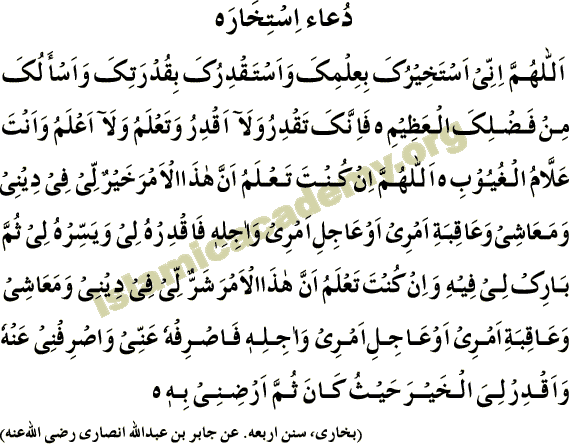
Istikhara Du'a (Click on picture to enlarge) WAY TO PERFORM ISTIKHARA: First pray Two Cycles (raka') of ritual Prayer (nafil). After finishing prayer recite this (supplication/dua') above. TRANSLATION: "O Allah! I seek goodness from Your Knowledge and with Your Power (and Might) I seek strength, and I ask from You Your Great Blessings, because You have the Power and I do not have the power. You Know everything and I do not know, and You have knowledge of the unseen. Oh Allah! If in Your Knowledge this action ------------------------------------------------ (which I intend to do) is better for my religion and faith, for my life and end [death], for here [in this world] and the hereafter then make it destined for me and make it easy for me and then add blessings [baraka'] in it, for me. O Allah! In Your Knowledge if this action is bad for me, bad for my religion and faith, for my life and end [death], for here [in this world] and the hereafter then turn it away from me and turn me away from it and whatever is better for me, ordain [destine] that for me and then make me satisfied with it."