ummtaalib
-
Posts
8,477 -
Joined
-
Days Won
773
Content Type
Profiles
Forums
Events
Everything posted by ummtaalib
-

-
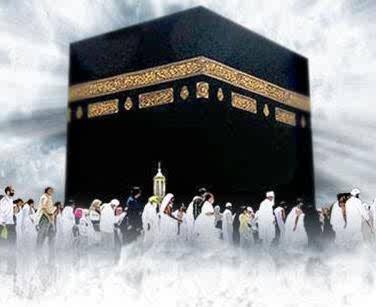
Hajj – A Beautiful Journey Vision cannot encompass this beautiful sight (the Ka’bah). Each glance return with a greater delight! Glory be to ALLAH TA’ALA for making the Ka’bah the rendezvous of the Ummah, for making Hajj the key expression of solidarity among Believers and as a manifestation of the bond of fraternity and mutual affinity. A journey full of symbolism, for it represents the soul’s journey towards ALLAH. Each stage and each aspect of the pilgrimage is replete with profound meanings about life, worship and realities of faith, especially the love and awe of ALLAH TA’ALA. An observer might wonder at the wisdom underlying the circumambulation, the running and the pelting, but the Muslim should not be concerned about the wisdoms beneath these acts. Render these acts believing them to be the Commands of ALLAH TA’ALA and that HIS remembrance will be grounded in the heart by observing these acts. The relationship of the Believer with ALLAH TA’ALA is strengthened and his/her love is tested. Without understanding the wisdom of these acts, the Muslim is in love with ALLAH TA’ALA, executes them because of the Command of ALLAH TA’ALA. All Commands of ALLAH TA’ALA are carried out because of HIS love. These acts of Hajj are permeated with love. Love overwhelms intelligence regarding Hajj. The pilgrimage take place each year between the 8th and the 12th days of Dhul-Hijjah, the 12th month of the Muslim lunar calendar. Its first rite is the donning of Ihraam. By ALLAH TA’ALA whose House (Makkah) the loving pilgrims visit, a beautiful journey begins by responding with the Ihraam at the appointed limit. During Ihraam there is a sense of humility before ALLAH to Whom faces bow in servility. The donning of the Ihraam is accompanied by the primary invocation of the Hajj, the Talbiyah: Here I am, O ALLAH, at Thy Command! Here I am at Thy Command! Thou art without associate; Here I am at Thy Command! Thine are praise and grace and dominion! Thou art without associate. The thunderous, melodious chants of the Talbiyah ring out not only in Makkah but also at the nearby sacred locations connected with the Hajj. On the first day of the Hajj, pilgrims sweep out of Makkah toward Mina, a plain just outside Makkah. As their throngs spread through Mina, the pilgrims generally spend their time meditating and praying, as our Beloved Prophet Muhammad (Sallallaahu Alaihi Wa Sallam) did on His pilgrimage in preparation for the great Day of Ara’fah the following morning. For Ibn al-Qayyim, even the tent is symbolic, put so aptly in His Qasidah Mimiyyah, “My heart is encamped in YOUR eternal plains!” That is, the human heart is sheltered within the confines of the Sacred Law, which help to protect it against all the perils in existence. During the second day, the 9th of Dhul-Hijjah, pilgrims leave Mina for the plain of Ara’fat the wuquf, “the standing”, the central cite of the Hajj. As they congregate there, the pilgrims stance and gathering reminds them of the Day of Reckoning. The irresistible draws near with HIS Mercy, HIS Majesty manifest, boasting to HIS Angels, for HE is the Mightiest, “My slaves have come to ME so lovingly, I’ll be generous and merciful and most kind to them willingly. On this sacred spot, they reach the culmination of their religious lives as they feel the presence and closeness of the Most Merciful ALLAH. This is the day of the Great Pilgrimage; a day of praise for ALLAH, a day of remembrance and repentance. The first English woman to perform Hajj, Lady Evelyn Cobbold, described in 1934 the feelings pilgrims experience during the wuquf at Ara’fat. “It would require a master pen to describe the scene, poignant in its intensity, of that great concourse of humanity of which I was one small unit, completely lost to their surroundings in fervor of religious enthusiasm. Many of the pilgrims had tears streaming down their cheeks; others raised their faces to the starlit sky that had witnessed this drama so often in the past centuries. The shining eyes, the passionate appeals, the pitiful hands outstretched in prayer moved me in a way that nothing had ever done before, and I felt caught up in a strange wave of spiritual exaltation. I was one with rest of the pilgrims in a sublime act of complete surrender to the Supreme Will which is Islam.” The Beloved Messenger of ALLAH (Sallallaahu Alaihi Wa Sallam) is reported to have asked ALLAH to pardon the sins of pilgrims who “stood” at Ara’fat, and was granted His wish. Thus, the hopeful pilgrims prepare to leave this plain joyfully, feeling reborn without sin and intending to turn over a new leaf. Just after sunset, the mass of pilgrims proceeds to Muzdalifah, an open plain about halfway between Ara’fat and Mina. In the sacred area they pray and then collect a fixed amount of pebbles to use on the following days. Before daybreak on the third day pilgrims move en masse from Muzdalifah to Mina. As pilgrims throw seven pebbles at each of these white pillars, they remember the story of Shaytaan’s attempt to persuade Ibrahim al-Khalill (Alaihis Salaam) to disregard ALLAH’S Command to sacrifice His son. A total of 70 pebbles are used to symbolically stone the Shaytaan, the throwing of each pebble being accompanied with the expression, ALLAHU AKBAR! (ALLAH is the Greatest!). This is one of the most powerful and piognant expressions of Takbir during the Hajj experience. As the pilgrims have, at this stage, finished a major part of Hajj, they are now allowed to shed their Ihraam and put on everyday clothes. On this day Muslims around the world share the happiness the pilgrims feel and join them by performing identical, individual sacrifices in a worldwide celebration of Eid-ul-Adha, “the Festival of Sacrifice”. Still sojourning in Mina, pilgrims visit Makkah to perform another essential rite of the Hajj: the Tawaaf al-Ifadah, the seven-fold circling of the Ka’bah, with a prayer recited during each circuit. The visit in it so much splendour, receiving their rewards and plenty of honour. After completing the Tawaaf, pilgrims pray, preferably at the Maqam (station) of Ibrahim al-Khalill (Alaihis Salaam), the site were Ibrahim al-Khalill (Alaihis Salaam) stood while He built the Ka’bah. Then they drink the water of Zamzam. Another, and sometimes final, rite is the Sa’i, or “the Running”. This is a re-enactment of a memorable episode in the life of Haajar (May ALLAH be pleased with her), who was taken into what the Qur’aan Kareem calls the “uncultivable valley” of Makkah, with her infant son Isma’il, to settle there. The Sa’i commemorates Haajar’s frantic search for water to quench Isma’il’s thirst. She ran back and forth seven times between two rocky hillocks, al-Safa and al-Marwah, until she found the sacred water known as Zamzam. They now return to Mina, where they stay up to the 12th or 13th day of Dhul-Hijjah. Every minute wish is granted and hearts are content. They stone the the pillars daily after the sun’s decline with a slogan of Takbir in the presence of the Divine! Their palms outstretched, hoping for ALLAH’S Mercy share! Praying and begging for HIS overflowing Mercy. When they’ve achieved at Mina all their gains, once more they fill the valleys and plains. Before leaving Makkah pilgrims make a final Tawaaf round the Ka’bah to bid farewell to the Blessed City. When the departure nears and they are certain that the bond of nearness, closeness is about to loosen. Now for ALLAH the eyes fill and swell with tears, and for ALLAH are the heavy hearts that turn into cauldrons of desire where fire does burn. The passionate sighs whose hearts are so fill with the love of ALLAH, nearly melts the lover of ALLAH in HIS glorification and remembrance! ….whilst others chant their sorrowful song: “I depart, but there remains for YOU YA ALLAH my yearning, my fire of grief is raging and burning in my heart and soul. I bid farewell YA ALLAH to YOUR House, but longing and hoping for YOUR Mercy again and again! My heart and soul is encamped in YOUR eternal plains!” Although not a legally-essential part of Hajj, the spiritual trip is not complete without a visit to Madinah and the Prophet’s (Sallallaahu Alaihi Wa Sallam) Masjid, giving the pilgrims the wonderful opportunity to greet their beloved Leader, Prophet and Messenger (Sallallaahu Alaihi Wa Sallam). Sweet Madinah, Beautiful Madinah – is rich in moving memories and historical sites that are evocative of Him as a Prophet and statesman. As pilgrims of diverse races and tongues return to their homes, they carry with them cherished memories of Ibrahim al-Khalill, Isma’il, Haajar and Muhammad (Sallallaahu Alaihi Wa Sallam). They will remember that universal concourse, where poor and rich, young and old, met on equal footing. They return with a sense of awe and serenity: awe for their experience at Ara’fat, when they felt closest to ALLAH TA’ALA as they stood on the site where the Beloved Prophet (Sallallaahu Alaihi Wa Sallam) delivered His sermon during His first and last pilgrimage; serenity for having shed their sins on that plain, and being thus relieved of such a heavy burden. The pilgrims go back radiant with hope and joy, for they have fulfilled ALLAH’S injunction to humankind to undertake the pilgrimage. Their blessed radiance has become part of their experience, forever transforming them. As they spiralled away from the heart of their world, back into the clouds, returning to the minutia of their daily life, but forever changed from the phenomenal experience. Above all, they return with a prayer on their lips: May it please ALLAH TA’ALA, they pray, to find their Hajj acceptable, and may what the Beloved Prophet (Sallallaahu Alaihi Wa Sallam) said be true of their own individual journey: “There is no reward for a pious pilgrimage but Paradise.”
-
- 1
-

-
The world is home to many religions. Some religions are very scarce whereas others are quite large. One of these religions is the religion of Islam. The religion of Islam, which was introduced to the world in the time of the Holy Prophet (PBUH), is followed by millions of people around the world. The followers of Islam are known as Muslims. The religion of Islam also has a special book which contains guidelines for Muslims which explain how they should live their lives, how they should behave and what they should do in their lives. This book is known as the Holy Quran, which is one of the four Holy Books that were sent down to the Earth by Allah himself. Three of these books have been tampered with whereas the Holy Quran remains the sole Holy Book that hasn’t been tampered with over the years and remains in the same language which it was revealed in. 5 common misconceptions about religion of IslamApart from being one of the largest religions in the world, Islam is also a religion that is very commonly misperceived by the people of this planet. Well, here are the 5 most common misconceptions about religion of Islam: 1. Islam is a religion that teaches violence Many people throughout this world think that Islam is a religion that teaches and promotes violence. This is one of the most common misconceptions about religion of Islam because that is certainly not the case. Islam promotes generosity and kindness and also advises the Muslim Ummah to behave well with others. Islam is a religion that promotes the purity of heart and is a religion that advises Muslims to make sure that their conduct does not hurt any of the people in their surroundings. 2. Islam teaches Muslims to kill non-MuslimsThere are many people who believe that Islam teaches Muslims to kill non-Muslims. However, it is quite the opposite. Islam teaches Muslims to make sure that they are kind and generous to everyone, including non-Muslims. Both Muslims and non-Muslims are creations of Allah and Allah has asked the Muslim Ummah to make sure that they do not hurt any of his creations. 3. Islam promotes the killing of women over honorIslam does not at all promote the killing of women, whether it is for honor or anything else. In addition, Islam teaches Muslim men to treat their women like queens. 4. Children have no rightsThe Quran teaches Muslims to make sure that they take care of the rights of children. The significance of a Muslim child is equal to that of a Muslim man and so are his or her rights. 5. Muslims become barbarians while at warThis is one of the many misconceptions about religion of Islam. Islam teaches Muslims to make sure that they stay on the right path while at war and do not become barbarians. Islam teaches Muslims to make sure that during war, they do not kill aged people, children, righteous people, women, do not commit treachery, do not mutilate dead bodies, do not harm animals (unless they need to do so for food), and do not harm tress or buildings. idealmuslim.com
-
Hajj Resources - all you need on Haqq-Islam Hajj is one of the pillars of Islam and for many Muslims it is the journey of a lifetime. It is therefore absolutely essential that a Muslim be prepared for this obligation in all ways. Below we provide resources, audio and articles to help you understand all about this pillar of Islam, its history and significance and Insha’Allah prepare you for your journey to the Holy lands. Please remember us in your du’as during your journey also. Preparing for Hajj A Guide For Intending Pilgrims Hajj Checklist Health Guidelines For Hajj And Umrah Correcting Our Outlook Spiritual Advice for Hajj The Internal Dimensions of Hajj Days of Hajj A Visual Guide to Hajj Ihram Hajj Map Virtues of Hajj Virtues of performing Hajj Blessed places where Duas are accepted Common Health Issues During Hajj The First Ten days of Dhul Hijjah After Hajj Virtues Related to Hajj Virtues of Makkah – pt1 Virtues of Madinah – pt1 Introduction and Virtues of Hajj Virtues of Madinah – pt2 Virtues of Performing Hajj Virtues of Zam Zam Water Virtues of Udhiyyah – Sacrifice E Books/ Resources A Simple Guide for Hajj & Umrah courtesy of Central Mosque Hajj: Merits & Precepts by Mufti Taqi Usmani Hajj and Umrah in Talimul Haq 40 Rabbana – Collection of Short Qur’anic Du’as Lectures & Audio (more on site) Advice for Hajj (Urdu) by Shaykh Abdur Raheem The 5 days of Hajj by Maulana Yunus Patel Days of Hajj, Prophet Ibrahim’s story by Maulana Yunus Patel Hajj and Qurbani by Maulana Muhammad Sindhi Last Hajj of the Prophet (pbuh) by Maulana Muhammad Sindhi Hajj and Makkah audio by Mufti Hoosen Elias Videos Ziarah of Madinah Al Munawarrah Introduction to Hajj Rulings for Ihram & Hajj/ Umrah Components of Hajj & Methodology Rulings for Rami & Qurbani Virtues & rulings of Zul-Hijjah & Qurbani
- 11 replies
-
- 1
-
-
- hajj
- hajj/umrah resources
- (and 1 more)
-
From Eid to Eid Ramadhan has departed. It was a month of patience. It was a month that called for sacrifice of desires, sacrifice of time, at the same time calling for much bodily exertion and striving. Ramadhan was followed by the joyous day of Eid. The day of Eid wasn’t a matter of taking the day off from acts of devotion and worship after a month long period of devotion, sacrifice and striving.It wasn’t just relaxation and good times – it entailed extra salah, two khutbahs and distribution of fitra. The theme of sacrifice and striving was clearly evident in this! After Eid, the optional six Shawwal fasts are rewarding and virtuous. They present another wonderful opportunity for sacrifice and striving. The fasts of the first 10 days of Zil Hajj (barring Eid) and the intensive Ibadah in these 10 holy nights is yet a continuation of the theme of sacrifice and striving. These days are also the days of the Hajj. The Hajj is one mammoth lesson in sacrifice of time, money and great physical and spiritual striving. Then Eid-al-Adha follows. Another lesson is sacrificing of time and money and striving! This is the essence of the life of a believer in this world, from start to end, it is non-stop sacrifice and striving! All of these micro occasions of sacrifice and striving prepares a Muslim for greater sacrifices, until he is ready and willing for the ultimate sacrifice, the sacrifice of his own life. Over and over, the Holy Quran repeats the theme of striving and sacrifice: “And strive (jahidu) for Allah in such an endeavour which is His right.” (22:78) “And whosoever strives (Jahada), strives (Yujahidu) only for himself, for surely! Allah is independent of the universe.” (29:6) “Did you think that you would enter Paradise while yet Allah knows not those of you who really strives (Jahada), nor knows those (of you) who are steadfast.” (3:142) “As for those who strive (Jahada) in Our ways, We surely guide them to Our paths, and surely Allah is with the good doers.” (29:69) “The (true) believers are only those who believe in Allah and His messenger and afterward doubt not, but strive with their wealth and their selves for the cause of Allah. Such are the truthful.” (49:15) “O man! You must strive a hard striving (to attain) to thy Lord, until you meet Him.” The repeated mention of the theme of striving in so many verses of the Holy Quran, indicates that the Holy Quran wishes to prepare and build the mindset of the Muslim for ongoing sacrifice and striving in this world. These is no place in a Muslim’s life for laziness, lethargy, indolence, carelessness, negligence and heedlessness. In fact, nothing is achieved even of worldly benefit, without effort, striving and sacrifice, then how can the endless bliss of the Hereafter be achieved without it, merely on wishful thinking or pious hopes? In fact the fulfilment of every order and command entails striving and sacrifice. Abstaining from sin and evil also requires striving and sacrifice of ones desires. This is referred to as Mujahada or Jihad-an-Nafs – the fight against desires. This striving against oneself is obligatory upon every Muslim male and female. The self of man calls towards transgression, preference of the world, and the desires and love of pleasures. But Allah calls to fear of His punishment, awe of His Might and great rewards for following His commands. “And as for the one who fears standing in front of His Lord and restrains himself from evil desires and lusts, verily, Paradise shall be his abode.” [79:40-41] The Messenger of Allah (sallallahu alayhi wasallam) also said: “The MUJAHID (one who strives) is actually he who strives against himself (his desires) for the sake of Allah, and the MUHAJIR (one who emigrates) is he who emigrates from sin.” (Sahih Ibn Hibban No. 4862) Many a time we find a person saying: ‘I have tried many times, to turn my soul away from committing these acts of disobedience but my efforts have failed.’ Another person says: ‘I tried to get myself to perform acts of obedience (to Allah), righteous deeds, but I am not able to remain firm upon them, I leave them so quickly.’ And yet another says: ‘I have repented from evil actions and promised myself that I would not commit them again. However after the passing of time and being occupied much it did not take long before I returned to them. In fact I fell into others and increased in them.’ If we were to look at the condition of these people we would realise that the main reason for them not being able to dominate and control their souls and not being able to remain firm upon what they have promised themselves is their lack of sacrifice and striving against their souls. In fact they have left the steering wheel of the soul so that it leads them wherever it wills. The soul is such that if it is not fought against and controlled it commands its possessor to commit evil and obscene deeds. This striving is all-encompassing and entails striving to learn the teachings of Islam, striving to make oneself act in accordance with what one has learned, striving against shaitaan to ward off the corrupt desires that he stirs in the heart, striving to bear patiently the difficulties involved in calling people to Allah and the insults of people. Serving others and fulfilling their rights also requires striving and effort. A man asked Nabi Muhammad (sallallahu alayhi wasallam): “Should I join the jihad?” He asked, “Do you have parents?” The man said, “Yes!” The Prophet (sallallahu alayhi wasallam) said, “Then strive by serving them!” (Sahih Al-Bukhari No. 5972) The life of the Nabi Muhammad (sallallahu alayhi wasallam) was a life of constant sacrifice and striving to call mankind to Allah, to convey to them the clear message of Islam, to save them from hell fire and to liberate them from the yokes of every form of tyranny. People are despondent about the pathetic plight of the Muslim Ummah and how they are being massacred with impunity in many troubled spots. The reality of the matter is no amount of emotional outbursts, without action and commitment from the Muslims is going to achieve anything. Until the Muslim Ummah – all of its members – everyone of US – have not mastered the lesson of sacrificing and striving at every required moment, there can be no success. When feeble and frivolous desires are not being sacrificed, how will big sacrifices be given, which is a requirement for an easy and quick entry into Jannah? There are no short cuts to Jannatul-Firdaus … It is an uphill path that has to be climbed with determination, sacrifice and striving. Those who make it to the summit will celebrate. Even the success on the actual battlefield is an illusion without learning to strive and sacrifice. If not, the behaviour of Muslims will be characterised even there, by acts of emotionalism, irrationality, fear, cowardice, weak resolve, confusion, fleeing, etc. When a person is not able to struggle against his own self and overcome it in that which Allah commands, he will not be able to fight against the external enemy, nor overcome him. How can he, who is defeated and weak, both mentally and spiritually, and cannot even gain control over his own feeble soul, do so?
-
- 1
-
-
-
-
Arrogance vs Self Dignity https://www.youtube.com/watch?v=Dysb9EBjAMI&list=UUA8Vjja9LNxc1ZeebVsrmOw
-
Further Information Death, Wills & Inheritance in Islam - Shaykh Ahmed Ali In this talk, Shaykh Ahmed Ali talks about a wide variety of other things too; including fulfilling the rights of the believers, status of women in Islam & more. Importance of Islamic Will and Inheritance Shaykh Khabbaab Ahmad DB http://www.youtube.com/watch?v=0XSgzmaKxuo The importance of wills and inheritance Sheikh Mumtaz ul Haq On YouTube http://mfi.re/listen/m46ngduar1t3tt2/The_importance_of_wills_and_inheritance-_Sheikh_Mumtaz_ul_Haq.mp3 Inheritance, the full detail This is a recent lecture by my Beloved Father, Moulana Haroon Abasoomar (may Allah protect him) in which he has highlighted -in detail- all that needs to be known on this crucial topic. Al-Miftah Download here Mufti Abdur Rahman Mangera Some Laws on Death and Inheritance Zamzam Academy Common Shortcomings committed in Inheritance (Meerath) By Mufti Nazar Kaleem Qudsee Al-Qasmi Central-Mosque Preparing an Islamic Will Islamic_Will_1stEthical.pdf Islamic Inheritance Law General Rules and Shares Muhammad Razi InheritanceLaw_0_4.pdf Islamic Law of Inheritance by Dr. Abdul Hai Arifi (r.a) IslamicLawOfInheritanceByDr.AbdulHaiArfir.a.pdf Inheritance in Islam Muhammad Imran Muhammad Read Online Basic Inheritance Chart Al-Islam Leaflet - Basic Inheritance Chart.pdf Taqseem -e- Wirasat Ki Ahmiyat (URDU) By Shaykh Mufti Abdur Rauf Sakharvi Read Online Ahkaam-e-Miraas aur Tareka Taqseem-e-Miraas (URDU) Ilm_Ul_Faraiz_version_1.pdf
-
Orphans & Inheritance All children have the right to be clothed fed and protected until they are adults, to receive love and affection from their parents and to be treated as equally as their siblings. These rights do not end when they become orphans. Their caretakers are primarily responsible for protecting orphans and instilling the values of the Qur'an and an appropriate reverence for Allah. The Qur'an says: Therefore, as for the orphan, do not oppress (him).[93:9] As for the inheritance of the orphans, warnings of grave consequences have been mentioned when their wealth is devoured: Give unto orphans their wealth. Exchange not the good for the bad (in your management thereof) nor absorb their wealth into your own wealth. Lo! that would be a great sin.[4:2] Lo! Those who devour the wealth of orphans wrongfully, they do but swallow fire into their bellies, and they will be exposed to burning flame. [4:10]
-
Good article with lessons, Alhamdulillah!
-
Registering An Islamic Will in Canada Al-Madhabah Answered by Shaykh Yusuf Badat Question: Assalamu Alaikum, I hope this question reaches you in the best Iman and health Insha Allah. I wanted to know how to obtain a copy of an Islamic Will and how to have it registered in a way recognized by the Canadian authorities. Are there some things I need to know or do to ensure an appropriate Islamic will in Canada? This information will be very appreciated. Answer: Jazakumullahu Khairan / Thank you for your question. It is extremely important to have a Will prepared and written. The reasons for this amongst others are as follows: 1. The Prophet Muhammad (pbuh) has emphasised the preparation of a Will at one’s earliest opportunity. According to a narration reported by Abdullah ibn Umar (ra), the Messenger of Allah (pbuh) said: “It is not befitting for a Muslim who has something to make a Will of, to remain for two nights without having one’s last Will and testament written and kept ready with one.” (Sahih Bukhari) 2. If a Muslim does not have a Will in a non-Muslim country such as Canada, the distribution of one’s wealth after death will not be done in accordance to Islamic laws. For example according to the Canadian SLRA (Succession Law Reform Act) if one dies as an intestate (without a written will), the Canadian authorities will distribute the wealth of the deceased as follows in order of merit(which does not meet islamic requirements): Firstly the preferencial share of upto $200 000 will be given to the spouse that remains behind and the remaining amount distributed equally to the children of the deceased. If one has no spouse, the wealth will be divided equally to all the children. If one has no spouse or children, the wealth is inherited by parents. If one has no spouse, children or parents, the wealth is given to brothers and sisters. If one has no spouse, children, parents, brothers, sisters or any other inheritors, the wealth is taken by the government. It must be borne in mind that the distribution of one’s inheritance with allocated portions is specified by Almighty Allah in the Holy Quran. A Muslim’s wealth, estate and assets are to be divided amongst the eligible heirs in accordance to these stipulated shares. A Muslim adhering to the injunctions of Islam cannot choose to distribute his or her assets the way one pleases. Rather the wealth of the deceased is to be divided according to the shares specified by Almighty Allah. Almighty Allah says in the Holy Quran regarding this; “There is a share for men and a share for women from what is left by parents and those nearest related, whether the property be small or large, legally fixed shares by Allah” (Holy Quran 4:7) It is important to understand that, while living in a non Muslim country such as Canada, one can still have an Islamic Will prepared and registered, that is also recognized by the Canadian law. With this method one is assured that one’s inheritance is distributed amongst the heirs that meet both Canadian and Islamic law. Some basic Islamic requirements are as follows: Firstly, all debts of the deceased are to be paid off Secondly, funeral expenses are to be paid Thirdly, any bequest are to be fulfilled from one third of the wealth (bequest can only be allocated to one third of one’s wealth. Bequest cannot be made for inheritors designated by Almighty Allah) Finally, the remaining wealth is to be divided according to the allocated shares and designated heirs as per the injunctions of the Holy Quran (refer to an Islamic scholar for your individual cases). Usually, a Will that meets Canadian law comprises of the following particulars: Name Name of Executor/s Asset Distribution Signatures Witnesses Dates Our advice to you is to consult both legal experts and Islamic scholars to help prepare your Will. It is also advisable to appoint executors (individuals, organization or trust company) along with witnesses. Thereafter, legal experts will help you register your will and make it an official document recognized by the Canadian government. A sample Islamic Will that can meet both Canadian legal and Islamic requirements can be found by CLICKING HERE. It will be advisable to take this document to both the Islamic scholar and also a legal expert as you prepare your Islamic Will. And Allah Knows Best
-
ISLAMIC WILL (According to English Law) Inter-Islam The following is an Islamic will and conditions for the will to be valid have also been listed. Those who require a copy of this will are free to make a printout of it. WASIYYAT According to the Shariah, Wasiyyat is permissible for non-heirs. Wasiyyat in favour of an inheritor is not permissible. Clause No.5 (iii) of the Islamic Will makes mention of Wasiyyat. If the testator makes no Wasiyyat, "section (iii) of clause No.5" should be deleted by striking a line across it. All signatories should identify the deletion with their full signatures. If the testator wishes to make Wasiyyat, the nature and description of the Wasiyyat should be set out on a separate sheet of paper. On the top of the sheet of the Wasiyyat paper, write: SCHEDULE A - WASIYYAT When making out the Wasiyyat, bear in mind the following: (a). A Wasiyyat cannot be made for any Islamic heir as such Islamic heirs inherit automatically in the estate of the deceased. (b). A Wasiyyat is valid only one third of the balance of the estate after payment of funeral expenses and debts. ©. The testator and the witnesses must also sign The Wasiyyat paper, “viz., Schedule A,”. CONDITIONS THAT HAVE TO BE FULFILLED IN ORDER TO RENDER THE WILL (WASIYYAT) VALID AND LEGAL (1). The testator (i.e. the one who makes a Will) and two witnesses must sign each page of the will. (2). The witnesses must not be under 14 years of age. They must be 14 or over. (3). The witnesses may not be beneficiaries or spouses of beneficiaries. For the purpose of signing Wills, `beneficiaries' include executors, administrators and guardians. (4). All signatories must be present throughout the signing process. No signatory may leave the room until all signatories have signed each page. (5). The date of signature should be inserted on the last page by the testator. (6). The signatures (full signatures) of the testator and witnesses must identify any deletion, addition or alternation as described in No.4, above. WASIYYAT (ISLAMIC LAST WILL) (1). I, the undersigned, ___________________ hereby cancel all former testamentary dispositions of whatsoever nature hereto formed by me, and declare this to be my last wasiyyat. (2). I hereby nominate and constitute, (i) ____________________________, (ii) ____________________________, (iii) ____________________________, jointly and severally, to be the Executor(s) of my Will and Administrator(s) of my Estate, granting to them all such powers allowed in law, especially the Power of Assumption. (3). My said Executor(s) and Administrator(s) shall not be obliged to furnish any security to the Master of the Supreme Court for the due and proper administration of my estate as laid down by the provisions of Act 66 of 1965 or any law governing the administration of estates. (4). I hereby direct that my said Executor(s) and Administrator(s) proceed with the distribution of my Estate in the following order of priority as commanded by Islamic Law: i. Payment for my funeral expenses ii. Payment of all my debts iii. Payment of the Wasiyyat as set out hereby iv. Distribution of the residue of my Estate to my Islamic heirs in accordance with Islamic Law. (5). My said Executor(s) and Administrator(s) shall endeavour to ascertain what amount, if any, is due by me in respect of my religious liabilities and obligations in accordance with the tenets of the Islamic faith until the date of my death; and for the guidance of my Executor(s) and administrators, I hereby declare that at present my liabilities on this respect are as follows:- i. Unpaid Zakaat (Annual Poor Rate) ii. Unaccomplished Hajj iii. Un-kept Sawm (Fast) iv. Unperformed Salaat v. Unfulfilled Compensation (Kaffaarah) vi. Un-discharged Vow (Nazar/Mannat etc). vii. Un-discharged Sacrifice of animal (Adh'hiyah / Qurbaani) or other Waajib (Lawful obligation) viii. _________________________________ ix. ___________________________________ x. ___________________________________ and accordingly I hereby direct and make Wasiyyat that such amounts shall be paid as a first charge to such persons or institutions / establishments as my Executor(s) and Administrator(s) shall determine to be entitled thereto according to the laws of Islam. The total amount payable under this clause shall not, however, exceed thirty-three and one-third per cent of the net value of my estate after the payment of all my lawful obligation, and all debts contracted by me during my life time, including Mahr (Dowry), Funeral expenses and expenses connected with the administration of my estate. (6). In the event of any balance remaining out of the thirty three and one-third per cent of the net value of my estate as mentioned in Clause 5 hereof, then I hereby make Wasiyyat according to the laws of Islam and give and bequeath (leave by Will), as free and absolute legacies, to the following charitable institution / establishments or persons out of such balance, the amounts as are set opposite their respective names, as follows:- (e.g. Darul-Uloom, Holcombe Nr Bury, BL8 4NG, U.K.) i. _________________________________________ __________ ii. _________________________________________ __________ iii. _________________________________________ _________ (7). It shall be the duty of my Executor(s) to determine who are my rightful heirs in accordance with the Islamic Law and what share each is entitled to receive. I do hereby nominate such persons in the shares determine, to be the heirs of the whole of the residue of my Estate, wherever situate, in the U.K., or elsewhere. (8). A Certificate stating the rightful heirs in my Estate, showing their respective shares therein in accordance with the Islamic Law issued by the Mufti of any recognised Islamic theological body, or by any certified Aalim (qualified scholar of Islamic Law), shall be accepted for all purposes as a lawful document, determining my rightful heirs. (9). In determining my heirs, my Executor(s) or any Muslim Judicial Council / Body or any certified Aalim of the Islamic religion shall take full cognisance of any marriages lawfully contracted by me anywhere in the world according to the tenets of the Islamic faith. (1O). I hereby direct that any share under this Will hereto falling to a female shall be paid to and fall and belong to her sole, absolute and exclusive property, and be excluded from the community of property that may now or hereafter exist between her and any husband she has married or may marry and shall be from the jus mariti and right of administration ordinarily to him accruing whether by virtue of the law of community of property or otherwise. The receipt alone of any female inheritor in my Estate, without the assistance of her husband, shall be a good and sufficient discharge to my Executor(s) / Administrator(s) therefore. (11). It is my express desire that my Executor(s) Administrator(s) shall wind up my Estate as promptly as possible until the final approval of the liquidation and distribution account. Any business carried on in my name at the time of my death, or any other assets belonging to my Estate, by arrangements between the heirs, be taken over by any or all of them. Any inheritance accruing to a minor child in terms hereof shall be retained by my Executor(s) Administrator(s) in trust for the benefit of such a minor until that minor attains the age of majority as determined by Islamic Law, in which event my said Executor(s) / Administrator(s) shall pay over to the said minor his / her share of the inheritance, and may be utilised to acquire any business or assets in the Estate, or any share in such business or assets, or any investment deemed suitable by my Executor(s) / Administrator(s) provided that the investments are in accordance with Islamic Law. And my Executor(s) / Administrator(s) are authorised in their discretion to apply the income and in case of need a portion of the capital of the Trust assets for the maintenance, education and general welfare of the beneficiary of the Trust provided that any such application of income is in accordance with the Islamic Law. No minor heir shall be entitled to participate in any discussion or matters affecting my Estate, without the approval of my Executor(s) / Administrator(s). If no agreement is reached between my heirs within a reasonable time, all Estate assets shall be realised and the proceeds distributed in the manner aforementioned. My Executor(s) /Administrator(s) shall have the right to carry on and continue any business carried on in my name in partnership or otherwise, at the time of my death, so long as they may consider it desirable for the benefit of my heirs in their absolute discretion. (12). In the event of any one or more of my said Executor(s) / Administrator(s) predeceasing me, or dying during his term of Office or declining to act, then the remaining or surviving Executor(s) / Administrator(s) shall be authorised to act alone. Furthermore in the event of all such Executor(s) / Administrator(s) predeceasing me or dying during his term of Office or declining to act, then I declare that any Islamic Judicial body shall be authorised to appoint one or more Executor(s) / Administrator(s). (13). My said Executor(s) / Administrator(s) shall not be required to pay any minor's inheritance into the Guardian's fund, nor shall they be required to furnish any security to the Master of the Supreme Court for the due administration of the inheritances due to such minors. (14). My said Executor(s) / Administrator(s) shall be entitled to make reasonable periodical payments for the proper maintenance, education and support of such heir, and to deduct such payment from the inheritance of such heir. (15). I hereby direct that my body be buried within the town / country that I die and must not be moved to another country. (16). I hereby direct that the least possible expenses be incurred in my shroud, coffin and other burial expenses. (17). I hereby direct that a certificate issued by a competent Islamic Judicial body or by any qualified Aalim in Islamic Law shall be binding and conclusive as to the aforesaid Islamic Law and the distribution of my Estate. Note: An Aalim in Islamic Law for this purpose will be any man recognised as a qualified Aalim by any Islamic Judicial body. (18). I hereby direct that the Wasiyyat be examined by an Islamic Judicial body or by any qualified Aim described in no. 17 above, and a certificate as to the validity of the Wasiyyat in Islamic Law be obtained from the Islamic Judicial body concerned. (19). I hereby direct that if the Wasiyyat be in conflict with Islamic Law, the Islamic Judicial body concerned in examining this Wasiyyat will have the right to annul the Wasiyyat, the whole of it, if the whole be in conflict with Islamic Law or annul that portion of the Wasiyyat which conflicts with Islamic Law. THUS DONE and EXECUTED at _______________ this ___________ day of _______________ 19 ______ corresponding with the Islamic _____________________ day of __________________ 14_______ in the presence of the subscribing witnesses, who signed in each other's presence, all being present at the same time. WITNESSES: (i) ____________________________ (ii) __________________________ TESTATOR: _____________________________________________________________
-
Guidelines on Preparing a will and testament Islamically Answered by Shaykh Muhammad ibn Adam al-Kawthari Can you please provide me with general guidelines that would help me prepare my last Will and testament according to Islamic law? Answer: In the name of Allah, Most Compassionate, Most Merciful, Writing and preparing a Will is undoubtedly very important, especially in non-Muslim countries, insuring that upon death, ones wealth and assets are distributed according to Shariah. There are a number of Islamic texts, both in the Quran and Sunnah, which point to the importance of Will-making, for example: Sayyiduna Abd Allah ibn Umar (Allah be pleased with them both) narrates that the Messenger of Allah (Allah bless him & give him peace) said: It is not befitting for a Muslim who has something to make a Will of, to remain for two nights without having ones last Will and testament written and kept ready with one. (Sahih al-Bukhari, no: 2587) The narrator of this Hadith (Abd Allah ibn Umar ibn al-Khattab) stated after hearing this from the Messenger of Allah (Allah bless him & give him peace): I did not let even one night pass by except that my Will would be kept by me. (Musnad Ahmad, 2/4) Making a Will becomes even more important in non-Muslim countries, such as the United Kingdom and US. The reason being is that, failing to leave a valid written Will can result in the law of the land deciding on how your estate is to be distributed, which obviously will not be in accordance with Shariah (Islamic law). Therefore, it is essential that all Muslims leave a valid written Will. Those who have, as yet, not made a Will should haste and prepare a Will. Writing a Will is not only for old people, rather all those who have reached puberty should quickly get their Will prepared, for there is no guarantee of when one will die. Below are simple and brief guidelines with regards to preparing and writing a Will in the West: The first and foremost aspect worth noticing here is that many Muslims are mistaken in believing that, writing a Will means distributing ones wealth and estate amongst the inheritors during ones lifetime. This is incorrect, as making a Will does not mean one must divide ones wealth amongst the various inheritors in ones life; rather, one must merely stipulate in the Will that upon my death, my executors will distribute my wealth according to Shariah. One may also state that this will be determined by a local Muslim scholar or Mufti, who will be contacted and appointed by my executors upon my death. The reason behind this is that the inheritance portions have been determined and allotted by Allah Most High in the Quran. These portions vary according to who is alive at the time of ones death. Death with leaving parents behind will differ from passing away after the parents have passed away, in that the inheritance portions will be different in both cases. As such, one cannot determine in ones lifetime as to how much percentage of ones wealth will be exactly allocated to each individual, for one is unaware who will be alive at the time of ones death. Even the death of one person can make a big difference in the division and distribution of the estate. The beauty of Shariah is its simplicity and certainty. When you are writing your Islamic Will, you do not have to try and figure out which of your relatives will still be alive when you die in order to make sure that they will receive something. Whoever administers your estate will ascertain (in collaboration with a knowledgeable scholar) which of your relatives are still alive and what fixed shares they are automatically entitled to inherit by applying the criteria of Shariah. Moreover, it is unlawful and invalid to make a bequest (Wasiyya) in favour of an individual who automatically is entitled to receiving a share of the estate, such as ones spouse, children and parents, etc. The Messenger of Allah (Allah bless him & give him peace) said in his historic sermon (khutba) of his farewell hajj (haj al-Wada): Verily Allah has given each rightful person their right, thus there is no bequest in favour of a inheritor. (Sunan Tirmidhi, no: 2120, narrated by Sayyiduna Abu Umama al-Bahili) The meaning of this Hadith is that Allah Almighty has already fixed and allotted the shares of those who are entitled to inherit from ones estate. As such, if one was to make a Will in their favour, one will be going against the shares fixed for them in the Quran and Sunnah. However, if one wished to make a bequest/Will for a non-relative, or for a charity, then this would be allowed (and rewarded), but only up to a third of ones total wealth. The remaining two thirds will be left to be distributed amongst the relatives according to the fixed shares prescribed by Allah Most High. If one does not make a bequest of up to one third of the estate, then all of the estate will be divided between the surviving relatives. The Messenger of Allah (Allah bless him & give him peace) forbade from making a bequest of giving ones wealth in charity which is more than one third, and regarding a third also, he stated: And a third is also more (although permissible). (Sunan Tirmidhi, no: 2116) The second point to remember here, which is very important, is that one must distinguish between a bequest/Will (wasiyya) and a gift (hiba). Many people fail to differentiate between the two, thus a grave error is committed. What a person gives to another in ones lifetime is considered a gift whilst attributing the giving of something after ones death is a bequest or Will (Wasiyya). For example, if I give my house to a friend whilst I am alive, then that will be a gift, but if I was to say that my friend will take ownership of my house after I pass away, then that is a bequest. At times, one would like to distribute ones estate amongst the children whilst one is alive. This will be valid provided it is given as a gift and not a bequest, because to make a bequest (or Will) for a relative who already qualifies to inherit is invalid, as mentioned previously. As such, if one desires to distribute the estate amongst the children whilst one is alive, then it does not have to be in accordance with the Shariah laws of inheritance, for it is merely a gift. However, the question arises as to whether it is necessary to distribute the estate equally between the children? The answer to this is that it is permissible to give the male children twofold of that given to the female children, as it would have been distributed as inheritance. It is also permissible to give all the children, male and female, equal shares. However, to give less than this to the daughters or to completely deprive them of any share, or to be unjust in the distribution of the wealth among the sons, without a valid Shari reason, is considered to be blameworthy and sinful. One will be sinful for favouring one child over the other, although the gift will stand as valid. Yes, if there is an Islamically valid reason, such as one child being extremely disobedient or involved in open sinning, it would be permitted to give him/her less. (See: Radd al-Muhtar) A point worth noting here is that Islamically a gift is only valid and complete when the one to whom the gift is given, takes full ownership and possession of the item. Merely, registering it on ones name is of no consequence in Shariah, hence the gift will be considered invalid. The possession in houses and properties will be established by the giving of keys, removing of furniture, and leaving no obstacles for the one whom the gift is given to come and reside in the property. Many times it is observed that the father only verbally says that this is your house, but he himself resides in the house and it is considered to be his. This will not be a valid gift. A gift is such that if the son was to say to the father: you must move out, he moves out without any hesitation, and it is completely understood to be the sons house. Thirdly, there is the issue of the husband and wife. If the house is solely owned by the husband, then upon his death, it would be distributed among all the inheritors. Many times it is observed that years pass by after the husbands death and the inheritance is not distributed. The deceaseds wife and some children keep residing in the house without even thinking about distributing it. This is a grave sin committed by all those who overlook this great injunction of Shariah. If the house was jointly owned by the couple, then in the event of one of the spouses death, half of the house will remain in the ownership of the other spouse, and the remaining half will be distributed. Thus, it would be wise for the couple to have joint ownership of the house. This also should be made clear to all the children, for being negligent in this regard brings about disputes and problems. Note that if the inheritors give their consent in their mother or father residing in the house, then this is permissible. However, what is necessary is that the shares are distributed, and then they may give their consent in allowing their mother or father to reside. However, one must be extremely precautious here, for all the inheritors must consent to this from their heart and must not be pressurised into it. If even one inheritor disagrees, his/her share will have to be given to him/her. The fourth point to note with regards to inheritance is that at times the deceased makes a unlawful and invalid bequest, such as saying that, my eldest son will take such and such property, the other such and such, my daughter will take the house, etc. In this case, it will be unlawful (Haram) and a grave sin for the relatives to distribute the inheritance according to the bequest made by the deceased. The estate must be distributed in accordance with the Quran and Sunnah. Finally, one must make sure that ones Will meets the requirements of the law of the land, for failing to do this may well render ones Will invalid. So in order to ensure that ones assets are distributed in accordance with the Shariah after ones death, one must write a Will, and that Will must comply with the requirements of the country one is residing in. Therefore, it is advisable that one seeks the advice of an expert practicing Muslim solicitor. Having understood the above general guidelines regarding Will-making, let us now look at how an Islamic Will is written. Normally when making a Will, one would stipulate the following: Revoking of all previous Wills. Naming the executors of the Will. Payment of funeral and burial expenses. Payment of all debts connected to the servants of Allah: After ones death, paying off ones debts is given primary consideration. Thus, ones leftover wealth will first be utilized in repaying the debts, and then the remainder, if any, will be distributed amongst the inheritors according to the Shariah. Note that this is with regards to debts payable to the servants of Allah (and not with regards to liabilities due by Shariah, such as unpaid Zakat, etc). Also, there is no condition here of it being from only one third of ones wealth. Payment of any bequest (Wasiyya): This refers to any religious liabilities, such as unpaid Zakat, Fidya for Salat, etc, and also anything that one would like to give in charity. However, the condition here is that this is only permissible from one third of ones wealth. It is worth remembering here that along with ones written Will, one should have a separate document stipulating the number of unperformed prayers, missed fasts, unpaid Zakat, unperformed Hajj, any other religious obligations and debts payable to the servants of Allah. One must strive in accomplishing these obligations in ones life, and make the necessary amendments to the document whenever an obligation is fulfilled. For example: One had 500 unperformed prayers. In such a case one should stipulate this in the document. Thereafter, whenever, a prayer is made up, it should be deducted from the total of 500. This important document should be attached with the Will in order to let the relatives know of ones obligations and liabilities after ones death. Distribution of the remaining two thirds of ones estate (or full, if one does not include no. 5) among the inheritors in accordance with Sunni Islamic law, and in consultation with a qualified local scholar or Mufti. Signing of the document by both the Will-maker and the relevant witnesses. Finally, the responsibility of the relatives is that they haste in distributing the estate of the deceased as quick as humanely possible. Being negligent in this regard will be highly sinful. All the inheritors will be jointly responsible for this distribution. Also, when totalling the deceaseds assets, the inheritors must include every big and small item left behind by the deceased at the time he/she passed away, which includes Properties, house, car, financial instruments, cash, gold, silver, clothes, furniture, etc. At times, people overlook small items and give them away in charity without the prior consent of all the inheritors, which is unlawful (haram). The permission and full consent of all the inheritors must be sought before giving away any item to anybody. I hope the above has been helpful in simplifying the laws governing the great responsibility of Will-making and inheritance. May Allah Almighty forgive our shortcomings and keep us steadfast on his Deen, Ameen.And Allah knows best. Muhammad ibn Adam al-Kawthari Darul Iftaa, Leicester, UK
-
YOUR WILL – A FINAL ACT OF DEFIANCE OR OBEDIENCE… Jamiatul Ulama of Gauteng “Unto Allah do we belong and unto Him is our return” — these are the touching words which will be murmured by strangers, friends and relatives upon our imminent demise. Not only do we return to Allah, our wealth which He had blessed us for a limited duration also returns to Him. We had come empty-handed into the World and empty-handed we shall return. Allah, Most High becomes the sole owner of all our properties, businesses, furniture, vehicles, bank accounts, investments, gold coins, jewellery, crockery and even the very clothing we are wearing the day we die. Nothing and nothing goes into the grave with us except a pocket-less kafan. Allah Most High being Most Kind and Merciful has given the owner of the wealth permission to bequeath one third conditionally to others. What these conditions are, could be learnt from reliable Ulama. The other two thirds have to be distributed in accordance to Allah’s Commands. Please, no ifs or buts. No “he worked harder and she deserves more”. No trying to control the destiny of Allah-given wealth from the grave. And please, no fighting amongst offspring. Let Daddy/Abba/Papa go in peace with a last act of obedience to Allah. Do not pressurise him not to defy Allah by making his own will. Kindly find for your convenience an Islamic Will with this issue of The Shariah. Every baaligh person should sign it and keep it safe. At most it will take an hour to read the will and to sign it. This one hour could make all the difference between your children fighting in courts and consuming Haraam for the rest of their lives. WHAT YOU HAVE TO DO TO RENDER THE WILL VALID AND LEGAL 1) The testator (i.e. the one who makes a will) and two witnesses must sign each page of the Will. 2) The witnesses must not be under 14 years of age. They must be 14 or over. 3) The witnesses may not be beneficiaries or spouses of beneficiaries. For the purpose of signing Wills, 'beneficiaries' include the executors, administrators and guardians. 4) All signatories must be present throughout the signing process. No signatory may leave the room until all signatories have signed each page. 5) The date of signature should be inserted on the last page by the testator. 6) Any deletion, addition or alteration must be identified by the signatures (full signatures) of the testator and witnesses as described in No. 4, above. IF YOUR MARRIAGE IS REGISTERED IN COMMUNITY OF PROPERTY If by some misfortune you have registered your marriage in community of property, the Islamic Will will not be valid in terms of non-Muslim law. However, if for some reason you have cancelled or cancel your community of property contract, you can renew the registration of your marriage, if you so desire. When doing so, first enter into an Ante Nuptial Contract. Such a contract will enable you to make an Islamic Will which will be valid even in terms of the law of the country. Since it is compulsory according to the Shariah to distribute the deceased's estate in accordance with the Law of the Shariah, Muslims should make out an Islamic Will even if their marriages have already been registered in community of property. Although in this case the Islamic Will will not be valid in terms of kuffar law, nevertheless the testator should advise and instruct his Islamic heirs to fear Allah Ta'ala and to act in accordance with the Islamic laws of inheritance in the distribution of the estate. After the non-Muslim law has taken its course, the Islamic heirs must arrange a proper re-distribution of the deceased's estate to conform with the Command of Allah Ta'ala. WASIYYAT According to the Shariah, Wasiyyat is permissible for a non-heir. Wasiyyat in favour of an inheritor is not permissible. Clause No.5 (iii) of the Islamic Will (which is an insert with this edition of ‘The Shariah’) makes mention of Wasiyyat. If the testator makes no wasiyyat, section (iii) of clause No.5 should be deleted by striking a line across it. All signatories should identify the deletion with their full signatures. If the testator wishes to make wasiyyat, the nature and description of the wasiyyat should be set out on a separate sheet of paper. On top of the sheet of the Wasiyyat paper, write: Schedule A — Wasiyat (see sample form below) When making out the Wasiyyat, bear in mind the following: a) A Wasiyyat cannot be made for any Islamic heir as such Islamic heirs inherit automatically in the estate of the deceased. b) A Wasiyyat is valid in only one third of the balance of the estate after payment of funeral expenses and debts. c) The Wasiyyat paper, viz., Schedule A, must also be signed by the testator and the witnesses. The Masaa’il of gifts 1) A gift is only valid in the Shariah, when physical possession occurs. 2) One of the greatest problems is that after the demise of a person, people claim that “he gave it to me while he was alive”. Understand well that unless physical possession was not taken, it is an invalid gift. 3) Physical ownership means that the receiver is totally free to dispose independently with whatever has been gifted to him. 4) If such ownership was not established then all the heirs will inherit. EXAMPLE OF A WASIYYAT FORM (This will be placed as an annexure to your Will) SCHEDULE A – WASIYYAT I, _____________________________, hereby make Wasiyat that one third of my wealth be distributed for: 1. Salaah Fidyah (State how many Salaats, or how many years of Salaat. This will naturally be updated regularly as one performs the Qadha-e-Umri) 2. Fasting Fidyah (same as for Salaat) 3. Qurbani (state how many Qurbanis) 4. Haj-e-Badal (If Fardh Hajj was not made) 5. Building of Masjid 6. Construction of borehole 7. Eesaale-Thawaab to person (name) 8. Eesaale–Thawaab (Institution name) Testator:______________________ Witness 1: ____________________ Witness 2: _____________________ DATE: _________________________ Note: The above points are merely examples. One may have only some of the above and perhaps even add more than what is stated above. Download a copy of the Jamiat will will pdf jamiat.pdf
-
An Introduction to Inheritance in Islam Shaykh Muhammad Saleem Dhorat (Hafizahullah) A simple, concise and beneficial leaflet produced by the Islãmic Da'wah Academy: introduction_to_inheritance.pdf Last Will & Testament - Islamic Da'wah Academy Last Will.pdf
-
الوصیة Al-Wasiyyah (Bequest/Will) A will is the authority given in writing by a person before his/her death that a certain portion of his property be given to someone, or pay his loans, or hand over to his successor and his children. Making a will is highly recommended in Islam. It is mentioned in the Holy Qur’an in Surah Al-Nisa’a: "The shares will be distributed after the payment of legacies (he may have bequeathed) or debts (which is left behind by the deceased)." (Qur'an 4:11-12) Also in the Hadith of Holy Prophet (SAW) reported by Ibn Umar (RA) that Holy Prophet sallallaahu 'alayhi wasallam said; ‘it is not permissible for any Muslim who has property for wasiyyah that he stayed two nights without having a written wasiyyah with him’. [bukhari and Muslim] Masaa'il (Rulings) Related to Making a Will [Note: I'll only be posting those masaa'il related directly to making a will. All masaa'il other than those will be skipped] 1. When a person has neither heirs nor creditors and he makes a Wasiyyat for all his wealth to be contributed as he directs, then such a Wasiyyat will be valid. 2. The Wasiyyat will be valid only if the Musi (the one who makes the bequest) is sane and an adult. 3. The subject of Wasiyyat should be an object or a right which can be owned, e.g. a fixed property, a vehicle, garments or the right to live in a house for s specific time, e.g. 5 years. If a right (i.e. a right which is valid in the Shariah) is bequeathed, the asset (e.g. house) will remain the property of the heirs while the beneficiary of the Wasiyyat will enjoy the right of occupying the house for whatever time specified in the Wasiyyat. 4. A Wasiyyat in favor of an heir is not valid. However, if all adult heirs uphold the Wasiyyat it will be valid. But, nothing will be taken from the shares of minor heirs to fulfill the Wasiyyat in excess of one-third which the adult heirs have accepted to uphold. 5. A Wasiyyat for a non-Muslim is valid although there are no ties of inheritance between Muslims and Non-Muslims. [Kitaabul Meerath by Majlisul Ulama of South Africa, pages 42-43 ] The Kinds of Wasiyyat There are four kinds of wasiyyat: Wajib, Mustahab, Jaa-iz and Haraam. Wajib Wasiyyat (Compulsory) 1. It is obligatory for a person to make a wasiyyat if he has liabilities to discharge. He should declare his liabilities verbally to witnesses or reduce these to writing so that rights of others are not plundered or lost after his death. Such liabilities are debt, articles of trust (Amaanat) in his possession or any other right owing to others. 2. It is obligatory for a person to make a wasiyyat in regard to Fardh salaat, zakaat, Fardh saum, Kaffaarah etc. which he had not discharged. It is a grave sin to refrain from Wajib Wasiyyat. Mustahab Wasiyyat (Preferable) 1. It is Mustahab to make wasiyyat that the kafan (burial shrouds) and dafan (burial) be in conformity with the Sunnah and that no un-Islamic and bi'dah customs be organized. 2. If one's assets are considerable, it will then be Mustahab to bequeath any sum up to one third the value of the estate to charitable works, e.g. Musjid, Madrasah, etc. However, if one's estate is not considerable it will not be Mustahab to make a wasiyyat for charity since such a wasiyyat will prejudice the heirs. It is more meritorious to leave the entire estate to the heirs if the estate is small and the heirs are needy. Jaa-iz Wasiyyat (Permissible) It is permissible to make wasiyyat of all things which are permissible, e.g. a certain person should conduct the Janaazah salaat, etc. Haraam Wasiyyat (Unlawlful) It is haraam to make wasiyyat of anything which is not permissible in Islam, e.g. to bury one's body in another city; to bequeath wealth to such a person or institution which will utilize the funds in haraam activities; making a wasiyyat which interferes in any way whatever with the shares of the heirs. It is also haraam to dispose of one's estate during one's lifetime if the intention is to deprive one's heirs. A man who has no sons sometimes is averse to his brothers or step-brothers inheriting. In such an attitude he shows displeasure with the decree of Allah Ta'ala. Consequently, he either disposes of his assets in his lifetime or he makes haraam bequests to deprive the rightful heirs. This type of transgression will be severely punished in the Akhirah. [Kitaabul Meerath, pages 44-45]
-
Are women denied equality by giving them a lesser share? This question was being asked a lot by Western women and due to Western influence some Muslim women have been questioning the fairness with which property was divided. Islam was the first religion to give women rights, and a share in the inheritance at a time when women were considered property of their male counterparts and were denied all rights. A woman was not obligated by Islamic Law to help run the household by contributing money even if she is a working woman; it is a man’s responsibility to make sure that his family lives in comfort, hence the burden of providing falls on his shoulders. While a woman can spend her inheritance however she wants, a man was obligated to spend his earnings, savings and inheritance on his family, so Islamic Law has made it fair by giving women a lesser share in the inheritance.
-
Importance of the Mahr (dowry given to the wife) and its role in Inheritance Husbands are obligated to pay their wives the mahr (dowry). If the husband has died before giving the mahr, the obligation does not fall. The mahr will then be taken out of the estate left behind by the husband. It must be ascertained before the' distribution of inheritance that the mahr (dower) of the wife has been paid. If the deceased has not paid the mahr of his wife, this will be taken as debt, and will have to be paid first from the total property, like all other debts. The inheritance will be distributed only after that. It should be noted that the woman, after having received her mahr, shall go on to receive her fixed share in the inheritance as a competent inheritor. And in case, the property left by the deceased is not more than the value of dower, and nothing remains after it is paid, the entire property will be given to the woman against her debt of mahr very much like other debts and, as a result, no heir will receive any share from the inheritance thus used up. [Ma'ariful Qur'an] Since Mahr is treated like debt, the shari'ah makes sure that no heirs can get their share until it (the mahr) is given to the wife. Even if the mahr happens to exhaust the entire estate, so be it. The wife's right to the mahr will have to be fulfilled, even if it means the other heirs get nothing. Source
-
How Islam Protects the Inheritance of the Wife Some selfish husbands try deprive their wives of inheritance by giving them a divorce on their deathbed. These immature "men" may do this because of a grudge they are holding against their wife, or as an act of revenge. Little do most of these ignoramuses know, that Islam has established a ruling to protect the wife from such a stunt. In case a person divorces his wife and the divorce is revocable, and this person dies before the revocation of the divorce and the expiry of his wife's waiting period, then this woman will get a share in the inheritance, for the marriage is in force. If a person divorces his wife during his sickness culminating in his death, even though the divorce is irrevocable or pronounced thrice, and he died before the expiry of the waiting period, even then, this woman will get a share in the inheritance. And in order to make her inherit, the longer of the two waiting periods shall be taken as operative in the following manner: The waiting period following a divorce is three menstrual periods and the waiting period following the death of the husband is four (lunar) months and ten days. The waiting period out of the two which lasts longer shall be prescribed as the waiting period for the aforesaid woman so that the woman may get a share in the inheritance as far as possible. And if a person divorces his wife, irrevocably or by pronouncing it thrice, prior to any sickness culminating in his death and, a few days later he passes away during the period of his wife's waiting period, then, she will not get a share in the inheritance under this situation. However, if the divorce given was revocable, she will inherit. [Ma'ariful Qur'an] SubhaanAllah, is there any religion in the world that goes to such an extent to preserve the right of the wife? Notice that even in the case of an irrevocable divorce, as long as the husband dies within the waiting period, the wife will still get her inheritance. And on top of that, the fuqahaa have ruled that the longer of the two waiting periods shall be considered, so she has an even greater chance of getting her share. If this is not perfect justice, I dont know what is. Another slap on the face of the kuffaar and their idiotic claims. Note: The detailed rulings of this particular mas'alah can be found on page 434 of the English translation of Bahishti Zewar (2005 Edition). Source