ummtaalib
-
Posts
8,467 -
Joined
-
Days Won
773
Content Type
Profiles
Forums
Events
Everything posted by ummtaalib
-
 Misconceptions In today’s technologically advanced world, we see non-authoritative sources spreading Islamic legal verdicts (fatwas) for the general public who are none the wiser. With one ‘ping,’ misinformation can spread like wildfire and potentially mislead thousands of people. Listed below are common misconceptions regarding menstruation, followed by what Islam actually says about the matter. Misconception 1: It is not permissible to trim/cut hair or nails while menstruating. Busted: Whilst it is somewhat disliked (makruh tanzihi) to cut hair or nails in a state of major ritual impurity due to wet dreams, intercourse, etc. (janabah), there is no dislike in doing so during menstruation (hayd) or post-natal bleeding (nifas). Misconception 2: It is not permissible to use a comb used by a menstruating woman. Busted: This claim has absolutely no basis in the Islamic law (Shari’ah) and is in fact contrary to a narration mentioned in Sahih al-Bukhari. It is narrated on the authority of Aisha (may Allah be pleased with her): “While in menses, I used to comb the hair of Allah’s Messenger (Allah bless him and give him peace)” (Sahih Muslim 244/1) Misconception 3: It is not permissible to sit on a prayer mat while menstruating. Busted: It is actually recommended (mustahabb) for a woman to perform ablution (wudu) and sit on her prayer mat while menstruating. She should recite other forms of supplications (adhkar e.g. praises and glorifications) for the duration it usually takes her to offer ritual prayer (salat). This will ensure she remains in the habit of worship, even during the days salat is not due on her. (Manhal al-Waridin p.267) Misconception 4: You cannot wear the same clothes worn in menstruation after attaining purity. Busted: They can be worn as long as the clothes have not been soiled by physical impurity. *See ‘Removing Impurity‘ for further detail. Misconception 5: Clothes worn in hayd must be washed separately. Busted: If clothes have been soiled by impurity while menstruating, they are the same as clothes soiled by any other impurity. They do not need to be washed separately. However, it may be advisable to wash any light-coloured garments as soon as possible so the stain does not set in. *See ‘Removing Impurity‘ for further detail. Misconception 6: It is not permissible to apply henna in menstruation. Busted: It is permitted to apply henna, whether on the hands, feet, or hair at any time. Misconception 7: It is not permissible to take a bath while menstruating. Busted: Islam advises us to stay clean at all times, and during hayd and nifas, one should make an extra effort to remain clean due to the bleeding that occurs. The Quran mentions, “Allah loves those who keep themselves pure” (Surat al-Tawbah 9:108). Misconception 8: You cannot use water to clean the private parts when menstruating; it will affect your fertility. Busted: This claim is completely baseless within the Shari’ah. Menstruating women should take extra care of their cleanliness to prevent the buildup of bacteria, odour, or physical impurity. Allah’s Messenger (Allah bless him and give him peace) said, “Cleanliness is half of faith” (Sahih Muslim 203/1). Misconception 9: It is not permissible to take a bath after menstruation until pubic hair is removed. Busted: It is compulsory to remove pubic hair on a weekly basis. Removing it is not a prerequisite to performing ritual bath (ghusl). *See ‘Basic Hygiene Etiquette‘ for further detail. Misconception 10: You must offer the prostration of recital (sajda tilawah) for a verse of prostration (sajda) heard during menstruation. Busted: If a menstruating woman hears a verse of sajda from someone else, it is not necessary for her to offer sajda tilawat, even after she attains purity. Misconception 11: You cannot leave your newborn during nifas. Busted: There is nothing mentioned in Shari’ah to prohibit a woman from leaving her newborn during nifas. Misconception 12: You cannot leave your house during nifas. Busted: There is no specific ruling mentioned in Shari’ah that prohibits a woman from leaving her house during nifas. Misconception 13: You cannot tell your father you are menstruating. Busted: In many cultures, it is considered inappropriate or immodest for a girl to tell her father she is menstruating. From a young age, girls are discouraged from discussing emotional and physical changes they may be going through. If a young girl needs help from her father to purchase sanitary pads, she should feel comfortable asking him. Fathers are there to care for their families; it’s their job. Menstruation is a completely normal part of everyday life. A father will understand that, and would never want his daughter to feel too embarrassed by something so natural as menstruation that it prevents her from asking him for help. There is no problem if there is shyness from either or both parties, but when she needs help, she should be able to ask. Misconception 14: You cannot write Qur’anic verses while menstruating. Busted: It is unlawful to write a Qur’anic verse while menstruating, unless the writer creates a barrier between her hand and the paper she is writing on. A menstruating woman should place a tissue or another piece of paper under her writing hand, so that her hand does not touch the paper on which the Qur’an is written. Misconception 15: Menstruating women must keep their distance from other members of their household. Busted: Islam is a religion of moderation and walking a balanced path; unlike many other faiths, it does not cast out menstruating women as unclean or unhygienic. Women are not expected to physically distance themselves from members of their household, including their spouse. There is no religious basis that prevents them from using the same utensils or sleeping in the same bed, although restrictions for intimacy remain. Menstrual Matters Whitethread
 -
Attaining Ritual Purity A woman can experience fluctuations in her bleeding and purity. As long as the bleeding is between 3-10 days and follows a purity of at least 15 days, the bleeding will be menstruation (hayd). To attain purity after hayd, she will always be obligated to take a ritual bath (ghusl). In situations of irregular bleeding (istihada), such as bleeding less than 72 hours or exceeds 240 hours, she is only required to perform ablution (wudu) to attain ritual purity as this bleeding is not hayd (Manhal al-Waridin p.206). It’s important that she track each instance of bleeding and her respective purity days. This record will help her determine whether she needs to perform wudu or ghusl to exit from a state of impurity. To determine which of the scenarios applies to her, she looks at how many days she’s bled and her usual habit in hayd See here for an attachment Keep in mind that the flow of blood does need to be continuous in hayd. If the bleeding stops after 72 hours, a woman should perform ghusl and resume praying – she has no way of knowing if and when the bleeding will return. If the bleeding does not return, her hayd has ended. If the bleeding returns, she should stop praying and wait for it to end. It’s important for a woman to act on what she is seeing prayer time to prayer time and not based on what she anticipates will happen. If a woman bleeds fewer days than her previous hayd, she should repeat ghusl out of precaution when she reaches her habit mark (Manhal al-Waridin p.204). If she has to retrospectively revert to her previous habit, her prayers will remain valid.
-
Menopause Menopause is a time of great change in a woman’s life. Unlike puberty, it isn’t openly discussed nor are women educated about what changes to expect. When it starts, anywhere from 45-55 years of age, and lasting between 5-7 years, women are often caught off guard. After going through menopause, many women feel relieved that they don’t have to worry about tracking their menstrual cycle or having a gap in their ritual worship. Biologically, menopause is when a woman’s menstrual cycle ends, and she can no longer conceive. The ovaries stop producing estrogen and progesterone and women experience a host of unpleasant symptoms, such as bone loss, hot flushes, insomnia, night sweats, vaginal dryness, and weight gain. Women also describe ups and downs in their emotional well-being, having to cope with anxiety, depression, an inability to concentrate, and a lack of motivation. While menopause can be a challenging time, these symptoms are temporary. A woman shouldn’t hesitate to reach out to her doctor with any concerns or questions she has. The Fiqh of It In Islamic law (Shari’ah) a woman is menopausal when she reaches 55 lunar years (53 solar years and 4 months). Prior to this age, any colour of blood that exits the body is considered menstruation (hayd) (Al-Muhit al-Burhani 212/1). Many women will notice a reduction in the number of days they bleed – as long as they have not reached the age of menopause and the bleeding lasts between 3-10 days, it will be hayd. Essentially, the rulings of hayd apply in their entirety until she reaches 55 lunar years. Once she reaches this age, vaginal blood will only be considered hayd if it is her regular menstrual colour, or if the blood is black or red and continues for a minimum of three days (Manhal al-Waridin p.166). Any other colour will be considered irregular bleeding (istihada), in which she continues her prayers and fasts, keeping in mind the rulings of istihada for purity before prayer.
-
Miscarriage Even though miscarriages are a fairly common experience, it is completely natural to feel a sense of loss. Some miscarriages take place before a woman even knows she’s pregnant, while others take place in later trimesters. Some of the most common signs of a miscarriage are abdominal cramping, back pain, and vaginal bleeding. Women also notice a discernible decrease in pregnancy symptoms due to hormonal changes, such as breast tenderness, nausea, and sensitivity to smell. From a spiritual perspective, a miscarriage can feel like a devastating loss, but it is important to be content with Allah’s decree and to seek reward through patience and steadfastness. As believers, we understand that it is through adversity and trials that Allah draws us closer to Him and forgives us our shortcomings. At the same time, it’s important to reach out to a medical professional if the feelings are not something you can work through on your own. The Fiqh of It To understand and appropriately apply Islamic rulings related to a miscarriage, the first step is to determine the stage of fetal development. This, in turn, will determine whether the blood that exits from the vagina is classified as menstruation (hayd), irregular bleeding (istihada), or post-natal bleeding (nifas). If a woman miscarries within the first 12 weeks and the embryo does not have any discernible human features, the blood will be either hayd or istihada. If 15 days from the end of her last menstruation have passed and the bleeding continues for at least 72 hours, it is hayd. If it has been less than 15 days, the blood is considered istihada. In order to pray, she will make sure her body and clothes are free of physical impurity, change her liner or pad, and perform ablution (wudu). If the blood flow is continuous, she may fall under the category of an excused person. In this situation of early embryonic development, the miscarried embryo will be wrapped in a cloth, if applicable, and buried. However, it will not be given a ritual bath (ghusl) or prayed over. If the fetus has discernible human features, such as fingernails, hair, or limbs, the bleeding will be considered nifas. If the baby dies before or during labour, it will be named, given ghusl, wrapped in a clean cloth, and buried. However, there is no funeral prayer (janaza). If the baby is born and cries, even once, and then passes away, the janaza will be prayed in addition to the above-mentioned.
-
Post-Natal Bleeding (Nifas) From the beginning of her pregnancy, a woman wonders what her labour and delivery will feel like. She learns the signs to active labour, such as the baby dropping, the dilation of the cervix and her water breaking. Contractions, which can feel like waves of intense pressure, will increase in frequency and intensity. As a woman goes through this experience, she also has to know what is expected of her in regards to her ritual prayer (salat). It is important to remember that whatever exits from the vagina during pregnancy is considered an impurity (najasah), including water breaking, losing the mucus plug, and seeing a watery red discharge (bloody show). These situations all invalidate ablution (wudu) and any impurity on the body/clothing must be removed prior to praying. However, they do not indicate the onset of nifas. Hence, a woman in labour is obligated to offer her prescribed (fard) prayers. If she cannot perform wudu (even with assistance), or there is no access to water, she will perform dry ablution (tayammum). If a woman is unable to stand or fears for the safety of the baby, she can perform salat sitting or even lying down. (Radd al-Muhtar 134-6/1, 233/1, 98/2) The Fiqh of It Technically, the start of nifas is when “most of the baby” has been delivered. If the baby is born head-first, “most” means after the chest comes out, and if the baby is breech, then after the navel comes out (Al-Bahr al-Ra’iq 129/1). With the onset of nifas, a woman cannot fast, pray salat, or have sexual intercourse until the bleeding ends, or up to 40 days, whichever comes first. If a woman does not have any post-natal blood, she is required to take a ritual bath (ghusl) and begin praying immediately. A cultural misunderstanding is that a post-natal mother will wait for the full 40 days to pray even if her bleeding ends earlier. This is incorrect, as 40 days is given as a maximum. Many women will stop much earlier. If this is the case, they should purify themselves with ghusl and begin praying. (Manhal al-Waridin pp.200-1) If the mother’s bleeding, coloured discharge, or spotting extends beyond 40 days, she will resort to her previous nifas habit, i.e. the number of days she bled after her last delivery. If it is her first pregnancy, she will count 40 days as her nifas, and any blood seen thereafter will be treated as istihada until her habit before the pregnancy is applied. (Manhal al-Waridin p.181) For example, if a woman had 30 days of bleeding after her first baby, and with her second delivery she bleeds beyond 40 days, her nifas will be 30 days. She will make up the prayers she missed from days 31-40, as these are istihada. If her bleeding ends before the 40-day maximum, she will have a new nifas habit. All the bleeding within the first 40 days after childbirth is considered part of nifas, even if the bleeding is intermittent or stops for some time (Al-Muhit al-Burhani 264/1). For example, a woman sees a spot of blood on the first day, then the bleeding stops. Thereafter, she sees blood again on day 39. She will consider herself to be bleeding for the entire duration, as it is within the 40-day time-frame. Multiple Births For multiple births, nifas will begin when more than half of the first baby exits the mother if vaginal, or from the birth of the first baby, if cesarean. This applies if the babies are born less than 6 months apart (Tabyin al-Haqa’iq 68/1). In our contemporary time, most multiple births are born within the same day, so nifas will begin after the first birth. Cesarean Birth If a baby is born from a cesarean section, only the blood that exits the vagina is considered nifas. If blood exits from her incision, and not from the vagina, she will perform ghusl and begin praying immediately. (Manhal al-Waridin p.160) Note: The Sacred Law rulings apply equally to menstruation (hayd) and nifas.
-
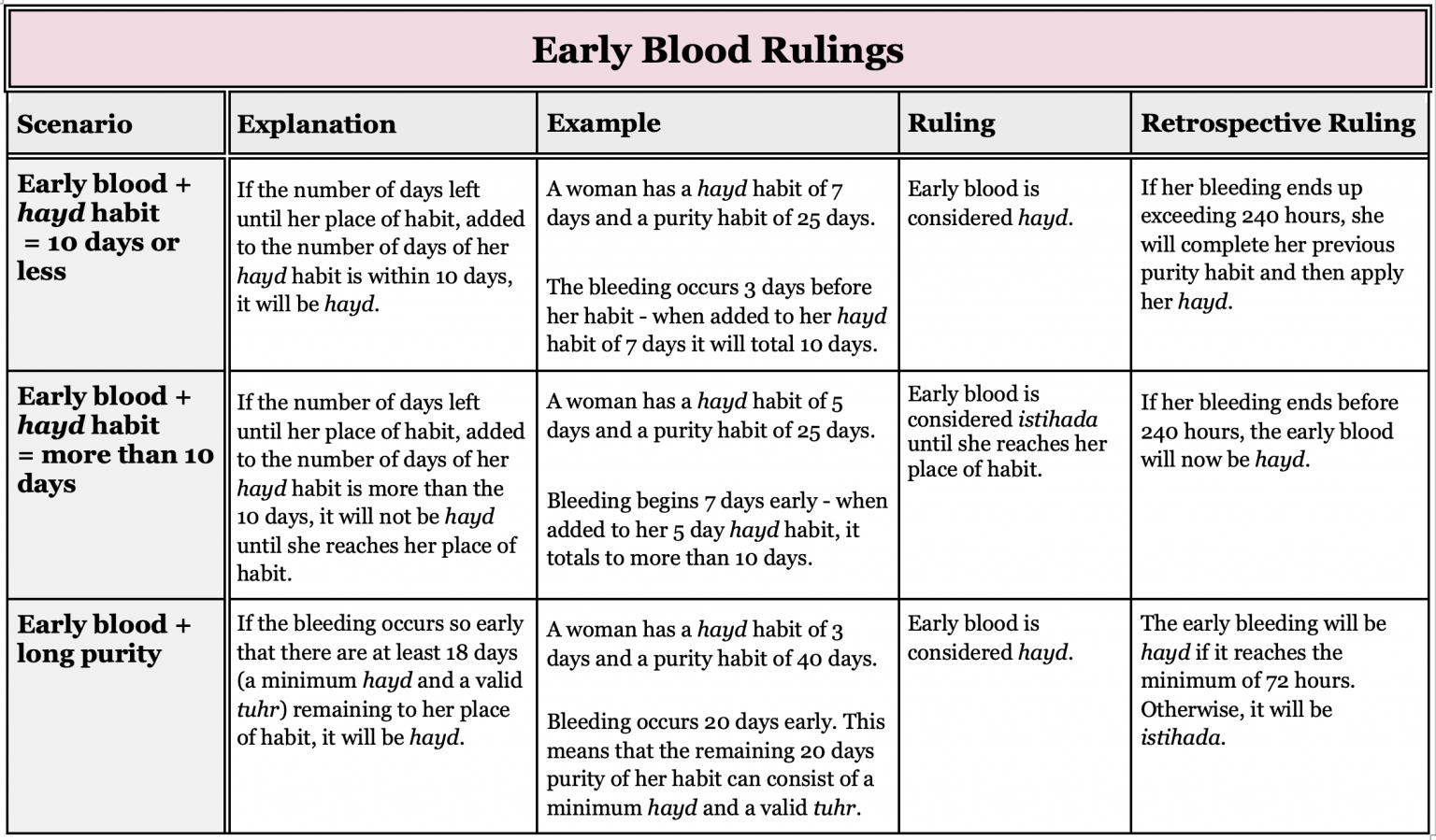
Early Blood A woman’s menstrual cycle can vary in length each month – it’s important for a woman to know her days of bleeding (hayd) and purity (tuhr) in case she has irregular bleeding (istihada). She will then have to look at her record, in order to align her bleeding with her place of menstruation and the number of days she regularly bleeds. The Fiqh of It If a woman experiences bleeding earlier than her normal place of habit, she cannot assume that it is hayd. Her place of habit is when she is due to bleed in relation to her recent hayd and tuhr habits. For a detailed explanation of the place of habit, refer to ‘Number & Place’. There are three possible rulings that can apply to early blood:

-
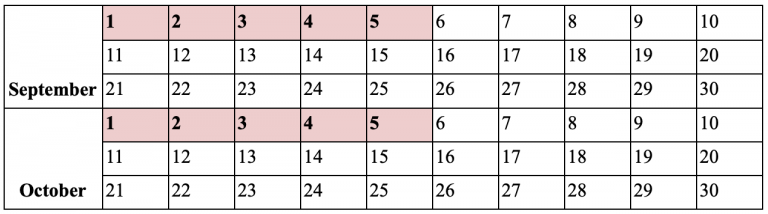
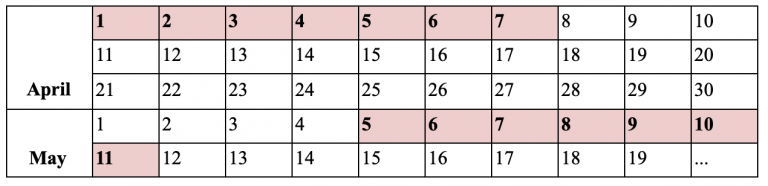
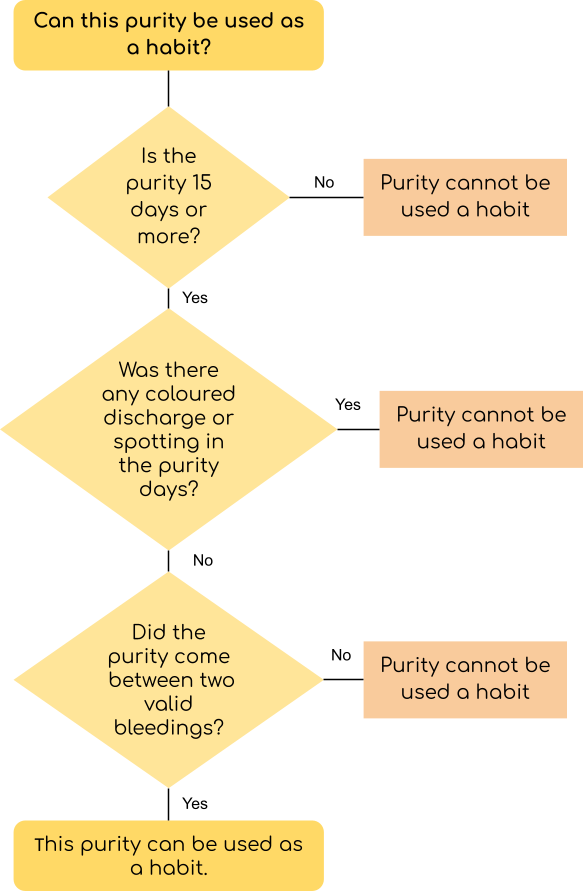
Number & Place When calculating habit in menstruation (hayd) and purity (tuhr), a woman looks at both the number of days (‘adad) as well as the place in the month (zaman) she bled. The Fiqh of It ‘Adad refers to the most recent number of days of valid blood (hayd) and valid purity (tuhr sahih)*. For example, Ayesha’s hayd was from September 1-5. Her following hayd was from October 1-5. Her ‘adad is 5 days for hayd and 25 days for tuhr. Zaman refers to the due date of a woman’s next menstrual cycle, based on her purity from the previous month. In this case it is 5 days of hayd, preceded by 25 days of tuhr. (Manhal al-Waridin pp.180-4) To really understand the interplay between ‘adad and zaman, let’s look at another example, Ayesha’s habit is 7 days for hayd preceded by 23 for tuhr. Accordingly, she was expecting her hayd to start on May 1, however it did not start until May 5. She then bled for 7 days. The ‘adad remains 7 days for hayd, but increases from 23 to 27 days for tuhr. This changes the zaman of hayd as the date she is expected to begin bleeding has shifted forward by 4 days. *A valid purity (tuhr sahih) is a purity that is 15 days or more, is not mixed with any bleeding in the beginning, middle or end and is preceded and followed by hayd. Determining Purity Habit
-
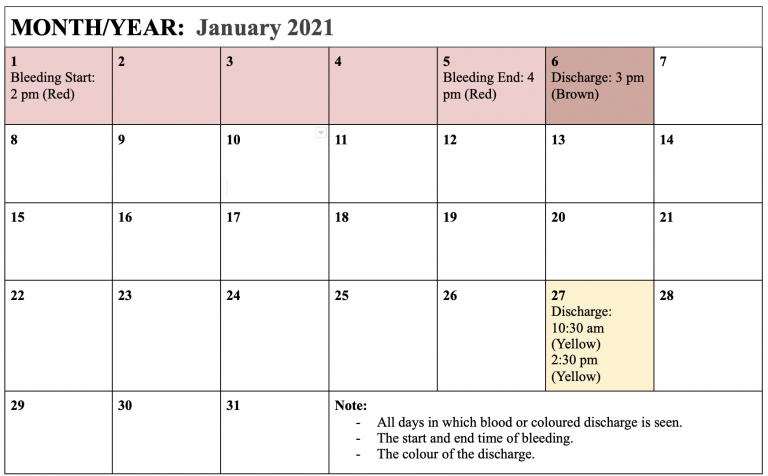
Recording Cycles All women are obligated to keep a detailed record of bleeding and purity, referred to as a habit chart, including dates and times. In case of any irregularities, a written record allows her to accurately pinpoint which days are menstruation and purity. Without this, a woman will not know whether she is obligated to fast and pray. How to Record Your Cycle Technology has made it easy for a woman to keep track of her cycle. There are multiple apps available and there is always the traditional method of recording the information on a calendar or in a notebook. Regardless of the method, the following information should be included: Record all days in which there is blood or coloured discharge, whether it is continuous or intermittent. Record the start/end time of each instance of bleeding, using hours and minutes. Record the colour of the discharge, such as whether it is black, brown, red, yellow, etc. Example:
-
Habit Fluctuation One of the most important principles in the rulings regarding menstruation is habit. A woman’s habit is the number of days she normally menstruates, as well as where in the month she experiences her bleeding. For example, a woman has a 5-day bleeding cycle, followed by 20 days of purity. We would say her habit in menstruation (hayd) is 5 days and her habit in purity (tuhr) is 20 days. It’s completely normal to have fluctuations in one’s habit – it can change each month if the bleeding and purity remain in the allowed limits. For example, a woman bleeds 5 days, followed by 20 days of purity and her next menstrual cycle lasts 7 days, followed by 25 days of purity. These ups and downs are not only normal, and they do not effect the rulings. Habit comes into play when a woman experiences irregular bleeding (istihada) or has an invalid purity following her hayd. For example, a woman who previously bled for 6 days bleeds beyond the 10-day maximum, for a total of 12 days. In this situation of irregular bleeding, she reverts to her habit and considers the first 6 days hayd and the remaining 6 istihada. (Manhal al-Waridin pp.182-3) These simple examples highlight another crucial point – the accurate and consistent recording of instances of hayd and tuhr. Without knowing how long her previous hayd lasted, a woman will not be able to determine which days should be marked as hayd and which as istihada. The concept of habit is also important to applying rulings related to purity. For example, a woman regularly has 25 days of purity between her menstrual cycles, but following her last hayd she continued to spot indefinitely. Her tuhr habit will determine how many days she should treat as istihada before considering the spotting hayd. (Manhal al-Waridin pp.211-2) A woman should record the exact time her bleeding begins. She should monitor her bleeding throughout her hayd. When the bleeding ends, she should again note down the exact time. Keeping a log from cycle to cycle will help with determining rulings if any irregularities occur. Mudilla (Woman Without a Habit) Many women overlook the importance of keeping a written record of bleeding and purity, despite the directive from scholars. A woman who has no recollection or record of a valid blood and purity habit is referred to as a mudilla. Should a mudilla find herself in a situation of irregular bleeding, she can be subjected to some of the most stringent rulings in the Islamic law (Shari’ah). The Fiqh of It In his treatise on menstruation, Imam Birgivi writes that it is mandatory for every woman to know her menstruation (hayd), post-natal bleeding (nifas), and purity (tuhr) habit (Manhal al-Waridin p.229). The importance of this rule cannot be emphasized enough, as the consequences of not knowing are very serious. For example, if a woman is experiencing irregular bleeding (istihada) and does not have any written record of her habit, there is uncertainty as to whether the blood is hayd or istihada. She will be required to perform a ritual bath (ghusl) before every prayer (salat) and repeat the previous salat in each subsequent prayer time. Not only can this practice become extremely burdensome, it can create a negative disposition toward the prayer. Many other restrictions also apply to the mudilla. She cannot perform any optional fasts or prayers and her recitation of the Qur’an is restricted. It will also impact the ability of her and her husband to be intimate with one another. Therefore, women should be extremely diligent about recording their habits. Should a woman find herself in this situation, she should consult a knowledgeable and reliable scholar, who can guide her to the correct course of action.
-
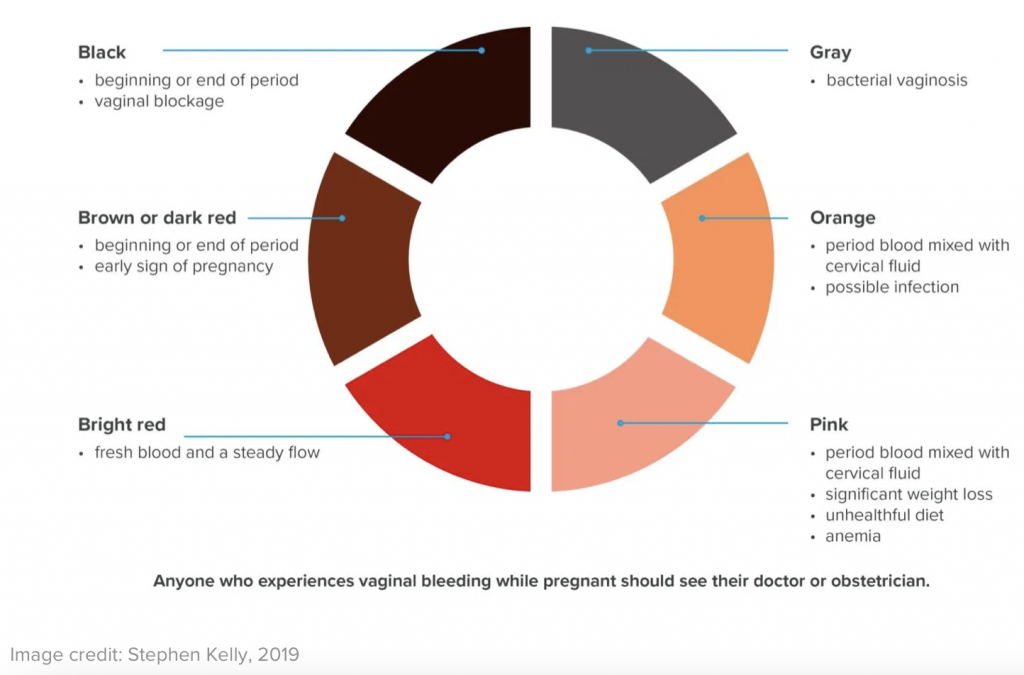
Colours Women experience variation in the colour and flow of menstrual blood – both convey important information regarding their health. While healthy menstrual blood ranges from dark red, brown, and even black, colours like grey and orange are indicative of a possible health issue, such as an infection. If a woman is concerned about changes in her cycle or the odour of her discharge, she should consult with a qualified medical professional. The Fiqh of It From an Islamic perspective, any coloured discharge in the habitual days of bleeding, other than clear or white, is considered menstruation (hayd). As long as the bleeding falls within normal parameters, colours such as black, brown, green, yellow and red are hayd. When looking at the colour of discharge, it is important that the sample is fresh and wet. If the discharge is looked at when it has dried, it has undergone a chemical reaction, altering its colour. For example, if the discharge is yellow when fresh, but changes colour after time, the original colour of yellow is considered. (Manhal al-Waridin p.169) Liners and pads may be used when bleeding. However, they cannot be used to determine the colour of the discharge, as they are placed away from the vaginal opening. Placing a piece of cotton at the point of exit (kursuf) can make it easier to accurately determine the colour of discharge. It allows for the colour of discharge to be seen when wet, before it undergoes a chemical change.
-
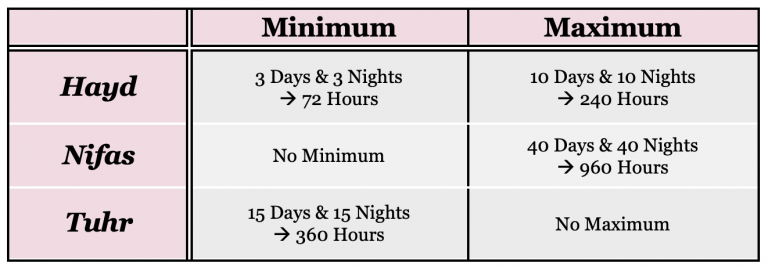
Min & Max Time Frames A woman’s menstrual cycle can vary in length. On average, a woman menstruates for 3-8 days, and her subsequent purity can range between 21-28 days. These fluctuations are fine as long as they fall within the fixed limits established by Islamic law (Shari’ah). As a woman has her menstrual cycles, it is extremely important that she record the respective dates of any bleeding: menstruation (hayd), post-natal bleeding (nifas) and irregular bleeding (istihada). She should also write down her purity (tuhr) dates as a record for future reference. The Fiqh of It
-
Depressed & Guilty for not Praying during Monthly Periods
ummtaalib replied to ummtaalib's topic in Fiqh of Menstruation
Please see HERE regarding this hadith -
Question I received the following as a broadcasted message, and would just like to know what is its authenticity: “Menstruation in Ramadan. It is related in a Hadith that Rasulullah (sallallahu ‘alayhi wa sallam) said if a woman reads (at her time of haidh – menstruation). Subhanaka astaghfirullahal lathi la ilaha illa huwal hayyul qayyum 70 times at the time of every Salah or any other istighfar even if it be astagfirullah only, then she will get the reward of reading 1000 rak’ahs of Salah, 70 of her sins are forgiven, her status is raised in the eyes of Allah and for every letter of istighfar, she gets a nur and for every vein in the body, one hajj and umrah is written!” (Majalisul Abrar) Answer I could not locate this in the popular Hadith books. The reference that is quoted in your query is not of a reputable primary Hadith-source. The promise of hugely inflated rewards for deeds that are relatively simple and easy is commonly found in fabricated Hadiths. (Tadribur Rawi) One should be cautious in sharing Hadiths like the above, especially since it cannot be traced to an authentic source. And Allah Ta’ala Knows best Answered by: Moulana Muhammad Abasoomar Checked by: Moulana Haroon Abasoomar Hadithanswers
-
Dar al-Uloom al-Arabiyyah al-Islamiyyah, Cape Town, South Africa is also a Shafiee Darul Ulūm - under Mufti Tāhā Karān DUAI | Home Submit a Question http://www.duai.org.za/fatawa.html
-
Advice on Teaching Daughters About Menses – Ustadh Abdus Shakur Brooks Question: How does a mother bring up the topic of menses to her daughter? Does she prepare her for what is going to happen and introduce the fiqh, or does she wait till she has her menses and then indirectly teach? Answer: Girls should generally be taught about menses before it occurs -without introducing technical matters of fiqh. A mother can introduce the subject to her by informing her that a day will come when she will see something called “menses”. She should explain to her what it is and why it happens a sign of her “growing up” and that when it occurs both angels on her right and left will begin to record her actions, thus Allah will have higher expectations of her; that she should pray, fast and wear hijab just like her mother. The mother must also inform her that she will have to stay away from boys and that Allah does not like her mixing with them. In general the mother needs to implant in her daughter’s mind and heart that seeing menses means a “great change in her life” that will make her a much more important in regards to her relationship with Allah and her religion. This will cause her to think about the coming of “the important day” which she will see as an interesting step in her life. The mother can also tell her a little bit about it before bed. This should be done randomly and not all at one time. A mother should also inform her that there are instructions that she will need to learn and that she will teach her in the near future. When she sees menses for the first time she will most likely come running to her mother overwhelmed and excited. At that point the mother should buy her (or already have bought) a little “special” calendar book and tell her to record the days of her menses. This type of teaching allows the girl to have her first responsibility for this “new beginning” she is experiencing. The point of giving her a calendar book and having her record her days of menses is to implant in her mind the importance of being responsible about this issue. The mother should inform her that when she is done bleeding that she should report back to her. When she tells her mother menses is done, the mother should teach her about the signs of indicate that menses is complete, and also teach her that her menses is now a fixed number of days based on the number of days she bled the first time. The mother should not forget to tell her to keep recording her menses every month and also to report back to her in any case when her blood stops before her fixed number of days or if it passes her fixed number of days. When the girl informs her mother about any of these cases then she should teacher her daughter the rules that apply to each situation such as the basics of what is covered in the Maliki fiqh text al-Akhdari. (You can listen to the course here and also listen to the course Menses & Postnatal According To The Maliki School). The mother should tell her to keep record these notes in her little book and she should also help her to do so. Following this type of education (tarbiyyah) will give the mother the ability to teach her daughter how to apply, and understand the general rules of menses without being “technical” until she gets a little older when she can learn from books. During the whole process the mother becomes like a practical guide for her. It is preferable that menstruation be taught by the mother before the father although if the father is a single parent then there is no doubt that he will have to teach her himself. Lastly just as the mother teaches her the rules of menses, she must also teach her about how to perform a proper ritual washing (ghusl). This is my advice. Allah knows best. Ustadh Abdus Shakur Brooks Reviewed and finalized 6/14/2011
-
- 1
-

-
Menstruation & Postnatal Bleeding In The Maliki School by Ustadh Abdus Shakur Brooks This is a six lesson audio course by Ustadh Abdus Shakur Brooks on the topic of menstruation and postnatal bleeding according to the Maliki school, based on two fundamental texts: Al-Akhdari and Al-Izziyah.This course will provide Muslim women with the fundamentals on how to deal with these matters with sound knowledge. Download the pdf : Menstruation & Postnatal Bleeding In The Maliki School (By Abdus Shakur Brooks) Part 1 : Part 2 : Part 3 : Part 4 : Part 5 : Part 6 : Share this:
-
Menstruation (Hayd) The literal definition of the Arabic term hayd is “to flow.” Legally, hayd refers to the physical blood that exits from the female body as well as the state of impurity a woman enters during the days of menstruation. Both prohibit her from specific ritual worship, such as fasting, prayer, and recitation of Qur’an. Practically, hayd is blood which originates from the uterus and exits from the vaginal opening. At a minimum, a threshold of 72 hours must be reached and a maximum of 240 hours is allowed to be hayd. This correlates to 3 days/nights and 10 days/nights. When the blood aligns within these parameters, it is classified as valid blood. (Sunan al-Daraqutni 406-7/1, Al-Tabrani 129/8) Post-Natal Bleeding (Nifas) The literal definition of nifas is to give birth. Legally, nifas is blood which originates from the uterus and exits from the vaginal opening during childbirth. Once more than half of the child has exited from the vaginal canal, the blood is considered nifas. While there is no minimum duration, nifas cannot exceed 960 hours, or 40 days/nights. (Sunan al-Daraqutni 410/1, Al-Mustadrak 283/1) Irregular Bleeding (Istihada) Istihada exits from the vaginal opening, but unlike hayd and nifas, it is considered an invalid blood. Practically, it is that blood which a woman sees for less than three days or for more than ten days, i.e. below the minimum or beyond the maximum of menstruation, or for more than 40 days after childbirth. When a woman experiences bleeding out of her norm, it is important that she review her bleeding record to determine whether it falls under the category of hayd or istihada. (Sahih al-Bukhari 55/1 & 68/1, Sahih Muslim 262/1)
-
The content in this topic has been taken from Menstrual Matters Whitethread Institute. Menstruation is a part of every woman’s life. For a young girl, it will mark her entrance into womanhood and the point at which she is responsible for her worship in accordance with Islamic laws (Shari’ah). For a woman, it will be a constant part of her life, through monthly cycles, pregnancies and even menopause. Given the way hayd (menstruation) and nifas (post-natal bleeding) are so intimately connected to a woman, it is imperative that she understands the rules that govern them. She must know when she is obligated to pray and fast and when she must abstain from certain acts of worship. The tutorials aim to help women gain clarity and understanding of how to differentiate between the differnt types of bloods they experience. Index 1. Key Terms - it is very important to know the different types of blood women experience 2. Minimum & Maximum Frames - Shari'ah has stipulated the minimum and maximum limit to the bloods 3. Colours of blood - Women experience different colours of blood. This tutorial shows which colours can be considered 4. Habits - Habits are formed in the number of days a woman bleeds (in menstruation and post-natal bleeding) 5. Recording Cycles - This tutorial shows how imporatnt it is for women to record their cycles 6. Number & Place - It is not just about the number of days a woman bleeds. It is also at which place of the month she bleeds 7. Early Blood - Women's habits fluctuate and some months she may beging bleeding earlier than expeceted. What does she do? 8. Post-natal Bleeding (Nifas) - Definition and rulings 9. Miscarriage - Rulings on how to determine the bleeding after a miscarriage 10. Menopause - Rulings 11. Attaining Ritual Purity - How and when to attain purity aftre bleeding
-
Why is the Ummah Suffering? by Maulana Yunus Patel (Rahmatullah alayhi) Many ask the question: Why is the Ummah suffering so much, despite millions making Dua throughout the world, millions making Dua during Haj and Umrah? Why is there no change? The answer can be understood by way of an analogy: A son is disobedient and rebellious towards his father’s instructions, arrogant in his stance against his father, demanding, swearing, abusing and adopting the bad behaviour as found common in this day and age. The father is deeply hurt, offended and angered and when he has had enough of the insolence and arrogance, he finally resorts to breaking off ties with his son. He cuts off all privileges. Now, if the entire family, even the entire community, tells that father: “Forgive him. He is your son…” That father will respond: “I have no problem with forgiving him. All he has to say is, “I’m sorry” and I will forgive him.” However, on being encouraged to humble himself and ask for forgiveness, the son retorts with arrogance: ‘Why must I? Why do I need to? I’m independent! I don’t need him!’ Then will that father forgive that son? Will he grant those privileges of money, car, etc.? Similarly, the friends of Allah, the Sawliheen (the pious) and so many more are making Dua for the Ummah. …In fact, if all the friends of Allah were to gather on the Day of Arafaat and earnestly pray for the Ummah, Allah Ta’ala will most assuredly be prepared to forgive. However, from our side, there is a step to be taken – and this is what the majority are not prepared to do: They are not prepared to take the step of “CHANGE”. Unfortunately, majority of us do not want to sincerely repent from our sins, let alone acknowledge them. Many justify and reason their sins, even dispute and argue regarding Allah Ta’ala’s Commandments, as if they have some kind of authority over Allah Ta’ala. So many are brazen in their indulgence in sins, as if challenging Allah Ta’ala, like that arrogant son: “What can You do? I’m not in need of You!” With this kind of behaviour and attitude, can we expect any favours, privileges or any kind of assistance from Allah Ta’ala? We are living in a fool’s paradise if we think that we can continue sinning and still be recipient of Allah Ta’ala’s bounties and aid. If we truly want Allah Ta’ala’s assistance, then we have to give up sins. Many, many are not even fulfilling the Fardh Injunctions – Salaah, Zakaah, Fasting in the month of Ramadaan, etc., and there are others who naively depend on wazeefas to solve their problems, not prepared to give up sins. This is sheer foolishness. Wazeefas and Taweez are no barrier against the punishment of Allah Ta’ala, when there is indulgence and persistence in sins. Then we have those Muslims who, in the face of natural disasters, war, genocide, etc. begin to question the existence of God or ask as to where is Allah Ta’ala’s Mercy and Compassion, or ask if He is seeing all that is happening. Allah Ta’ala is not blind or deaf. He does not want chaos. Allah Ta’ala wants peace. However we have to fulfill the conditions of the contract. The first condition is that we implement Deen in our lives, adopt Taqwa and follow the noble example of Rasulullah (Sallallaahu ‘alayhi wa sallam) then the conditions will change. The Day the Ummah fulfills its duties, across the board – making a total change, then our suffering will be replaced with success, prosperity and happiness and people of other faiths will also accept Islam. Allah Ta’ala explicitly spells out His conditions and His promises: “Allah has promised those among you who believe and perform righteous deeds, that He will surely grant them inheritance (of control) in the land as He granted it to those before them; that He will firmly establish their religion - the one which He has chosen for them - and that He will change their fear to one of security and peace.” [Surah Nur 24 ; V: 55] Thus, we will have to fulfill our pledge by making the effort to obey Allah Ta’ala and His Rasul (Sallallaahu ‘alayhi wa sallam), to see the fruit of our duas and receive the assistance of Allah Ta’ala – on an individual level, on a national level, and on an international level. Jamiatul Ulama (KZN) Council of Muslim Theologians
-
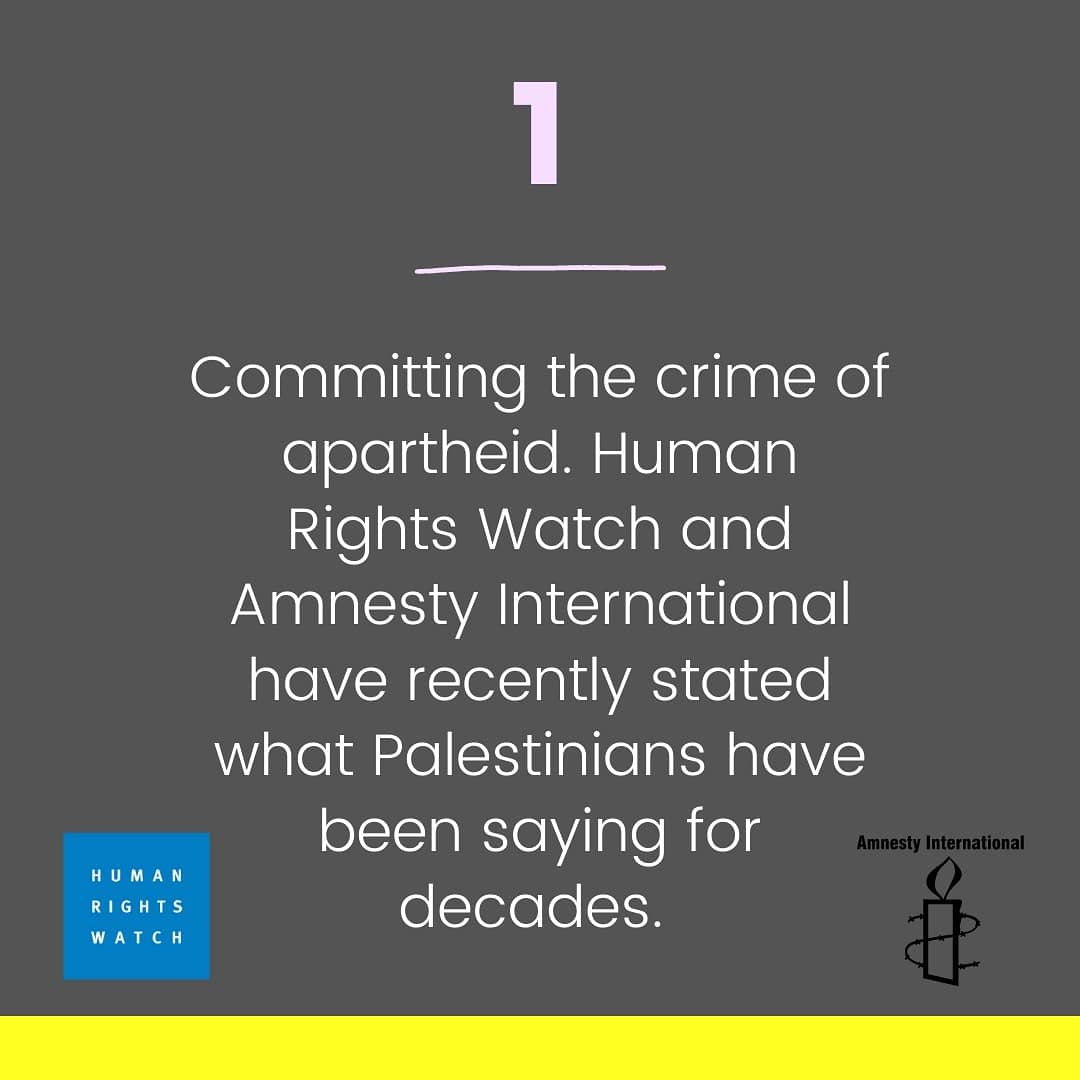
URGENT: Meet Your MP - Friends of Al-Aqsa (foa.org.uk) Write to your MP to meet you online On June 14th a debate has been scheduled in Parliament for MPs to discuss sanctions on Israel. FOA are calling on everyone to contact their MP’s to meet them (online) on Wednesday 9th June to: Ask MP’s to attend the June 14th debate and call for sanctions on Israel for breaking international law. If they are unable to attend, ask them to make a public statement which supports sanctions on Israel.
-
-
-
-
Books on Women's issues (Hanafi Fiqh)
ummtaalib replied to Bint e Aisha's topic in Fiqh of Menstruation
Tuḥfat al-Banāt by Jamiatul Ulama (KZN) A Muslim Girl’s Guide to Life’s Big Changes by Rayhana Khan -
Books on Women's issues (Hanafi Fiqh)
ummtaalib replied to Bint e Aisha's topic in Fiqh of Menstruation
A Woman’s Guide to Hajj & Umrah by Mufti Muhammad Faruq Women’s Hajj Companion by Maulana Ebrahim Noor