ummtaalib
-
Posts
8482 -
Joined
-
Days Won
773
Content Type
Profiles
Forums
Events
Everything posted by ummtaalib
-
Mufti Ebrahim Desai Sahib (Rahimahullah)
ummtaalib replied to ummtaalib's topic in General Islamic Discussions

-
Mufti Ebrahim Desai Sahib (Rahimahullah)
ummtaalib replied to ummtaalib's topic in General Islamic Discussions
*Mawlana Imraan Desai on His Beloved Father Mufti Ibrahim Desai Hafizahullah* My fathers 3 outstanding qualities: 1) Husne Zann - He used to make excuses for people who had done the worst of things to him & to us children. 'Maybe this is what happened..' & make excuses for them. He disliked ugliness between himself & anyone & disliked it for others too. 2) Love for Hadith, Fatawa & anyone in all the different services of Deen. He taught Bukhari Shareef for 30 years & his love for Bukhari Shareef cant be explained in words. Only if you sat in his class, you would know. I was lucky enough to be his student also. 3) Generosity - Many people think of generosity as giving wealth, whilst he felt pity for every single beggar who asked of him, he was generous with his time to the public & his love for his students. Those who know him will recognize & realise this deep, inner generosity he had. Once, he wanted to give to a beggar & he gave a long, sad story. He listened & didnt interrupt him. i said, hes conning you ( referring to the beggar ) & he told me that Allah is so merciful & loving, Allah sent the beggar to HIM, so he could deposit some Sadaqah into his Aakhirah. 'Dont look at WHO you are giving, look at where it is going' (Your Akhirah) If kindness, love & generosity were to be personified, it would be my fathers smiling face. May Allah grant him complete Shifaa' & keep him with us for a long time, Ameen! -
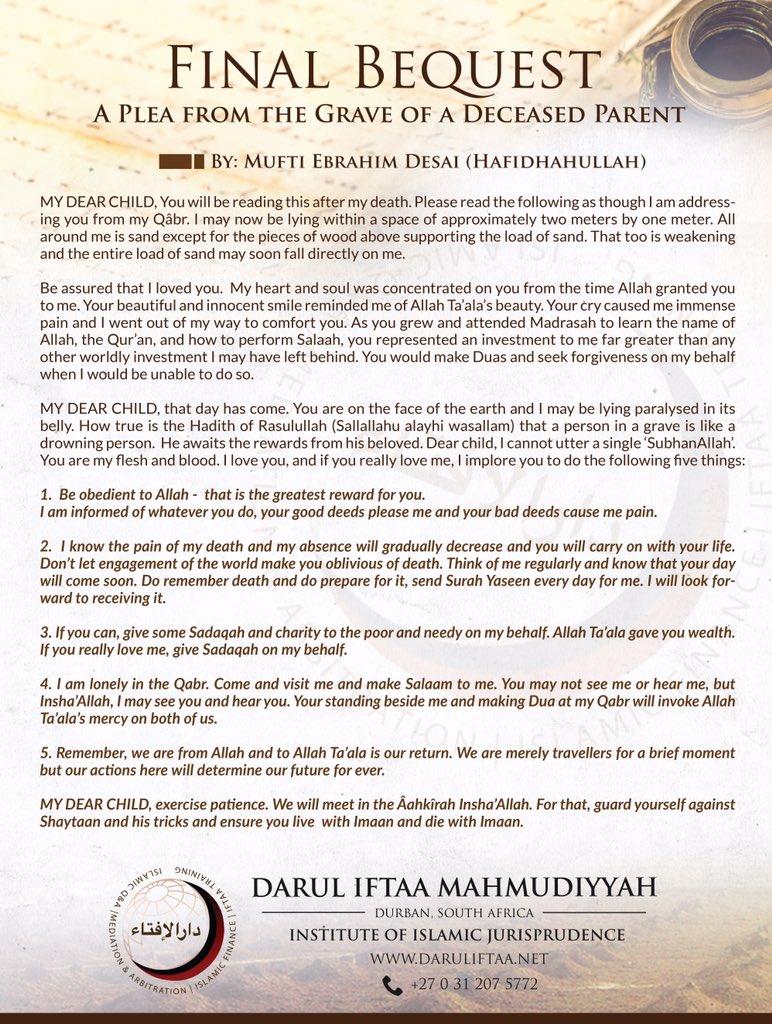
Mufti Ebrahim Desai Sahib (Rahimahullah) of Darul Iftaa Mahmudiyyah (South Africa) has passed away A huge loss to the Ummah. May Allah ta'alagrant maghfirat and elavate his stages and grant his family, students and associates Sabr, Aameen
-
The housing of a Palestinain Bedouin community in the Jordan Valley is destroyed during a demolition operation led by Israeli security forces.This is a common sight for some Palestinian Bedouin communities.Middle East Eye spoke to the Bedouin community of Khirbet Humsah whose homes and livestock pen were destroyed six times between November and February.“This is a very important and strategic area for the Israelis. Israel has been very clear about its plans to annex the Jordan Valley, so people should not be surprised when it comes and destroys Khirbet Humsah time and time again.” Middle East Eye (@middleeasteye) • Instagram photos and videos
-
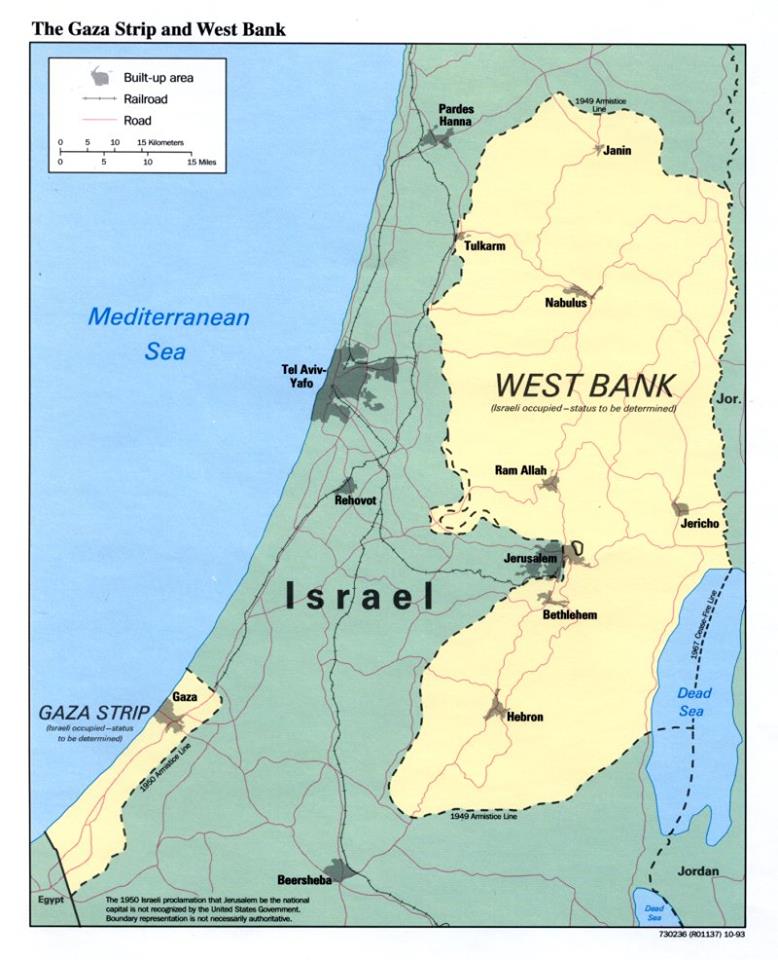
Israel's planned annexation of the Jordan Valley: Why it matters In September, Israeli Prime Minister Benjamin Netanyahu vowed that should he be re-elected in nearing elections, he would annex the occupied West Bank's Jordan Valley - forcibly claiming the territory as part of Israel. At the time, Netanyahu revealed a map of 30 illegal Israeli settlements north of the Dead Sea that would be integrated into Israel as part of his plan. Netanyahu failed to form a government in September, and Israel headed to the ballot box in March for the third time in the span of a year. In April, the political deadlock was broken and a national unity government was formed with Netanyahu and former army chief Benny Gantz to alternate in the role of prime minister after 18 months - with the incumbent Netanyahu taking the seat first. Netanyahu reached an agreement with his former rival Gantz to form a coalition cabinet that would advance an annexation plan starting in July. But why is the Jordan Valley so important? What would annexation mean concretely, and who would it affect? And how is this Israeli move received by both Palestinian and international leadership? What is the Jordan Valley? The Jordan Valley and the Dead Sea are parts of the West Bank, which Israel has occupied since the 1967 Middle East war. The occupation of Palestinian territories has been condemned, notably through UN Resolutions 242 and 338, as violating international law. Jordan, which used to rule over the West Bank until 1967, still acts as the custodian for Muslim and Christian holy places in occupied East Jerusalem's Old City Historically, the Jordan Valley used to refer to an area between the Dead Sea and the slopes of the mounts of Hebron and Jerusalem to the west. It also used to include areas between the towns of Bisan - now referred to by Israel as Beit Shean - and Safad, along the western edge of Lake Tiberias; and stretched south between Ein Gedi, an oasis on the Dead Sea, to the Negev desert. These southern- and westernmost points now fall inside Israel. The Jordan Valley currently accounts for around one-third of the West Bank (almost 2,400 square kilometres) - the majority of its land falling within Area C, as defined under the 1993 Oslo Accords, which remains under full Israeli military control. In January, US President Donald Trump unveiled his full Israel-Palestine plan - colloquially known as the "deal of the century" - which proposed for Israel to claim about a third of the West Bank in exchange for the recognition of a disjointed Palestinian state with no control over its borders or airspace. Who lives in the Jordan Valley? The announced Israeli annexation plan is limited to areas north of the Dead Sea, where 30 Israeli agricultural settlements house around 11,000 settlers. To date, more than 600,000 Israeli settlers live in sprawling settlements and outposts in Area C, often in confrontational proximity to the three million Palestinians living in the West Bank and East Jerusalem. The transfer of civilian populations to occupied land is considered illegal under international law. Historically, Palestine Liberation Organisation (PLO) guerrilla fighters operated in the Jordan Valley to launch armed attacks on Israeli settlements, most famously on Beit Shean, before the PLO was forced to move its headquarters out of Jordan into Lebanon in the early 1970s after violent clashes with Jordanian forces. Today, some 56,000 Palestinians reside in the Jordan Valley, including in the city of Jericho, where their daily lives are deeply impacted by Israeli occupation policies. The Coordinator of Government Activities in the Territories (COGAT), a unit of the Israeli army, is responsible for overseeing building permits, water, agriculture, road construction and other civil matters in Area C. The Israeli army and COGAT regularly place hurdles on Palestinians' access to their lands and water for everyday use and for farming and agriculture, and they stage military exercises in the area, turning village lands into closed military zones. Why is the Jordan Valley so important? The West Bank's Jordan Valley is rich in minerals and agricultural soil and is a highly strategic area, as it lies along the Jordanian border. Israel has long prepared the ground for the annexation of the border territory, building a network of highways such as the Allon Road to separate the Jordan Valley from the rest of the West Bank. Jordan shares 335km of borders with Israel and the West Bank, and Amman's security coordination is highly treasured by Israel's military and intelligence. The areas slated for annexation amount to around one-third of the West Bank and include a 97km stretch along the border with Jordan, including two crossings - the Sheikh Hussein Bridge and the al-Karameh Bridge, also known as the Allenby crossing. Naftali Bennett, Israel's former Minister of Defence, said in January that Israel is “facing crucial days of establishing its permanent borders and applying sovereignty to Jewish settlements” in the West Bank. Should annexation be fully implemented, Israeli laws would be applied to these areas, instead of orders and regulations issued by COGAT. Since World War II, there have only been three cases of annexation throughout the world: Iraq's invasion of Kuwait in 1990; Russia's annexation of Ukraine's Crimea in 2014; and Israel's seizing of Arab territories, including the Syrian Golan Heights and Lebanon's Shebaa Farms, since 1967. More here...
-
-
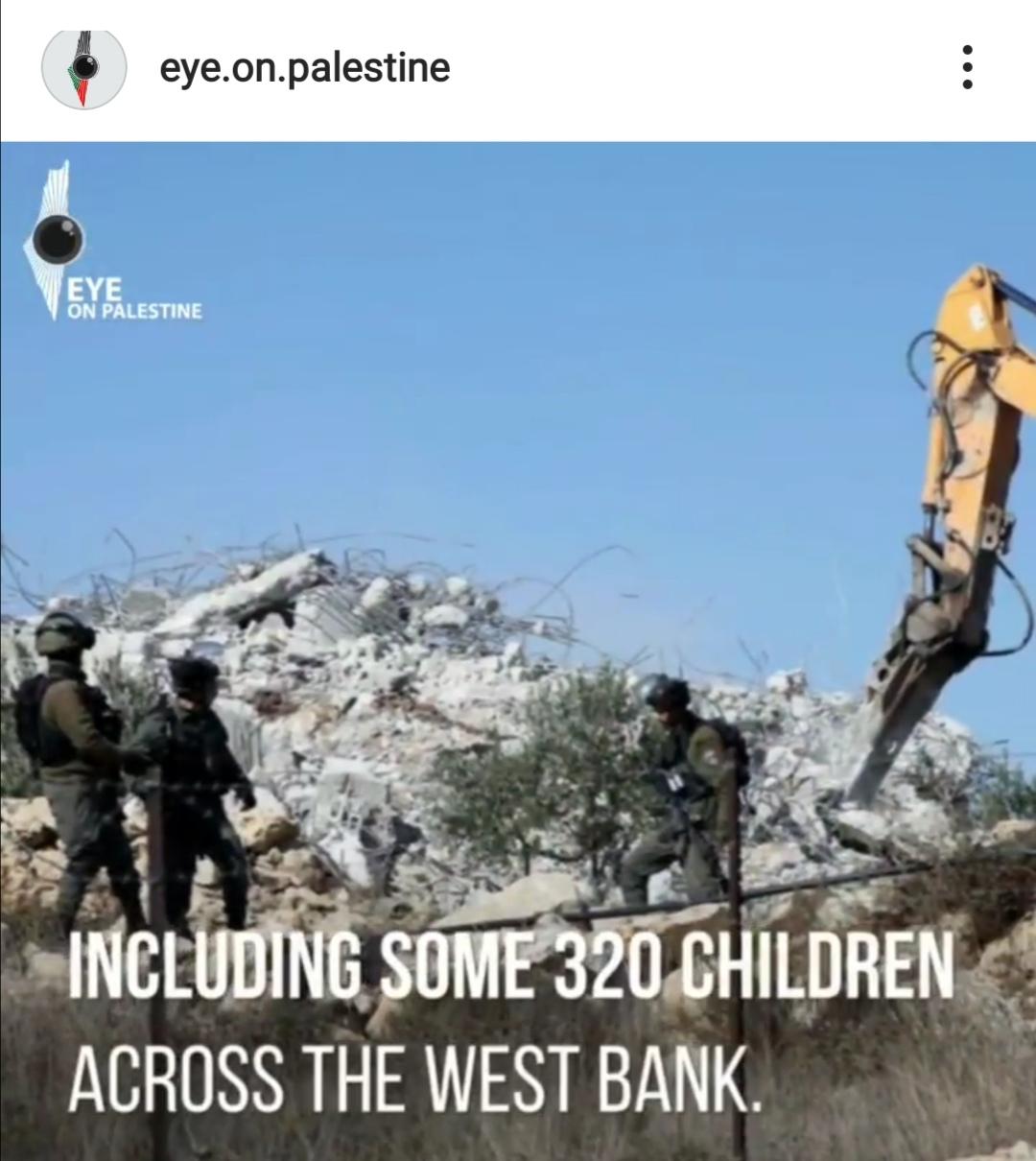
Tents in a bedouin community demolished Today, the occupation forces demolished the tents in a Bedouin community located on the lands of the village of Kufur Malik, Ramallah District. And here the children sit under this arbor to take cover from the heat of the sun. Eye On Palestine on Instagram: ". Today, the occupation forces demolished the tents in a Bedouin community located on the lands of the village of Kufur Malik, Ramallah…"
-
Gaza: A chronology of oppression Under the 1947 United Nations partition plan that split Palestine apart, giving 52 percent to a Jewish state of Israel, the Gaza Strip was supposed to be part of the now-smaller Palestinian nation. However, when the state of Israel was proclaimed on May 14, 1948, the Egyptian Army moved into Gaza and the territory became a magnet for Palestinians fleeing from all over. Gaza was, as one refugee described it, the “Noah’s Ark” of a lost Palestine. One in four Palestinians from the former British-governed Palestine thus took refuge in a strip of land that represented just 1 percent of its land area. Seen another way, 200,000 refugees were packed into a territory previously inhabited by just 80,000 Palestinians. (The proportion is about the same today: 1.2 million refugees out of a population of 1.8 million.) During Israel’s Six-Day War against its Arab neighbors in June 1967, Gaza was invaded by the Jewish army and the surrendering Egyptians were soon evacuated. Some 8,000 Israeli settlers moved in. In December 1987, a Palestinian generation born and raised under two decades of occupation found in its frustration the energy for an unprecedented intifada (the “First Intifada”), or uprising. The cradle of this uprising was the Gaza Strip, although it soon spread to the West Bank. (A Second Intifada, also known as the Al-Aqsa Intifada, began September 2000, when Israeli Prime Minister Ariel Sharon visited the Temple Mount with hundreds of soldiers, seen by Palestinians as highly provocative. Palestinian protesters were dispersed by the Israeli army, using tear gas and rubber bullet.) The Second Intifada did not wind down until 2005, when the Israeli cabinet also directed the withdrawal of its military forces and 8.000 settlers from Gaza. The pull-out was part of a unilateral disengagement plan that allowed Israel to attack the Strip with less caution, as well as provide cover for settlement expansion in the West Bank. However, Israel continued a virtual occupation through total control of its crossings in and out of Gaza. In January 2006, Israel and the United States pushed for Palestinian elections, and were surprised when the Hamas movement won control of the Palestinian legislative council. In retaliation for the victory of what they considered “terrorists,” Israeli authorities imprisoned many of the moderate members of Hamas who had run for office (including 28 still in prison today). In June of that year, Hamas operatives captured Israeli solider Gilad Shalit, saying he would not be released until female and under-age Palestinian political prisoners were freed. (A deal for Shalit’s release was not finalized until 2011.) Meanwhile, as documented in Vanity Fair magazine, U.S. Secretary of State Condoleeza Rice forbade the Palestinian Authority from forming a unity government (threatening a total cutoff of aid), then armed a faction of Fatah forces to prevent Hamas from assuming leadership. Hamas pre-empted the “coup” and in 2007, expelled the Palestinian Authority from Gaza. In retaliation, Israel imposed a blockade on the movement of goods and human traffic in and out of Gaza that has continues today. As a direct result, the Strip’s 1.8 million population has been plunged into poverty and conflicts erupt regularly as attempts to enforce international law against collective punishment fail and resistance turns violent. In the first of three wars on Gaza, Israeli forces invaded the Strip on Dec. 27, 2008, calling it “Operation Cast Lead.” Six months previously, Israel had negotiated a ceasefire with Hamas and other Palestinian armed groups in Gaza. Under the agreement, both sides agreed to stop hostilities across the Green Line, the de facto border between Israel and the Gaza Strip. And, despite minor violations by both sides, the truce was largely successful. That is, until Nov. 4, 2008, when Israeli soldiers staged a raid into the Strip, killing six members of Hamas. The attack, which took place on the eve of the U.S. presidential elections, ended the ceasefire. Over the course of 22 days, 13 Israelis, including 10 soldiers, were killed, while more than 1,300 Palestinians were killed and 5,500 injured. In addition, 4,000 buildings were destroyed and 20,000 damaged throughout the Gaza Strip. On Jan. 18, 2009, under enormous international pressure and just two days before Barack Obama was sworn in as President of the United States, Israel declared a unilateral ceasefire and withdrew its forces from Gaza. Palestinian armed groups followed with a separate unilateral ceasefire. The second major assault, called Operation Pillar of Defense by Israel, came on Nov. 14, 2012. Triggered by the Israeli killing of Ahmed Jabari, chief of the Gaza military wing of Hamas, it lasted eight days. Four Israeli civilians and two soldiers were killed by Palestinian rocket attacks, compared to 158 Palestinians, including 102 civilians – of which 30 were children and 13 were women. The most recent war, dubbed “Operation Protective Edge” by Israel, was the most devastating – lasting 50 days (or 51, depending on when you start the clock). After the latest round of Israeli-Palestinian peace negotiations stalled, Fatah moved toward reconciliation with Hamas in Gaza, and the two factions formed a Palestinian consensus government in early June of 2014. Meanwhile, Israel blamed Hamas for the June 12 kidnapping of three teenage settlers in the occupied West Bank and conducted massive arrests. Rocket fire from Gaza increased in protest. When the youth's bodies were found on July 1, Israel warned that Hamas "would pay" for their deaths. Its massive assault began July 8, 2014, with extensive air raids and artillery strikes. On July 17, the Israeli military launched a ground invasion. It is estimated that 2,191Palestinians killed (1,473 of whom were civilians) and 11,000 were wounded. According to the UN, 18,000 housing units were totally destroyed or severely damaged by Israeli attacks during the summer 2014 war, leaving approximately 108,000 of Gaza’s 1.8 million Palestinians homeless. This is in addition to the 12,000 Palestinians still displaced from Israel’s 2008-09 assault. At the peak of Israel’s war, an estimated 485,000 people (approximately 28 percent of Gaza’s population) were displaced. And then there is the extensive damage to Gaza’s infrastructure (such as the power supply), commercial enterprises (419 businesses were damaged and 128 totally destroyed) and civic institutions (for example, 22 schools were destroyed and 118 damaged). Today, months after the Aug. 26 ceasefire, almost no reconstruction has occurred, and Israel violates the terms of the truce almost daily – shooting at farmers who venture into the “buffer zone” along Gaza’s border with Israel, as well as fishermen who try to sail more than five miles out. The world is looking away, and we must refocus its attention https://wearenotnumbers.org/Background/Gaza_Strip
-
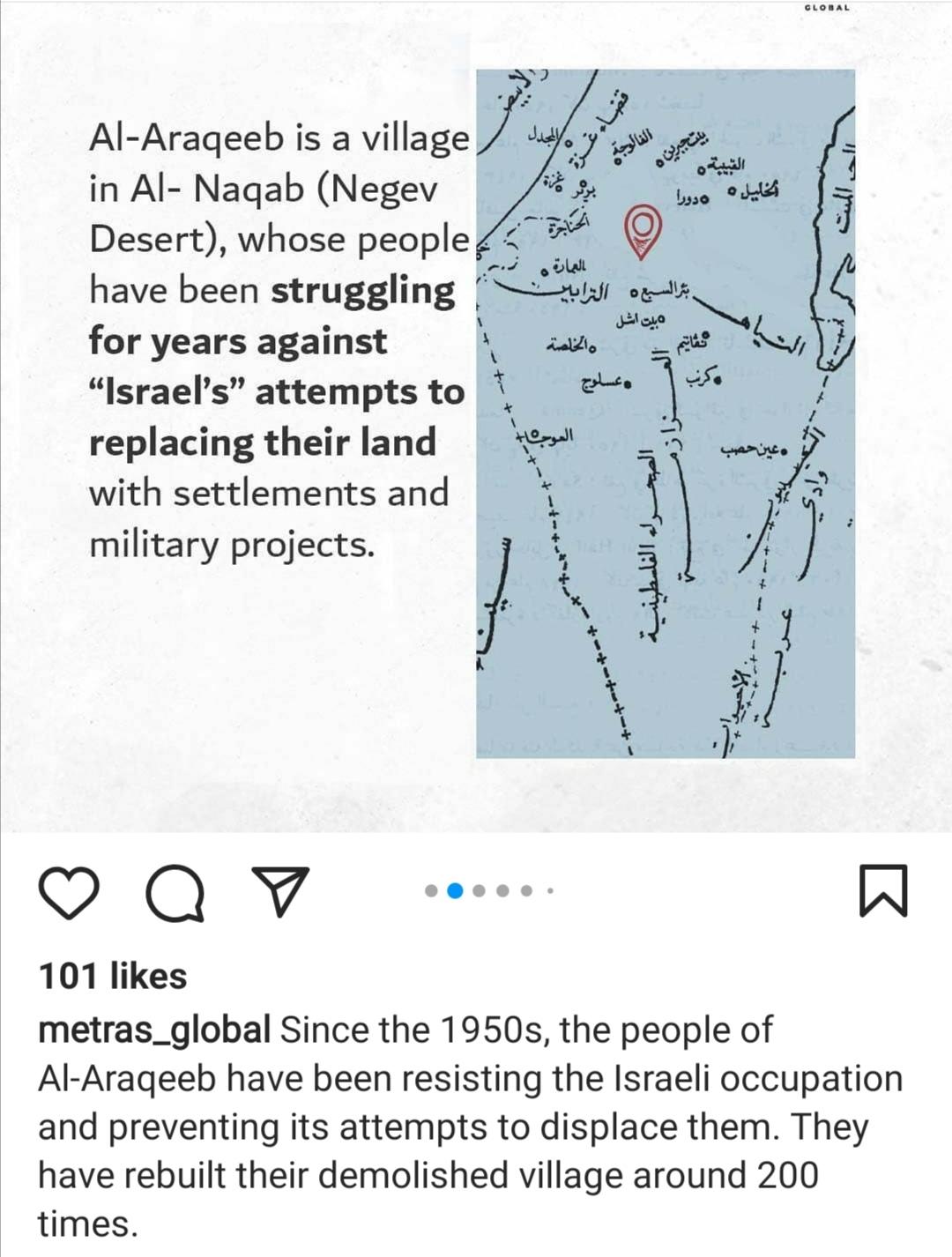
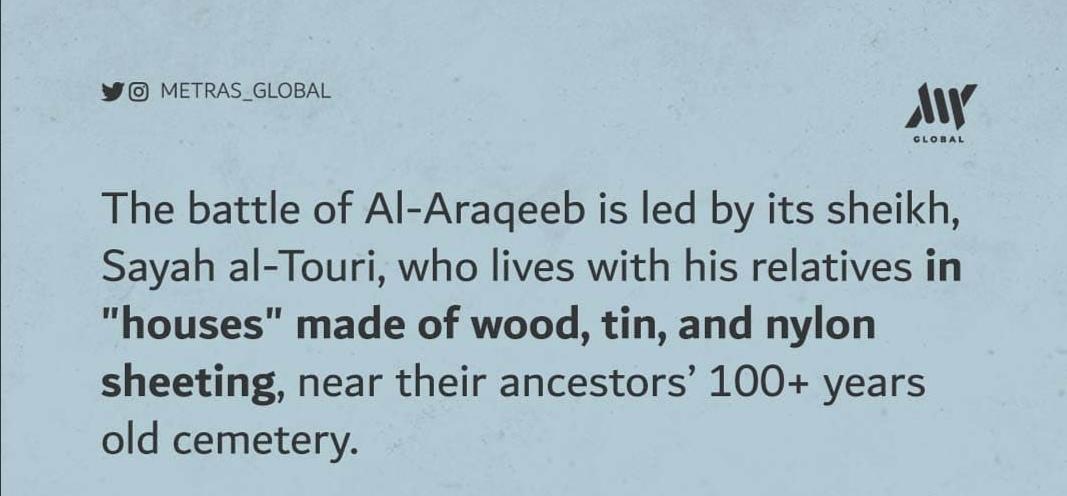
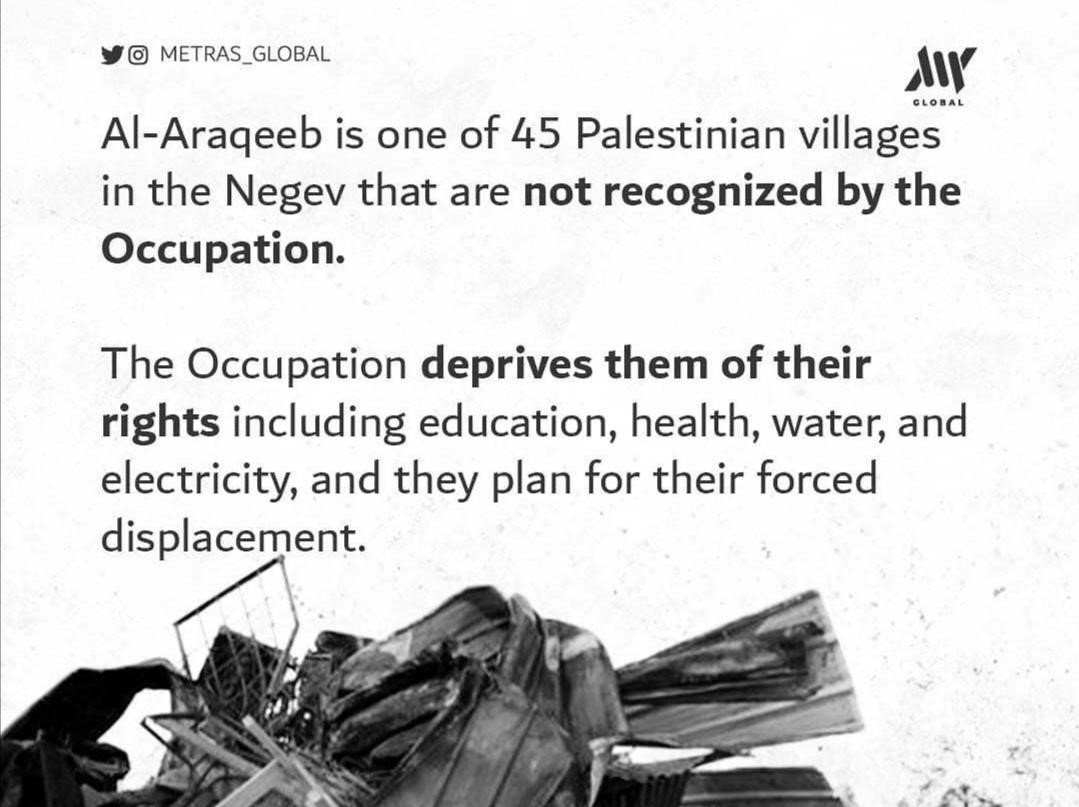
The village of Ar-Raqeeb Since the 1950s, the people of Al-Araqeeb have been resisting the Israeli occupation and preventing its attempts to displace them. They have rebuilt their demolished village around 200 times.
-
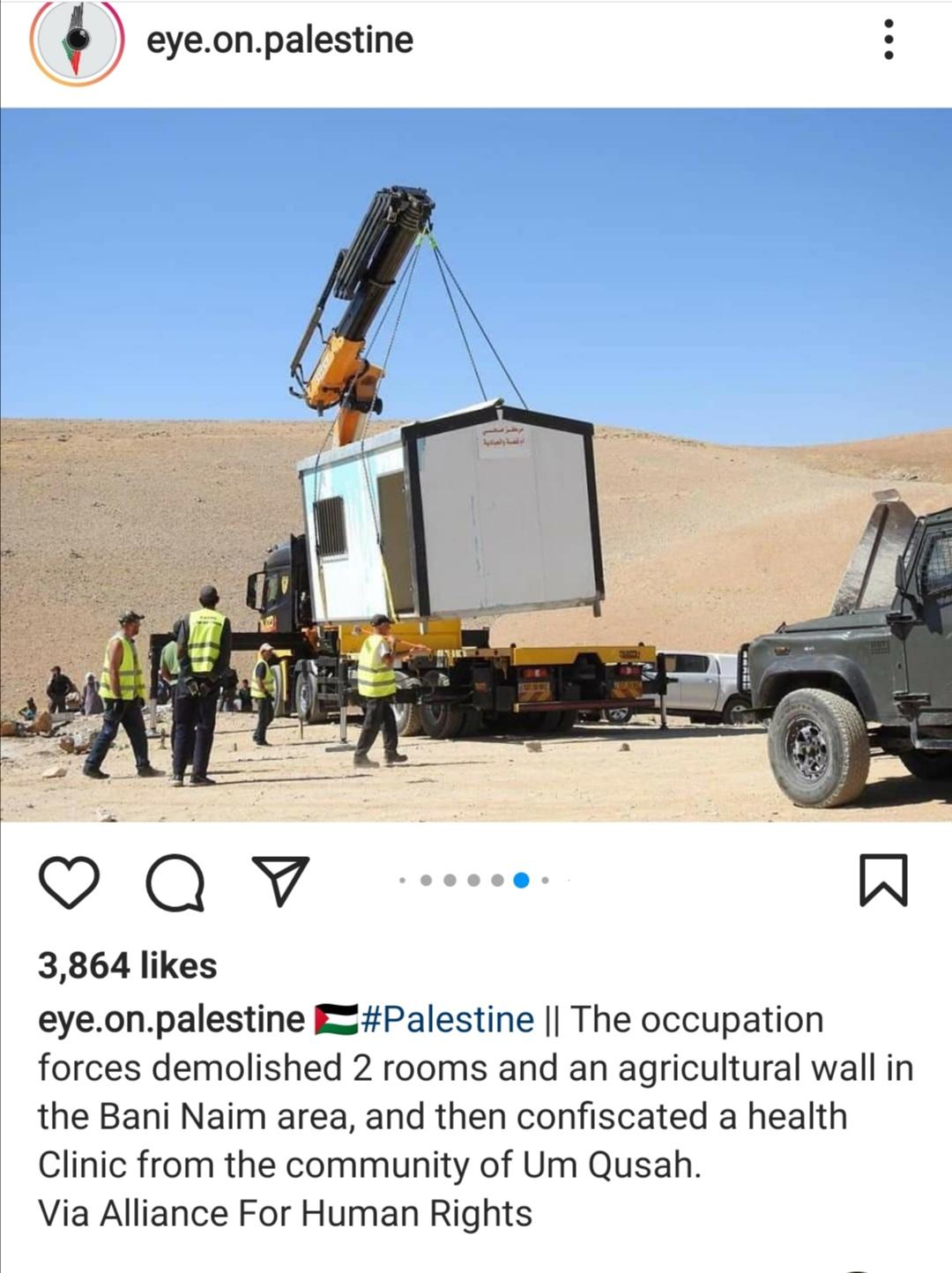
Health clinic confisicated! Eye On Palestine on Instagram: "🇵🇸#Palestine || The occupation forces demolished 2 rooms and an agricultural wall in the Bani Naim area, and then confiscated a health…"
-
Monthly march of Is-ra'eeli settlers The monthly march of settlers in the old city of Jerusalem under the protection of occupation forces. The Israeli occupation forces restricted the movement of Palestinians in the city to secure the march of settlers. Eye On Palestine on Instagram: "🇵🇸#Palestine || The monthly march of settlers in the old city of Jerusalem under the protection of occupation forces. The Israeli occupation…"
-
-
-
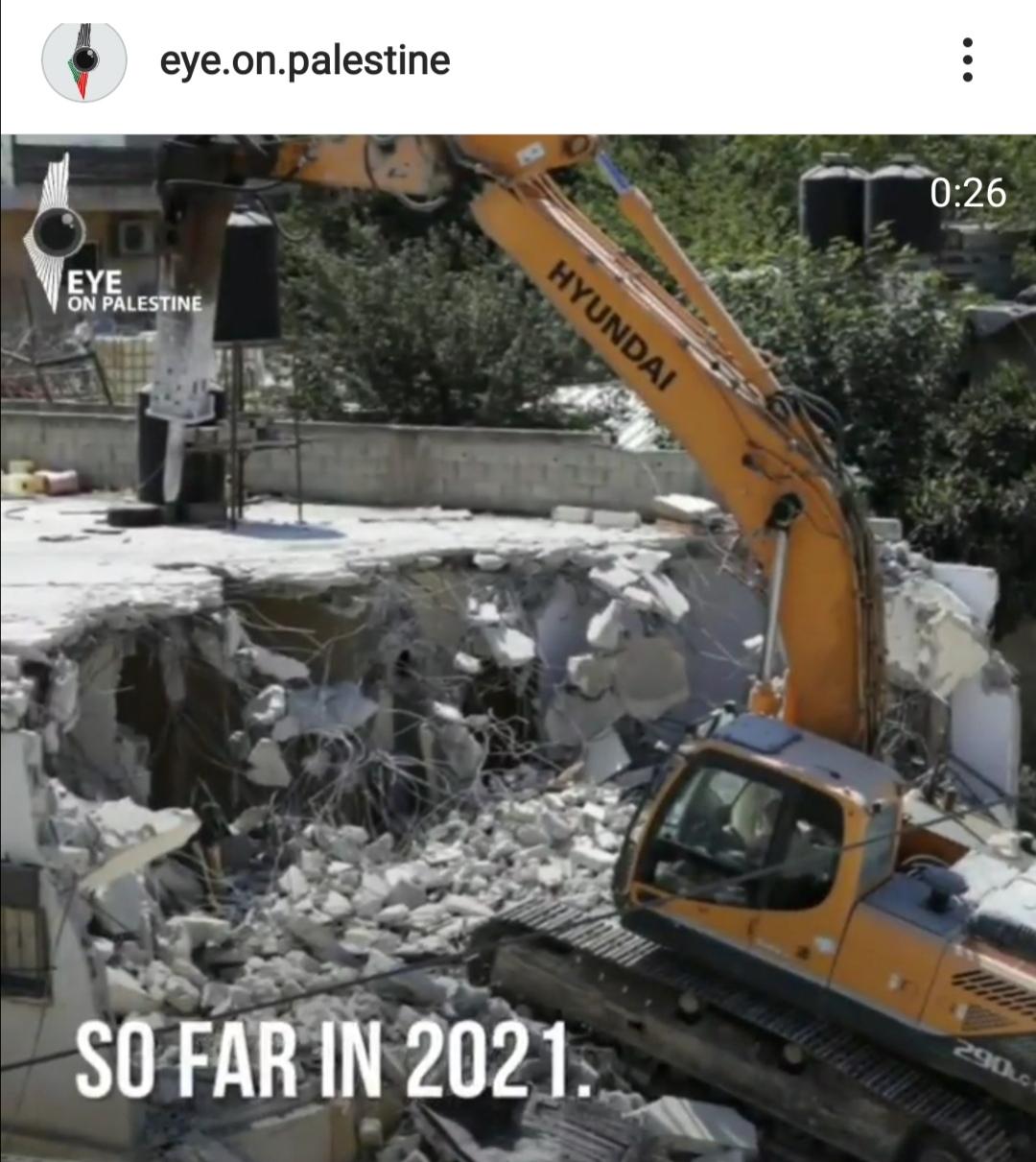
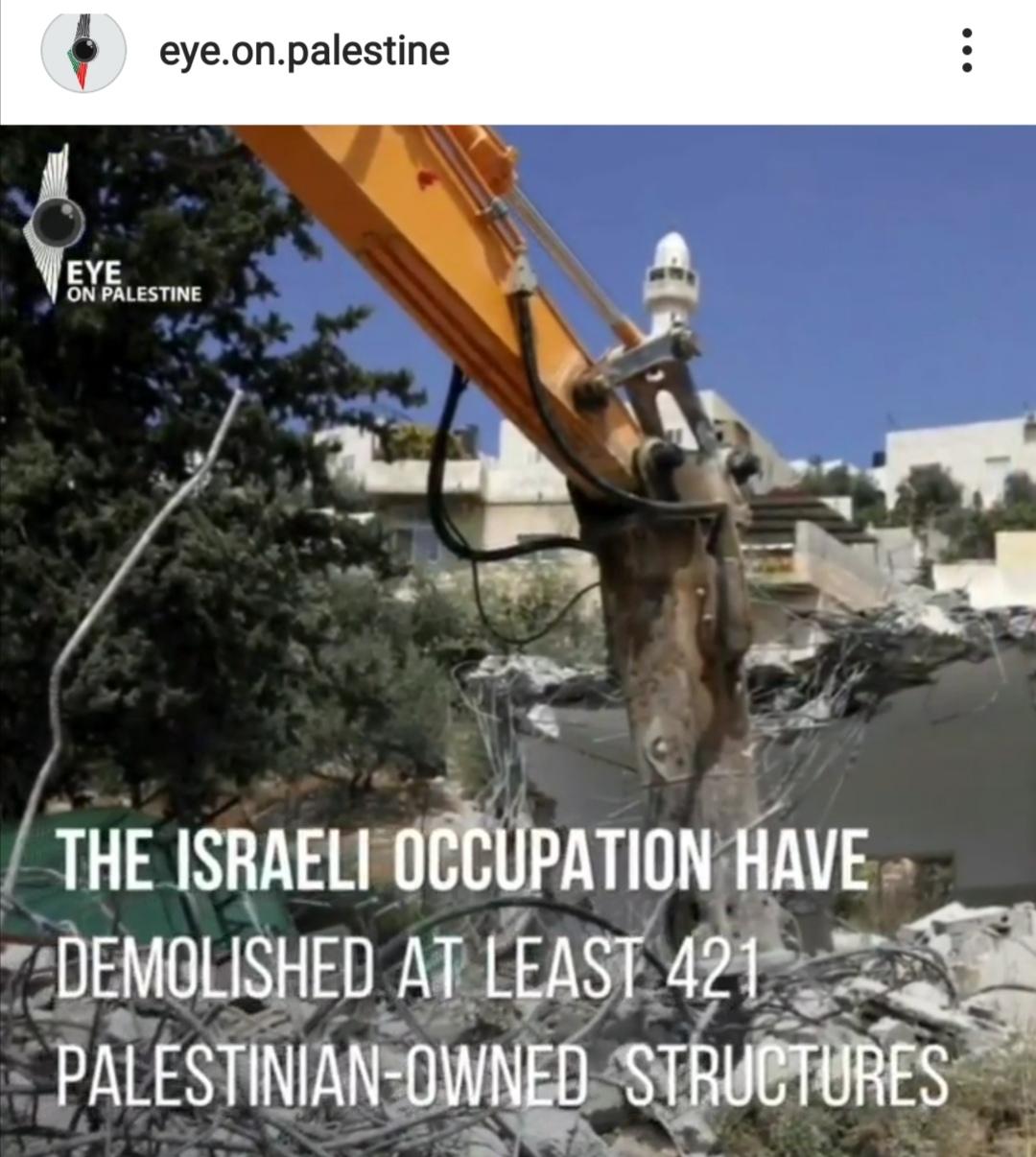
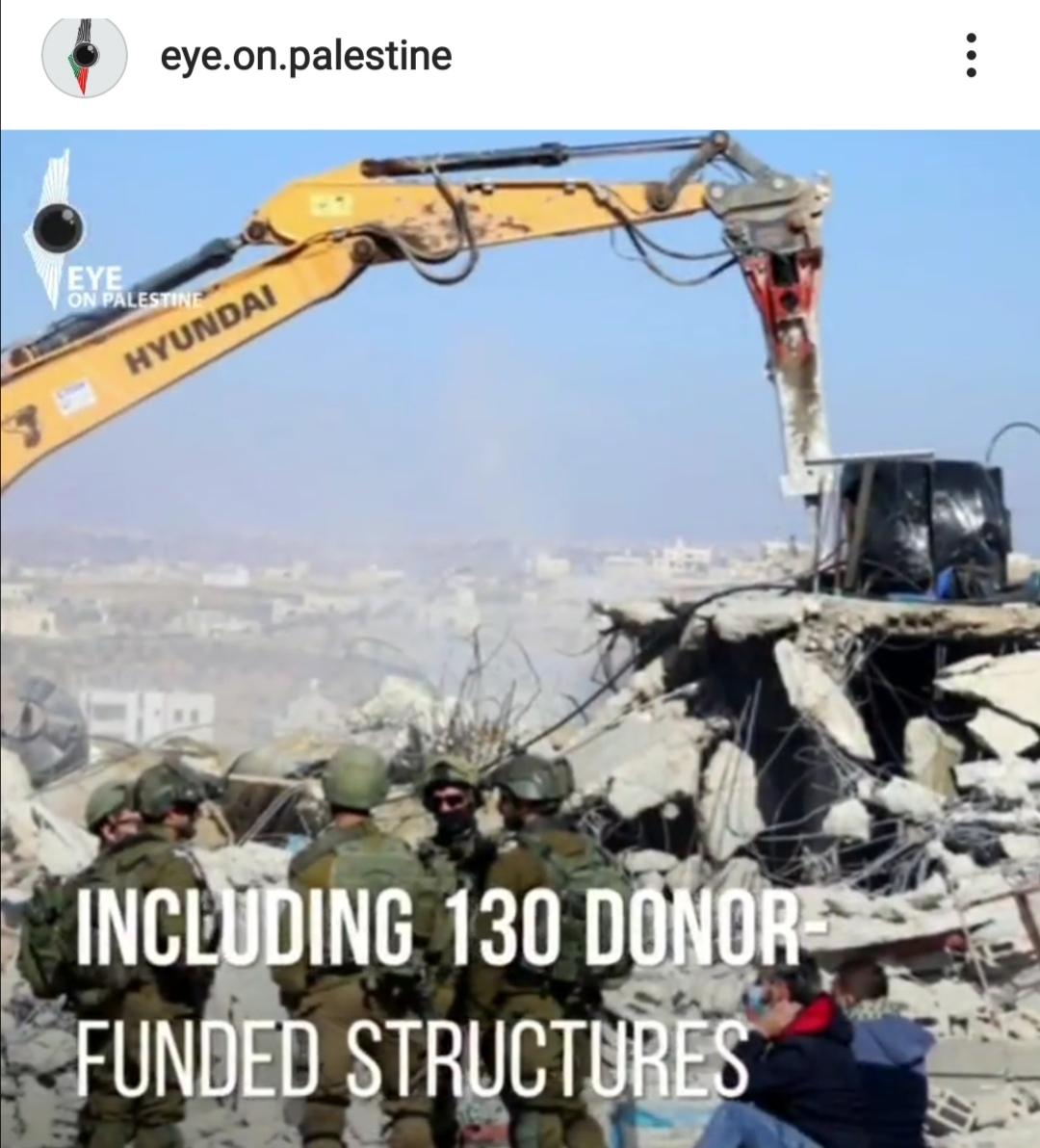
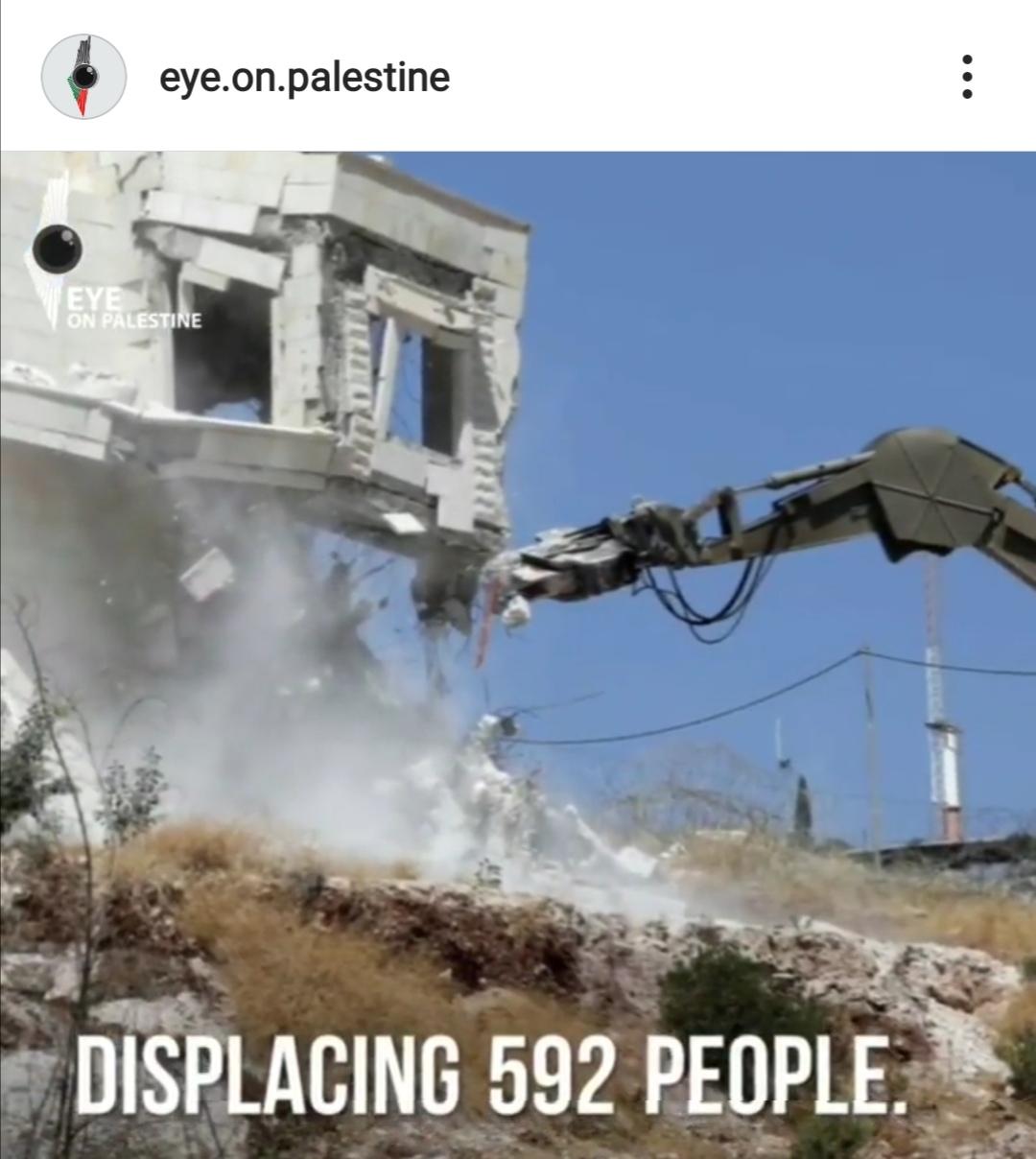
So far in 2021....
-
Green Blood - The Occupation's war against our Trees The massive expansion of illegal Israeli settlements has produced a war on objects older than the settler colony of “Israel” itself.Read more about the “mass executions” of trees in Palestine: MetrasGlobal (@metras_global) • Instagram photos and videos
-
-
Teachers’ unions in LA, San Francisco, Seattle and Vermont are speaking out against Israel’s apartheid rule over Palestinians. IMEU (@theimeu) • Instagram photos and videos
-
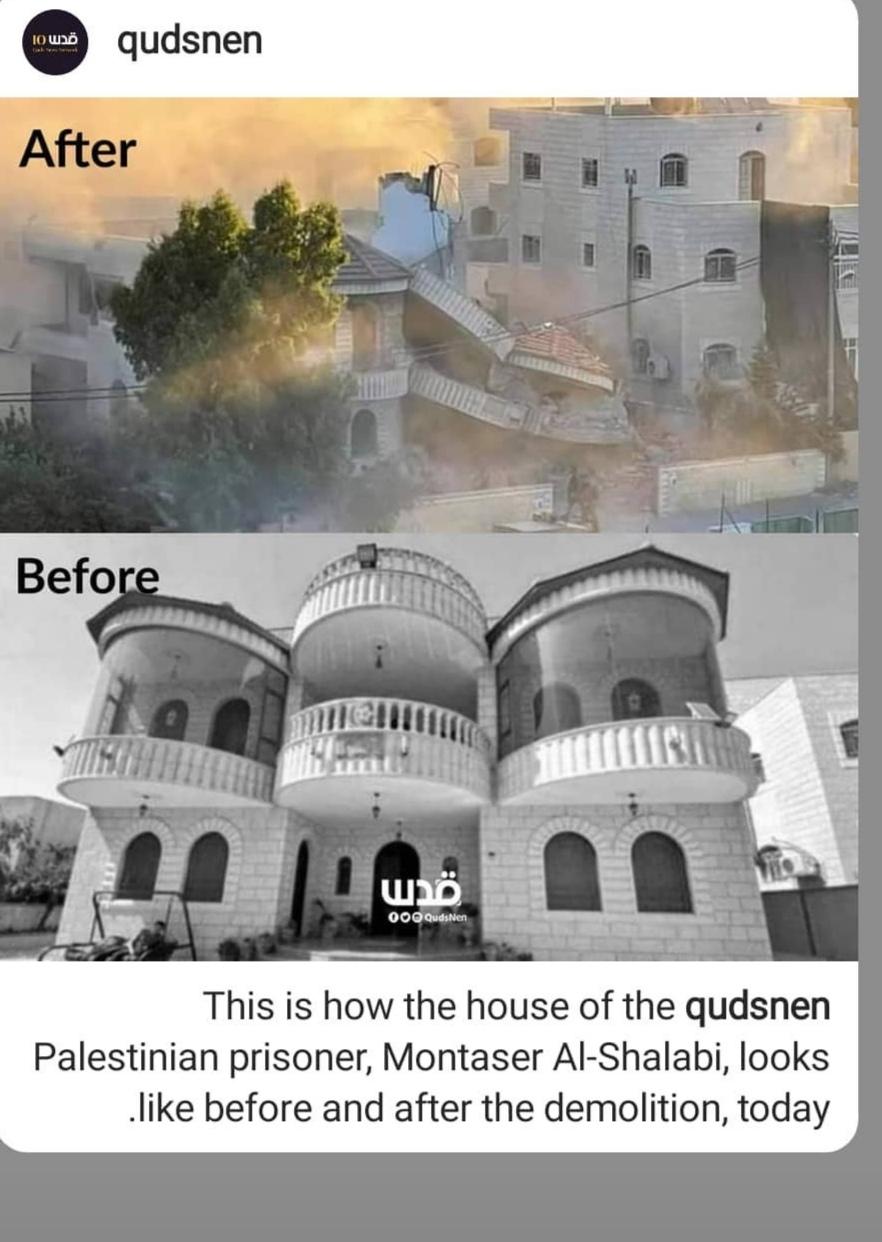
IOF started to evacuate Palestinians near the house of the prisoner Muntaser Al Shalaby demolishing it with explosives Our Voice Matters (@our.voicematters) • Instagram photos and videos
-
Humsa is forcibly displaced, Humsa lives the Nakba again ..Yesterday, during the day, the occupation pressured the citizens of Humsa to get into military vehicles in order to transport them outside the community. They brought female soldiers in order to force the women onto cars if they refused. The residents of Humsa decided to refuse to get into military cars and refused to leave, even the delegation of the Consul and diplomats from the European Union who arrived at the community were prevented by the Occupation forces from entering the entrances to Humsa. Eye On Palestine on Instagram: "🇵🇸#Palestine || Humsa is forcibly displaced, Humsa lives the Nakba again .. Yesterday, during the day, the occupation pressured the…"
-
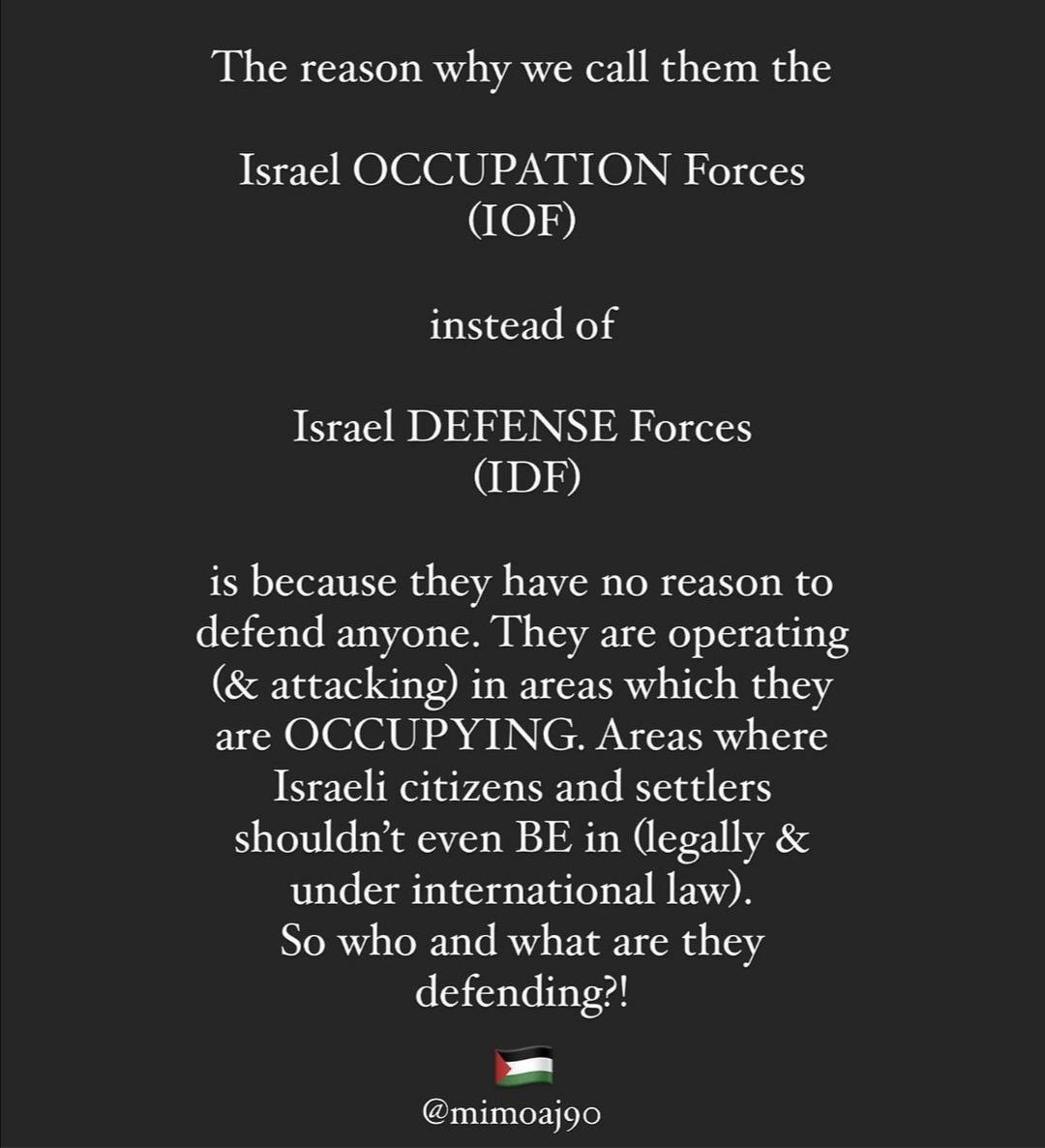
What is the "Israel Defence Force"? The Israel defence force is the armed forces of Israel, comprising the Israeli army, navy, and air force. The IDF was established on May 31, 1948, just two weeks after Israel’s declaration of independence. Since its creation, its guiding principles have been shaped by the country’s need to defend itself from its numerically superior neighbours. The primary element of this doctrine is the belief that Israel cannot afford to lose a single war. IDF planners believe that this goal can be attained only through a defensive strategy that utilizes the rapid mobilization of overwhelming force to take the war to the enemy.... However Palestinians call it IOF - Israel OCCUPATION Force
-
From the remains, Gaza Remains "No pebble will be left unused.”The occupation is hell-bent on razing Gaza to the ground, but Palestinians are salvaging material from that very destruction to rebuild their beloved city. MetrasGlobal (@metras_global) • Instagram photos and videos
-
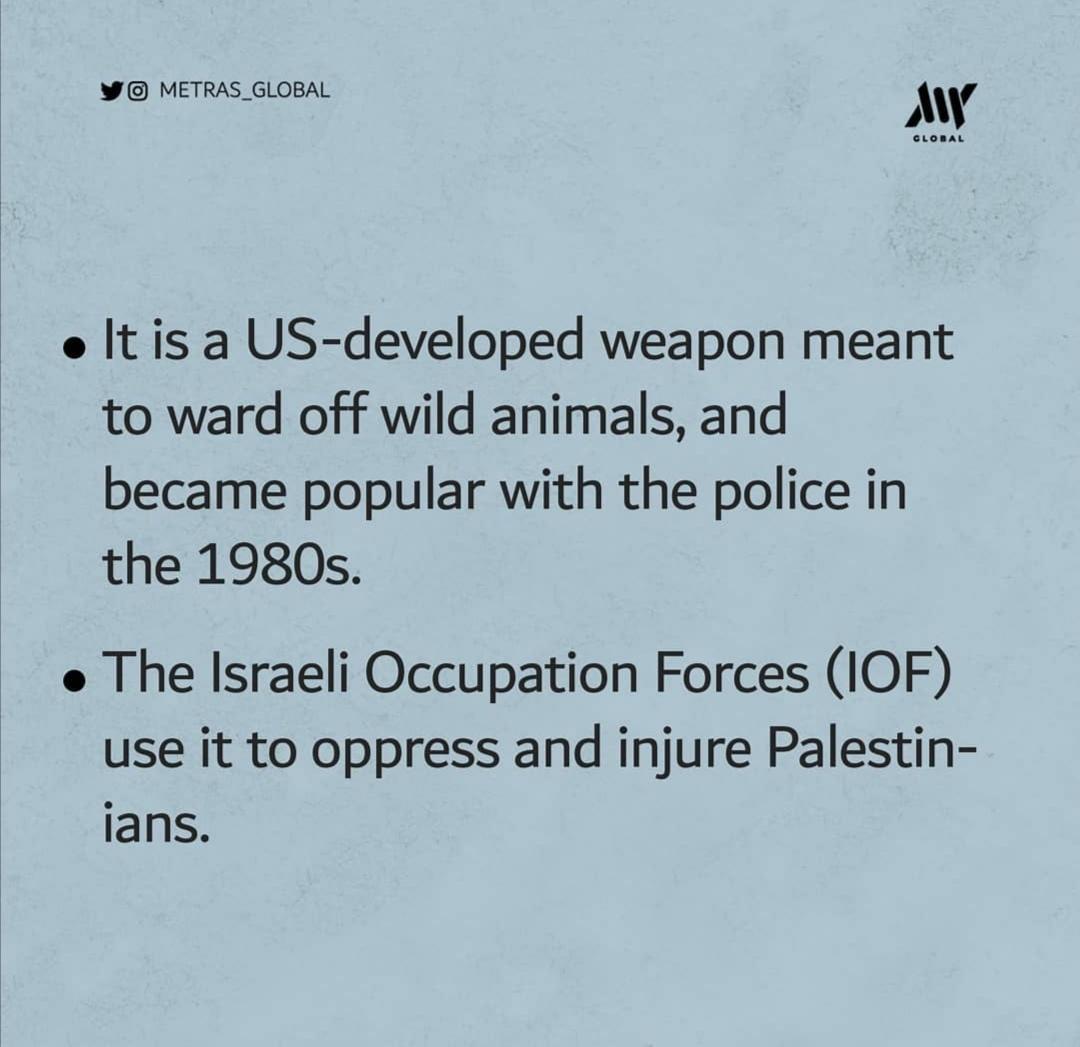
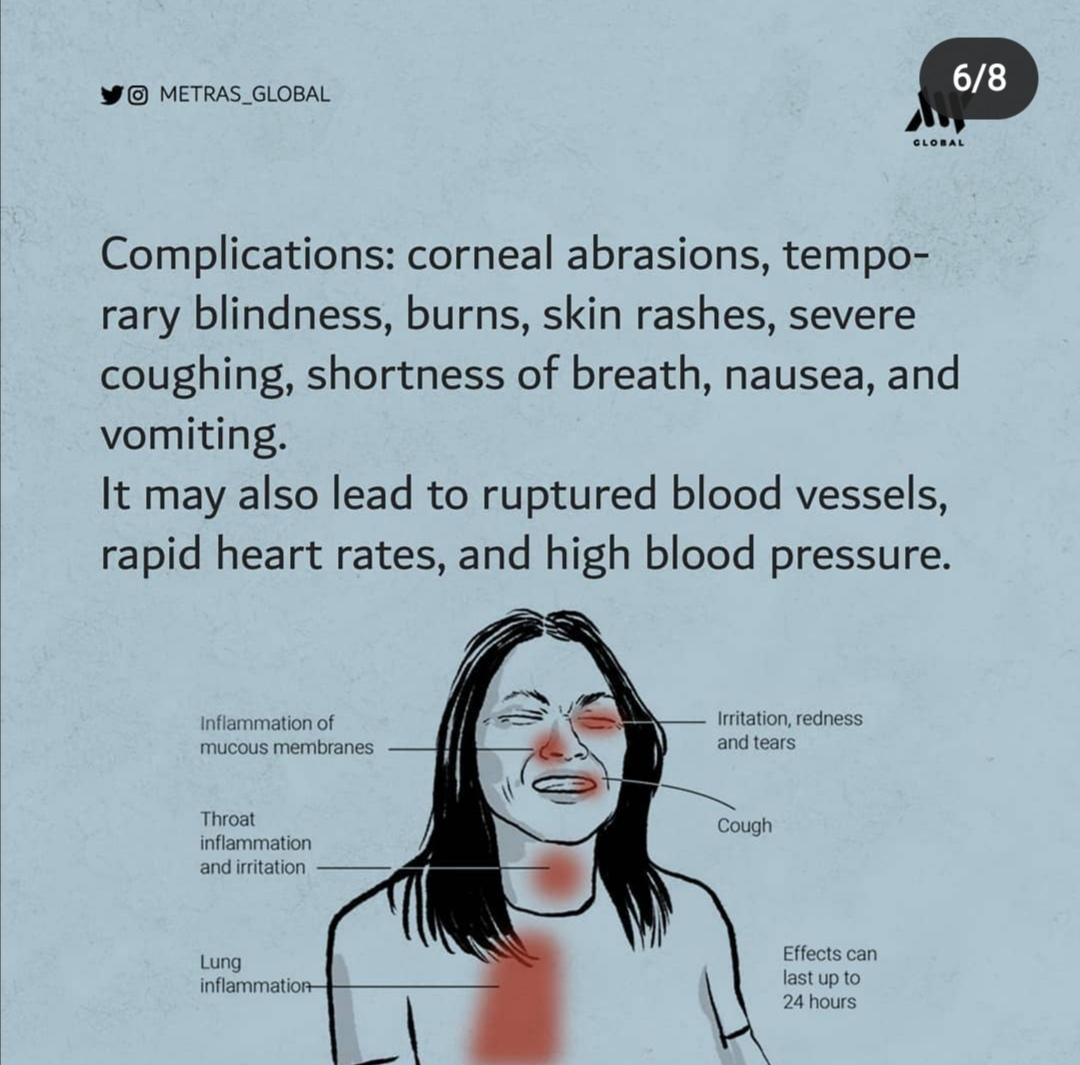
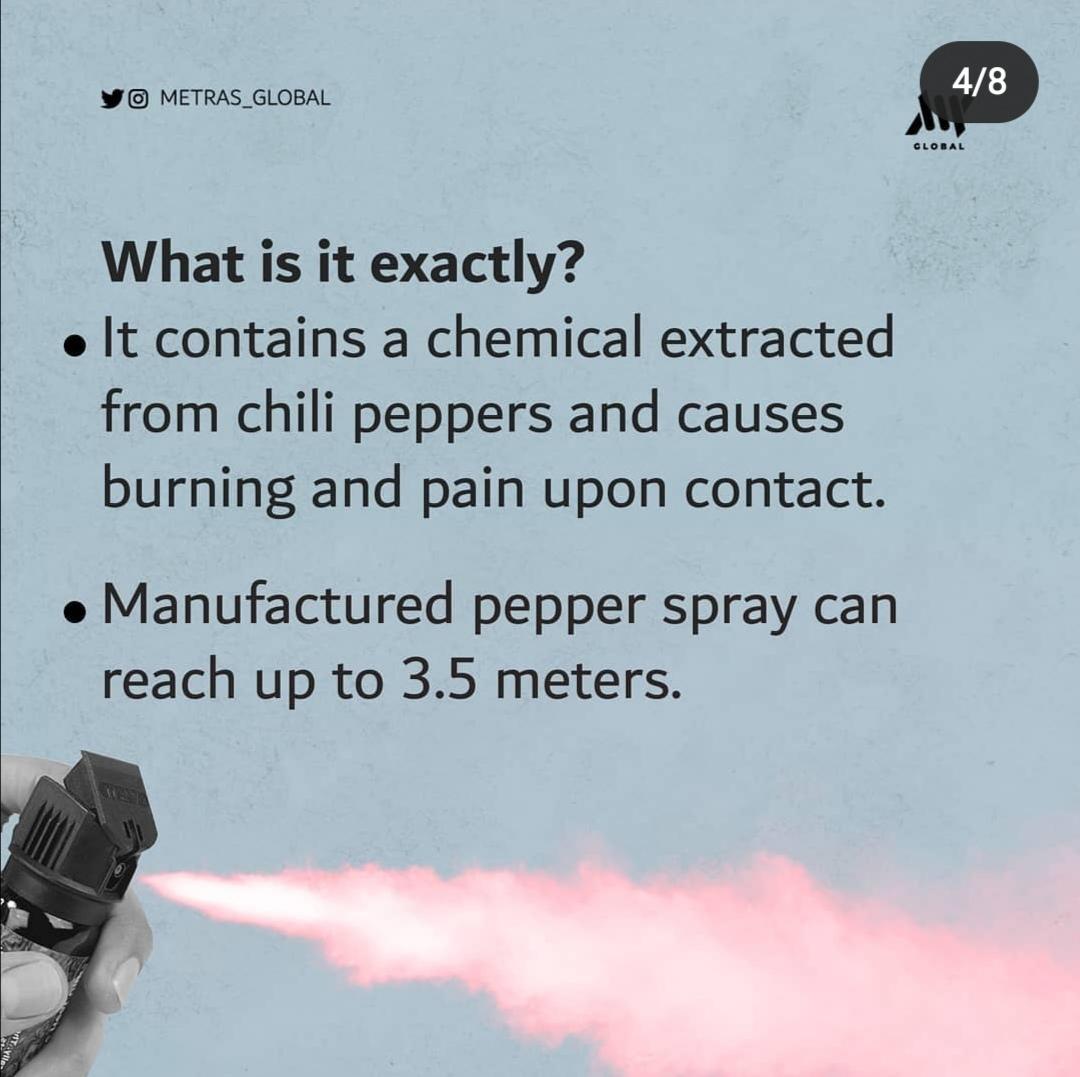
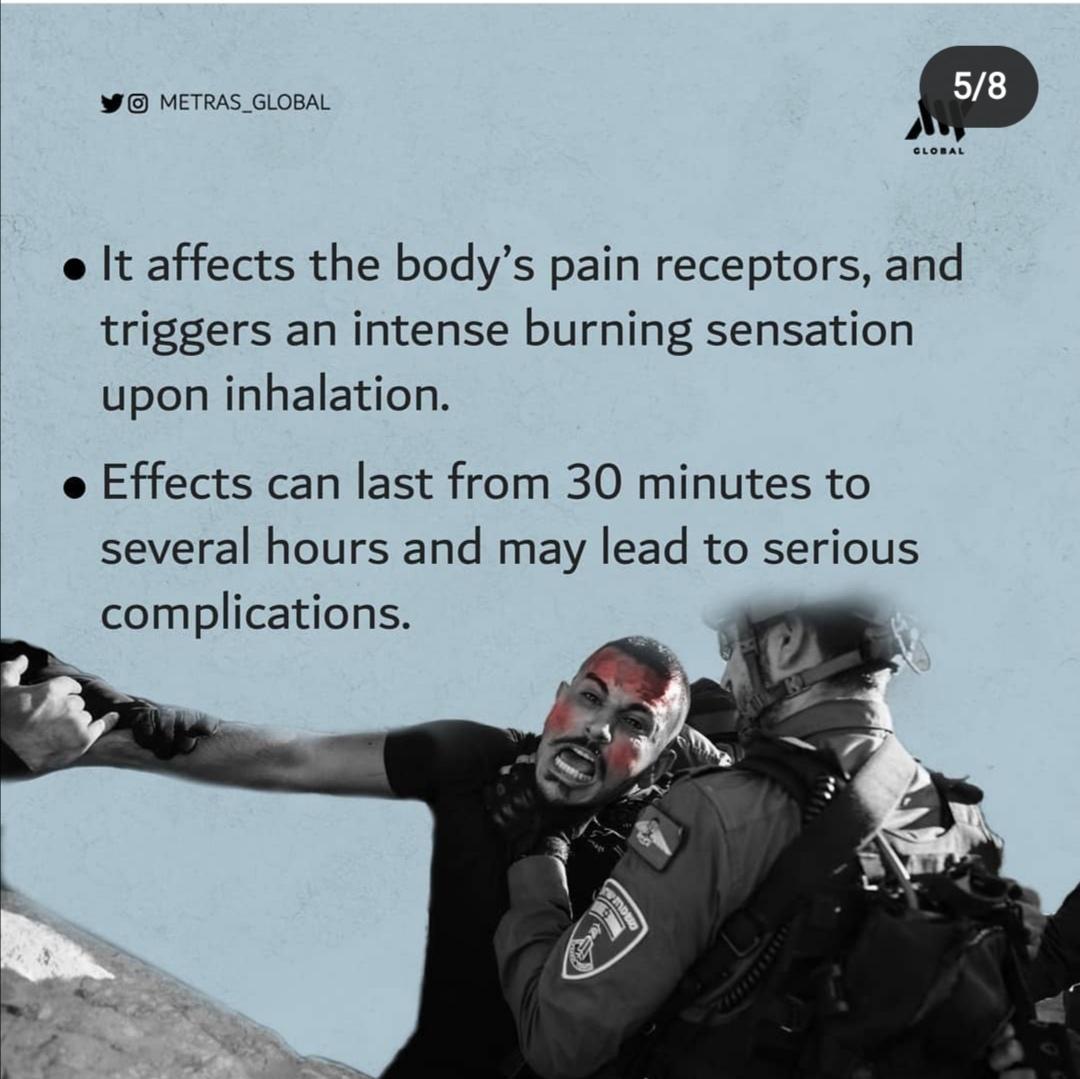
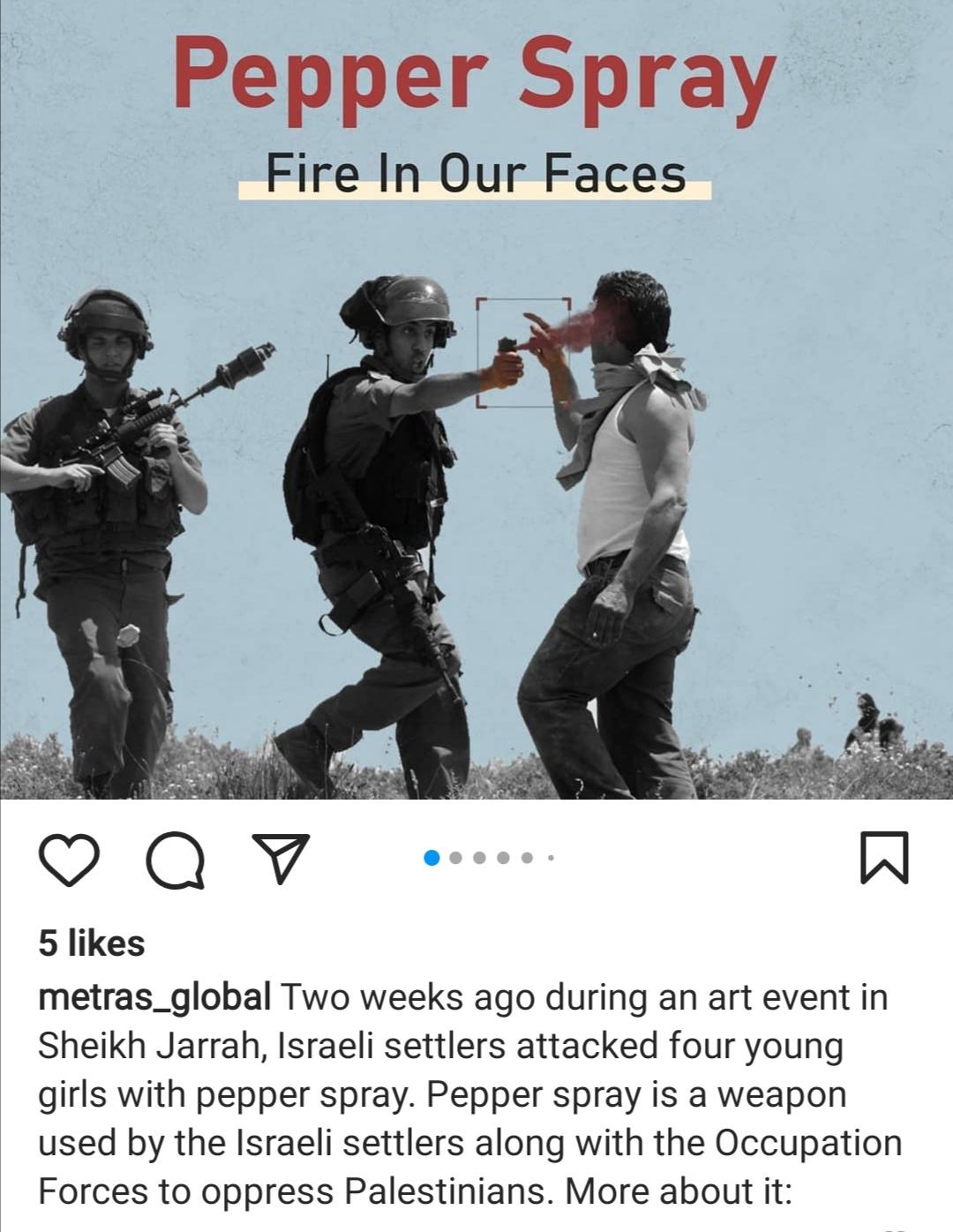
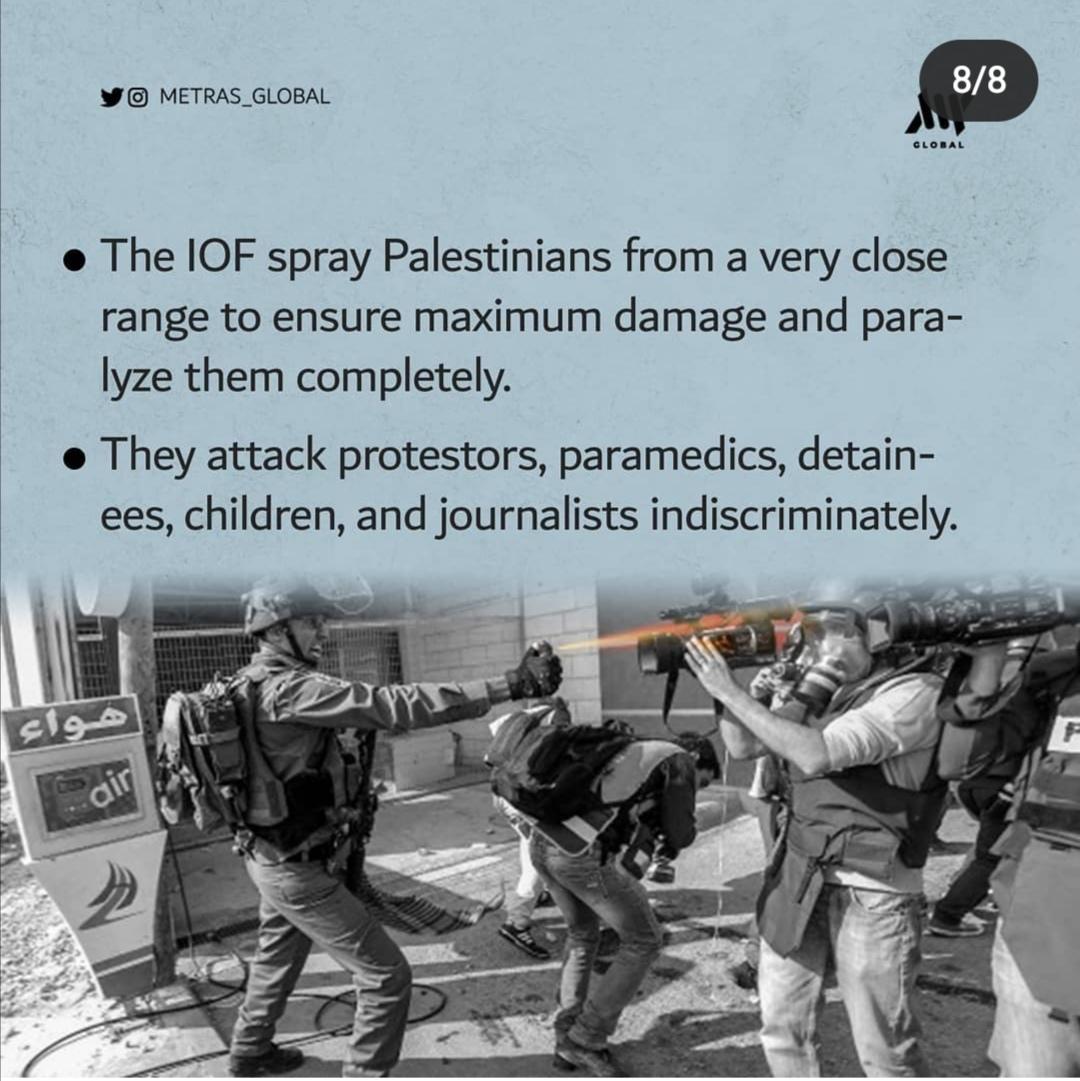
Pepper Spray Two weeks ago during an art event in Sheikh Jarrah, Israeli settlers attacked four young girls with pepper spray. Pepper spray is a weapon used by the Israeli settlers along with the Occupation Forces to oppress Palestinians. More about it: MetrasGlobal (@metras_global) • Instagram photos and videos
-
Water network destroyed in Al-Jawaya village Eye On Palestine on Instagram: "🇵🇸#Palestine || The Israeli occupation forces destroyed the water network in Al-Jawaya village, east of Yatta this morning. The Israeli…" The Israeli occupation forces destroyed the water network in Al-Jawaya village, east of Yatta this morning.The Israeli government relies on trying to cut off and destroy the basic necessities of life, the most important is water, as the residents of southern Hebron need water more, especially during the summer season.The occupation is following all these apatahied processes to force the people leave the land and give it to the settlers who are attacking the people by unbelievable way recently. [ Via Alliance For Human Rights]
-
-
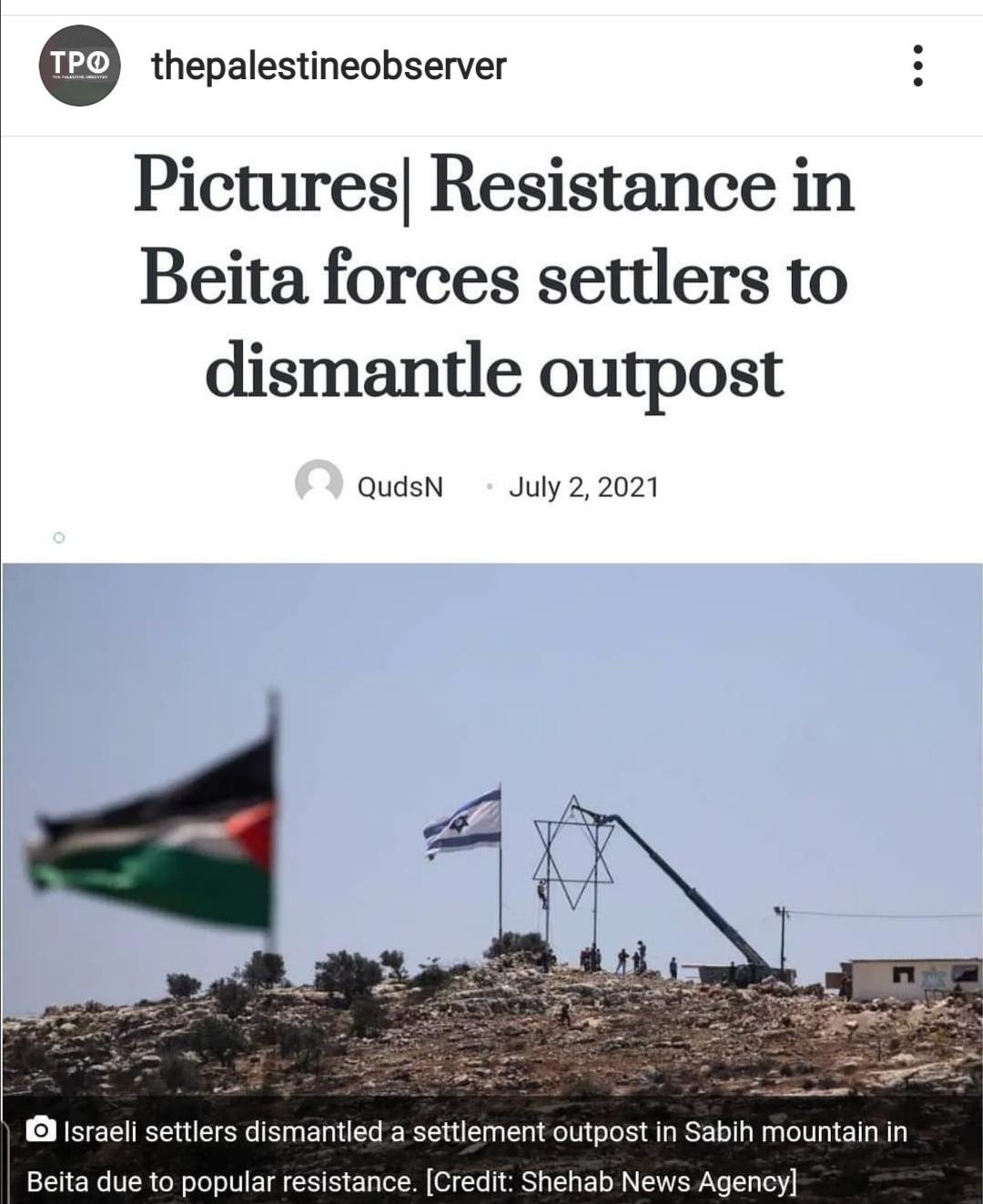
UPDATE The agreement to leave the Givat Eviatar settlement will still allow a Jewish religious seminary to be constructed in some months' time, according to reports - source