ummtaalib
-
Posts
8,477 -
Joined
-
Days Won
773
Content Type
Profiles
Forums
Events
Everything posted by ummtaalib
-
The Veil of the Muslim Woman
ummtaalib replied to ummtaalib's topic in Answers to Misconceptions about Islam
Hijaab: A Liberation Women in hijaab find freedom from the shackles of the ever changing fashion trends. It is a means of saving time and money. How many people in the women sacrifice financial savings and health in a desperate attempt to meet up to an unrealistic standard of beauty? In Islam a woman is assessed for her piety, knowledge and contribution to society and not just superficial physical traits. -
The Veil of the Muslim Woman
ummtaalib replied to ummtaalib's topic in Answers to Misconceptions about Islam
Hijaab: A sign of a Woman’s Honour Hijab is a special outfit of honour. When a woman prays in her home while no one else present, not even a child, she must still wear hijab when she is standing before Allah (swt), the Lord of all the worlds. If hijab was something only intended to protect a woman from men who are not relatives and may have bad intentions, then why should she wear it when she is standing alone before Allah (swt)? A further piece of evidence is as follows. Slavery was a phenomenon that existed all over the world and Islam managed to end it relatively quickly and indeed centuries earlier than it ended in other parts of the world. During the era in which slavery still existed but was being tackled and was finally stopped by Islam, the female slaves were not obliged to wear hijab. For them, hijab was not compulsory though they could choose to wear it. However, a free woman, or the mistress of a house, was required to observe hijab. So if hijab is a burden or is only a form of protection, why must a free woman observe it? Many people who do not understand hijab think that it is a sign of a woman’s inferiority and that they are to wear hijab because they are inferior to men or to unveiled non-Muslims. On the contrary, those in higher positions are supposed to observe hijab more. Thus, whoever is closer to Allah (swt) should observe hijab more. -
The Veil of the Muslim Woman
ummtaalib replied to ummtaalib's topic in Answers to Misconceptions about Islam
Hijaab: A Protection "Prophet! Tell thy wives and thy daughters and the women of the believers to draw their cloaks close round them (when they go abroad). That will be better, so that they may be recognized and not annoyed. Allah is ever Forgiving, Merciful." (Qur'an 33:59) -
The Veil of the Muslim Woman
ummtaalib replied to ummtaalib's topic in Answers to Misconceptions about Islam
Hijaab: A sign of Modesty Modest clothing and hijab are precautions to avoid social violations. The following verses of the Quran highlight that this is not limited to women only. "Say to the believing men that they should lower their gaze and guard their modesty; that will make for greater purity for them; and Allah is well acquainted with all that they do. And say to the believing women that they should lower their gaze and guard their modesty; and that they should not display their beauty and ornaments except what must ordinarily appear thereof; that they should draw their veils over their bosoms and not display their beauty except to their husbands…." (Qur'an 24:30-31) WhyIslam -
The Veil of the Muslim Woman
ummtaalib replied to ummtaalib's topic in Answers to Misconceptions about Islam
Hijaab: A Sign of Piety & an Expression of Faith There are a myriad of reasons why a Muslim woman wears the hijaab, however in most cases it is because they believe God has made it an obligation for believing women. It is an expression of their submission to their Lord. -
The Veil of the Muslim Woman
ummtaalib replied to ummtaalib's topic in Answers to Misconceptions about Islam
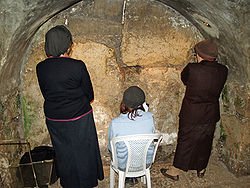
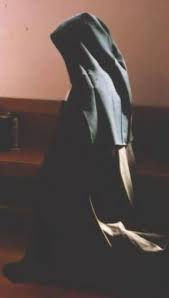
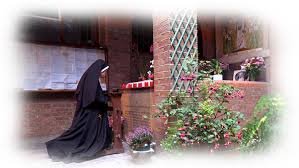
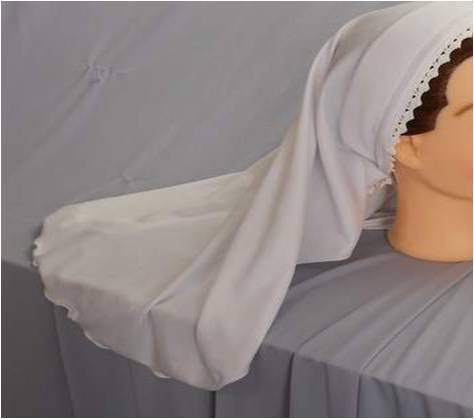
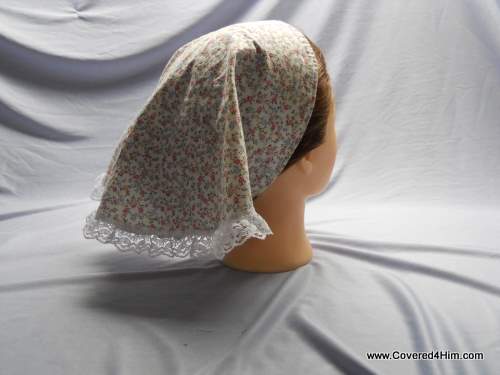
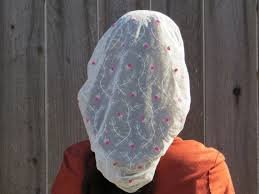
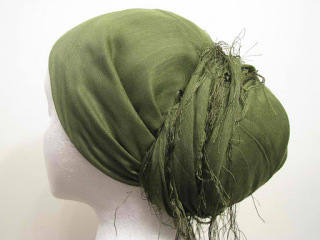
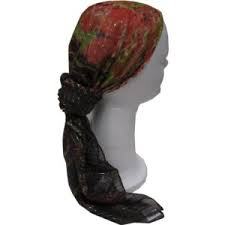
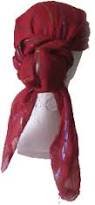
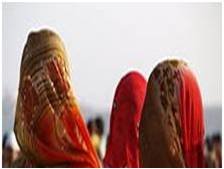
The Veil in other Religions A common misconception is that Muslim women are the only ones who cover their hair. It may be true that Islam is the only religion in which most women follow its directives to cover the hair, but it is not the only religion to have such directives. The Head Covering in Christianity Pictures from Christian Modesty The Habit of the Nun Regarding a nun in her habit, is that a symbol of oppression or a dress that demands dignity and respect? The habit of a nun is a complete hijab. When a Catholic nun dresses in that way, she becomes dignified, but when a Muslim woman dresses in that way, she becomes the symbol of oppression?! 53 Bible Verses about Modesty The Head Covering in Judaism Praying Jewish women wearing Tichel The Tichel in different styles Modesty in Judaism The Veil in Hinduism Indian women with the Ghoongat Modesty in Hinduism Veiling and the Seclusion of Women
-
Tahajjud Salaah After Isha Q: Will I receive the reward of tahaujjd if I perform nafil Salaah after esha before retiring to bed with the intention of tahajjud? A: Tahajjud refers to the salaah which is performed after awakening (from one’s sleep) during the night. Tahajjud salaah can be performed anytime after the Esha salaah until the time of subah saadiq. If one performs salaah before sleeping with the niyyat of tahajjud, Insha Allah he will receive the reward of tahajjud. And Allah Ta'ala (الله تعالى) knows best. وعن إياس بن معاوية المزني أن رسول الله صلى الله عليه و سلم قال لا بد من صلاة بليل ولو حلب شاة وما كان بعد صلاة العشاء فهو من الليل رواه الطبراني في الكبير وفيه محمد بن إسحاق وهو مدلس وبقية رجاله ثقات (مجمع الزوائد #3525) وعن جابر عن النبي صلى الله عليه و سلم قال لا تدعن صلاة الليل ولو حلب شاة رواه الطبراني في الأوسط وفيه بقية بن الوليد وفيه كلام كثير (مجمع الزوائد #3523) مطلب في صلاة الليل قوله ( وصلاة الليل ) أقول هي أفضل من صلاة النهار كما في الجوهرة ونور الإيضاح وقد صرحت الآيات والأحاديث بفضلها والحث عليها قال في البحر فمنها ما في صحيح مسلم مرفوعا أفضل الصلاة بعد الفريضة صلاة الليل وروى الطبراني مرفوعا لا بد من صلاة بليل ولو حلب شاة وما كان بعد صلاة العشاء فهو من الليل وهذا يفيد أن هذه السنة تحصل بالتنفل بعد صلاة العشاء قبل النوم . (رد المحتار 2/24) Answered by: Mufti Zakaria Makada Checked & Approved: Mufti Ebrahim Salejee (Isipingo Beach)
-
Jazaakillah, actually that answers a question i've had in my mind for a long time
-
erm yes but slowly (and I need harakaat) so i get put off ) :
-
Question Assalamu Alaikum, What does it exactly mean by mufti bihi opinion of any madhhab? Can you elaborate? Was-salam. Answer Wa'alaykum as Salam wa rahmatullahi wa barakatuhu, The literal meaning of Mufta bihi is 'the view on which fatwaa is given on'. Basically, in every Madhab we have countless Fuqaha. At times, those who reached the status of Ijtihaad within a Madhab differ from others. For example, in the Hanafi Madhab, we have an elite student of Imam Abu Hanifa (may Allah be pleased with him) - (Imam Muhammad, for example) - differing with him. Since the student too is a Mujtahid, there are times when a Mufti will pass verdict in accordance to the view of that student. That view becomes the Mufta Bihi (the view upon which verdict is given). If the verdict is passed on the view of Imam Abu Hanifa, then that is Mufta Bihi. On a side note, this proves that a Madhab is not the work of one individual, rather it is the combined effort of thousands of scholars. Tags: Mufta bihi
-
- 1
-

-
Jazaakillah Haya!
-
(Click on pictures to enlarge)
-
Isra & Meraj in Detail
ummtaalib replied to ummtaalib's topic in Muhammad (Sallallaahu 'alayhi wasallam)
Some Lessons from Mi'raaj- Synopsis Sublime Position of Salaah: The greatest gift given on this miraculous journey on Mi'raj was the gift of salaah. The importance of this great gift is evident by the fact that the Prophet(sallallahu alaiyh wassallam) was called personally to the heavens and beyond to receive this injunction, whereas most other injunctions were given on earth via Jibraeel(alaiyhis salaam). Moreover, the fact that Jibraeel(alaiyhis salaam) descended the very next day after Mi'raj to teach Nabi(sallallahu alaiyh wassallam) the finer points of the method of salaah, highlights it's importance. Neglect of Salaah: During Mi'raj, Nabi (sallallahu alaiyhi wassallam) passed by a group of people whose heads were being crushed with boulders. After becoming smashed, their heads would again resume their original shape, only to be crushed again. This process would continue ceaselessly. When he asked Jibraeel (Alaihis salaam) who they were, he replied that they were those people who were neglectful of their salaah. During the time of salaah, they would remain asleep. Salaah with congregation: We notice that Nabi (sallallahu alaiyhi wassallam) performed salaah in congregation with all the Ambiya in Masjidul-Aqsa. This also illustrates the importance of salaah in congregation. Besides the warnings on discarding salaah with the congregation, many virtues have also been mentioned for observing salaat with congregation. Abdullah bin Umar(radhiallaha anhu) reports that Nabi (sallallahu alaiyhi wassallam) said, " Salaah performed in congregation exceeds the salaah performed individually(in reward) by twenty five times." (Sahih Bukhari Vol.1) Zamzam Water: In the incident of Mi'raaj, it has also been recorded that the blessed chest of Nabi (sallallahu alaiyhi wassallam) was opened, and his heart removed and washed in the water of Zam Zam, and then replaced and restored to its original condition. In today's modern, scientific age, when the practice of surgery has become an ordinary everyday occurrence, this is not at all difficult to believe. And since no other water was used, but the Blessed water of Zam Zam was used to wash the noble heart of Rasulullah (sallallahu alaiyhi wassallam), we can clearly understand the merit and excellence of this water. Importance of Masjidul Aqsa in Islam: The fact that Rasulullah(sallallahu alaiyhi wassallam) was taken to this Glorified Masjid and not to any other Masjid to perform salaah and lead the Ambiyaa, illustrates the pivotal role it plays in the life of a Muslim. In a hadith narrated by Hazrat Anas(R.A.): Rasullullah(sallallahu alaiyhi wassallam) has said that "the reward for salaah in his Masjid(Masjidun Nabawi) and in that of Masjidul Aqsa is of 50 000 prayers, but the reward of salaah in the kaaba is equal to a 100 000 prayers." (Ibn Majah) Some Meritorious recitations given during Mi'raj: Revelation of the last few verses of Surah Al Baqarah (i.e. from " Aa-manar-rasoolu bimaa un-zila ilayhi mir-rab-bihee wal-mu'-minoon....till the end). Increase recitation of 3 rd Kalimah: Rasullullah(sallallahu alaiyhi wassallam) said, "On the night of Mi'raj, I met Hazrat Ibraheem(alaiyhis salaam) and he said to me, O Muhammad ! Convey my salaam to your Ummah and inform them that undoubtedly the soil of Jannah is pure, its water is sweet, its ground is barren and its plants are: "Subhanallahi walhamdulillahi wala ilaha illallaahu wallaahu akbar." Admonitions and Punishments witnessed during Mi'raj: During this journey Rasulullah(sallallahu alaiyhi wassallam) was shown the different punishments meted out to those who transgressed and were dis-obedient. These experiences serve as a warning to the Ummah to refrain from dis-obedience and those actions that displease Allah Subhana Wata'ala. Refrain from Teaching without practicing: Punishment for this is "lips were being slit with scissors of fire- they are the khateebs who command people to do good deeds while forgetting their own selves." Refrain from Slandering: Punishment for this is "people who had fingernails of copper and they were raking their own faces and chests with them." Refrain from Consuming Interest: Punishment for this is "people with bellies as huge as houses (in which people stay) and inside their bellies were snakes which were visible from the outside." Refrain from fornication and adultery: Punishment for this is: " These people were eating the decayed meat and leaving the cooked meat untouched." Refrain from Abusing peoples trust: Punishment for this is: " A man who was struggling to carry a very large bundle of wood which he was unable to bear, yet he wanted to carry even more." Refrain from witholding Zakaat: Punishment for this is: "They were eating Daree'(a thorny plant of the fire of Jahannam) and Zaqqoom( a most bitter and foul smelling tree growing at the bottom of Jahannam) and the smouldering stones of Jahannam." In short all these punishments were shown to Rasulullah(sallallahu alaiyhi wassallam) so that he may warn mankind to abandon sin and transgression and encourage mankind to obedience and goodness. It is through His Divine Mercy that Allah Ta'ala has shown these incidents to mankind, so that one has the opportunity, now in this world to mend one's ways before it is too late. To believe and practice un-conditionally as Hazrat Abu Bakr(R.A.) did: It was belief that distinguished Abu Bakr as-Siddiq and placed him in a rank never to be equalled or surpassed by any of the companions or those who would come after them. Abu Bakr(R.A.) was known by the nickname ‘as-Siddiq (the believer)’ more than his real name. He gained that nickname because he immediately and unconditionally believed in what the prophet (Sallallaahu Alayhi Wasallam) said about his journey to the heavens. Abu Bakr(R.A.) had based his Imaan on his belief and practiced accordingly; Abu Bakr(R.A.)’s belief is that the Prophet (Sallallaahu Alayhi Wasallam) is the Informer. His practice of that was based upon the fact that Allah is the Legislator. Allah Ta’ala says, ‘The Messenger believes in what has been revealed to him from His Lord, and (so do) the believers. Each one believes in Allah, His Angels, His Books and His Messengers. (They say), ‘We make no distinction between one another of His Messengers’ and they say, ‘We hear, and we obey. (We seek) Your forgiveness, our Lord, and to You is the return (of all).’ (2:285) The lesson for us, the Muslims, is that if it is in the Qur’an or reported authentically as a Sunnah, then we should believe in it, and act upon it. In Summary: The Sahaba(radhiallahu anhum), however fully appreciated the gift of Mi'raj. They would never forego any salaah without any valid excuse to such an extent that a person who could not walk to the Masjid would be carried by two Sahaba and brought to the Masjid to perform salaah in congregation. Furthermore, we learn from the incident of Mi'raj, the importance of us strictly refraining from all vices and sins; especially those mentioned( adultery, consuming interest, speaking lies etc.). We should try to please our Glorious Creator and try our best not to transgress His Divine laws in anyway. At the same time, it was also announced that the major sins of those in the ummah of Rasullullah(sallallahu alaiyhi wassallam) who do not ascribe partners with Allah will be forgiven. (Sahih Muslim p. 97 Vol. 1). This means that they will not suffer eternal punishment on account of their major sins, but will instead be pardoned either through tawba (sincere repentance) and istighfaar (seeking the forgiveness of Allah), or after first being punished for their sins.(An Nawawi). We also understand, that from the incidents narrated, that the successful believer will attain Jannah and all the promised luxuries that are within it. Description of Jannah, the Damsels of Jannah and the various splendours have all been shown to our beloved Rasullullah(sallallahu alaiyhi wassallam) as an encouragement for the righteous. This is what the Sahaba have preserved regarding Mi'raj. This is what they practiced upon and propagated to others. Hence it is imperative that we take heed of these aspects and act accordingly. Courtesy: www.everymuslim.net -
Isra & Meraj in Detail
ummtaalib replied to ummtaalib's topic in Muhammad (Sallallaahu 'alayhi wasallam)
What is the Sidratul Muntahaa ? In the narrations of Hadith, the names Sidratul Muntahaa and As- Sidratul Muntahaa in both the forms have appeared while in the Qur'an Majeed, it is described only as Sidratul Muntahaa. The word "Sidrah " in Arabic means "a lote tree ", while "Al-Muntahaa " denotes "furthest" or "a place of ending". Why was this name given to the tree? In Sahih Muslim it is recorded that Rasulullah(sallallahu alaiyhi wassallam) said: "Every order of Allah that descends from above, comes to an end there, and every deed of man which rises from the earth towards the heavens, comes to a halt at this point. " In other words, whenever an order of Allah is issued, it first stops there before descending upon the earth, and the deeds of man from below first stop there and are then lifted above. It has already been mentioned that Rasulullah(sallallahu alaiyhi wassallam) said that it was adorned with objects of such resplendent beauty that none of the creation of Allah Ta'ala is able to describe its absolute elegance and splendour. Another Hadith, describes that it was bedecked with golden moths.(Sahih Muslim Vol.1). Concerning this tree, it has also been mentioned in the Hadith that it is so huge that a rider could ride for up to hundred years under the shade of its branches, or that a hundred horsemen are able to roam under its shade. (Mishkaat p. 498) ENTERING JANNAH AND BEHOLDING THE RIVER OF KAUSAR Hadrat Anas bin Maalik (Radiallahu anhu) reports that Rasulullah(sallallahu alaiyhi wassallam) said,"While walking in Jannah, I suddenly found myself along a river. On both its banks were domes of pearls that were empty in the centre (i.e. the whole dome consisted of just one pearl). I asked Jibraeel (Alaihis salaam) what this was and he replied that it was the river of Kausar which Allah has bestowed upon me. When I took a closer look at it, I noticed that the soil (beneath the water), was an immensely fragrant musk." (Sahih Bukhaari) THE PURE HEART OF NABI(sallallahu alaiyhi wassallam) WASHED WITH ZAM ZAM IN A GOLDEN TRAY In the Ahaadith on the incident of Mi'raaj, it has also been recorded that the blessed chest of Nabi(sallallahu alaiyhi wassallam) was opened, and his heart removed and washed in the water of Zam Zam, and then replaced and restored to its original condition. In today's modern, scientific age, when the practice of surgery has become an ordinary everyday occurrence, this is not at all difficult to believe. And since Zam Zam was used to wash the noble heart of Rasulullah(sallallahu alaiyhi wassallam), we can clearly understand the merit and excellence of this water. The Hadith also mentions that the heart of Nabi(sallallahu alaiyhi wassallam) was filled with Imaan, and Hikmah (wisdom). What this means, is that the overwhelming power of Imaan in Rasullullah(sallallahu alaiyhi wassallam) and the wisdom in his heart was reinforced and enhanced in order to fortify him with strength and power required for his magnificent journey into the heavens. Source: The Miracle of Mi'raaj- Mufti Aashiq Ilaahi Bulandshari Courtesy: www.everymuslim.net -
Isra & Meraj in Detail
ummtaalib replied to ummtaalib's topic in Muhammad (Sallallaahu 'alayhi wasallam)
What is the Buraaq and what were it's features? The name "Buraaq" is derived from the word "bareeq" which means "white " in Arabic. According to another view, its origin lies in the word "barq " which means "light", the speed of which is well-known; hence the name Buraaq. From the narrations of Hadith, it is clear that before Nabi(sallallahu alaiyhi wassallam), other Prophets too had travelled upon it. For instance, Imaam Baihaqi relates in his Dalaa-ilun Nubuwwah (p.390 vol.2) that Nabi(sallallahu alaiyhi wassallam) said: "Other Prophets used to ride on it before me. " The Prancing of the Buraaq in excitement and the reason for it In the Sunan of Tirmizi, on the commentary of Surah Al lsraa, it is narrated that Rasulullah(sallallahu alaiyhi wassallam) said, "On the night of my journey, when the Buraaq was brought before me in a bridled and saddled state, it began to prance about. Jibraeel said to it, 'How dare you prance before Muhammad ? Nobody more honoured and beloved to Allah than Muhammad has ever ridden on your back before him.' When it heard this, the Buraaq immediately began to perspire heavily (and became submissive)." It is mentioned in Dalaa-ilun Nubuwwah that Rasulullah(sallallahu alaiyhi wassallam) said, "No sooner did the Buraaq begin to prance, Jibraeel twisted its ears and helped me mount it. (Dalaa-ilun Nubuwwah (p.355 vol.2)". In some narrations, it is mentioned that when Nabi(sallallahu alaiyhi wassallam), reached Baitul Maqdis, Jibraeel (Alaihis salaam) carved a hole in the wall with his fingers and tied the Buraaq around it." (Ibn Katheer) The reason for the excitement of the Buraaq Some scholars believe that the Buraaq was excited because it was being used after a long time. Even during the period of Fatrah (i.e. the period in between the advent of Jesus-Eesa (Alaihis salaam) and Rasulullah(sallallahu alaiyhi wassallam) nobody had ridden upon it. It was now overjoyed at this newly-found privilege.(Fathul Baari Pg.207 Vol.7). Other scholars believe it to be on account of its sense of pride and ecstasy at the prospect of being honoured with the Last and the Noblest of all Prophets(sallallahu alaiyhi wassallam). This was similar to the occasion when Nabi(sallallahu alaiyhi wassallam), accompanied by Hadrat Abu Bakr, Hadrat Umar and Hadrat Usmaan (Radiallahu anhum) were on Mount Thabeer when it began to shudder. "Be still! " he ordered the mountain, 'for standing upon you is a Nabi, a Siddeeq, and two Martyrs." (Mishkaat p.562 from Tirmizi and Nasaee) Certainly it is within the power of Allah Ta'ala to have transported Nabi(sallallahu alaiyhi wassallam) without the agency of the Buraaq. But He did so purely in order to honour and exalt him. Since travelling without a vehicle would have obviously meant that the journey would have had to be undertaken on foot, and travelling in a vehicle is far more dignified, Nabi(sallallahu alaiyhi wassallam) was taken by means of a conveyance." .(Fathul Baari Pg.206 Vol.7). To Baitul Maqdis on the Buraaq and upto the heavens by a ladder When Nabi(sallallahu alaiyhi wassallam) left Makkah for Baitul Maqdis, Jibraeel (Alaihis salaam) accompanied him on the back of the Buraaq. He sat in the front, as a guide, and seated Nabi(sallallahu alaiyhi wassallam) behind him..(Fathul Baari Pg.208 Vol.7). Like this, they travelled on the Buraaq until they reached Baitul Maqdis and performed two rakaat salaah each there. Then Nabi(sallallahu alaiyhi wassallam)led the Ambiyaa (Alaihimus salaam) in salaah. When Nabi(sallallahu alaiyhi wassallam) set out for the heavens, a ladder of extraordinary beauty was lowered before him. According to some narrations, one ladder was of gold, and another of silver, while another narration adds that they were also studded with pearls. As they journeyed upwards by the ladder, Nabi(sallallahu alaiyhi wassallam) was escorted on his right and left by a procession of angels until they arrived in the heavens and had the doors opened there. BAABUL HAFAZAH(The Gate of the Guardians) It has been recorded that the gate to the first heaven is called Baabul Hafazah and that an angel named Ismaeel has been appointed over it. This angel has twelve thousand angels under his charge and each one of these angels in turn has another twelve thousand angels under his command. After mentioning this, Nabi(sallallahu alaiyhi wassallam) recited the following verse: " And nobody knows the armies of your Lord except He." (Qur'an 74:31) - (Fathul Baari Pg.207-208 Vol.8- Seerah ibn Hisham). Meeting the keeper of Jahannam in the first heaven and seeing Jahannam When Nabi(sallallahu alaiyhi wassallam), entered the closest sky, every angel he met there, greeted him with great joy, and prayed (dua) for his well-being. However, there was one angel among them, who, despite meeting Nabi(sallallahu alaiyhi wassallam) and making dua for him, did not smile. When he asked Jibraeel (Alaihis salaam) who this angel was, he replied, "This is Maalik, the keeper of Jahannam. If he were ever to smile at anyone before or after you, he would certainly have smiled when meeting you. But (truly) he does not smile." Nabi(sallallahu alaiyhi wassallam) requested Jibraeel to tell him to show him Jahannam. Jibraeel (Alaihis salaam) said, "O Maalik! Show Muhammad the fire of Jahannam." He lifted the lid of Jahannam and immediately the flames of the fire leapt from the top. Nabi(sallallahu alaiyhi wassallam) said, "O Jibraeel! Tell him to order Jahannam back to its place." At the instruction of Jibraeel (Alaihis salaam), the angel at once ordered the fire back to its place and replaced the lid over it. Source: The Miracle of Mi'raaj- Mufti Aashiq Ilaahi Bulandshari Courtesy: www.everymuslim.net -
Isra & Meraj in Detail
ummtaalib replied to ummtaalib's topic in Muhammad (Sallallaahu 'alayhi wasallam)
Some of the Things witnessed during Mi'raaj Hadrat Moosa (Alaihis salaam) performs Salaah in his Grave It is related by Hadrat Anas (Radiallahu anhu) that Rasulullah(sallallahu alaiyhi wassallam) said, "On the night in which I was taken on the journey, I passed by Moosa (Alaihis salaam) and he was performing salaah in his grave." (Sahih Muslim Pg.268 Vol.1) People's Lips Slashed with Shears Anas (Radiallahu anhu) narrates that Rasulullah(sallallahu alaiyhi wassallam) said, "On the night of Mi'raaj, I saw some people whose lips were being slit with scissors of fire. I asked Jibraeel who these people were and he replied that they are the khateebs who command people to do good deeds while forgetting their own selves." In another version of this Hadith it says, "They are the sermonizers (of your ummah) who say such things which they themselves do not do. They read the Book of Allah, without themselves practising upon it." (Mishkaatul Masaabih Pg.438) People Scraping their Chests with their Fingernails Anas (Radiallahu anhu) narrates that Rasulullah(sallallahu alaiyhi wassallam) said, "When I was taken up during the Me'raaj, I passed by people who had fingernails of copper and they were raking their own faces and chests with them. I asked Jibraeel (Alaihis salaam) who they were and he replied that they were those who used to eat the flesh of others (i.e. slandered them) and attacked their reputations." (Abu Dawood, in Mishkaat p.249) The Miserable Plight of those who Consume Interest It has been narrated by Abu Hurairah (Radiallahu anhu) that Rasulullah(sallallahu alaiyhi wassallam) said, "On the night of Mi'raaj, I passed by people with bellies as huge as houses (in which people stay) and inside their bellies were snakes which were visible from the outside. I asked Jibraeel (Alaihis salaam) who they were. He replied that they were those who consume interest (usury)." (Mishkaatul Masaabih Pg.246) Angels Emphasize the Importance of Cupping Hadrat Abdullah bin Mas'ood (Radiallahu anhu) narrates: "Among the things described by Rasulullah(sallallahu alaiyhi wassallam) about the journey of Mi'raaj was that every group of Angels he passed by, urged him to instruct his ummah to practise cupping." (Mishkaatul Masaabih p.389 from Tirmizi and Ibn Maajah) In the past, the custom of cupping was very much in vogue among the Arabs. It is a way of letting out bad and excess blood from the body and a sovereign remedy for many diseases. People have abandoned having faith in this practice today. Rasulullah(sallallahu alaiyhi wassallam) used to have his head and the area between his shoulders cupped. (lbid) The Reward of the Mujaahidoon (i.e. those who strive in the path of Allah) Abu Hurairah (Radiallahu anhu) reports that Nabi (sallallahu alaiyhi wassallam) was travelling with Jibraeel (Alaihis salaam) when they passed by a group of people who were sowing seeds in the ground and harvesting the crops on the same day. Immediately thereafter, the seeds would again be sown into the ground and the entire process would be repeated. When Nabi (sallallahu alaiyhi wassallam) asked Jibraeel(Alaihis salaam) who these people were, he informed him that they were those who strive in the path of Allah. The reward for their every good deed would be multiplied seven hundred times and whatever they spent, Allah Ta'ala would certainly reward them for it. People's Heads Crushed with Rocks Nabi (sallallahu alaiyhi wassallam) passed by another group of people whose heads were being crushed with boulders. After becoming smashed, their heads would again resume their original shape, only to be crushed again. This process would continue ceaselessly. When he asked jibraeel (Alaihis salaam) who they were, he replied that they were those people who were neglectful of their salaah. During the time of salaah, they would remain asleep. The Despicable State of those who withhold their Zakaah Then he passed by another group of people whose private parts, from the front and behind, were wrapped in rags and they were grazing like camels and cattle. They were eating Daree'(a thorny plant of the fire of Jahannam) and Zaqqoom( a most bitter and foul smelling tree growing at the bottom of Jahannam) and the smouldering stones of Jahannam. Rasulullah(sallallahu alaiyhi wassallam) asked who these people were and Jibraeel (Alaihis salaam) replied, "They are those who do not discharge the zakaah of their wealth." People Eating Spoilt Meat Thereafter Nabi (sallallahu alaiyhi wassallam) passed by a group of people in front of whom was some cooked meat in a pot. In another pot nearby, was some raw and decayed meat. These people were eating the decayed meat and leaving the cooked meat untouched. Rasulullah(sallallahu alaiyhi wassallam) asked Jibraeel (Alaihis salaam) who they were, and he replied that they were those men of the ummah, who, despite having their own lawful and pure wives, would spend the night in the company of adulteresses and despicable women, and remained with them till the morning. And they were those women of the ummah who had left their lawful and pure husbands to spend the night with adulterous and evil men. A Person Carrying a huge bundle of wood Then, Rasulullah(sallallahu alaiyhi wassallam) passed by a man who was struggling to carry a very large bundle of wood which he was unable to bear, yet he wanted to carry even more. When Nabi(sallallahu alaiyhi wassallam) asked who he was, Jibraeel (Alaihis salaam) replied that this was the person who had been a trustee of people's possessions, but he had failed to discharge the trust. And yet, he was eager and willing to take on more of the things of people in trust. An Ox Attempts to Enter a Tiny Opening Thereafter, they came upon a tiny opening from which a huge ox emerged. After making its appearance, the ox wanted to return into this small hole. Nabi(sallallahu alaiyhi wassallam) asked who this was and Jibraeel (Alaihis salaam) replied that this was the person who, after having uttered some very serious and sinful words, was full of remorse and wished to retract them but was unable to do so. The Fragrance of Jannah Then Rasulullah(sallallahu alaiyhi wassallam) reached a valley from which a very beautiful fragrance emanated. The smell was of musk and it possessed a voice. Nabi(sallallahu alaiyhi wassallam) asked, "What is this?" Jibraeel (Alaihis salaam) replied that it is the voice of Jannah saying, "O My Lord! Bring to me those people who have been destined to stay in me, and fulfill your promise." Hearing the Shriek of Jahannam Then, Rasulullah(sallallahu alaiyhi wassallam) passed by another valley from which an unbearable voice could be heard. When he asked about it, Jibraeel (Alaihis salaam) replied that it was Jahannam imploring Allah saying, "Make over to me the people who have been destined to dwell in me, and fulfill your pledge." A shaitaan Trails Them In the Muatta of Imaam Maalik (Rahmatullahi alaih), there is a Hadith narrated by Yahya bin Sa'eed, that on the night of Mi'raaj, Nabi(sallallahu alaiyhi wassallam) saw a rebellious jinn pursuing him with a flame of fire. Whenever he would turn(to the right or left), he would catch sight of this Jinn. Jibraeel (Alaihis salaam) said, " Should I not teach you some words which, if recited, will extinguish this fire and cause him(the Jinn) to fall down on his face. Upon request of Rasulullah(sallallahu alaiyhi wassallam) , Jibraeel(Alaihis salaam) recited the following words: " Aoozu biwajhil laahil kareem wabi kaleematil laahit-taam-maati-lati la-yu-jaa-wizu-hunna barrun wala-fa-jir. Wa-min sharri ma-yanzilu minas-samaa. Wa-sharri maa-ya'ruju fie-haa, Wa-sharri maa-dha-ra-a fil-ardi, Wa-sharri maa-yakh-ruju min-haa. Wa-min fita-nil-layli wan-nahaar. Wa-min tawaa-ri-qil-layli wan-nahaar, illa taa-ri-qann yat-ruq bi-khair. Ya-Rahmaan." Salaams from Hazrat Ibrahim(alaiyhis salaam) to the Ummah of Rasulullah(sallallahu alaiyhi wassallam) Hazrat Abdullah bin Mas'ud(Radiallahu anhu) narrates that Rasulullah(sallallahu alaiyhi wassallam) said, "On the night of Mi'raj, I met Hazrat Ibraheem(alaiyhis salaam) and he said to me, O Muhammad ! Convey my salaam to your Ummah and inform them that undoubtedly the soil of Jannah is pure, its water is sweet, its ground is barren and its plants are: "Subhanallahi walhamdulillahi wala ilaha illallaahu wallaahu akbar." TWO OTHER GIFTS BESIDES SALAAH On the night of Mi'raaj, apart from the gift of salaah and the promised reward of fifty salaah in lieu of five, among other bounties of Allah is the: Revelation of the last few verses of Surah Al Baqarah (i.e. from " Aa-manar-rasoolu bimaa un-zila ilayhi mir-rab-bihee wal-mu'-minoon....till the end). Sins forgiven of the ummah of Rasulullah(sallallahu alaiyhi wassallam): At the same time, it was also announced that the major sins of those in the ummah of Rasulullah(sallallahu alaiyhi wassallam) who do not ascribe partners with Allah will be forgiven. (Sahih Muslim p. 97 Vol. 1). This means that they will not suffer eternal punishment on account of their major sins, but will instead be pardoned either through tawba (sincere repentance) and istighfaar (seeking the forgiveness of Allah), or after first being punished for their sins.(An Nawawi). Source: The Miracle of Mi'raaj- Mufti Aashiq Ilaahi Bulandshari Courtesy: www.everymuslim.net -
Isra & Meraj in Detail
ummtaalib replied to ummtaalib's topic in Muhammad (Sallallaahu 'alayhi wasallam)
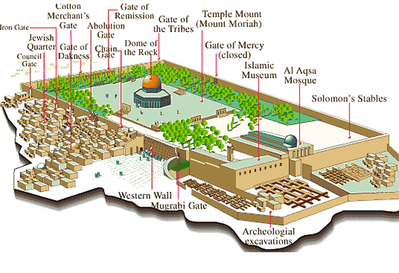
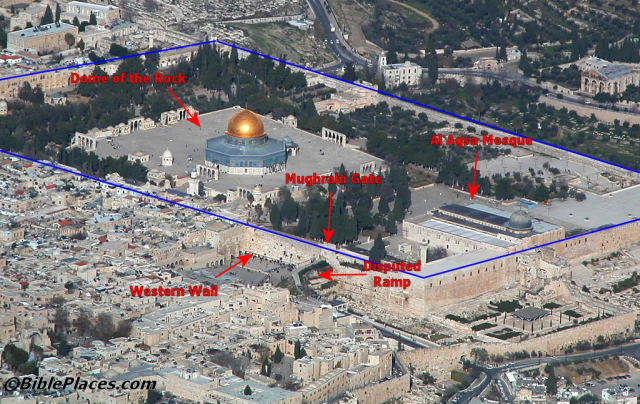
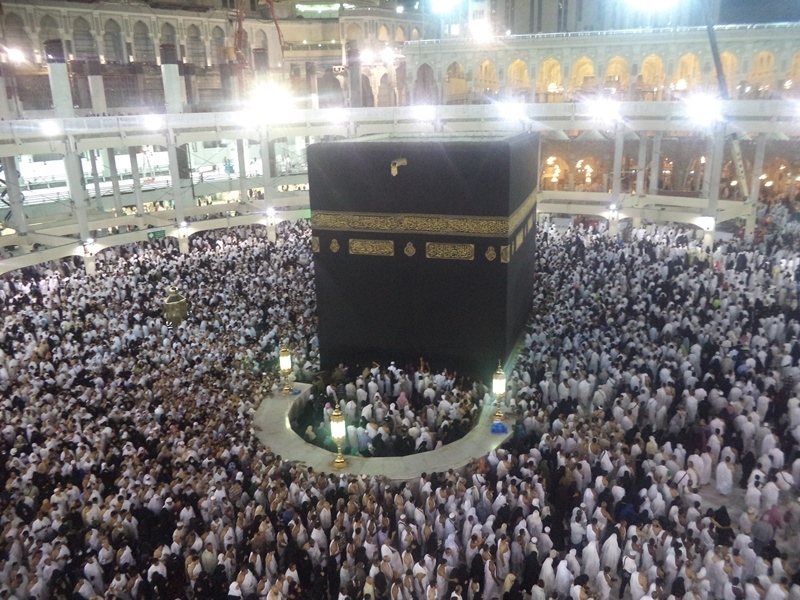
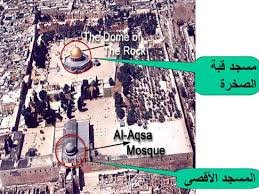
AL-ISRA AND Al-MI‘RAJ Summary of Events (The Miraculous Night Journey from Makkah to the Farthest Mosque in Jerusalem, and the Ascent through the Spheres of Heavens) The story of ‘the Night Journey’ as we see in the Noble Qur’ân is epitomised in the first verse of the Sûrah Isra’(Chapter 17 — The Journey by Night) "Glorified be Allah Who enabled His slave, (Muhammad), for a journey by night from Masjid al-Haram (in Makkah) to Masjid al-Aqsa(in Jerusalem), the neighbourhood whereof We blessed, in order that We might show him(Muhammad) of our Ayat(proofs, evidences,signs etc.). Verily, He is the All-Hearer ,the All-Seer." This journey is also confirmed in the sahih(authentic) hadith. As such, there is scholarly consensus (ijma) that Prophet Muhammad(Peace and blessings be upon him) journeyed in body and soul on the night of al-Isra' from Masjid al-Haram in Makkah to Masjid al-Aqsa in Jerusalem and to the heavens beyond. As for its exact date, it is still controversial and no common consent has been reached. However, the majority of jurists is in favour of a date between 16-12 months prior to migration to Madinah. The following is a epitome of the details of that miraculous event narrated on the authority of Ibn Al-Qayyim. The Messenger of Allâh (Peace and blessings be upon him) was carried in body from the Sacred Mosque in Makkah to the Distant Mosque in Jerusalem on a horse called Al-Buraq in the company of Gabriel(Jibraeel-alaiyhis salaam), the archangel. There he alighted, tethered the horse to a ring in the gate of the Mosque and led the Prophets in prayer. After that Gabriel(Jibraeel-alaiyhis salaam) took him to the heavens on the same horse. When they reached the first heaven Gabriel(Jibraeel-alaiyhis salaam) asked the guardian angel to open the door of heaven. It was opened and he saw Adam(Peace be upon him), the progenitor of mankind. The Prophet (Peace and blessings be upon him) saluted him and he welcomed him and expressed his faith in Muhammad(Peace and blessings be upon him)’s Prophethood. He saw the souls of martyrs on his right and those of the wretched on his left. Gabriel(Jibraeel-alaiyhis salaam) then ascended with the Prophet(Peace and blessings be upon him) to the second heaven, asked for opening the gate and there he saw and saluted John, son of Zachariya (Yahya bin Zakariya(Peace be upon him)) and Jesus-Isa(Peace be upon him), son of Mary. They returned the salutation, welcomed him and expressed their faith in his Prophethood. Then they reached the third heaven where they saw Joseph (Yusuf(Peace be upon him)) and saluted him. The latter welcomed the Prophet(Peace be upon him) and expressed faith in his Prophethood. The Prophet(Peace and blessings be upon him), in the company of Gabriel(Jibraeel-alaiyhis salaam), then reached the fourth heaven where he met the Prophet (Idris(Peace be upon him)) and saluted him. Prophet Enoch(Peace be upon him) returned the salutation and expressed faith in his Prophethood. Then he was carried to the fifth heaven where he met the Prophet Aaron (Harun(Peace be upon him)) and saluted him. The latter returned the salutation and expressed faith in his Prophethood. In the sixth heaven he met Moses (Musa(Peace be upon him)) and saluted him. The latter returned the salutation and expressed faith in his Prophethood. Muhammad (Peace be upon him) on leaving, saw that Moses-Musa(Peace be upon him) began to weep. He asked about the reason. Moses-Musa(Peace be upon him) answered that he was weeping because he witnessed a man sent after him as a Messenger (Muhammad) who was able to lead more of his people to the Paradise than he himself did. Then Prophet Muhammad (Peace and blessings be upon him) reached the seventh heaven and met Abraham (Ibrahim) (Peace be upon him) and saluted him. The latter returned the salutation and expressed faith in his Prophethood. Then he was carried to Sidrat-al-Muntaha (the remotest lote tree) and was shown Al-Bait-al-Ma‘mûr [(the much frequented house) which is like the Ka‘bah (Sacred House) encompassed daily by seventy thousand angels, so that the angels who once encompassed it would not have their turn again till the Resurrection]. He was then presented to the Divine Presence and experienced the thrill of witnessing the Divine Glory and Manifestation at the closest possible propinquity. There the Lord revealed unto His servant that which He revealed, and ordained fifty daily prayers for him. On his return, he spoke to Moses(Peace be upon him) that his followers had been enjoined to pray fifty times a day. Moses(Peace be upon him) addressing the Prophet (Peace be upon him) said: “Your followers cannot perform so many prayers. Go back to your Lord and ask for a remission in number.” The Prophet(Peace and blessings be upon him) turned to Gabriel(Jibraeel-alaiyhis salaam) as if holding counsel with him. Gabriel(Jibraeel-alaiyhis salaam) nodded, “Yes, if you desire,” and ascended with him to the Presence of Allâh. The All-Mighty Allâh, Glory is to Him, made a reduction of ten prayers. He then descended and reported that to Moses(Peace be upon him), who again urged him to request for a further reduction. Muhammad(Peace and blessings be upon him) once more begged his Lord to reduce the number still further. He went again and again in the Presence of Allâh at the suggestion of Moses-Musa(Peace be upon him) for reduction in the number of prayers till these were reduced to five only. Moses-Musa(Peace be upon him) again asked him to implore for more reduction, but he said: “I feel ashamed now of repeatedly asking my Lord for reduction. I accept and resign to His Will.” When Muhammad(Peace and blessings be upon him) went farther, a Caller was heard saying: “I have imposed My Ordinance and alleviated the burden of My servants.” Some significant suggestive incidents featured in the ‘Night Journey’ of the Prophet(Peace and blessings be upon him), of which could be mentioned : The Prophet(Peace and blessings be upon him)’s breast was cleft by Gabriel-Jibraeel(Peace be upon him), his heart extracted and washed with the water of Zamzam —a sacred spring in Makkah. In the same context, there were brought to him two gold vessels. There was milk in one, while the other was full of wine. He was asked to choose either of them, so he selected the vessel containing milk and drank it. He (the angel) said: “You have been guided on Al-Fitrah or you have attained Al-Fitrah. Had you selected wine, your nation would have been misled.” [it is a symbolic way of saying that good and evil in the form of milk and wine were brought before the Prophet and he instinctively made a choice for the good. It is very difficult to render the Arabic term ‘Fitrah’ into English. It denotes the original constitution or disposition, with which a child comes into this world, as contrasted with qualities or inclinations acquired during life; besides it refers to the spiritual inclination inherent in man in his unspoilt state]. He had the opportunity to see Malik, the guardian of Hell, with a cheerless frowning face. Therein, he saw the Hell dwellers, of whom were those who unjustly eat up the property of the orphans. They have flews similar to those of camels, swallowing red-hot stones and then issuing out of their backs. There were also the people who take usury with bellies too big to be able to move around; they are trodden by the people of Pharaoh when these are admitted into Hell. In the same abode, he saw the adulterers offered tasty fatty meat and rotten smelly one but they make option for the latter. The licentious women were also there hanging from their chests. In Paradise, the Prophet(Peace and blessings be upon him) saw some of the bounties Allah prepared for the inhabitants of Paradise. He saw the Hur ul Ayn(Damsels of Paradise). They are in Paradise and will be married to those men Allah willed them to marry. In short the Prophet(Peace and blessings be upon him) was shown the different punishments meted out to the inmates of Jahannam(hell) and he was priveledged to be shown the luxuries and pleasures of Jannah(heaven). The ‘Night Journey’ raised a good deal of stir among the people and the sceptical audience plied Muhammad(Peace and blessings be upon him) with all sorts of questions. He told them that he saw the camels of Makkan merchants to and fro. He also guided them to some of their animals that went astray. He informed them that he had drunk some of their water while they were fast asleep and left the container covered. The Prophet(Peace and blessings be upon him) Returns to Makkah After all these matters took place with the Prophet(Peace and blessings be upon him), he returned to the city of Makkah. Some scholars said the Prophet(Peace and blessings be upon him)'s journey took about one-third of the night, i.e., his journey from Makkah to Jerusalem, then to the heavens and what is above them, and then back to Makkah. The next day the Prophet(Peace and blessings be upon him) told the people what happened to him the previous night. The blasphemers belied the Prophet(Peace and blessings be upon him) and mocked him, saying, "We need a month to get there and back, and you are claiming to have done all this in one night?" They said to Abu Bakr, "Look at what your companion is saying. He says he went to Jerusalem and came back in one night." Abu Bakr(R.A.) told them, "If he said that, then he is truthful. I believe him concerning the news of the heavens--that an angel descends to him from the heavens. How could I not believe he went to Jerusalem and came back in a short period of time--when these are on earth?" At that, the Companion, Abu Bakr(R.A.), was called "as-Siddiq"--because of how strongly he believed all what the Prophet(Peace and blessings be upon him) said. The blasphemous people questioned the Prophet(Peace and blessings be upon him): "If you are truthful, then describe to us Masjid Al-Aqsa and its surroundings." They asked this because they knew Prophet Muhammad(Peace and blessings be upon him) had never been there before the previous night. Allah enabled the Messenger to see Masjid al-Aqsa, and he described the masjid and its surroundings in exact detail. Moreover, the Prophet(Peace and blessings be upon him) said, "On my way back, I saw some of your shepherds grazing their animals in a particular location. They were searching for a camel they had lost." The Prophet(Peace and blessings be upon him) continued by giving the description of the camel. When these shepherds came back, they told their people what happened to them--precisely as the Prophet(Peace and blessings be upon him) had already told them. The disbelievers, however, found it a suitable opportunity to jeer at the Muslims and their creed. They pestered the Prophet (Peace and blessings be upon him) with questions as to the description of the Mosque at Jerusalem, where he had never gone before and, to the astonishment of many, the Prophet(Peace and blessings be upon him)’s replies furnished the most accurate information about that city. He supplied them with all the news about their caravans and the routes of their camels. However, all this increased in them nothing but flight from the Truth, and they accepted nothing but disbelief. For the true devout Muslims, there is no difficulty in believing the miraculous Night Journey. The All-Mighty Allâh, Who is Powerful enough to have created the heavens and the earth by an act of His Will, is surely Powerful enough to take His Messenger(Peace and blessings be upon him) beyond the heavens and show him those signs of His at firsthand which are inaccessible to man otherwise. The disbelievers on their part went to see Abu Bakr(R.A.) on account of this event, and he readily said: “Yes, I do verify it.” It was on this occasion that he earned the title of As-Siddiq (the verifier of the truth). The most eloquent and most concise justification of this ‘Journey’ is expressed in Allâh’s Words: “... in order that We might show him (Muhammad) of Our Ayât (proofs, evidences, signs, etc.)” [17:1]. The Divine rules as regards the Prophets goes as follows: “Thus did We show Abraham the kingdom of the heavens and the earth that he be one of those who have Faith with certainty.” [6:75] To Moses-Musa(Peace be upon him), his Lord said: “That We may show you (some) of Our Greater Signs.” [20:23] In order that: “He be of those who have Faith with certainty.” There are the simple facts that emanate from this blessed Journey, and flow along into the flowery garden of the Prophetic biography of the Prophet Muhammad(Peace and blessings be upon him) that leave lessons manifest for mankind. Main Source: Raheequl Makhtoom Courtesy: www.everymuslim.net -
Isra & Meraj in Detail Mer'aaj and Isra: The Muarrikheen(historians) have differed greatly with regard to the date of Me'raj(Ascension). Hafiz ibn Hajar(Rahmatullahi alaiyh) has quoted more than ten different dates which the Ulema and historians have regarded as the possible date of Me'raj.(refer Fathul-Baree Vol.6 Page 203). As for its exact date, it is still controversial and no common consent has been reached. However, the majority of jurists are in favour of a date between 16-12 months prior to the migration to Madinah. ISRAA (NIGHT JOURNEY): refers to the journey of the Messenger of Allah (Peace and blessings be upon him) from the Sacred Mosque(Masjidul Haram) in Makkah to the Distant Mosque(Masjidul Aqsa) in Jerusalem on Al-Buraq in the company of Gabriel(Jibraeel-alaiyhis salaam). MI' RAJ (ASCENSION): Refers to what happened to the Prophet(Peace and blessings be upon him) when he ascended from al-Masjid al-Aqsa in Jerusalem up to beyond the Seventh Heaven, where Salaat(prayer) was prescribed, and then returning back in the same fashion in the same night. Courtesy: www.everymuslim.net
-
Wearing the Pants above the Ankles Once Suhail bin Hanzalah (Radhiallahu Anhu) mentioned: “On one occasion Rasulullah (Sallallahu Alaihi Wasallam) made mention of Hadhrat Khuraim Asadi (Radhiallahu Anhu) and said, “He is a good man except for two habits, viz. he keeps the hair of his head too long and he allows his izaar (lower garment) to go below his ankles. When Khuraim learnt of this, he immediately cut his hair up to his ears and began to keep his izaar up to the middle of the calf of his leg.” (Fazaail Aamaal) يَا رَبِّ صَلِّ وَ سَلِّمْ دَائِمًا أَبَدًا عَلَى حَبِيبِكَ خَيرِ الخَلْقِ كُلِّهِمِ
-
An Interview with Umm Saalih A Grandmother Who Completed Memorizing the Qur'an at Eighty-Two Years Old As Read by Dr. Saleh as Saleh Al-Hamdulillaah (All-Praise is due to Allah), the One Who said (what means): "And in truth We have made the Qur'aan easy to remember; but is there any that remembers?" Surah 54: 32 Many all over the world memorize the Qur'aan, and it is not strange to see the youth memorizing the Noble Qur'aan and an early age. Al-Hamdulillaah, the One who made the Qur'aan easy for remembrance, had made it easy for Umm Saalih age 82. In an interview with Umm Saalih, she was asked the following questions: Q1: "What was the reason that drove you to memorize the Qur'aan after so many years?" She said, "I always hoped to memorize the Qur'aan from the time I was young. My father always used to invoke Allaah for me to become one of the memorizers of the Qur'aan, like himself and like the elder brothers of my family who memorized it. So I memorized in the beginning about three parts and then after I completed the age of thirteen, I got married and became busy with the household and the children. After I had seven children, my husband died. They (the children) were all young so I took the time to raise them and educate them, and then after they grew up and got married, I had more time for myself. Therefore, the first thing I directed myself to focus upon was the Qur'aan. Q2: "Tell us about your journey with the Noble Qur'aan." She said, "My younger daughter was going to high school and she was the closest of my children to me and the most beloved, because she stayed with me after her older sisters got married and got busy with their lives, and because she was a quiet girl, upright, loving, and good. In addition, she was interested in learning the Noble Qur'aan, and her teachers encouraged her. Furthermore, she was very enthusiastic and always told me of many women who were driven by this great motivation to memorize the Qur'aan, and this is where I started." Q3: "Tell me about your way of memorization." She said, "We assigned ten verses (meaning her and her daughter who was going to high school). So each day after Asr, we used to sit together. She reads and I repeat after her three times. Then she explains the meaning to me, and after a while, she repeats that three times. On the next morning, she repeats them to me before she goes to school. She recorded also the recitations of Ash Shaykh al Husary, Rahimuhullaah, repeating each verse three times and thus I continued to listen most of the time. Therefore, the next day we would go to the next ten verses if my memorization was good. Otherwise, we would postpone taking additional verses until the day after. Moreover, we assigned the day of Friday to review the memorizations of the entire week. And this was the journey from the beginning." Then she said, "Over four years and a half, I memorized twelve juz" according to the way I described to you. Then this young daughter got married. When her husband knew of our task concerning the memorization, he rented a house close to me, close to my house, so that he could allow the continuation of the memorization. In addition, he, May Allah reward him used to encourage us and sometimes sit with us listening, explaining and teaching. Then after three years of her marriage, my daughter got busy with the children and the household and our schedule was interrupted, but that did not make her give up. To the contrary, she sensed that my eagerness for the memorization was still established so she looked for a special good teacher to continue the journey under her supervision. So, I completed the memorization by the success of Allaah and my daughter is still working to finish the memorization of the Glorious Qur'aan. She has a little left, In Shaa Allaah Ta'aala. Q4: "This motivation of yours, did it have an effect on other women around you?" She said, "It really had a good strong effect. My daughters and stepdaughters were all encouraged and worked on learning and teaching the Qur'aan to their children and learning it themselves. Q5: "After finishing the Noble Qur'aan, don't you think about working on memorizing hadith?" She said, "Now I have memorized ninety hadith and In Shaa Allaah I will continue the journey. I depend, in my memorization, upon the tapes and upon the Qur'aan radio station. At the end of each week, my daughter comes and checks for me the memorization of three hadith, and I am trying now to memorize more. Q6: "Over this period of memorization of the Qur'aan, did your life change? Was it affected in one way or another?" She said, "Yes, I went through a major change and I tried always, all praise is due to Allaah, to obey Allaah before I started the memorization. However, after I started the task of memorization, I began to feel a self-comfort, a great self-comfort and all worries began to move away from me. I even reached the stage of freeing myself from all these excessive worries concerning fearing for the children and their affairs, and my morale was boosted. I had a noble objective to work for and this is a great Ni'mah (Favor) from Allaah . upon me, since we know that some women, when they get old and they do not have a husband, and their children got married, may be destroyed by the empty time, thoughts, worries, and so forth. But, AlHamdulillaah, I didn't go through this and I made myself busy with a great task and a great objective. Q7: "Didn't you think at one point, to join one of the circles focusing on teaching the Noble Qur'aan?" The answer was, "Yes, some of the women suggested this to me, but I am a woman who got used to staying at home, and I don't like to go out everyday, and Al Hamdulillaah, my daughter sufficed me from all difficulty and I was so happy while I was learning from her. My daughter had set an example in goodness and righteousness which we rarely find in our days. She started this task and journey with me while she was an adolescent and this is a critical age many people complain of. She used to pressure herself so that she could have spare time to teach me, and she used to teach me with kindness and wisdom. Her husband was a good help to her and he exerted a lot of effort. I ask Allaah . to give them success and to bring their children up on uprightness." Q8: "What do you say to a woman of your age who wishes to learn and memorize the Qur'aan yet she is worried about it and feeling unable to?" She said, "I say to her there their shall be no despair with the firm, sincere and truthful determination. Begin with sincerity, firm determination and dependence on Allaah at each time. And remember that at this age you should have the time for yourself. However, do not use your time to only go out or to sleep and so forth. Rather, busy yourself with righteous work. Q9: "Now what would you say to a woman who is still young? What would you advise her?" She, may Allaah preserve her, said: "Preserve Allaah and He will preserve you. Make use of the favor of Allaah bestowed upon you from health and ways and means of comfort. Use that to memorize the Book of Allaah. This is the light which enlivens your heart, your life and your grave after you die. And if you have a mother then exert the effort to teach her, and there is no better favor upon a mother than one of her righteous children aiding her to be close to Allaah." Presented on the 1st of Muharram 1426, Feb 10th 2005. Originally published in Ad-Da'wah Magazine, no.1552, 17th of Rabee' Al-Awwal 1417,corresponding to Aug 1, 1996.
-
- 2
-
-
I think Haya wants us to mention if it would against haya (modesty) to use one's real name I think it would be.
-
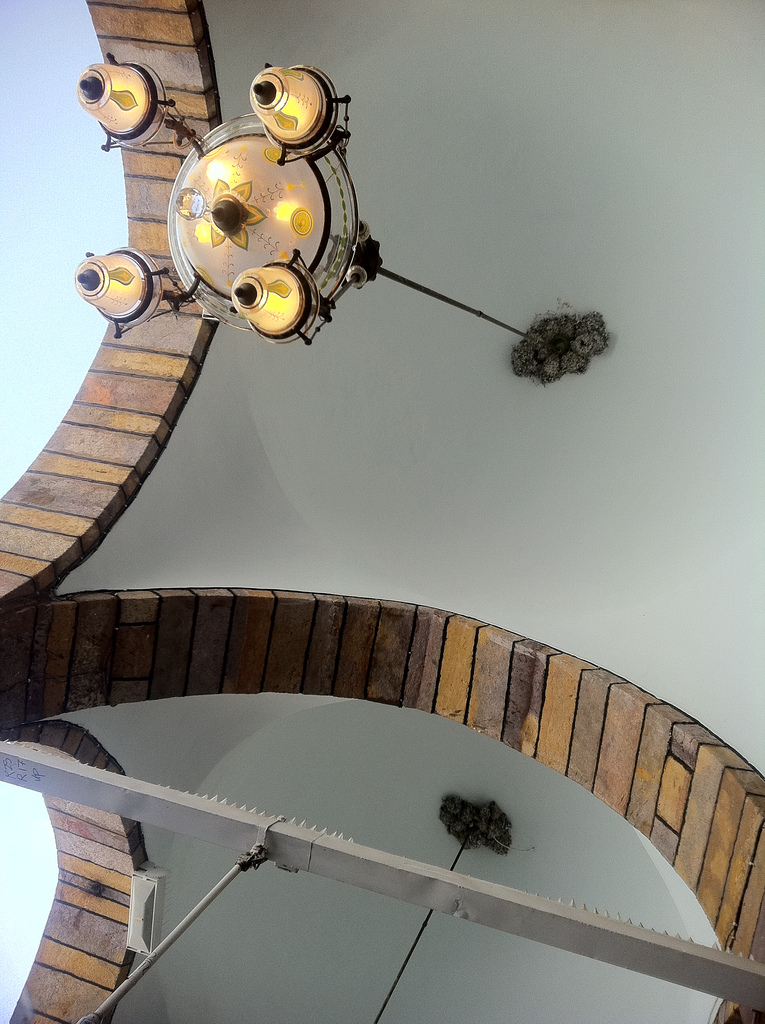
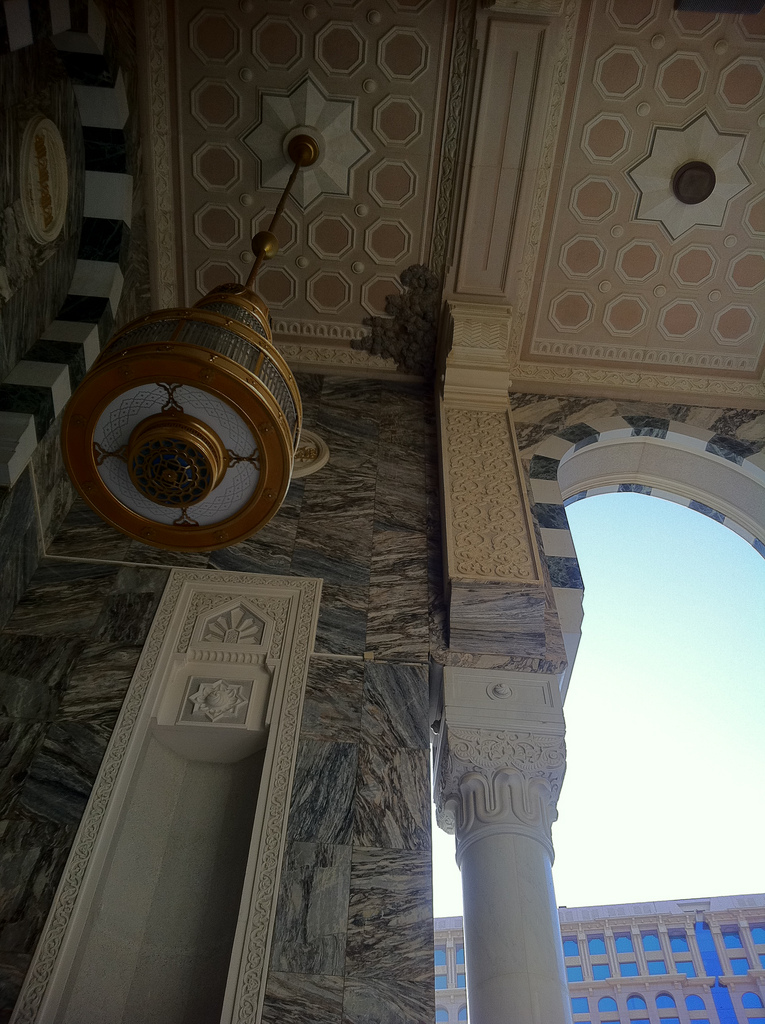
Swallows (Abaabeel) live in Masjid al Haram (Click on pictures to enlarge) Source
-
hmmm security purposes...that would go for even the males I once read (or heard in a speech) that The Qur'an does not mention the names of any woman except Maryam AS, the mother of 'Eesa AS. The names of other women are alluded to and we learn the names from the hadith.....sooo if we can get an answer to this from an authentic source then we'll have our answer
-
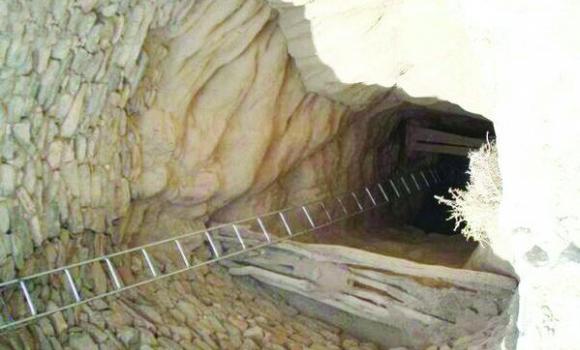
Saudis retrace route of Abraha’s army that came to destroy Kaaba Thursday 9 October 2014 A group of young Saudi history enthusiasts has retraced the path of the People of the Elephant who tried to destroy the Holy Kaaba centuries ago. The Holy Qur’an, in a short chapter, briefly refers to the story of the army of elephants led by Abraha Al-Ashram, who was a governor of Yemen. God destroyed Abraha and his army that included 13 elephants, by sending flocks of birds that dropped small stones on them. “There never fell a stone on a soldier except it dissolved his flesh and burst it into pieces … Abraha Al-Ashram fled while his flesh was bursting into pieces and died on the way back to Yemen,” said the 14th century scholar Ibn Kathir, an authentic Qur’an commentator. During their tiring journey across mountains and rough terrain, the young Saudi men took photographs of important landmarks, beginning from north of Najran, to the east of Asir, and then east of Baha. Some of the most important historical sites along the way included inscriptions of elephants on rocks in the Al-Qahr Mountain, southeast of Tathlith; an old well in Hafaer, east of Asir; and a paved road near Kara in Aqeeq principality in the Baha region. Mohammed Al-Amry, head of the geology department at King Saud University, said he had seen the path of Abraha and his army in Tathlith and Baha. “The army had passed the Arabian shield region comprising rocks and there were writings in the Humairiya language on some mountains,” he said. According to historical Islamic sources, Abraha, who was a Christian, had thought of building a church similar to the Kaaba in Sanaa. He wanted the Arabs to perform the pilgrimage in Sanaa instead of Makkah, with the intention of diverting trade and benefits to Yemen. He presented the idea to the then king of Ethiopia who agreed to it. Abraha built the church but the Arabs refused to come for pilgrimage in Sanaa. This infuriated him, prompting him to form an army to invade Makkah and demolish the Kaaba. He defeated all Arab armies on the way until he reached Makkah where he was attacked by the flocks of birds sent by the Almighty. arabnews
-
The Event of the Elephant took place in the month of Al-Muharram, fifty or fifty five days before the birth of Prophet Muhammad (Peace be upon him) which corresponded to late February or early March 571 A.D Abraha As-Sabah Al-Habashi, the Abyssinian (Ethiopian) viceroy in Yemen. He had seen that the Arabs made their pilgrimage to Al-Ka‘bah so he built a large church in San‘a in order to attract the Arab pilgrims to it to the exclusion of Makkah. A man from Kinana tribe understood this move, therefore he entered the church stealthily at night and besmeared its front wall with excrement. When Abraha knew of that, he got very angry and led a great army - of sixty thousand warriors - to demolish Al-Ka‘bah. He chose the biggest elephant for himself. His army included nine or thirteen elephants. He continued marching until he reached a place called Al-Magmas. There, he mobilized his army, prepared his elephants and got ready to enter Makkah. When he reached Muhassar Valley, between Muzdalifah and Mina, the elephant knelt down and refused to go forward. Whenever they directed it northwards, southwards or eastwards, the elephant moved quickly but when directed westwards towards Al-Ka‘bah, it knelt down. Meanwhile, Allâh loosed upon them birds in flights, hurling against them stones of baked clay and made them like green blades devoured. These birds were very much like swallows and sparrows, each carrying three stones; one in its peak and two in its claws. The stones hit Abraha’s men and cut their limbs and killed them. A large number of Abraha’s soldiers were killed in this way and the others fled at random and died everywhere. Abraha himself had an infection that had his fingertips amputated. When he reached San‘a he was in a miserable state and died soon after. The Quraishites on their part had fled for their lives to the hillocks and mountain tops. When the enemy had been thus routed, they returned home safely. [ibn Hisham 1/43-56; Tafheemul-Qur’an 6/462-469] Source: Ar-Raheeq Al-Makhtum The Sealed Nectar, biography of the Noble Prophet (SAW) by Safi-ur-Rahman Al-Mubarakpuri See more here: The Story of the People of the Elephant