
ummtaalib
-
Posts
8,467 -
Joined
-
Days Won
773
Content Type
Profiles
Forums
Events
Everything posted by ummtaalib
-

Additional Spending on Ashura Day
ummtaalib replied to ummtaalib's topic in General Islamic Articles
Is it necessary to purchase items on Ashura to attain reward in hadith? Question: In relation to the hadeeth relating to spending on ones family on the day of Ashoora, does one purchase on the day of Ashoora itself or can one buy few days before due to work commitments, so he may give on the day? Answer: In the Name of Allah, the Most Gracious, the Most Merciful. As-salāmu ‘alaykum wa-rahmatullāhi wa-barakātuh. Rasulullah sallallahu’alaihi wasallam is reported to have said: “Whoever expands his expenditure on his family on the day of ‘Aashura, Allah Ta’ala will inflate his sustenance for the rest of that year” (al-Bayhaqī) The Fuqahā’ have stated expenditure is not restricted to only food, rather, one may purchase clothes or any other item and it to one’s family and dependents.[ii] To attain the reward mentioned in the ḥadīth, it is not necessary to actually purchase a brand new item on `Ᾱshūrā’ and gift it to one’s family. Rather, one may purchase items prior to `Ᾱshūrā’ and spend it on one’s family on `Ᾱshūrā’. Expenditure on one’s family may be done in one of two ways[iii]: 1) Tamlīk (Transfer of ownership) 2) Tamkīn (enablement) Tamlīk refers to granting one’s family ownership of items. This can be achieved by giving items in their physical possession or by constructive possession[iv]. Physical refers to where the person takes actual receipt of the item. Constructive possession refers to where the owner has not taken physical receipt of the item, but it has come into his control, all rights and liabilities of the commodity are passed onto him including risk. Tamkīn refers to enabling others to use and consume items freely. This is more applicable to consumables like food. By presenting food to one’s family and enabling them to consume, expenditure on one’s family will be achieved. Thus, as long as there was transferral of ownership of the items on Ᾱshūrā’ or there was enablement, insha’Allah (Allah willing), you will be entitled to the reward mentioned in the ḥadīth. And Allah Ta’ālā Alone Knows Best Mufti Faraz Adam al-Mahmudi, www.darulfiqh.com For a detailed analysis of the authenticity of this hadith, see: http://www.al-miftah.com/2012/12/15/ashura-spending/ [ii] التوسعة على العيال يومَ عاشوراء مندوبةٌ في المأكل، والملابس، وغير ذلك (الهدية العلائية ص 223 دار ابن حزم) [iii] فَنَقُولُ طَرِيقُ إيصَالِ النَّفَقَةِ إلَيْهَا شَيْئَانِ التَّمْكِينُ أَوْ التَّمْلِيكُ (المبسوط للسرخسي ج 5 ص 181 دار المعرفة) وَلَمْ يَذْكُرْ الْمُصَنِّفُ طَرِيقَ إيصَالِ النَّفَقَةِ إلَيْهَا وَهُوَ نَوْعَانِ: تَمْكِينٌ، وَتَمْلِيكٌ فَالتَّمْكِينُ مُتَعَيَّنٌ فِيمَا إذَا كَانَ لَهُ طَعَامٌ كَثِيرٌ وَهُوَ صَاحِبُ مَائِدَةٍ فَتَمْكِينُ الْمَرْأَةِ مِنْ تَنَاوُلِ مِقْدَارِ كِفَايَتِهَا، فَلَيْسَ لَهَا أَنْ تُطَالِبَهُ بِفَرْضِ النَّفَقَةِ وَإِنْ لَمْ يَكُنْ بِهَذِهِ الصِّفَةِ فَإِنْ رَضِيَتْ أَنْ تَأْكُلَ مَعَهُ فَبِهَا وَنِعْمَتْ وَإِنْ خَاصَمَتْهُ فِي فَرْضِ النَّفَقَةِ يُفْرَضُ لَهَا بِالْمَعْرُوفِ وَهُوَ التَّمْلِيكُ كَذَا فِي غَايَةِ الْبَيَانِ وَظَاهِرُ مَا فِي الذَّخِيرَةِ أَنَّ الْمُرَادَ بِصَاحِبِ الطَّعَامِ الْكَثِيرِ أَنْ يُنْفِقَ عَلَى مَنْ لَا تَجِبُ عَلَيْهِ نَفَقَتُهُ فَحِينَئِذٍ هِيَ مُتَعَنِّتَةٌ فِي طَلَبِ الْفَرْضِ؛ لِأَنَّهُ إذَا كَانَ يُنْفِقُ عَلَى مَنْ لَا تَجِبُ عَلَيْهِ نَفَقَتُهُ فَلَا يَمْتَنِعُ مِنْ الْإِنْفَاقِ عَلَى مَنْ عَلَيْهِ نَفَقَتُهُ إلَّا إذَا ظَهَرَ لِلْقَاضِي أَنَّهُ يَضْرِبُهَا وَلَا يُنْفِقُ عَلَيْهَا فَحِينَئِذٍ يَفْرِضُ لَهَا النَّفَقَةَ اهـ. وَظَاهِرُ مَا فِي غَايَةِ الْبَيَانِ أَنَّ النَّفَقَةَ الْمَفْرُوضَةَ تَصِيرُ مِلْكًا لِلْمَرْأَةِ إذَا دَفَعَهَا إلَيْهَا فَلَهَا التَّصَرُّفُ فِيهَا مِنْ بَيْعٍ وَهِبَةٍ وَصَدَقَةٍ وَادِّخَارٍ وَيَدُلُّ عَلَى ذَلِكَ مَا فِي الْخُلَاصَةِ لَوْ سُرِقَتْ الْكِسْوَةُ أَوْ هَلَكَتْ النَّفَقَةُ لَا يُفْرَضُ لَهَا أُخْرَى بِخِلَافِ الْمَحَارِمِ، وَلَوْ فَرَضَ لَهَا دَرَاهِمَ وَبَقِيَ مِنْهَا شَيْءٌ يُفْرَضُ بِخِلَافِ الْمَحَارِمِ اهـ. (البحر الرائق ج 4 ص 188-189) [iv] لِأَنَّ النَّفَقَةَ تُسْتَحَقُّ اسْتِحْقَاقَ الصِّلَاتِ لَا اسْتِحْقَاقَ الْمُعَاوَضَاتِ عَلَى مَا قَرَّرْنَاهُ، وَالصِّلَاتُ لَا تَتِمُّ إلَّا بِالْقَبْضِ وَتَسْقُطُ بِالْمَوْتِ قَبْلَ الْقَبْضِ. (المبسوط للسرخسي ج 5 ص 195 دار المعرفة) لِأَنَّ النَّفَقَةَ صِلَةٌ فَلَا تُمْلَكُ إلَّا بِالْقَبْضِ (تبيين الحقائق ج 3 ص 55 إمدامية) وَالصِّلَاتُ لَا تُمْلَكُ بِأَنْفُسِهَا بَلْ بِقَرِينَةٍ تَنْضَمُّ إلَيْهَا وَهِيَ الْقَبْضُ كَمَا فِي الْهِبَةِ (بدائع الصنائع ج 4 ص 26 دار الكتب) -
Muharram and the day of Aashura The divine system of Allah Ta’aala It is the divine system of Allah Ta’aala that He has afforded special virtue and significance to some things over others. From mankind, the Ambiyaa عليهم السلام have been blessed with distinguished positions and elevated statuses over others. From the different places in the world, the Haramain (Makkah Mukarramah and Madinah Munawwarah) have been accorded a special rank over the rest of the world. From the twelve months of the Islamic calendar, special sanctity and sacredness has been given to four specific months i.e. Zul-Qa’dah, Zul-Hijjah, Muharram and Rajab. By the same token, amongst the days of the Islamic year the day of Aashura has been blessed with exclusive virtue and immense blessings. عن أبي قتادة رضي الله عنه قال قال رسول الله صلى الله عليه و سلم صيام يوم عاشوراء إني أحتسب على الله أن يكفر السنة التي قبله It is reported from Abu Qataadah (Radhiallahu Anhu) that Rasulullah (Sallallahu Alaihi Wasallam) said: “On account of observing the fast of Aashura, I have hope that Allah Ta’aala will expiate the sins of the past year.” (Ibnu Maajah 1/124, Saheeh Muslim 1/368) The month of Muharram and the day of Aashura Reward for fasting an entire month عن ابن عباس رضي الله عنهما قال قال رسول الله صلى الله عليه و سلم : من صام يوم عرفة كان له كفارة سنتين ومن صام يوما من المحرم فله بكل يوم ثلاثون يوما It is reported from Ibnu Abbaas (Radhiallahu Anhuma) that Rasulullah (Sallallahu Alaihi Wasallam) said: “The one who observes the fast of the day of Arafah two years of his sins will be forgiven and the one who fasts during the month of Muharram, for each day he fasts he will receive the reward of fasting for an entire month.” (At-Targheeb wat-Tarheeb, vol. 2, p. 46) It is an exclusive virtue of the month of Muharram that each fast in this auspicious month is equivalent in reward to fasting for an entire month. No other month has been blessed with this virtue. The greatness and virtue of Aashura While the month of Shawwaal, Zul-Qa’dah and Zul-Hijjah have been divinely selected to accommodate the rituals of Haj and sacrifice, the month of Muharram is the month that enjoys the honour of being the month of Allah Ta’aala and of accommodating the fast of Aashura, which expiates the sins of the past year. The immense virtues and abundant blessings that this day holds could be somewhat understood through the desire and eagerness that Rasulullah (Sallallahu Alaihi Wasallam) expressed to meet this day. عن ابن عباس رضي الله عنهما قال ما رأيت النبي صلى الله عليه وسلم يتحرى صيام يوم فضله على غيره إلا هذا اليوم يوم عاشوراء Hazrat Ibnu Abbaas (Radhiallahu Anhuma) reports: “I did not see Rasulullah (Sallallahu Alaihi Wasallam) anxiously await the fast of any virtuous day more than the day of Aashura.” (Saheeh Bukhari 1/268) عن أبي هريرة رضي الله عنه قال قال رسول الله صلى الله عليه وسلم أفضل الصيام بعد رمضان شهر الله المحرم وأفضل الصلاة بعد الفريضة صلاة الليل It is reported from Abu Hurayrah (Radhiallahu Anhu) that Rasulullah (Sallallahu Alaihi Wasallam) said: “The best of fasts after the month of Ramadhaan is fasting in the month of Allah, which is Muharram, and the best of Salaahs after the faraaidh (obligatory Salaah) is the Tahajjud Salaah.” (Saheeh Muslim 1/368) Fasting on the day of Aashura Rasulullah (Sallallahu Alaihi Wasallam) fasted on the day of Aashura and exhorted the Sahaabah to also observe the fast. The extent of enthusiasm and passion with which the Sahaabah enlivened and upheld this mubaarak sunnah of Rasulullah (Sallallahu Alaihi Wasallam) could perhaps be gauged from the following hadith. عن الربيع بنت معوذ بن عفراء رضي الله عنها قالت فكنا بعد ذلك نصومه ونصوم صبياننا الصغار منهم إن شاء الله ونذهب إلى المسجد فنجعل لهم اللعبة من العهن فإذا بكى أحدهم على الطعام أعطيناهم إياه عند الإفطار Hazrat Rubayyi’ (Radhiallahu Anha) reports that the Sahaabah observed the fast of Aashura and encouraged their children to observe the fast. The Sahaabah used to make toys for their children out of wool and if any child felt hungry and wept for food then they kept them occupied with those toys until the time of iftaar. (Saheeh Muslim 1/360) History of Aashura Prior to the Hijrat, Rasulullah (Sallallahu Alaihi Wasallam) and the Sahabah observed the fast of Aashura in Makkah Mukarramah as this conformed to the sharee’at of Ebrahim (Alaihis salaam). Rasulullah (Sallallahu Alaihi Wasallam) migrated to Madinah Munawwarah in the month of Rabiul Awwal. The following year (2 A.H.), in the month of Muharram, Rasulullah (Sallallahu Alaihi Wasallam) witnessed the Jews of Madinah Munawwarah fasting. Nabi (Sallallahu Alayhi Wasallam) inquired from them as to why they were observing the fast on that day. They exclaimed that it was on that day that Allah Ta’aala delivered Moosa (Alaihis Salaam) and the Bani Israa’eel from the tyranny and oppression of Fir’oun and his people and Allah Ta’aala destroyed Fir’oun and his army. This is explained in the following narration: عن ابن عباس رضي الله عنهما قال قدم النبي صلى الله عليه وسلم المدينة فرأى اليهود تصوم يوم عاشوراء فقال ما هذا قالوا هذا يوم صالح هذا يوم نجى الله بني إسرائيل من عدوهم فصامه موسى قال فأنا أحق بموسى منكم فصامه وأمر بصيامه Hazrat Ibnu Abbaas (Radhiallahu Anhuma) said: “When Nabi (Sallallahu Alaihi Wasallam) migrated to Madinah Munawwarah, he witnessed the Jews observing the fast of Aashura. After inquiring, they replied that this was a virtuous day. This was the day that Allah Ta’aala had delivered the Bani Israa’eel to safety from their oppressive enemy (Fir’oun and his army). In expression of gratitude and thanks to Allah Ta’aala, Moosa (Alaihis salaam) fasted on this day. Nabi (Sallallahu Alaihi Wasallam) remarked, ‘We are more worthy of following Moosa (Alaihis Salaam) than you.’ Thereafter, Nabi (Sallallahu Alaihi Wasallam) continued fasting on this day and ordered the Sahabah (Radiallahu Anhum) to fast as well.” (Saheeh Bukhari 1/268) Prior to the fast of Ramadhaan becoming compulsory, fasting on the day of Aashura was Fardh (obligatory). After the fast of Ramadhaan became compulsory, fasting on the day of Aashura was optional. عن عائشة زوج النبي صلى الله عليه و سلم أنها قالت :كان يوم عاشوراء يوما تصومه قريش في الجاهلية وكان رسول الله صلى الله عليه و سلم يصومه في الجاهلية فلما قدم رسول الله صلى الله عليه و سلم المدينة صامه وأمر بصيامه فلما فرض رمضان كان هو الفريضة وترك يوم عاشوراء فمن شاء صامه ومن شاء تركه Hazrat Aa'isha (Radiallahu Anha) reports: “In the pre-Islamic era, the Quraish fasted on the day of Aashura. Nabi (Sallallahu Alaihi Wasallam) also observed the fast of Aashura. After migrating to Madinah Munawwarah, Nabi (Sallallahu Alaihi Wasallam) continued with this noble practice (of fasting on the day of Aashura) and instructed the Sahabah (Radhiallahu Anhum) to fast on this auspicious day (as it was made obligatory). However, after the fast of Ramadhaan became obligatory, fasting on the day of Aashura no longer remained fardh.” (Rather it was made sunnah (optional).) (Muatta Imaam Maalik, p. 240) This remained the practice of Rasulullah (Sallallahu Alaihi Wasallam) and Sahaabah till the end of the life of Rasulullah (Sallallahu Alaihi Wasallam). In the 11th year of Hijri (after the fast of Aashuraa prior to Rasulullah (Sallallahu Alaihi Wasallam)’s demise), Rasulullah (Sallallahu Alaihi Wasallam) commanded the Sahabah (Radhiallahu Anhum) to oppose the Jews and to add another day of fasting together with the tenth. Rasulullah (Sallallahu Alaihi Wasallam) said that if he lived till the following year he would fast for two days. عن ابن عباس رضي الله عنه قال قال رسول الله صلى الله عليه و سلم صوموا يوم عاشوراء و خالفوا فيه اليهود صوموا قبله يوما أو بعده يوما (البيهقي) Hazrat Ibnu Abbaas (Radiallahu Anhuma) reports that Rasulullah (Sallallahu Alaihi Wasallam) said: “Observe the fast of Aashura and oppose the Jews by fasting a day before it or after it (as well) i.e. the ninth and tenth or tenth and eleventh of Muharram.” (As-Sunan Al-Kubra Baihaqi 4/287 / Talkheesul Habeer 2/819) عن ابن عباس رضي الله عنه قال قال رسول الله صلي الله عليه و سلم لئن بقيت الى قابل لأصومنّ التاسع (مسلم 359/1) Hazrat Ibnu Abbaas (Radiallahu Anhuma) reports that Rasulullah (Sallallahu Alaihi Wasallam) said: “If I live until the following year, I will definitely fast on the ninth (together with the tenth).” (Saheeh Muslim 1/359) (Awjaz-ul-Masaalik, vol. 5, p. 192 / Addurrul Mandhood, vol. 4, p. 254) Important lesson While reaping the virtues of fasting on the day of Aashura, an important lesson is emphasised by means of this fast. This is the lesson of firmly maintaining one’s Islamic identity at all times, totally refraining from imitating the kuffaar (disbelievers) and even avoiding any resemblance with them. Hence, Rasulullah (Sallallahu Alaihi Wasallam) instructed the ummah to fast for two days (i.e. the ninth and tenth or tenth and eleventh) in order to oppose the Jews. Dressing Imitating the kuffaar can occur in any and every aspect of life. However, the most obvious and apparent is in the aspect of appearance and dressing. Imitating “others,” which is known as‘tashabbuh’ is completely forbidden in cases where it opposes the sunnah of Rasulullah (Sallallahu Alaihi Wasallam). So abhorred is this practice that Rasulullah (Sallallahu Alaihi Wasallam) has declared: “The one who imitates a nation is from amongst them.” Thus when the dressing and appearance taught by Rasulullah (Sallallahu Alaihi Wasallam) is not adhered to, and the kuffaar are imitated, at times it becomes difficult or even impossible to distinguish a Muslim from a Jew, Christian or an atheist. Desire to resemble Rasulullah (Sallallahu Alaihi Wasallam) The Fast of Aashura highlights the importance of avoiding any resemblance to the Jews and Christians. No person prefers to resemble the one who is his enemy. Rather, he will prefer to resemble those whom he loves. A true follower of Rasulullah (Sallallahu Alaihi Wasallam) will love to resemble, in fact imitate, his beloved. He would love to be identified with Rasulullah (Sallallahu Alaihi Wasallam), not with those who are the enemies of Islam and the Muslims. Baseless practices There are also many baseless practices and customs which people engage in on the tenth of Muharram. Among these baseless customs and practices is mourning over the martyrdom of Hazrat Husain (Radiyallahu Anhu). This practice was introduced in the tenth century of Islam (946 A.H.) by the deviated group known as the shia. Undoubtedly the gruesome martyrdom of Hazrat Husain (Radiyallahu Anhu) was among the tragic and heart breaking events that occurred in the annals of history. However despite that, it has no connection with the blessed occasion of Aashura. Instead Aashura had received its virtue and auspiciousness even before the birth of Hazrat Husain (Radiyallahu Anhu). Hence the custom of mourning the martyrdom of Hazrat Husain (Radiyallahu Anhu) has no basis whatsoever in Islam. Virtue of spending on one’s family on the Day of Aashura Apart from the virtue of fasting on the Day of Aashura, Nabi (Sallallahu Alaihi Wasallam) has also encouraged that one should be generous upon one’s family on this auspicious day. عن أبي هريرة رضي الله عنه أن رسول الله صلى الله عليه و سلم قال : من أوسع على عياله و أهله يوم عاشوراء أوسعالله عليه سائر سنته Abu Hurairah radiyallahu anahu reports that Nabi Sallallahu alaihi wa sallam said, “Whoever spends freely upon his family on the day of Aashura Allah Ta`ala will bless him with abundant sustenance for an entire year.” (At-Targheeb wat-Tarheeb, vol. 2, p. 48) قال السخاوي رواه الطبراني والبيهقي في الشعب وفضائل الأوقات وأبو الشيخ عن ابن مسعود والأولان فقط عن أبي سعيد والثاني فقط في الشعب عن جابر وأبي هريرة وقال إن أسانيده كلها ضعيفة ولكن إذا ضم بعضها إلى بعض أفاد قوةبل قال العراقي في أماليه لحديث أبي هريرة طرق صحح بعضها ابن ناصر الحافظ وأورده ابن الجوزي في الموضوعات من طريق سليمان بن أبي عبد الله وقال سليمان مجهول وسليمان ذكره ابن حبان في الثقات فالحديث حسن على رأيه قال وله طريق عن جابر على شرط مسلم أخرجها ابن عبد البر في الاستذكار من رواية أبي الزبير عنه وهي أصح طرقه ورواه هو والدارقطني في الأفراد بسند جيد عن عمر موقوفا عليه والبيهقي في الشعب من جهة محمد بن المنتشر قال كان يقال فذكره قال وقد جمعت طرقه في جزء قلت واستدرك عليه شيخنا رحمه الله كثيرا لم يذكره وتعقب اعتماد ابن الجوزي في الموضوعات قول العقيلي في هيصم بن شداخ راوي حديث ابن مسعود إنه مجهول بقوله بل ذكره ابن حبان في الثقات والضعفاء (المقاصد الحسنة ص505) قال المنذرى في الترغيب: رواه البيهقى و غيره من طرق و عن جماعة من الصحابة و قال البيهقي:هذه الأسانيد وإن كانت ضعيفة فهي إذا ضم بعضها الى بعض أخذت قوة والله أعلم (الترغيب و الترهيب 2/48) Ihyaauddeen
-
The Habit of Umar Ibn Abdul Aziz (Rahmatullahi Alaih) A Hadith says: "When two third of the night passed, Rasulullah (Sallallahu Alaihi Wasallam) said, “O people, remember Allah! Remember Allah! The quake of Doomsday will soon occur! The time for the blowing of the Trumpet (Soor) is drawing near! And everybody's hour of death, along with its pangs and throes, is coming!”(Mishkaat). It was the custom of Umar Ibn Abdul Aziz (Rahmatullah Alaih) to invite a number of Ulama every night, who would speak about death, the Day of Qiyaamah and the conditions and events of the Aakhirah. Thereupon he would weep so bitterly that one might think he was weeping over a dead body lying before him. (Fazaail Sadaqaat-Urdu-633)
-
Dua For Entering and Leaving Home
ummtaalib replied to ummtaalib's topic in Du’as for Various Occasions
Dua For Leaving Home بِسْمِ اللَّهِ، تَوَكَّلْتُ عَلَى اللَّهِ، لَا حَوْلَ وَلَا قُوَّةَ إِلَّا بِاللَّهِ Transliteration: Bismillahi Tawakkaltu Alallah, Laa Hawla Wa Laa Quwwata illa Billah Translation: In the name of Allah, I place my trust in Allah, there is no power and might except with Allah In the Hadith it is mentioned whoever recites this Dua when leaving home, the Mala’ikah make the following Dua: “May you be guided, may Allah be sufficient for you, may you be protected from all harm” and Shaitaan distances himself away from the person. (Tirmizi). -
Constancy in 8 Things When a person reaches the stage of ihsaan, his walking, talking, sitting and so on all become ibaadah (worship) because he is conscious of Allah at all times; thus, his whole life becomes ibaadah. However before a person can reach this lofty stage he must firstly become constant in, and perfect, 8 beginning stages: 1. Constancy in purity and worship, 2. Constancy in fasting, 3. Constancy in silence, 4. Constancy in solitude, 5. Constancy in the remembrance of Allah سبحانه وتعالى, 6. Constancy in negating stray thoughts, 7. Constancy in the company of one’s spiritual guide, 8. Contentment with the Decree of Allah سبحانه وتعالى. [This short excerpt is based on a brothers’ majlis (gathering for spiritual training) held by Shaykh Abu Yusuf Riyadh ul Haq on 11th March 2000].
-
Adorn Your Character Mawlana Rashid Ahmad Gangohi رحمة الله عليه, a great a scholar of the Indian subcontinent who died in 1905, wrote an article in which he listed the attributes and characteristics that are manifested in those who reach the rank of ihsaan. We should work towards these attributes which are: 1. To adopt humbleness and regard oneself as inferior. 2. To show kindness to creation and to tolerate inconvenience and hurt from the rest of creation. 3. To conduct oneself with mercy and compassion and to abandon anger and rage. 4. To be sympathetic and to give priority to the rights of Allah’s creation above one’s own. 5. To be generous. 6. To overlook the wrongs of others and to forgive and forget. 7. To always have a pleasant face. 8. Softness in one’s character. 9. To avoid affectation and to behave naturally (i.e. avoid pretence). 10. To spend moderately. 11. Reliance upon Allah سبحانه وتعالى 12. Contentment with little from Allah سبحانه وتعالى (i.e. few worldly possessions). 13. Piety and taqwa. 14. To avoid arguments and retaliation. 15. To abstain from envy and malice. 16. To fulfil one’s promises. 17. To exercise forbearance and patience. 18. To do things calmly. 19. To detach oneself from those who distract you from Allah سبحانه وتعالى 20. To show gratitude to Allah سبحانه وتعالى 21. To spend for the benefit of the creation. 22. To feel shame in front of Allah سبحانه وتعالى out of His respect and fear. Tazkiya is all of good character and manners ( akhlaaq) and the one on the path of tazkiya should adorn his zaahir (outer self) and his baatin (inner self). [This short excerpt is based on a brothers’ majlis (gathering for spiritual training) held by Shaykh Abu Yusuf Riyadh ul Haq on 4th September 1999].
-
The Select and The Elect Islam is the external application of the laws of religion but it doesn’t necessarily mean that that application and that belief is reflected within. Therefore, imaan is a degree higher than Islam. But the degree of ihsaan is beyond both and is reserved only for the select and for the elect; those who are truly close to Allah سبحانه وتعالى. They are those whose ibad’ah (worship), awareness of Allah عز وجل and ma’rifah (cognisance) of Allah is not just limited to ritualistic prayer or to ritualistic remembrance with the tongue. Rather, their belief, faith, and devotion to Allah rests securely in their hearts, and is reflected in their limbs and organs, in their external application of religion and most importantly it permeates their whole body and their very being. So for them ihsaan (i.e. to worship Allah in a manner as though they see Him) is not just in the heart or the mind but their whole condition is one of ihsaan. Truly that is a lofty degree to which all of us should aspire but we should realise at the same time that it is not easily gained and it requires determination, devotion, perseverance and sacrifice. May Allah سبحانه وتعالى bless us with such a rank of ihsaan. Allah praises those with the rank of ihsaan. In one verse Allah عز وجل says: وَإِنَّ اللَّهَ لَمَعَ الْمُحْسِنِينَ And indeed Allah is with the muhsineen. [surah al-Ankabut, 29:69] The meaning of muhsineen is those who occupy the rank of ihsaan; thus, Allah is with those who practice ihsaan. Allah is with them all the time. Allah protects them, surrounds them, supports them and strengthens them just as He specifically and exclusively supports the prophets عليهم السلام, their companions, the siddiqeen (the veracious), the martyrs and those who are close to Allah سبحانه وتعالى in a way which is different to others. [This short excerpt is based on Lesson 21 of the al Tajrid al Sarih series taught by Shaykh Abu Yusuf Riyadh ul Haq on 26th October 2001. For a more comprehensive understanding of this topic please refer to that lecture].
-
In the famous hadeeth of Jibril عليه السلام narrated by Sayyiduna Abu Huraira رضى الله عنه (Hadeeth 47, Abridged Saheeh al-Bukhari), Prophet صلى الله عليه وسلم. says ‘Ihsaan is that you worship Allah as though you see Him. Then, if you do not see Him then indeed He sees you’. This sentence of the Prophet صلى الله عليه وسلم. can be understood as follows; Ihsaan is that you reach such a degree of devotion, sincerity, godliness, and awareness in your worship as well as in your very being and existence, that you obey Allah and worship Him in such a state that your belief extends to your body and mind. Not only are you convinced of Allah سبحانه وتعالى and your relationship with Him but that belief and conviction, that faith in Allah عز وجل permeates your very body, nay your very existence. And thus with this state of mind, heart and spirit you worship Allah سبحانه وتعالى with such conviction and faith as though you are constantly seeing Allah سبحانه وتعالى Himself. That is your level of awareness. That is your state of obedience. Not only in salah, not only when you recite the Qur’an, not only when you engage in the dhikr (remembrance) of Allah but throughout your life you reach that level of awareness, devotion and concentration in your ibad’ah that you behave respectfully towards Allah عز وجل and you behave in such a state as though you are constantly seeing Allah سبحانه وتعالى. [This short excerpt is based on Lesson 21 of the al Tajrid al Sarih series taught by Shaykh Abu Yusuf Riyadh ul Haq on 26th October 2001.]
-
The following are explanations of various Mashaikh taken from: Nisbat, Ihsaan & Aamaal-e-Qalbiyyah Compiled byHazrat Mufti Moosa Badat Sahib Shaykh Maulana Ashraf Ali Thaanvi rahmatullahi alai says, Maulana Shabbir Ahmad Uthmani rahmatullahi alai’s explanation Sayings of Hazrat Shaikh Zakariya rahmatullahi alai Explanation of Shaikh Abdul Haq Muhaddith Dehlawi rahmatullahi alai
-
A wise man once said: “I sometimes regretted my speech, but never my silence.”
-
My husband is drinking again, and insists I drink with him Answered by Shaykh Faraz Rabbani Question I used to consume alcohol with my husband for fun in the past. We realized we were doing wrong and we put an end to it three yrs ago, sincerely repenting never to do it again. For the past couple of months, my husband & I have been living separate due to a temp project at work. When I went to see him, he insisted me to drink and said he did not want to hear no as an answer. I reminded him of why we stopped in the first place…he said, he wants to do it with me instead of drinking with other people. He said he wanted to avoid all the temptations he has around him. e.g. I was so confused, I refused repeatedly but seeing my husband’s frustration over it, I went ahead and drank with him. I really did not enjoy it cos I kept thinking of Allah while I was doing it. How can I repent to Allah when I know something is wrong and I still do it? How do I get my husband to stop doing this ever in the future? Do I really have to listen to husband when this happens in the future again? Answer: In the Name of Allah, Most Gracious, Most Merciful"/> Walaikum assalam wa rahmatullah, 1. The Messenger of Allah (Allah bless him and give him peace) said, There can be no obedience in sin. Obedience is only in the good. [bukhari and Muslim] And he also said (peace and blessings be upon him), There is no obedience to creation in disobedience to the Creator. [Ahmad] As such, it is not permitted for you to drink with your husband, or to even sit with him when he is drinking, regardless of what your husband says. 2. Repent from your past mistake, and resolve not to fall into this again. 3. Try to find ways of gently encouraging your husband towards strengthening his faith and religious resolve, so that he is able to avoid such matters. And Allah alone gives success. Wassalam. Faraz Rabbani. Source
-
Q. If Your husband ask you to carry out a sin as his wife do you have to listen & do it? Also would his wife be accountable for that sin? (Question published as received) A. Rasulullah (Sallallahu Alayhi wa Sallam) has stated: “There is no obedience to the creation in the disobedience of Allah.” (Mujamul Kabeer) Thus, if a husband commands his wife to commit a sin, she should not obey him. It is not permissible for her to obey him in committing a sin. If she commits the sin, she will be accountable as well as her husband for he incited her towards that sin. And Allah Ta’ala Knows Best Mufti Moosa Salie Confirmation Mufti Ebrahim Desai Fatwa Department Jamiatul Ulama (KZN) Council of Muslim Theologians
-
Muharram - Reflect,Resolve and Reclaim!
ummtaalib replied to ummtaalib's topic in General Islamic Articles
The Significance of the Month of Muharram and its Tenth day (Ashura) The following booklet is a short and precise discussion on the importance and significance of the Holy month of Muharram which is the first month in the Islamic calendar. It was compiled by a senior Hadith specialist of Indian origin by the name of Shaykh Fazlur Rahman Azmi who currently resides in South Africa. The work has also outlined the matters pertaining to the 10th day of Muharram known as Ashura and the days that fasting is significant. The work also serves to dispel some of the myths and superstitions that some people have introduced over time in the name of Islam. Download link -
Sunnats and Aadaab of Duaa – Part 2 1. When making duaa one should raise his hands parallel to his chest. [1] عن سلمان الفارسي : عن النبي صلى الله عليه و سلم قال إن الله حيي كريم يستحيي إذا رفع الرجل إليه يديه أن يردهما صفرا خائبين (ترمذي رقم 3556) Hadhrat Salmaan Faarsi (Radhiyallahu Anhu) reports that Rasulullah (Sallallahu Alaihi Wasallam) said: “Certainly Allah Ta’ala is the most honourable and most kind and generous. His honour is such that He feels it against His greatness and mercy to let the one who raises his hands in duaa to Him, go empty handed. عن ابن عباس رضي الله عنه أن رسول الله قال هكذا الإخلاص يشير بأصبعه التي تلي الإبهام وهذا الدعاء فرفع يديه حذو منكبين وهذا الابتهال فرفع يديه مدا (المستدرك رقم 7903) Hadhrat ibn Abbaas (Radhiyallahu Anhuma) reports that Rasulullah (Sallallahu Alaihi Wasallam) said: “Ikhlaas (i.e. expressing one’s belief in the oneness of Allah Ta’ala) takes place in salaah through raising the index finger (in tashahhud), and duaa (after salaah or at any other time) takes place through raising one’s hands in line with the shoulders, and ibtihaal (i.e. expressing one’s fervent supplication before Allah Ta’ala) takes place through stretching out one’s hands high in Duaa (e.g. as done in the duaa of istisqaa-seeking rain).” 2. When making duaa, one should face the palms upwards towards the sky. عن مالك بن يسار رضي الله عنه قال قال رسول الله صلى الله عليه وسلم: إذا سألتم الله فاسألوه ببطون أكفكم ولا تسألوه بظهورها (ابو داود رقم 1488) قال أبو داود قال سليمان بن عبد الحميد له عندنا صحبة يعنى مالك بن يسار. Hadhrat Maalik bin Yasaar (Radhiyallahu Anhu) reports that Rasulullah (Sallallahu Alaihi Wasallam) said: “At the time of duaa when you beg Allah Ta’ala, then beg Him in the condition that you face your inner palms upwards (i.e. towards the sky). Do not face your hands downwards (i.e. towards the ground). [1] والمستحب أن يرفع يديه عند الدعاء بحذاء صدره كذا في القنية (الفتاوى الهندية 5/318)
-
Muharram - Reflect,Resolve and Reclaim!
ummtaalib replied to ummtaalib's topic in General Islamic Articles
Muharram and the Islamic Calendar The Islamic new year cannot help but remind us of the very origin of the Islamic Calendar. In the era of Ameerul Mumineen Sayyiduna Umar Al-Farouq Radhiyallahu Anhu, the Sahaabah Radhiyallahu Anhum gathered in consultation to decide on the implementation of an Islamic Calendar. Among the various opinions, the Sahaabah Radhiyallahu Anhum finally agreed on the Hijrah (the emigration from Makkah to Madina) for the commencement of the Islamic calendar. The Hijrah was a momentous occasion for it completely transformed the Islamic landscape. The Muslim Ummah, thus far under persecution finally found a home, a refuge against oppression and a capital for its soon to be empire. Weakness turned to strength and adversity to prosperity for as Yathrib became Madinatun Nabi (the City of Prophet) a transformation took place that was to indelibly alter the course of history. Rasulullah’s Sallallahu Alayhi wa Sallam arrival in Madina ignited a lantern whose rays would shine across the globe transforming barbarism to civilisation and restoring justice to a tyrannical world. Today’s world is sorely in need of that very transformation. The revival of Islam in the world is dependent on the Muslim Ummah reforming themselves. Allah Ta’ala states, “Allah never changes a people’s state until they change what is in themselves.” (Surah 13, Verse 11) If we resolve to change ourselves for the better, the world will become a better place. But if we continue living our lives oblivious of our Islamic responsibilities, then nothing will halt the downward trajectory that we find ourselves in. Masjid Poster downloadable here. Jamiatul Ulama (KZN) Council of Muslim Theologians -
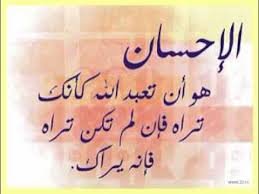
True definition of Ihsaan Ihsaan has two meanings: 1. To show generosity and favour upon others. 2. To improve Aamaal (actions) and to carry them out with utmost concentration.This latter meaning is applicable here. This has been clearly explained in the famous Hadith of Hazrat Jibraeel alaihis salaam in which after explaining the definition of Imaan (faith) and Islam he enquired from the Prophet sallallahu alaihi wasallam, “What is Ihsaan?” The Prophet sallallahu alaihi wasallam replied, “…to worship Allah in such a manner that you are looking at him, and if this is not achievable then in such a manner that he is looking at you.”[sahih Bukhari] From: Nisbat, Ihsaan & Aamaal-e-Qalbiyyah Compiled by Hazrat Mufti Moosa Badat Sahib
-
Hadith of Jabrail عليه السلام On the authority of 'Umar, radiyallahu 'anhu, who said: "While we were one day sitting with the Messenger of Allah, sallallahu 'alayhi wasallam, there appeared before us a man dressed in extremely white clothes and with very black hair. No traces of journeying were visible on him, and none of us knew him. He sat down close by the Prophet, sallallahu 'alayhi wasallam, rested his knee against his thighs, and said, O Muhammad! Inform me about Islam." Said the Messenger of Allah, sallallahu 'alayhi wasallam, "Islam is that you should testify that there is no deity save Allah and that Muhammad is His Messenger, that you should perform salah (ritual prayer), pay the zakah, fast during Ramadan, and perform Hajj (pilgrimage) to the House (the Ka'bah at Makkah), if you can find a way to it (or find the means for making the journey to it)." Said he (the man), "You have spoken truly." We were astonished at his thus questioning him and telling him that he was right, but he went on to say, "Inform me about iman (faith)." He (the Messenger of Allah) answered, "It is that you believe in Allah and His angels and His Books and His Messengers and in the Last Day, and in fate (qadar), both in its good and in its evil aspects." He said, "You have spoken truly." Then he (the man) said, "Inform me about Ihsan." He (the Messenger of Allah) answered, " It is that you should serve Allah as though you could see Him, for though you cannot see Him yet He sees you." He said, "Inform me about the Hour." He (the Messenger of Allah) said, "About that the one questioned knows no more than the questioner." So he said, "Well, inform me about the signs thereof (i.e. of its coming)." Said he, "They are that the slave-girl will give birth to her mistress, that you will see the barefooted ones, the naked, the destitute, the herdsmen of the sheep (competing with each other) in raising lofty buildings." Thereupon the man went off. I waited a while, and then he (the Messenger of Allah) said, "O 'Umar, do you know who that questioner was?" I replied, "Allah and His Messenger know better." He said, "That was Jibril. He came to teach you your religion."" [Muslim] [Al-Bukhari & Muslim]
-
‘Ihsaan is that you worship Allah as though you see Him. And if this is not achievable then in such a manner that He is seeing you

-
Reflecting over death Hazrat Shaikh Moulana Muhammad Zakariyya (rahmatullahi ‘alaih) once mentioned: The life of this world is temporary and will soon come to an end. While there exists a difference of opinion regarding everything in life, there exists no difference of opinion regarding the certainty of death. Despite us believing in the inevitability and certainty of death, yet we still don’t find time to work and strive for the eternal life. We find the time to earn our livelihood but don’t find any time to engage in zikr. The separation of India and Pakistan (where people were forced to leave India and settle in Pakistan leaving behind all their properties and wealth) made it easy for us to realize that at the time of death nothing will accompany a person when he leaves this world. The Masha’ikh have written in regards to hajj that the entire scene of hajj is one that depicts the spectacle of death. A person removes his normal clothing and replaces it with two simple pieces of cloth. People accompany the person leaving for hajj to the station or to Bombay in order to see him off and thereafter return to their homes. People departing for hajj have to leave all their wealth, properties etc. behind. Hazrat Sheikh (rahimahullah) then mentioned, “When the clock sounds, an announcement is actually being made: “O negligent person, every time the needle of the clock goes around, it has decreased a portion of your life.” (Suhbate Ba Awliyaa’ page.152)
-
THE CALAMITY IN MAKKAH – A TIME TO PONDER BY MAZAAHIRUL ULOOM, SAHARANPUR, INDIA The incident that occurred in the Haram of Makkah Mukarramah on Friday 11 September 2015 is most disturbing and heart-rending. May Allah Ta'aala forgive those who have lost their lives and grant complete recovery to those injured in this sad event, Aameen. However, the issue that needs to be pondered here is: Why did this calamity strike those people who were worshipping and engaging in Tawaaf of Baitullaah? Is it not that we are failing in the observance of the sanctity, etiquettes and respect of this most sacred sanctuary, due which this calamity has struck? Nowadays in the noble sanctuary of Makkah Mukarramah, Madeenah Munawwarah and other sacred places there is a flood of photography and videography going on. Looking at the condition of the people at these sacred places, it seems as if they are not in the Haram of Makkah Mukarramah and Masjidun Nabawi (Sallallaahu 'Alayhi Wassalaam) but in some park or place of entertainment. Newspapers, whatsapp and the media in general are cluttered with photos from these sacred places. This conveys the impression that people visit these sacred places only for these accursed acts (Na'oodhubillaah). Committing such accursed acts in the Haramayn Shareefayn is without doubt (vile) acts of disrespect shown to these sacred places. Allah Ta'aalaa says in the Glorious Qur-aan, “And who is more unjust than those who forbid that Allah’s Name be glorified and mentioned much (i.e. perform Salaat and Dua, etc.) in Allah's Musjid, and they strive for their ruin? It is not fitting that such people should enter (into Allah's Musjid) except fearfully. For them there is disgrace in this world, and they will have a great punishment in the Hereafter.” (Surah Baqarah) From the abovementioned Aayat of the Qur’aan-e-Kareem we understand that Musjidul Haraam in Makkah Mukarramah, Musjidun Nabawi (Sallallaahu 'Alayhi Wassalaam) and other Musaajid must be entered with dignity, respect, awe and fear. To enter the Musaajid haughtily and slovenly in a disrespecting manner is utter oppression. Photography and videography (being major sins) in these sacred places are acts of the vilest form of disrespect and flagrant transgression. Grave warnings of punishment have been sounded in the Hadeeth for defiling the sanctity, honour and respect of the sacred Haramayn Shareefayn. In a Hadeeth which has been narrated in Mishkaat Shareef, Hadhrat 'Ayyaash ibn abi Rabee'ah Makhzoomee (radhiyallaahu 'anhu) states that Rasulullaah (Sallallaahu 'Alayhi Wassalaam) said: “This Ummah will remain with goodness as long as it continues to maintain this sanctity (i.e. the sanctity of Makkah Mukarramah and its Haram) as it has to be observed, and when people will forsake this sanctity and discard it, then they will be destroyed.” (Mazaahirul Haqq) Based on the above Hadeeth we request with due respect that all the people residing there in the Haram, and those visiting these sacred places should safeguard themselves from the Wrath of Allah Ta'aalaa. They should desist from creating means for their destruction which come in the wake of defiling the sanctity and respect of these holiest of Places. Abstain from all futile, accursed sinful acts thus maintaining the honour and dignity of these Sanctuaries. FURTHER COMMENT BY A MUFTI • Let us understand this very important point that in these sacred places just as the reward of virtuous act is multiplied manifold, the same is the case with sinful acts. The consequences (the punishments) are more severe. • Muslims should bear in mind that through this long corridor of Islam's fourteen centuries, the Fuqaha of Islam - the great and noble Representative of Rasulullah (Sallallaahu 'Alayhi Wassalaam) – have issued a unanimous verdict on this question of picture-making, viz. Pictures are Haraam. • As far as digital photography is concerned, there are no valid grounds to prove its permissibility, neither from the Qur’aan and Hadith nor from the four Imaams of Fiqh. Instead, the general Ahaadith, Mazhabs of Sahaabah, Taabi’een and the four Imaams are general regarding the prohibition of all picture making, that is, all pictures of animate objects are haraam. • Bear in mind that a sin remains a sin in all conditions even if the whole world is soiled in it. When a sin becomes universal, then its misfortune and evil also become universal although every person is liable for his own deeds. The appearance of some 'Ulama on television does not halaalize it. The Imaam of the Haram shown on television to perform Taraaweeh does not halaalize it. It is not proof for its permissibility. • Finally let us conclude the topic with the grave warning of Rasulullaah (Sallallaahu 'Alayhi Wassalaam) narrated in Bukhaari Shareef and Muslim Shareef for the photographers & videographers of animate objects: “Those involved in picture-making will be subjected to the worst forms of punishment on the day of Qiyaamat.” May Allah Ta'aalaa guide us all and keep us steadfast on the Haqq, Aameen taken from The Majlis
-
Start of the Islamic month of Muharram around 15 October 2015 Muharram-Reflect,resolve And Reclaim! Muharram - By Hadhrat Moulana Abdul Hamid Is`haq Saheb (Daamat Barakaatuhum)
-
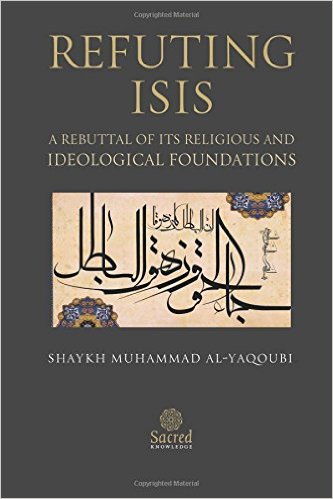
Refuting Isis A Rebuttal Of Its Religious And Ideological Foundations Shaykh Muhammad Al-Yaqoubi The Islamic State in Syria and Iraq (ISIS) constitutes the most serious threat Islam has ever faced. To justify its horrible crimes and appeal to Muslims around the world, ISIS has based its ideology on a superficial and literalist approach to the Sacred Texts of Islam - the Holy Qur'an and the Prophetic Tradition. ISIS manipulates religion to brainwash angry young Muslims, who have little knowledge of Islamic theology and jurisprudence. Therefore, the Muslim scholars are obliged to respond with a counter-narrative that elucidates the reality of Islam and its commitment to tolerance. There exists a plethora of proofs that demonstrates ISIS’ actions do not represent Sunni Islam and its claims are based on clear fallacies. The author, Shaykh Muhammad Al-Yaqoubi, a renowned scholar and one of the 500 most influential Muslims in the world today, presents in this invaluable book a thorough refutation of ISIS’ beliefs and crimes. Providing authentic quotes that destroy the allegations of ISIS, Shaykh Al-Yaqoubi reaches the conclusion that this group does not represent Islam, its declaration of a caliphate is invalid, and fighting it is an obligation upon Muslims. Avaialable at amazon
-
Long Nails & Nail Polish Q. What exactly are the Islamic views on putting nail polish when a lady is not reading Salaah? Also is it advisable for ladies to keep long nail? (Question published as received) A. It is permissible for a female to apply nail polish as a means of beautifying herself for her husband. However, it should be noted that nail polish will prevent the Wudhu from being valid and it must be removed before making Wudhu. It is not permissible for a person to grow his/her nails for more than 40 days as stated in the Hadith. (Sahih Muslim) It is an emphasized Sunnah and part of Fitrah that the nails are kept short. It is unbecoming of a Muslim to keep long nails, apart from it being unhygienic. And Allah Ta’ala Knows Best Mufti Suhail Tarmahomed Fatwa Department Jamiatul Ulama (KZN) Council of Muslim Theologians
-
Clothed yet naked Every human being is born with several basic needs. Among the basic needs is the need for clothing. Allah Ta’ala declares: “O children of Adam (Alayhis Salaam)! We have sent down to you clothing to cover your nudity as well as adornment for you, and the garment of piety is the best (7:26).” By mentioning the aspect of covering before the aspect of adornment, the Qur’an-al-Kareem impresses upon us that the primary object of clothing (i.e. to cover one’s satr) is more important than its secondary benefits (i.e. adornment). Hence, if the clothing does not adequately cover one’s body, causing part of the satr to remain visible, then such a person, though clothed, will be regarded as naked in the eyes of Shariah. Rasulullah (Sallallahu Alayhi Wasallam) has prophesized the coming of such crucial and critical times in the ummah where women will be clothed yet naked. Hadhrat Abu Hurairah (Radiyallahu Anhu) reports that Rasulullah (Sallallahu Alaihi Wasallam) said: “There will be two groups (in my ummah) who will be punished in Jahannum whom I have not yet seen (i.e. they will emerge after my demise). One group will carry whips with them resembling the tails of cattle, with which they will (oppressively) lash the people. The second group will be those women who will wear clothes yet will still be naked (i.e. they will wear tight fitting or flimsy clothing), they will attract men towards themselves, and they themselves will be inclined towards men, their heads will resemble the humps of the Bukhti camels (i.e. they will wear buns which will be high like camel humps). They will neither enter Jannah nor smell its fragrance despite its fragrance being perceivable from a great distance away. (Saheeh Muslim #2128) Shariah has provided extensive guidelines in regard to the description of the clothing a woman should cover herself with. 1. The clothing must provide cover for her entire body, otherwise in the eyes of Shariah they will not be worthy of being called “clothes.” It is compulsory upon a woman to cover her entire body and hair (with the exception of her hands till her wrists and feet) before non-mahrams (strange men). 2. The clothing must be such that it should neither be transparent nor should it reveal the shape of the body. Hence if the clothing is tight-fitting to the extent that the shape of the satr is discernable, such a woman is also included in the description of being “clothed yet naked.” 3. When leaving the home, a woman should ensure that the laws of hayaa and modesty are maintained. The Hadith commands that she should dress in an unattractive manner, should not apply perfume and she must don the niqaab. It is a fact of life that there exists a basic natural inclination towards the opposite gender. Wearing attractive clothing further incites such inclination which leads to fitna. 4. The type of clothing that is essentially for one gender should not be worn by the opposite gender. Rasulullah (Sallallahu Alaihi Wasallam) is reported to have said: “Allah Ta’ala has cursed those men who imitate women (in dressing, etc.) and those women who imitate men.” (Tabraani #4003) Ihyaauddeen
-
Making the Sunnah a Part of Life: a Three Point Plan By Hadrat Mawlānā Muhammad Saleem Dhorat hafizahullāh Importance of Sunnah Allāh ta‘ālā has commanded us to follow and emulate the life of Rasūlullāh sallallāhu ‘alayhi wasallam in the Glorious Qur’ān: Say (O Prophet sallallāhu ‘alayhi wasallam): If you really love Allāh, then follow me, and Allāh shall love you and forgive you your sins. Allāh is Most-Forgiving, Very-Merciful. (3:31) Similarly this has been emphasised by Rasūlullāh sallallāhu ‘alayhi wasallam in numerous ahādīth: Hold fast to Kitābullāh and my Sunnah... (Al-Hākim) Indeed adopting the ways of Rasūlullāh sallallāhu ‘alayhi wasallam is the key to our success in both worlds. Rasūlullāh sallallāhu ‘alayhi wasallam has stated: Whoever loves my sunnah, loves me, and whoever loves me will be with me in Jannah. (Mishkāt) Regarding the importance of the Sunnah, Imām Mālik rahimahullāh has commented, “The Sunnah is like the Ark of Nūh ‘alayhis salām; whoever boards it will gain salvation and whoever stays aloof from it will drown.” (Tarīkh Dimashq) Making Sunnah an Objective In order to emulate the beautiful way of our beloved Rasūlullāh sallallāhu ‘alayhi wasallam in every aspect of our lives, first and foremost we must make this a conscious objective. Without making this an objective, the goal will only remain on our tongues. When a person aspires to achieve something, he can only succeed when his aspiration becomes an objective, which he is passionate and determined to fulfil. Merely wishing and dreaming without any effort does not bring any progress or success. Learn the Sunnah After this objective becomes embedded in our hearts and minds, it is inevitable that we will want to strive to attain this. In this regard, it is essential that we first learn about the Sunnah. There are many good and authentic books from which we can learn about the ways of Rasūlullāh sallallāhu ‘alayhi wasallam. A few are listed hereunder: Ash-Shamāil At-Tirmidhī authored by Imām At-Tirmidhī rahimahullāh, with commentary by Shaykh-ul-Hadīth Mawlānā Muhammad Zakariyyā rahimahullāh; The Sublime Conduct of Nabī sallallāhu ‘alayhi wasallam, a translation of Shamāile Kubrā authored by Muftī Muhammad Irshād Qāsmī hafizahullāh. Uswae Rasūle Akram sallallāhu ‘alayhi wasallam, authored by Hadrat Dr. Abdul Hayy ‘Ārifī rahimahullāh. One effective method of learning is to allocate a time of the day wherein we will learn the Sunnah. Fixing a time will ensure that we do not fall into the trap of deferring this important task. For example, allocate a time to study after supper or before going to sleep. If we can also involve our family and study the Sunnah together that will be far better, as not only will the Sunnah become a part of our lives, it will also come into the lives of our family. We do not need to allocate a lengthy period of time; if we merely aim to learn one Sunnah a day with the intention of practicing upon it, inshā’allāh, very soon we will begin to emulate the life of Rasūlullāh sallallāhu ‘alayhi wasallam. Therefore, start immediately to learn and practice one new Sunnah a day. Bringing into Practice After learning the Sunnah, make a concerted effort to bring this Sunnah into our lives. The following three points will assist in bringing the Sunnah into practice: a. Increase the love for Rasūlullāh sallallāhu ‘alayhi wasallam by reading and contemplating about his features and excellences. Ponder over his efforts, sacrifices and favours upon the Ummah. b. Associate with and sit in the company of those whose lives are in accordance with the Sunnah, as this will have a positive effect on our lives. c. Make du‘ā to Allāh ta‘ālā to assist and grant us the ability to practice. If we are struggling to bring a particular Sunnah into practice, turn to Allāh saying that you are weak and feeble and unable to make that genuine effort needed, however, He is all powerful and He is able to change this. By making an effort in this manner it will surely bear fruit inshā’allāh and very soon we will be able to see a transformation in our lives. May Allāh ta‘ālā grant us all the ability to practice. Āmīn. © Riyādul Jannah (Volume 24, Issue 9)