ummtaalib
-
Posts
8,467 -
Joined
-
Days Won
773
Content Type
Profiles
Forums
Events
Everything posted by ummtaalib
-
 Islamic Employment Law on Delaying the Payment of Wages to Staff Question: I work in a madrasah where the wages are supposed to be paid monthly but the wages are always delayed and paid on different dates. At times, there is a few days delay and at times, one week into the next month passes and we still have not received our wages. Is this against Shariah employment law? Furthermore, we feel shy to ask for wages as we are told it is Khidmah thus evading discussions on pay? In the Name of Allah, the Most Gracious, the Most Merciful. As-salāmu ‘alaykum wa-rahmatullāhi wa-barakātuh. The Answer: According to Islamic employment law, if the payment of wages has been agreed to at the end of every month, it becomes binding on the employer to pay the employee immediately at the end of the month[1]. Thus, if the contract stipulates payment of wages at monthly intervals, the employer must adhere to this and pay monthly. To delay in paying wages without any justified reason is sinful. The Qur’an has instructed the immediate payment of wages upon completion of the service or on the contractually agreed term: “Then if they give suck to the children for you, give them their due payment” (Qur’an 65:6) The Prophet ﷺ instructed employers to give the wages when they are due immediately in the following manner: “Give the employee his wage before his sweat dries.” (Sunan Ibn Majah) Commenting on the above, al-Munāwī rahimahullah states: “It is prohibited to delay and postpone the payment of wages by the employer despite having the ability to pay.”[2] Considering the above, it is totally incorrect for your employer to delay in paying you without justification. Employees are further disadvantaged when the payment method is cheque which takes up to a further five days to clear. In the United Kingdom, we live in a society of direct debits, liabilities and constant cash inflows and outflows. Every person has payments to make on fixed dates and liabilities to meet. Delaying in paying wages has a ripple effect on a person’s financial duties. Thus, the need to pay regularly at the pre-agreed interval is even more emphasised. Moving on, employers should consider this their Islamic obligation to ensure their employees are paid on time. The employers should seek advice from accountants to ensure efficient and timely payment of staff. In respect to your second issue about Khidmah (service) in Islamic institutes, this is sadly exploited. A scholar, Imam and anybody else who serves at a Masjid or Madrasah is serving Islam, however, his Khidmah and service is for Allah and between him and Allah[3]. Conversely, Between the scholar/teacher and the employer, it is not Khidmah; it is a contract of employment. All the laws of employment govern the relationship between the employer and employee. The employer has rights and dues just as the employee has rights and dues. A Masjid or Madrasah cannot exploit the concept of Khidmah to over demand service, delay in pay and underpay. And Allah Ta’ālā Alone Knows Best Mufti Faraz Adam al-Mahmudi, www.darulfiqh.com
 -
Dear sister bont-e-anwar, Welcome to the forum! We do have a couple of scholars on the forum however due to their busy schedule they are unable to visit regularly. Would you kindly explain a little regarding the nature of your question? I could then either put you in touch with a scholar or send your question on to them
-
Takbiraat of Tashreeq It is Wajib (compulsory) to recite aloud the Takbiraat of Tashreeq (once only) after every Fardh Salaah, from the Fajr of the 9th Zul-Hijjah to the Asr of the 13th of Zul-Hijjah, performed with Jamaat or individually. اَللهُ أَكْبَرْ اَللهُ أَكْبَرْ.لَا إِلٰهَ إِلَّا اللهُ وَاللهُ أَكْبَرْ. اَللهُ أَكْبَرُ وَللهِ الْحَمْدُ Allahu Akbar, Allahu Akbar. Laa ilaaha illallaahu Wallaahu Akbar. Allahu Akbar Walillaahil Hamd. Translation: Allah is the Greatest, Allah is the Greatest. There is no deity but Allah & Allah is the Greatest. Allah is the Greatest & all praise belongs to Him. NB. Females should recite the Takbeer in a soft voice. *based on the South African lunar calendar. Jamiatul Ulama (KZN) Council of Muslim Theologians
-
A Very Touching Hajj Story! Sa’eed was sitting at the waiting area at the Jeddah airport after having just completed the rites of Hajj. The man next to him said: "I work as a contractor and Allah Ta’ala has blessed me with performing my tenth Hajj." Sa’eed told him: " Hajj mabroor, may Allah accept and forgive your sins." The man smiled and said: "Ameen." Then he asked : " Have you performed Hajj before this time?" Sa’eed was hesitating to tell him, and then he said: "By Allah, it’s a long story and I don’t want to hurt your head with my talk." The man laughed and said: "Please tell me, as you see we have nothing to do, we’re just waiting." Sa’eed smiled and said: "Yes, waiting is the start of my story. I’ve been waiting for so many years so that I could go for Hajj. After working for thirty years as a physiotherapist in a private hospital, I was able to save enough money to go for Hajj. The same day I went to get my savings, I came across one of the mother’s who’s paralyzed son I treat. I could see her face was worried and anxious." She said: "I leave him to Allah’s keeping, Brother Sa’eed this is our last visit to this hospital". I was surprised with her words and I thought she wasn’t happy with my treatment and our service and that she therefore considered moving her son to another hospital. She told me: "No brother Sa’eed, Allah bears witness that you were to my son like a father, and you helped him in his treatment when we had lost hope.” Then she left very saddened. The man next to him interrupted and said: "That’s strange, if she was pleased with your treatment and her son was improving then why did she leave? Sa’eed answered: "That’s what I thought so too, so I went to the administration to find out what happened. They told me the boy’s father had lost his job and was unable to continue paying for his son’s treatment.” The man next to him said: "There is no Might nor Power except with Allah, poor them, how did you deal with it? Sa’eed said: “I went to the manager and pleaded with him to continue treating the boy on the hospital’s expense, but he sharply rejected and said, ‘this is a private institution not a charity’. I left his office sad and broken for this family. Then suddenly, I placed my hands in my pocked which had my money all prepared for Hajj. I stood in my place for a while, and then I raised my head above and spoke to my Rabb Allah: O Allah, You know how I feel and You know there is nothing more beloved to me than to go to Your House and do Hajj, and to visit Your Messenger’s (peace be upon him) Masjid. You know I have been working all my life for this moment, but I prefer this poor lady and her son over myself, so don’t deprive me of Your favors. I went to the accounts desk and paid all I had for his treatment which covered the next six months. I begged the accountant to tell the lady that it’s from the hospital expense for special cases. He was affected by this and there were tears in his eyes and said, ‘baarak Allah feek and people like you’” The man next to him then said: "If you donated all of your money, then how did you come for Hajj? Sa’eed said: " I went back to my home sad that day for having lost the opportunity of a lifetime for Hajj. But my heart was filled with happiness that I removed a distress from the lady and her son. I slept that night with a tear on my cheek. I had a dream and I was making tawaf (circumbulating)around the Ka’aba and people were saying salaam to me and they told me: ‘Hajj mabroor O Sa’eed, for you have performed Hajj in the heavens before you performed Hajj on earth’. I immediately woke up and felt an indescribable happiness. I praised Allah Ta’ala for everything and was pleased with His decree. When I got up from my sleep, my phone rang and it was the hospital’s manager. He told me the owner of the hospital wants to go to Hajj this year and he won’t go without his personal therapist. But his therapist’s wife is expecting and has reached her final days of pregnancy so he can’t leave her. ‘Would you do me favor, he asked politely. Would you accompany him for Hajj?’ I made sujood shukr (prostrated in gratitude to Allah Ta’ala). As you see, Allah Ta’ala granted me this gift to go to His House without having to pay anything. All praise to Allah, the owner of the hospital insisted on giving me something for his accompaniment. I told him the story of the lady and her son, and he demanded the boy be treated at the hospital from his own personal expense and to place a donations box in the hospital for the treatment of needy patients. He also gave the boy’s father a job at one of his companies. He even returned the money I had initially spent for the boy’s treatment. Have you seen great favors than the favours of my Rabb Allah?.. Subhan Allah. The man next to him hugged him and told him: “By Allah, I have never felt this kind of embarrassment as I’m feeling now. I would perform Hajj one year after another thinking I was doing something great, and that my place with Allah would be elevated as a result of it. But now I understood that your Hajj is equivalent to a thousand of mine. I went to the house of Allah, but Allah invited you to His house. May Allah accept your Hajj!” Editor’s Note: Sometimes Allah Ta’ala will give you exactly what you want after he tests your devotion and sincerity. Allah Ta’ala works in the most mysterious ways and we need to place our Trust in Him! www.eislam.co.za
-
Hadhrat Aa'isha (RA) reports from Rasulullaah (Sallallahu Alaihi Wa Sallam) that when making Du’aa with the following words, the Du’aa will be accepted. Anything asked for will be granted, mercy asked for will be showered down, and any calamity from which protection is sought will be averted. [ibn Maajah 3859] اَللّٰهُمَّ إِنّيْ أَسْأَلُكَ بِا سْمِكَ الطَّاهِرُ الطَّيِّبُ الْمُبَارَكُ الْأُحِبُّ إِلَيْكَ Madrasah in Just 5 Minutes Mufti A.H.Elias-May Allaah protect him
-
THE SPIRIT OF QURBANI Qurbani is a sacred Ibaadah that holds great spiritual significance. It is an act of humbling oneself before Allah and offering a sacrifice while praying to Allah for its acceptance. Allah Ta’ala says, “It is neither its flesh nor its blood that reaches Allah, but rather it is your Taqwa that reaches Him.” (Surah 22, Verse 37) Allah is not impressed at the size and weight of the animal if it is slaughtered with a corrupt intention (for show). Rather it is your connection with Allah and the spirit with which you slaughter that determines whether the slaughtered animal is indeed a Qurbani. There were many of the pious who would rear a baby animal for the entire year for the purpose of Qurbani. Thus when the time of sacrifice came, the entire family would weep at the pain of slaughtering this pet of the home to which the entire household had become attached. Qurbani is not a circus, nor a funfair. As we understand that there is no element of fun and entertainment in Salaah, we should understand the same for Qurbani. May Allah Ta’ala grant us the true spirit of Qurbani, Ameen. Jamiatul Ulama (KZN) Council of Muslim Theologians
-
TASHREEQ MADE EASY Allahu Akbar, Allahu Akbar, Laillaha illallaah, wallahu Akbar, Allahu Akbar, Allahu Akbar, Walillaahi Hamd This is the Takbeer Tshreeq. It is read after every Fardh Salaat from the 9th Zil Hajj until the 13th Zil Hajj. Four aspects need discussion: 1. Order 2. Method 3. Condition 4. Wajib. 1) It is Wajib (Compulsory) to read the Takbeer Tashreeq. 2) To read the Takbeer Tashreeq 3 times is better. 3) There are 3 conditions: a. To be a ‘Muqeen’ (a resident); b. To be in a town/city; c. To be read immediately after the Fardh Salaah. d. [To be well.] 4) Takberaat is not Wajib on a traveller, for those in the village, women or those performing Salaat alone. 5) If these people follow an Imaam upon whom Takberaat is necessary, they will also follow suit. 6) If the ‘Musafir’ (traveller) and/or woman and/or one performing Salaat alone, read it then that is better as per ‘Sahibain’. 7) Women should read it softy even if they have made ‘Jamaat Salaat’ on their own. 8) Men recite it audibly. 9) If women performed behind an Imaam who made intention of leading them, then it is Wajib for them to read Takberaat. 10) Takberaat is not Wajib after a Salaat that is not Fardh Ein (like Witr, Eid Ghah, Nafl, Sunnat, Salaat Janaza, etc.) 11) Takberaat is Wajib after Jumuah. 12) It is permissible to read after Eid-ul-Adhaa because, according to some, it is Wajib. 13) Because it is performed in Jamaat and this action has the status ‘Tawatthur’ (continuity without break) thus to follow this is Waijb. 14) It is Wajib on the Mazbooq (latecomer) and Laahiq (one who starts the Salaah, then the Salaah breaks and he misses one or more Rakaats, and then he re-joins the Salaah.) 15) The Takberaat will be read after they have completed their Salaat and not with the Imaam when he reads the Takberaat. 16) If they read it after the Imaam reads it then their Salaat will be valid for it is ‘Zikr’ and then they do not have to repeat the Takberaat after completion of their own Salaat. 17) If a person is performing a Nafl behind an Imaam who is leading a Fardh then it will be Wajib for that person to read the Takberaat. 18) If a ‘Muqeem’ is following a ‘Musafir’ then it (the Takberaat) is Wajib on the Muqeem although it is not Wajib on the Masafir Imaam. 19) It is not Wajib on a villager or Musafir who follows someone upon whom the Takberaat is Wajib like a Muqeem. 20) Also it is not Wajib on the sick to read the Takberaat if they make Jamaat for it is necessary for the Muqeem to be well. TIME: 1) This Takberaat is from the Fajr of the 9th Zil Hajj till the Asr of the 13th Zil Hijjah. 2) Thus 23 Salaat in total. 3) This Takbeer has to be said immediately after the Fardh Salaat. 4) Meaning as long as the person does not do such an act that negates ‘Binaa’ e.g. intentionally or mistakenly speaking, intentional breaking Wudhu (going to toilet) or left the Masjid, then the Takberaat does not lapse. 5) If the Imaam leaves out the Takbeer then the followers should read it, for it is Wajib… 6) It is permissible for the follower to commence reading the Takberaat before the Imaam but Mustahab for the Imaam to start. 7) If the Imaam forgets then the followers should read immediately and should not wait for the Imaam to start. 8) The followers should wait for as long as the Imaam does not do an act which will not allow him to do ‘Binaa’ – (see point 4). 9) If one misses any Salaat in the Days of Tashreeq and performs the Qadha of that Salaat within the Days of Tashreeq then one will read the Takberaat. 10) If one misses any Salaat in the Days of Tashreeq and performs the Qadha of that Salaat outside the Days of Tashreeq then one not does read the Takberaat. Al-Islam
-
Love and Obedience to Nabi (sallallahu ‘alaihi wasallam) Hazrat Mufti Ebrahim Salejee (Daamat Barakaatuhu) mentioned: One can only reach Allah Ta‘ala through emulating Nabi (sallallahu ‘alaihi wasallam) both inwardly and outwardly. We recognise the favours of our parents, wives etc. upon us, but we have failed to recognise the favours of Nabi (sallallahu ‘alaihi wasallam) upon us. He did not only show us the way to acquire the good of the dunya (world), but he also showed us the way to acquire the good of the aakhirat (hereafter) through his mubaarak teachings. Continue to ponder over his efforts and sacrifices for the ummah. This will be a means of his true love and recognition being instilled within our hearts. Thereafter emulating his mubaarak sunnah will become easy for us.
-
Qurbani on a person in debt Q. Is it wajib for a person to make qurbani if she/he has debt eg: credit card, over draft payments. Jazakallah. (Question published as received) A. Qurbani is Waajib (compulsory) on every mature Muslim Muqeem (non-Shari’ traveler) who is the owner of the Zakaat Nisaab during the days of Eid - 10th, 11th and 12th of Zul-Hijjah. (Al-Iktiyaar Li-Ta’leelil Mukhtaar 5/16) The Zakaat Nisaab in South Africa is currently R5835.79 (as of 01/09/2016) In the enquired case, if you fulfil the above criteria and you are the owner of the Zakaat Nisaab during the days of Eid which is over and above your debts, credit card payments etc. then Qurbani remains Waajib (compulsory) upon you despite having debts. However, if you do not own the Zakaat Nisaab after deducting your debts, credit card payments etc., then Qurbani will not be Waajib (compulsory) upon you. (Shaami 6/312) And Allah Ta’ala Knows Best Mufti Ismaeel Bassa Confirmation: Mufti Ebrahim Desai (Islamic rulings on this Q&A newsletter are answered in accordance to the Hanafi Fiqh) Fatwa Department Jamiatul Ulama (KZN)
-
Reality of Istikharah, Mashwarah and Decision Making in Islam
-
Istikharah, Mashwarah and Decision Making in Islam Istikharah Istikharah means to ask Allah for goodness. From the words of the Istikharah dua, we understand that by virtue of making Istikharah, Allah will facilitate the means of what is beneficial for you. Equally, Allah will make the means of what is unfavourable for you difficult to acquire. Hence, one should do Istikharah is his daily affairs to make the acquiring of good easy. Mashwarah Mashwarah is to seek counsel and advice from relevant people who can relate to your dilemma. It is highly encouraged to consult those who can relate to your dilemma and have an understanding of your life. Consulting those who do not have the relevant experience, insight and understanding may not be as beneficial. The performance of Mashwarah is emphasised in the Qur’an and Sunnah. Scholars argue that Mashwarah is more emphasised than Istikharah due to its explicit command in the Qur’an. Decision Making With regards to decision making, there are four things one should do in the following order: 1) Seek Allah’s guidance (Istikharah) regarding your dilemma 2) Consult (Mashwarah) the right people concerning the dilemma 3) Resoluteness (‘Azm) upon a decision 4) Trust in Allah (Tawakkul) upon acting on the decision Before doing anything in the world or with the creation, one should seek guidance and good from the Creator of creation. Seeking Allah’s guidance and assistance in our affairs can only bring goodness. Thereafter, one should consult people who understand and can relate to one’s dilemma and issue. Thereafter, whatever one is inclined to, one should have resoluteness and be firm on the decision. One should not entertain ‘what if’s’ and ‘buts’ in his mind. Finally, upon acting upon the decision made, one should now place his trust in Allah is what lies ahead in such a decision. The above steps are understood from the verse: “So by mercy from Allah , [O Muhammad], you were lenient with them. And if you had been rude [in speech] and harsh in heart, they would have disbanded from about you. So pardon them and ask forgiveness for them and consult them in the matter. Then when you have made a decision, then rely upon Allah. Indeed, Allah loves those who rely [upon Him].” (Qur’an 3:159) Mufti Faraz Adam al-Mahmudi, www.darulfiqh.com

-
The Ten Days of Zul-Hijjah Rasulullah Sallallahu Alayhi wa Sallam has said, “There are no days during which pious actions are more beloved to Allah than during the first ten days of Zul-Hijjah.” The Sahaabah Radhiyallahu Anhum enquired,“Is it greater than even Jihad in the path of Allah?” Rasulullah Sallallahu Alayhi wa Sallam replied, “It is even greater than Jihad except that Jihad where a person sacrifices his possessions and even his life in the path of Allah.” (Tirmizi) The Fast of Youmul Arafah The 9th day of Zul Hijjah is called Yowmul-Arafah. The fast of Yowmul Arafah has been prescribed by Rasulullah Sallallahu Alayhi wa Sallam as a most meritorious act. According to the Hadith, the fast of this day becomes a cause of forgiveness for sins committed in the past and future year. (Muslim) Clipping of nails & Removal of hair It is Mustahab (preferable, but not obligatory) for a person performing Qurbani to abstain from trimming/removing hair or clipping nails from the commencement of Zul Hijjah (expected date: Friday (after Maghrib) 2nd September 2016) to the time he slaughters his Qurbani animal. Hence, hair and nails should be removed prior to the commencement of Zul-Hijjah. Jamiatul Ulama (KZN) Council of Muslim Theologians
-
Status of fasting during the ten days of Zul-Hijjah Q. What is the status of fasting during the ten days of Zul-Hijjah? A. It is forbidden to fast on Eid-ul-Adha (the 10th of Zul-Hijjah) and the three days of Tashreeq (three days after Eid-ul-Adha: 11th, 12th and 13th of Zul-Hijjah). (Al Ikhtiyaar Li Ta’leelil Mukhtaar 1/125). Apart from these days, it is recommended (Mustahab) to fast on the first nine days of Zul-Hijjah and, particularly, on the 9th of Zul-Hijjah, the Day of Arafah. (Hindiyyah 1/201) And Allah Ta’ala Knows Best Mufti Ismaeel Bassa Confirmation: Mufti Ebrahim Desai (Islamic rulings on this Q&A newsletter are answered in accordance to the Hanafi Fiqh) Fatwa Department Jamiatul Ulama (KZN) Council of Muslim Theologians
-
Pearls of Wisdom: No.44 “Food for the Soul” SUBJECT: GOOD COMPANIONSHIP Allah, The Most Exalted, says: “O you who Believe! Fear (the punishment of) Allah (by doing good and abstaining from sin) and stay (associate) with the Truthful” (Qur’an-Surah Tawbah:119) The Messenger of Allah (peace be upon him) is reported to have said: “The example of a good companion and a bad companion is like that of the seller of musk, and the one who blows the blacksmith’s bellows. So as for the seller of musk then either he will grant you some, or you buy some from him, or at least you enjoy a pleasant smell from him. As for the one who blows the blacksmith’s bellows then either he will burn your clothes or you will get an offensive smell from him.” (Hadith Bukhari and Muslim) Note: Imaan (Faith) is our greatest wealth and the key to the security of Imaan is adopting Taqwa (The fear and love of Allah) and the key to adopting Taqwa is to be with the pious and in good comapny. Bad company can ruin good character. A good friend will always lead you to Allah. Man is known by the company he keeps and good companionship will open a fountain of virtue whereas evil companionship could lead to eternal damnation. It is better to be alone than in the company of evil minded persons. Good friends are like stars, you don’t always see them but when you are lost they will guide you to safety and bring joy into your life. Be wise and choose only the best company for yourself! www.eislam.co.za
-
Is Teeth Whitening Permissible? Question: Is Teeth Whitening Permissible? In the Name of Allah, the Most Gracious, the Most Merciful. As-salāmu ‘alaykum wa-rahmatullāhi wa-barakātuh. The Answer: It is permissible to undergo a teeth whitening procedure to treat stained teeth. However, since it is a medical issue, you should consult doctors and dentists on the suitability and potential harms before proceeding. In addition, one should consult the dental practice on the ingredients used in the applied treatments. Furthermore, one should have an intention of genuinely cleaning stained teeth with such procedures. The Fiqh (jurisprudence of the Answer): Whitening of stained and discoloured teeth is not regarded to be changing Allah’s creation and nor is whitening of stained teeth a form of impermissible beautification. Rather, it is a procedure to remove discolouring as a result of stains. In addition, teeth whitening removes defects from the teeth. The removing of physical defects is permissible. And Allah Ta’ālā Alone Knows Best Mufti Faraz Adam al-Mahmudi, www.darulfiqh.com عن عبد الله قال لعن الله الواشمات والموتشمات والمتنمصات والمتفلجات للحسن المغيرات خلق الله ... ( صحيح البخاري: 2/725، 878 ، قديمي كتب خانه (قوله: المتفلجات) ... وذلك حرام للحسن أي لأجل التحسين لما فيه من التزوير فلو احتاجت إليه لعلاج أو عيب في السن فلا ( حاشية صحيح البخاري للشيخ المحدّث أحمد علي السهارنفوري: 2/ 725 ، رقم الحاشية: 5 ، قديمي كتب خانه ) ( قوله: للحسن ) يتعلق بالمتفلجات أي لأجل الحسن قيد به لأن الحرام منه هو المفعول لطلب الحسن أما إذا احتيج إليه لعلاج أو عيب في السن ونحوه فلا بأس به ( عمدة القاري: 19/325 ، دار الكتبالعلمية ) ( قوله : والمتفلجات للحسن ) يفهم منه أن المذمومة من فعلت ذلك لأجل الحسن فلو احتاجت إلى ذلك لمداواة مثلا جاز ( فتح الباري: 13/455 ، دار الكتب العلمية وَأَمَّا قَطْعُ الْإِصْبَعِ الزَّائِدَةِ وَنَحْوِهَا: فَإِنَّهُ لَيْسَ تَغْيِيْرًا لِخَلْقِ اللهِ وَإِنَّهُ مِنْ قَبِيْلِ إِزَالَةِ عَيْبٍ أَوْ مَرَضٍ فَأَجَازَهُ أَكْثَرُ الْعُلَمَاءِ خِلَافًا لِبَعْضِهِمْ (تكملة فتح الملهم) Read more.
-
- 1
-

-
Obituary of Hazrat Moulana Mahmood Madni Desai (Rahimahullah) – Camperdown It was with great sadness that we received the news of the tragic demise of one of the senior Ulama of South Africa, Hazrat Moulana Mahmood Madni Desai Saheb (Rahimahullah) on Sunday, 28 August 2016 / 24 Zul-Qa’dah 1437. Hazrat Moulana was born in Madinah Munawwarah and was named Mahmood Madni by his father’s very close friend, Hazrat Moulana Abdul Haq Omarjee (Rahimahullah), one of the founders of Jamiat KZN. Hazrat Moulana Madni Saheb was the founder and principal of Madrasah Inaamiyyah, Camperdown; a world-renowned institute with hundreds of graduates from all corners of the globe. Hazrat Moulana also served as Treasurer of the Jamiatul Ulama KZN for several years and as Ameer of the Jamiat for a brief period. It was during this time that the current Alpine Road premises of the Jamiat was purchased in which Moulana played a vital role. His passing has left a void in the hearts of the multitudes who knew and benefited from him. A very large number of people attended his Janaaza held at the Madrasah in Camperdown on the 29th of August 2016 with Mashaaikh and Ulama attending from throughout South Africa. There were so many attendees that the Janaaza Salaah had to be performed in an open field behind the Masjid. Hazrat Moulana is survived by his mother, wife, one son, two daughters and many grandchildren. May Allah Ta’ala grant them the patience to bear this irreplaceable loss. May Allah Ta’ala make his Maghfirah, enshroud him in His mercy and grant him the highest of stages in Jannah, Ameen. Jamiatul Ulama (KZN) Council of Muslim Theologians
-
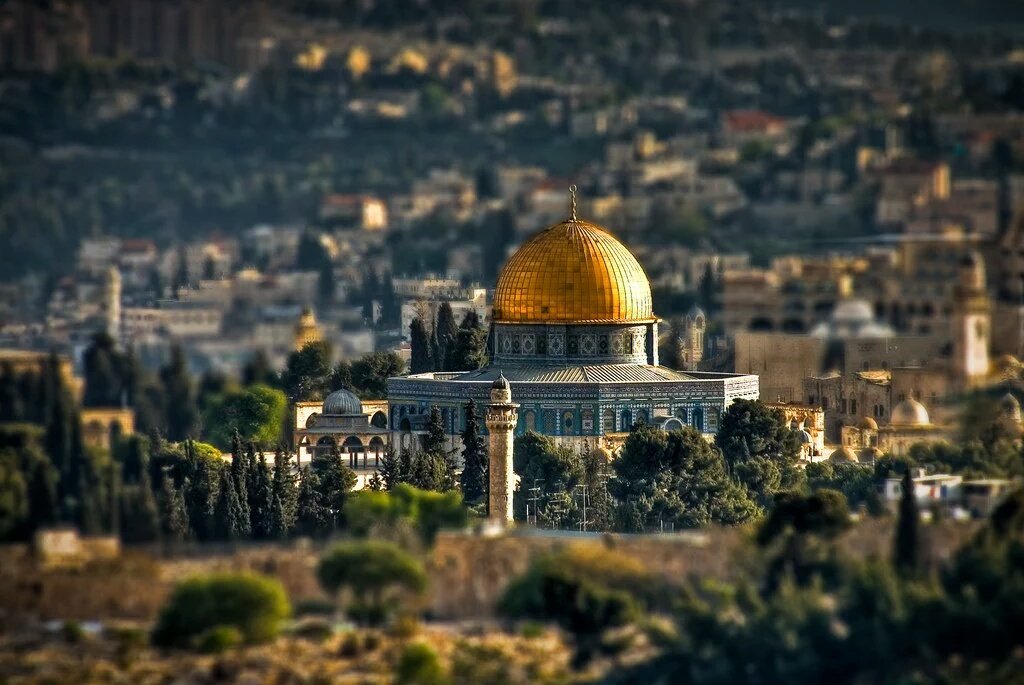
(Click on the picture to see a beautiful view of the Dome of the Rock)
-
Hanafi Fiqh Q / A...browse & Learn Or Ask A Question
ummtaalib replied to ummtaalib's topic in Hanafi Fiqh (General)
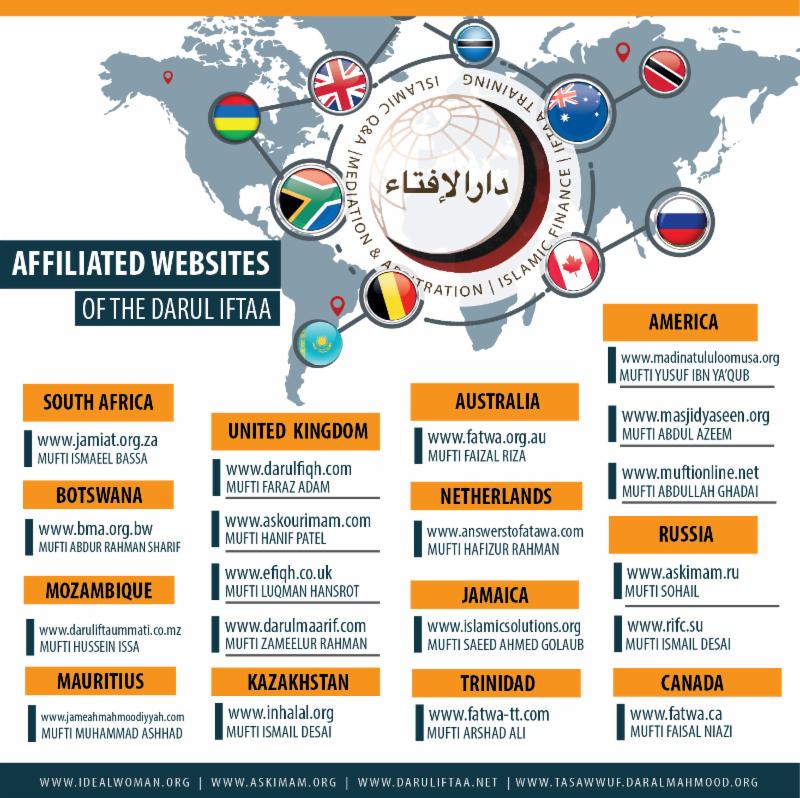
Websites of Darul Iftas (Click on picture to enlarge)
-
With thanks to Central-Mosque for an excellent compilation!
-
Nablus This is the hub of Palestinian trade and culture. Allah (SWT) has blessed this city with greenery and vegetation and prices are about half of what they are in the rest of Israel. Discussing the prices with my Taxi driver I asked him as to why he doesn’t buy produce from here and sell it near Bethlehem? He replied that at Israeli checkpoints they regularly and deliberately destroy produce to crush the Palestinians economically so Palestinians are scared to lose their merchandise (and invested capital) therefore don’t buy anything from here even at half prices! Nablus is also famous for holding the Guinness Book of World record for the largest Kanafeh in the whole world. My driver insisted that I eat it! Since I was from Pakistan he actually paid for my Kanafeh as a gift from Palestine. Apparently, you cannot visit Nablus without eating Kanafeh! There are two Mosques in Nablus which are both associated with the incident when Yaqub [Jacob] (AS) was shown the (false) blood soaked shirt of Yusuf [Joseph] (AS) by his brothers. وَجَآءُو عَلَىٰ قَمِيصِهِۦ بِدَمٍ۬ كَذِبٍ۬ۚ قَالَ بَلۡ سَوَّلَتۡ لَكُمۡ أَنفُسُكُمۡ أَمۡرً۬اۖ فَصَبۡرٌ۬ جَمِيلٌ۬ۖ وَٱللَّهُ ٱلۡمُسۡتَعَانُ عَلَىٰ مَا تَصِفُونَ [12:18] And they came with fake blood on his shirt. He said, .Rather, your inner desires have tempted you to do something. So, patience is best. It is Allah whose help is sought against what you describe.‘‘ This one to is called Great Mosque of Nablus and it is a narrow and long Mosque right in the middle of the Market town. The other is the Al-Khadra Mosque which was damaged by the Knights Templars during Crusades and then destroyed by the Mongols to be rebuilt. The Mosque was 85% destoryed by Israeli bulldozers when they locked the city of 200,000 down and banned all entry/exit in 2002 for 100 days. The picture is for historical archives of what it used to look like before Israeli destruction.
-
Dead sea, Sea of Galilee (Lake Tiberias): Muslims believe that one of the signs of the end of the world is drying up of water in the Sea of Galilee (Lake Tiberias) as narrated in a lengthy but Authentic tradition of Muhammad (570-632) [Peace be upon Him] which is actually a conversation between the companion who is lost and the Dajjal (Anti-Christ), the companion who is led there by hairy beast called Al-Jassasa. Dajjal (Anti-Christ) predicts that water in will one day dry up and checks the state of the water (1400) years ago from the visiting companion as follows: أخبروني عن بحيرة طبرية. قلنا: عن أي شيء تستخبر؟ قال: هل فيها ماء؟ قالوا: هي كثيرة الماء. قال: أما إن ماءها يوشك أن يذهب He [Dajjal (Anti-Christ)] asked, ‘Inform me of the lake of Tiberias. Is there water in it?’ We replied, ‘It is full of water.’ He Dajjal (Anti-Christ) informed us, ‘Soon its water will disappear.’... [Muslim] I didn’t go to Sea of Galilee (Lake Tiberias) but I visited the Dead sea (which is the source) around the spot where it is 300 meters below sea level and the Israeli Government has a desalination to use this for drinking water and they use the Dead sea salt in Cosmetics (as miracle beauty and Health products). The water has retracted for miles and there is a lot of sand for miles and little water.
-
JerichoAlthough it is called أريحا Arriha in Arabic the Palestinians also usually refer to it as Jericho. It is the most excavated city and presumed to be the oldest continuously inhabited city of the world. Again the minute you tell the Palestinians that you are from “Pakistan” the whole time erupts everywhere. You don’t get entrance fees, you get offered free gifts and you get your 15 minutes of fame! Zacchaeus & the Sycamore Tree:This is a story from the bible as to how Eesa [Jesus of Nazareth] (AS) met Zacchaeus (Tax Collector) as follows: Jesus entered Jericho and was passing through. A man was there by the name of Zacchaeus; he was a chief tax collector and was wealthy. He wanted to see who Jesus was, but because he was short he could not see over the crowd. So he ran ahead and climbed a sycamore-fig tree to see him, since Jesus was coming that way... [Luke 19:1-10] This tree is estimated to be around 2000 years old and Christians believe that the fruit of this tree which is extremely bitter if consumed (bearing the bitterness with patience) is a cure for all diseases.
-
Sanctuary of Younis [Jonah] (AS): : The Masjid which houses the gravesite of Younis [Jonah] (AS) is about 5 KM outside of Hebron in a city called Halhul.This Mosque was originally constructed and sponsored during the Ayyubid dynasty and I have some doubts about the historical authenticity of the originator but I will record the following from the discoverislamicart (on their Authority): The building is composed of a mosque and a maqam (tomb). The mosque is a new construction undertaken amidst the rubble of the original Ayyubid mosque. Composed of two stories, the first level includes the remains of the Ayyubid mosque, while the burial area is at the basement (crypt) level of the maqam. The maqam of the Prophet Jonah is accessed from inside the mosque via the ground-floor entrance, thus the visitor can see what remains of the old mosque by passing through the centre of it in the direction of the qibla (south). The old maqam consists of a building with a square ground plan that is surrounded on the south, east and west by porticoes. Each portico is supported by three large piers which bear skilfully built cross vaults. Beneath the porticoes, are windows that overlook the commemorative tomb chamber, this is square in form and topped by a barrel vault. The tomb is covered by a green cloth, as is customary for Islamic shrines. Above the west window of the tomb chamber there is a woven-silk panel (kiswa) upon which is the name of the deceased. The panel, which resembles those found in the Haram al-Ibrahimi in Hebron, is in the late Ottoman style and may date to the period of Sultan Abd al-Hamid. The tomb itself is a wooden structure with the burial chamber beneath it in an underground room below the mosque. The tomb is inaccessible and cannot be visited. It does not face the qibla as is customary in Islam but deviates towards the southwest. This is perhaps because the maqam dates to the Pre-Islamic era, along with a series of other old tombs that have been discovered during expansion works of the mosque. The residents of this area associate the maqam with miracles and it forms a centre for religious heritage and the folklore of the region. Central-Mosque
-
Sanctuary of Lut [Lot] (AS): The picture (above) is of the Mosque where Lut [Lot] (AS) stayed Lut [Lot] (AS) sas a Prophet of Allah (SWT) according to Islam and pious personality according to Judeo-Christian tradition. Qur’aan tells his story and the divine punishment on the people of Sodom and Gomorrah as follows: ذۡ قَالَ لَهُمۡ أَخُوهُمۡ لُوطٌ أَلَا تَتَّقُونَ (١٦١) إِنِّى لَكُمۡ رَسُولٌ أَمِينٌ۬ (١٦٢) فَٱتَّقُواْ ٱللَّهَ وَأَطِيعُونِ (١٦٣) وَمَآ أَسۡـَٔلُكُمۡ عَلَيۡهِ مِنۡ أَجۡرٍۖ إِنۡ أَجۡرِىَ إِلَّا عَلَىٰ رَبِّ ٱلۡعَـٰلَمِينَ (١٦٤) أَتَأۡتُونَ ٱلذُّكۡرَانَ مِنَ ٱلۡعَـٰلَمِينَ (١٦٥) وَتَذَرُونَ مَا خَلَقَ لَكُمۡ رَبُّكُم مِّنۡ أَزۡوَٲجِكُمۚ بَلۡ أَنتُمۡ قَوۡمٌ عَادُونَ (١٦٦) قَالُواْ لَٮِٕن لَّمۡ تَنتَهِ يَـٰلُوطُ لَتَكُونَنَّ مِنَ ٱلۡمُخۡرَجِينَ (١٦٧) قَالَ إِنِّى لِعَمَلِكُم مِّنَ ٱلۡقَالِينَ (١٦٨) رَبِّ نَجِّنِى وَأَهۡلِى مِمَّا يَعۡمَلُونَ (١٦٩) فَنَجَّيۡنَـٰهُ وَأَهۡلَهُ ۥۤ أَجۡمَعِينَ (١٧٠) إِلَّا عَجُوزً۬ا فِى ٱلۡغَـٰبِرِينَ (١٧١) ثُمَّ دَمَّرۡنَا ٱلۡأَخَرِينَ (١٧٢) وَأَمۡطَرۡنَا عَلَيۡهِم مَّطَرً۬اۖ فَسَآءَ مَطَرُ ٱلۡمُنذَرِينَ (١٧٣) إِنَّ فِى ذَٲلِكَ لَأَيَةً۬ۖ وَمَا كَانَ أَكۡثَرُهُم مُّؤۡمِنِينَ (١٧٤) وَإِنَّ رَبَّكَ لَهُوَ ٱلۡعَزِيزُ ٱلرَّحِيمُ [26:161] when their brother Lut said to them, .Do you not fear Allah? [26:162] I am an honest messenger for you.[26:163] So fear Allah and obey me.[26:164] I do not claim from you any reward for it. My reward is with none but with the Lord of the worlds. [26:165] Do you go to the males (for having sex) out of the whole universe, [26:166] and leave your wives whom your Lord has created for you? Indeed you are a people who cross (all) limits.[26:167] They said, .If you do not stop O Lut, you shall be included among the outcast.. [26:168] He said .Indeed, I am annoyed with your act. [26:169] My Lord, save me and my family from what they do.. [26:170 So We saved him and his family, all of them [26:171] except an old woman among those who remained behind. [26:172] Then We destroyed the others, [26:173] and subjected them to a terrible rain. So evil was the rain of those who were warned. [26:174] Surely, in this there is a sign, but most of them are not believers, [26:175] and indeed your Lord is the Mighty, the Merciful. The picture above is where Ibraheem [Abraham] (AS) prostrated to his Lord (SWT) when he witnessed the divine punishment towards the peopke of people of Sodom and Gomorrah. Central-Mosque
-
Hebron Historically this city is associated with Ibraheem [Abraham] (AS) according to Authentic Islamic tradition. Since Allah (SWT) took Ibraheem [Abraham] (AS) as his close friend (Al-Khalil) the historic (Islamic) name of this city is “الخليل” (Al-Khalil). The Qur’aan states: وَمَنۡ أَحۡسَنُ دِينً۬ا مِّمَّنۡ أَسۡلَمَ وَجۡهَهُ ۥ لِلَّهِ وَهُوَ مُحۡسِنٌ۬ وَٱتَّبَعَ مِلَّةَ إِبۡرَٲهِيمَ حَنِيفً۬اۗ وَٱتَّخَذَ ٱللَّهُ إِبۡرَٲهِيمَ خَلِيلاً۬ [4:125] Who is better in Faith than one who has surrendered his self to Allah and is good in deeds, and has followed the creed of Ibrahim, the upright. Allah has made Ibrahim a friend. Al-Khalil was always Palestinian territory and unlike Jerusalem it's sovereignty has never been disputed. In 1968 a group led by Extremist Zionist Rabbi Moshe Levinger rented a Hotel and then refused to leave. The hardliner (one-eyed) Israeli defence minister Moshe Dayan instead of evicting them decided to move them to an abandoned military base thus starting an Israeli settlement which is now smack bang in the middle of Palestinians. These hard-line Zionist settler number around 500, protected by 4,000 heavily armed Israeli soldiers and make life intolerable for over 400,000 Palestine. Since the settlers are on higher grounds they walk around fully armed, throw rocks and even shot right in the middle of the Bazars. You will read guidebooks where Foreign Tourists who try to get friendly with Palestinians are abused or stones thrown at them. The Bazar is covered by make shift tin roofs to stop Zionist stones from reaching tourists. The Zionists also regularly dump their trash straight down on the heads of Palestinians and Tourist. You can see the net in the picture to try to prevent that. Sanctuary of Ibraheem [Abraham] (AS): Palestinian access is tightly controlled by Israeli checkpoint and my Taxi driver was stopped from entering. The grave of Ibraheem [Abraham] (AS) actually has a Bulletproof partition because in 1994 the Extremist Baruch Goldstein shot and killed 29 unarmed Palestinians and injured 129. I was denied entry to the Yaqub [Jacob] (AS) graveside which is reserved for Jews and told that he is a Jewish Prophet! Central-Mosque