
ummtaalib
-
Posts
8,467 -
Joined
-
Days Won
773
Content Type
Profiles
Forums
Events
Everything posted by ummtaalib
-
Fill the Bucket! By Abdur Rahmaan Umar “Sheikh, Ramadaan soon,” said Omar, his gruff voice making him sound a lot older than his 28 years, “We will really have to exert ourselves this Ramadaan!” Sheik Hamaad nodded quietly, taking a sip of his favourite Jasmine tea. “Yup, we really gonna have to try and do a lot this Ramadaan,” chorused Ridwaan. Sheikh looked at them and whispered, “Or not to do.” Omar jerked his head in surprise and looked at Ridwaan, searching for an answer. Ridwaan raised his eyebrows and shrugged his shoulders. The group looked at one another with skewed glances but said little until Omar mustered the courage and broke the silence, “Did Sheikh say not to do?” Sheikh nodded in silent affirmation, his long beard making little waves on his chest. They looked at one another for some clue, something just wasn’t right. Zaid, unable to contain himself and ventured softly, his voice barely audible from his usual position against the wall at the back, “But Sheikh always told us that this is the month to capitalize, to take maximum benefit of the time and to really … how you say…stock up.” Sheikh Hamaad’s lips curled into a soft smile as he placed his tea on the little ornate wood table beside him, “True, I did say that you have to work hard and earn rewards. But let me give you an example – if you have a bucket, how long will it take to fill up?” Omar’s face lit up, he adjusted his specs, and in his a very professional tone said, “Depends on many factors – what’s the rate of flow of the water, how big is the bucket, what is the size of the opening, and …” “Let say we ignore all that,” Sheikh continued, “If the bucket has a huge hole at the bottom will it remain full?” “Well,” began Omar, “depends on the size of the hole, and the rate of…” “No ways! It will not remain full,” Zaid interrupted him, and looked to Sheikh for an explanation of the analogy. Sheikh surveyed the puzzled look on their faces and decided to end the suspense, “If we do a lot in Ramadaan, but fail to give up sinning then we are like people who are trying to fill a bucket that has holes.” “Holy bucket!” said Zaid, chuckled softly at his joke. Sheikh smiled and continued, ”Hadhrat Abu Hurayrah Radiallahu anhu narrated that the Messenger of Allah Sallalahu Alaihi wasallam said: ‘There are many such people who fast but gain nothing from their fast except hunger, and there are many such people who stand up (in Prayer) for whom there is nothing but the (difficulty) of staying awake. (Hadith-ibn Majah)’ So….people may make a lot of effort, but gain nothing from it.” “Holes in the bucket,” acknowledged Zaid, his head nodding in affirmation, “But why?” Sheikh paused to sip his tea, “Because they don’t give up sinning…perhaps they break their fast with haraam provisions, or they indulged in backbiting during the day. Or they indulged in some other sin that erased the good of the fasting and prayer. “ In another saying of the Messenger of Allah Sallalahu Alaihi wasallam narrated by Hadhrat Abu Ubaydah( Radiallahu Anhu) that “Fasting is a shield until it’s not torn” (Hadith-Ibn Majah); which conveys a similar meaning. A shield is only useful if it’s able to withstand the onslaught of the enemy. If it’s damaged it’s no longer a source of protection. Likewise, we have to be extra careful about not committing sins in Ramadaan. Ridwaan leaned forward and asked, “Must we be more vigilant about sins than doing good deeds?” “Yes, you need to be more cautious, because if you do good deeds without refraining from sin then it’s like filling a bucket with holes. Holy bucket!” said sheikh nodding at Zaid, whose curiosity dragged him away from the back wall. Sheikh paused to take drain the cup of the last drops of tea, In another Hadith it’s mentioned that a person asked The Messenger Sallalahu Alaihi wasallam, just as you have asked, what causes the fast to tear, and he, Muhammad Sallalahu Alaihi wasallam replied – lies and backbiting. Fasting is not just about giving up food and drink; it’s about staying away from haram(forbidden things). So the eyes have to fast by not looking at anything impermissible, the ears have to fast by not listening to haraam. So too, the mouth, by avoiding lies, backbiting, swearing and other wrongful words. Even the limbs have to fast by not going to haraam or indulging in it. “That changes the whole notion of fasting,” asked Zaid, now having made his way close to the front, “But that’s tough…” Sheikh immediately began reciting in his melodious voice: “From Surah Baqarah (verse 185) – Allah Ta'ala desires ease for you and does not intend for you hardship. And (wants) for you to complete the period and to glorify Allah for that (to) which He has guided you;” “Zaid! You love your kebabs?” Sheikh asked. Zaid nodded bashfully. “Would you eat any one of those lovely, tasty kebabs just before fast breaking time? Say with 30 seconds to spare?” Zaid shook his head vigorously and replied, “No!” his voice a little too loud for the occasion. “Why not?” “Because that would be breaking Allah’s command!” “Even by a mere thirty seconds?” asked Sheikh and Zaid shook his head more energetically. “So we have so much self-restraint about what we put in our mouths that we won’t even transgress by thirty seconds, but we take very little care about what comes out of our mouths,” said Sheikh, “Allah Ta'ala has given us the ability to control ourselves, we have to use this ability to avoid all those things which earn His displeasure.” “So what’s the best thing we can do this Ramadaan? “asked Omar. “The best thing to do is to avoid sinning in this blessed month, and…and...do your best to fill the bucket. By the grace of Allah Ta'ala it will be filled which much good that will remain even after Ramadaan. So, simply, do nothing wrong this Ramadaan!” www.eislam.co.za
-
- 1
-

-
CAN ZAKAT FUNDS BE USED TO FEED DESERVING RECIPIENTS SUHUR AND IFTAR? Question: I wish to send my zakah to Burma for the extremely poor, persecuted and completely unprotected n defenseless Muslims. Great majority of them do NOT and can NOT fast because they are extremely poor and have no means to afford enough food for Suhoor-Iftaar. They live on handouts, scavenging and begging. Can my cousin in Rangoon arrange to prepare S-I out of zakah that I plan to send, to feed them hearty S-I so that they can fast throughout Ramadan? For your information, according to strong evidence, indications and observations for an extended period of time, these Muslims might spend cash handed to them (i.e., zakah) more on sinful things and less on essential food and other basic day to day necessary items. Answer: In the Name of Allah, the Most Gracious, the Most Merciful. As-salāmu ‘alaykum wa-rahmatullāhi wa-barakātuh. There is no doubt that our brothers and sisters in Burma are in dire need of assistance and one can assist deserving recipients among them. Keep in mind the principle that deserving recipients of Zakat need to be made owners of the Zakat funds regardless of whether they are paid in money or in-kind. In Suhur and Iftar, this act of making a recipient an owner [tamlik] is not found – meaning that ownership of the food is not transferred to them. Rather, they are merely given permission to partake of this food at the time of suhur and iftar. In order to use Zakat funds to give food to deserving recipients of Zakat, one can give them food in packets or containers such that it is clear to them (i.e. the recipients) that they are now owners of this food and may do whatever they want with it. Now, whether they eat it immediately or save some or all of it for later, give it to someone else, etc. it is their choice. In this way, it will be permissible to use Zakat funds for this purpose since they will become owners of the food they are given. [ii] And Allah Ta’āla Knows Best Mufti Sohail ibn Arif, Assistant Mufti, Darul Iftaa Chicago, USA Checked and Approved by, Mufti Ebrahim Desai. _____________________ ويشترط أن يكون الصرف (تمليكا) لا إباحة كما مر (قوله: تمليكا) فلا يكفي فيها الإطعام إلا بطريق التمليك ولو أطعمه عنده ناويا الزكاة لا تكفي رد المحتار، ٢/ ٣٤٤ فتاوى محمودية، ٩/ ٦٠١ - ٦٠٢ [ii]
-
Fasting Related Questions pertaining to Women Q. Does a woman have to keep Qadha of fasts missed due to menstruation? A. Yes, Sayyidatuna A’ishah RadiallaahuAnha reports from Rasulullah Sallallaahu Alayhi WaSallam that a menstruating woman will keep the Qadha of missed fasts but there is no Qadha for Salaah missed during menses. (I’laaus Sunan V: 1, P: 372, Idaratul Qur’an) Q. Can I visit my gynaecologist or have a pap-smear during Ramadaan? A. The fast would be nullified if medication is inserted into the private part. It would therefore be advisable to delay the appointment until after Ramadaan. (al-Fataawa al-Hindiyyah– V: 1, P: 204, Turath) Q. Is a fasting woman allowed to breastfeed her baby? A. It is permissible for a fasting woman to breastfeed her child. Breastfeeding does not invalidate the fast. (Jawahirul Fiqh, V: 1, P: 380, D.U. Karachi) Q. Is it permissible to take the medication like the pill (contraceptive) throughout the month of Ramadaan to avoid getting one’s period in order to keep all the fasts as it is very difficult to keep the missed fasts? A. Though it is permissible, it is not best to do so. It could have side effects like tampering with one’s cycle, etc. which leads to difficulties and problems in the future for Salaah, Umrah/Hajj etc. This is besides other long term medical harms. Q. I would like to obtain some clarity on women that miss fasts in the month of Ramadaan due to being pregnant or are breastfeeding. Are they required to fast after Ramadaan the missed fasts or can they just pay the Fidyah? A. Women who are breastfeeding or pregnant may postpone the fast during Ramadaan if fasting will be detrimental to their health or the health of the child. After Ramadaan, they will have to make Qadha of the fasts they had missed when they are in a position to do so. Paying the Fidyah will not suffice if one is physically able to make Qadha of the missed fasts. NB. Breastfeeding and pregnant women should consult an upright and experienced Muslim doctor for advice on whether fasting will be detrimental or not. Q. If a female starts menstruating whilst fasting in Ramadaan, can she eat (discreetly) when she is in seclusion? Similarly can she do so when she stops menstruating during the day? What if in both cases she kept the entire fast for that day. Will her fast be valid as she has completed some part of the fast as a pure/paak person? A. If her menses has commenced whilst fasting then she may eat discreetly (out of people’s sight). However if her menses had terminated during the day, then she should abstain from eating and drinking etc. both in private and public and act as a fasting person. In both cases her fast will be invalid as menstruating women cannot fast. She will have to make Qadha for these days as well after Ramadaan. (Ahsanul Fatawa, V: 4, P: 438, Sa’eed) Q. Is it permissible for a female to insert medicine through her private part whilst fasting? A: Any form of medicine inserted into the internal part of a woman’s private will invalidate her fast. (al-Fataawa al-Hindiyyah– V: 1, P: 204) N.B. It is not permissible, whether fasting or not to totally insert a tampon into the inner private part. Q. What is Kaffarah? A. The term Kaffarah refers to the penalty upon a person who intentionally breaks his fast for no valid Shari’ reason by either eating, drinking or engaging in conjugal relations during the fast of Ramadaan. In the case of Kaffarah becoming obligatory on a person, a person will have to fast for 60 days consecutively. If a person cannot fast for 60 days consecutively due to a valid Shari’ reason, for e.g., old age or a chronic illness, then he would have to feed 60 poor people two full meals for 1 day, or feed one poor person two full meals a day for 60 days or give them the equivalent in monetary value. The average type of a meal is 1.6kg of wheat or flour or its value. (Maraaqil Falaah 1/250/1) Jamiatul Ulama (KZN) Council of Muslim Theologians
-

Bleeding After Miscarriage - Haidh, Nifaas Or Istihaadhah?
ummtaalib replied to ummtaalib's topic in Fiqh of Menstruation
Abortion / Miscarriage Question Could you please explain the rulings regarding bleeding after an abortion or miscarriage? Is the bleeding considered to be impure therefore the woman cannot perform her salaat or fast during this time? Please give as much detail as possible on the matter. Jazak alla khair Answer Bismillah Al-jawab billahi at-taufeeq (the answer with Allah’s guidance) Bleeding that follows an abortion or miscarriage of a foetus that has some limbs formed (usually after four months into the pregnancy, but could occur earlier) will be regarded as Nifas (postnatal bleeding). If no limbs have formed on the aborted or miscarried foetus then the bleeding that occurs after the abortion or miscarriage will only be considered menstruation if 15 days have lapsed since her last cycle. The bleeding should also continue for at least three days. If these conditions are not present, it will be considered as Istihadhah (dysfunctional uterine bleeding). Rules of Haid and Nifas: : During Haidh or Nifas, it is not permissible to have intercourse, to enter a mosque, to make Tawaaf of the Ka’bah, to read the Quran or to touch it and to offer prayer or to fast. The only difference is that she is completely excused from prayer. After the Haidh or Nifas, it is not Wajib on her to make up of her prayer. However, after her Haidh or Nifas she will have to keep her missed fasts. Rules of Istihadah: chronic blood discharge (Istihada) is the same as for the one whose nose bleeds continuously. Such a woman should offer her prayer, fast and should not leave out these. It is also permissible to have sexual intercourse with such a woman. Note: The rules for chronic blood discharge (Istihada) are the same as those of the Ma’zur (excused). And Only Allah Ta’ala Knows Best. Moulana Qamruz Zaman London, UK Source -
Frequently asked Questions pertaining to Fasting (Part 2) What is the status of Sehri in Ramadaan? A. Sehri is a Sunnah practice. Rasulullah Sallallaahu Alayhi Wa Sallam is reported to have said, ”Partake of Sehri, for verily there is Barakah (blessings) in Sehri.” (Bukhari, Muslim) However the fast is valid without Sehri. Does the use of an injection break the fast? A. The fast is not nullified. However if the injection is injected directly into the stomach or brain, the fast would break. (Ahsanul Fatawa, V: 4, P: 432). NB. Dosages of Insulin injected to the abdomen does not invalidate the fast as it is not injected directly into the stomach. Does the use of a drip break the fast? A. No. (Fataawa Mahmoodiya, V: 10, P: 149, Farooqiyyah). Can I have a blood test done whilst fasting? A. Yes, you could do so provided that you do not become so weak that fasting becomes difficult. (AhsanulFatawa, V: 4, P: 435, Sa’eed) If one vomits, does it break the fast? A. The fast is only broken if one had vomited a mouthful involuntarily and swallowed it voluntarily or if one had voluntarily (induced) vomited a mouthful whether swallowed or not. (al-Fataawa al-Hindiyyah– V: 1, P: 203/4) The definition of “mouthful (vomit)” is that which one cannot hold back in one’s mouth without difficulty. Is it permissible to swim whilst fasting? A. It is not advisable to swim whilst fasting. If water is swallowed by mistake or enters through the nose and reaches the brain then the fast will break and a Qadha will have to be kept. (Tahtaawi Alaa Maraqil Falaah, P: 671) Is it permissible to apply oil to the head whilst fasting? A. Yes it is permissible to do so. (al-Fataawa al-Hindiyya– V: 1, P: 203) I am writing exams during Ramadaan and find it difficult to concentrate whilst hungry. Can I delay my fast until after Ramadaan? A. It is not permissible to do so. Keep your fast and pray to Allah Ta’ala to make it easy for you.(Fataawa Raheemiya V: 2. P: 34) I am an asthmatic. Does the usage of the pump break my fast? A. It is advisable that you use your pump at Sehri time and Iftaar time. However, if you do have an acute attack, you could use your pump. This will break your fast however. Will my fast break if my nose bleeds? A. No, the fast is not broken by mere nosebleed. However if blood flows down the throat, it will break if one tastes the blood in the throat or the blood swallowed is more or equal to the saliva swallowed with it. If the blood is less than the saliva, the fast is still intact. (al-Fataawa al-Hindiyyah– V:1, P: 203) Can one take a bath after Sehri, to be cleared from the state of Janaabat (requiring Fardh Ghusal)? A. It is not advisable to unnecessarily delay the Fardh Ghusl. However if one is the position that he wants to partake of Sehri before taking the Ghusl then it is permissible. If one is fasting and sprays perfume on oneself and accidentally inhales some of the perfume, will it break the fast? Will Qadha have to be made? A. One’s fast does not break by wearing, feeling or smelling fragrance. As such, it is permitted to apply perfume (itr) whilst in the state of fasting. However, if one was to intentionally inhale something that has a perceptible body, such as smoke (like the smoke of lobaan, the vapour of perfumes, agharbatti, Oudh etc.), then one’s fast would become invalid. (Tahtawi ala Maraqil Falaah, P:660) Does masturbating break the fast? A. One is not allowed to masturbate, whether fasting or not. However if one does this vile act whilst fasting then the fast will break and a Qadha will have to be kept. (Raddul Muhtaar, V:. 2, P: 399) NB: One should make sincere and abundant Taubah for this debase act. Is it permissible for a husband and wife to kiss whilst fasting? A. It is permissible, provided that: i. One does not swallow the saliva of his/her partner. ii. One has control over his/her desire and is not driven by desire to sexual intercourse or ejaculation. (Raddul Muhtaar, V: 2, P: 410) However such an action in the state of fasting is not advisable. If the saliva of the spouse is swallowed then not only is Qadha to be made but also Kaffaarah (i.e. fasting consecutively for 60 days). Q. I am a diabetic and not in a position to keep fast. How do I compensate for the missed fasts? A. Allah Ta’ala has granted permission to people like yourself to compensate the fast with contributions for poor Muslims. The Jurists have equated this amount to that of Sadaqatul Fitr (money given on Eid day to the poor). The current (Ramadhaan 1438) price in KwaZulu-Natal, South Africa is R20.00 or more for each fast. It could be paid at the beginning of Ramadhan or at the end. (Shaami). This money may not be discharged before Ramadaan. Jamiatul Ulama (KZN) Council of Muslim Theologians
-
Objective of Ramadān (Part 1) Guidance and advice for the Blessed Month from Hadrat Mawlānā Muhammad Saleem Dhorat hafizahullāh The Spirit of Ramadān In order to truly benefit from the month of Ramadān, we need to understand its true purpose. The purpose of this blessed month is to help us weaken our connection with the material world and to strengthen our connection with Allāh ta‘ālā by excelling in spirituality. Any ‘ibādah performed with this spirit will truly be fruitful. Change Your Life Make the month of Ramadān a means of changing your life for the better. Ramadān Advice An associate once asked me for some advice regarding Ramadān. I advised him to not say, look at or listen to anything which is wrong and sinful.
-
RAMADHAAN 1438/2017 Message from Mufti Ebrahim Desai (Hafidhahullah) Alhamdulillah, once again, Allah blessed us with the Month of Ramadhaan. Value the opportunity and take stock of our lives and make taubah (repent). Focus on reforming ourselves by becoming more sensitive to our obligations in Deen. § Correct our Salaah and perform it with love for Allah. § Increase the Tilawat of Qur’aan. § Increase our Dhikr of Allah. § Keep the heart pure and clean from ill-feelings. A pure heart ascends the heights of spirituality faster. § Exert yourself in asking Allah for His forgiveness and emancipation from the fire of Hell.
-
Frequently asked Questions pertaining to Fasting (Part 1) Q: Does a minor child have to fast? A: fasting is not obligatory on a child. Q: Does a pregnant woman have to fast? A: By default, a pregnant woman has to fast. However, if illness or harm is genuinely feared upon herself or the foetus, she is then exempted from fasting. She will have to do Qadhā’ later. Q: Does a sick person have to fast? A: A sick person is exempted from fasting altogether if there is genuine reason to believe that the current illness will intensify by fasting or that he will suffer another illness on result of fasting or that his recovery will be prolonged due to fasting. Q: Can a traveller omit fasting? A: A Shar’ī musāfir (traveller) who embarked on his journey prior to dawn is permitted to omit the fast of that day. As long as he is a Shar’ī musāfir, he may omit fasting. Q: What about travelling during the day? A: If a person embarked on a journey during the day, he/she will have to fast that day. Q: Will the application of eye drops break the fast? A: Using eye drops will not break the fast. Q: Can ear drops be used? A: If a person’s eardrum is not perforated (intact), he may use ear drops. If someone has perforated ear drums, it will not be permissible to use ear drops. Q: Can we use insulin injections whilst fasting? A: It is permissible to use insulin injections. Injections do not break a fast. Q: Will a nasal spray break the fast? A: Yes, a nasal spray will break the fast. Q: Can mouthwash be used whilst fasting? A: It is disliked to use mouthwash whilst fasting. Q: Is it permissible to brush teeth and use toothpaste? A: It is disliked to use toothpaste whilst fasting. One may brush teeth, use a miswak and a tongue scraper. Q: Can an addicted smoker smoke whilst fasting? A: It is not permissible to smoke whilst fasting. Smoking will result in Qadhā and Kaffārah. A smoker may use a transdermal nicotine patch. Q: What is the ruling for using suppositories? A: Insertion of suppositories up the rear passage will invalidate the fast. Q: I forgetfully ate whilst fasting? A: If one was totally unaware that he was fasting, the fast will not be broken regardless of what was consumed. Q: By mistake I swallowed water whilst doing wudhu? A: By doing an act mistakenly will break one’s fast. However, only Qadhā will be necessary. Q: I engaged in intercourse with my spouse? A: Intercourse will invalidate the fast and will make Qadhā and Kaffārah compulsory. Q: will engaging in intimacy break the fast? A: Merely being intimate is disliked if it will lead one further. If one experiences ejaculation, the fast will be broken. Q: I had a wet dream whilst fasting. Is my fast broken? A: A wet dream will not invalidate the fast. Q: What is the Kaffārah? A: A Kaffārah is expiation for a violation. It is fasting for 60 days consecutively without any interruption for those capable of fasting. If one cannot fast, he will have to give monetary Kaffarah. Q: When will Kaffārah be binding? A: By swallowing food without an excuse, consuming something that one is inclined to or by intercourse. Q: Can a sick person pay fidyah instead of fasting? A: A person who cannot fast due a chronic or terminal illness may give fidyah. As long as a person’s condition remains such that they cannot fast, they will keep giving fidyah for each fast. Jamiatul Ulama (KZN) Council of Muslim Theologians
-
Fasting – Its Virtues and Principles – Imam Ghazali (from al-Arba`in fi Usul al-Din) ReflectOnThis: Fasting – Imam al-Ghazali Excerpt from Imam al-Ghazali’s (d. 1111 CE / 505 AH) Book of Forty Principles from the Foundations of Religion: Translated by: Khalil Abu Asmaa (Christopher Moore) [ After discussing the Prayer and Zakah, Imam al-Ghazali goes on to say: ] The Third Principle: Fasting The Messenger of God (peace and blessings be upon him) said that God said: He (peace and blessings be upon him) also said: Every good deed is ten times its likeness, up to seven hundred times, except for fasting, for verily it is for Me, and I will reward it. [al-Bukhari and Muslim] Fasting has been singled out with these amazing qualities for two main reasons: For everything there is a door, and the door of worship is fasting. [ibn al-Mubarak] 1. Its essence is that it is a personal abstinence, and such is a hidden action that no one but God can see, unlike the prayer, the zakah, or other (acts of worship). 2. It is a grief for, and subdual of, the enemy of God. Shaytan is the enemy, and the enemy cannot gain strength except through the medium of the passions. Hunger breaks all the passions that are the tool of Shaytan. For this reason, the Prophet (peace be upon him) said: Verily Shaytan runs in the Son of Adam like blood. Therefore, constrain the passageways of Shaytan with hunger. [al-Bukhari and Muslim, except after “Therefore”] Such is the secret of his statement (peace be upon him): When Ramadan comes the doors of Paradise are opened, the doors of the Fire are shut, the shaytans are restrained, and a caller calls: ‘Oh seeker of good, come forward! Oh seeker of evil, back off!’ [al-Tirmidhi, and al-Hakim said it was sound] Know that fasting, in addition to its rank, has three levels, and in addition to its secrets, has three levels as well. As for the levels of its rank: The least of them is to only fast the month of Ramadan. The highest of them is the fast of David (peace be upon him), which entails fasting every other day. It is mentioned in an authentic narration (in both al-Bukhari and Muslim) that such is “the fast of all time” and that it is the best of all fasts. The wisdom behind this type of fast lies in the fact that whoever fasts daily, fasting will become completely habitual and he will not feel brokenness in his soul, purity in his heart, or weakness in his desires. For indeed, the soul is only impacted by what comes to it (occasionally), not by what it has become used to. This shouldn’t be hard to imagine, for medical doctors also discourage their patients from developing a dependence for medicine, and they say, “Whoever becomes accustomed to that he will not benefit from it when he is sick, for his temperament will becomes used to it and it will henceforth not affect him.” Know that the doctoring of the hearts is akin to that of the doctoring of the bodies. This is the wisdom of the statement of the Messenger of God (peace and blessings be upon him) to ‘Abdullah b. ‘Amr b. al-‘Aas (may be pleased with them both) when he asked him about fasting: “Fast one day, break your fast the next.” He replied, “I want something better than that.” The Prophet (peace be upon him) responded, “There is nothing better than that.” It is for this reason that when it was said to the Messenger of God (peace be upon him), “So-and-so fasts all the time,” he said, “He neither fasted, nor broke his fast.” This is just like when Aisha (may God be pleased with her) said to a man that was reciting the Quran in a rapid fashion: “This one here has neither recited the Quran nor kept silent.” As for the middle level, it is to fast one third of the time. Whenever you fast every Monday and Thursday, adding to it Ramadan, then you have fasted four months and four days out of the year, which is slightly over a third. With that said, it is necessary that one day will be broken during the days of tashriq (during Hajj), so the total left is now three days. It is also imagined that the days of Eid will be lost as well, so this makes three days missed altogether, leaving us with one day. So think about the arithmetic and you will figure it out. Therefore, it is inappropriate for your fast to be less than this, for it is light on the nafs (self) and its reward is immense. As for the levels of its secrets, they are three: 1. The least of them is that one abstains from those things that break the fast, all the while not preventing his limbs from that which is disliked. This is the fast of the masses and it is indicative of their being pleased with the name (of “fasting”). 2. The second level is when you add to it prevention of the limbs. Hence, you guard the tongue from backbiting and the eye from looking at doubtful things, as well as guarding the rest of the body parts. 3. The third level is when you add to it the maintenance of the heart from (bad) thoughts and whisperings, and when you restrict it to the remembrance of God (Mighty and Majestic). This is the fast of the elect of the elite and it is the perfection of the fast. Finally, fasting has a last matter by which it is completed: to break the fast with that which is permissible, not that which is doubtful. In addition, not to be excessive in the eating of the permissible, in an attempt to make up for what was lost in the morning. In this case one would be merging two meals into one thereby weighing down the stomach and increasing the desires. This will invalidate the wisdom of the fast and its benefit, and will lead one to be too lazy to get up for tahajjud (night vigil prayer) and possibly cause one to not even get up before Fajr (to have suhur and prepare for prayer). All of this is a complete loss and it may be that such a one will not even benefit from the fast at all. Source
-
The Status of the Taraweeh Supplication (Tasbeeh)
ummtaalib replied to Bint e Aisha's topic in Ramadhaan
The famous tarawih tasbih Question Is the famous tasbih of tarawih mentioned in the Hadith? i.e, Subhana Dhil Mulki Wal Malakut……….. Answer I haven’t seen mention of this in Hadith books. Some Fuqaha (Jurists) have quoted it as a suggested form of tasbih, among other things that a person could engage in, between every set of 4 rak’ats of tarawih. (Raddul Muhtar, vol.2 pg.46) One may recite this or any other form of tasbih, dhikr etc as long as it’s not considered binding or sunnah. And Allah Ta’ala Knows best, Answered by: Moulana Muhammad Abasoomar Checked by: Moulana Haroon Abasoomar hadithanswers -
The Status of the Taraweeh Supplication (Tasbeeh)
ummtaalib replied to Bint e Aisha's topic in Ramadhaan
Taraweeh dua Hanafi Fiqh > Muftisays.com Question 1. Is the dua for taraweeh which is found displayed in many masjids sunnah? 2. If it is not and someone recites it considering it to be so will this be classified as bid’ah? 3. If it is not a sunnah shouldn’t the ulema point this out to the public? Answer BismillahAl-jawab billahi at-taufeeq (the answer with Allah’s guidance) Du’a or Tasbeeh of Taraweeh: Subhana ZilMulki wal Malakuti, Subhana ZilIzzati wal Azmati wal Haybati wal Qudrati, Wal Kibriyaa’i wal Jabaroot Subhanal Malikil Hayyil Ladhi, la Yanaamu wa la Yamutu, Subbuhun, Quddusun, Rabbul Malaa’ikati war-Ruh, La Ilaha Illal Lahu, Nastaghfirullahi Nas ‘alukul Jannati, Wa Na-udhubika Minan-Naar Translation: Glorified is the Owner of the Kingdom of the earth and the heavens; Glorified is the Possessor of Honour and Magnificence and Awe, and Power and Greatness and Omnipotence Glorified is the Sovereign, the Living, Who does neither sleep nor die O all Glorious, All Holy one, Our lord and the Lord of the Angels, And the soul. There is no God but You, Forgive us, Grant us Paradise, and save us from (hell) fire. There are no reports from the Sunnah but this Du’a has been recommended by ‘Ulamaa such as, Allamah Ibn Abidin al-Shami and others. (Shami Vol.2 Pg.46) This Du’a is permissible to recite, and it will be Bid’ah to make it compulsory. One may recite any other Du’as or Zikr. And Only Allah Ta’ala Knows Best. Moulana Qamruz Zaman London, UK Source -
Ramadan; a divine opportunity for our reformation ‘Allamah Muhammad Yusuf Al Binnory (rahimahullah) writes: ‘From the beginning of time, Allah Ta’ala selected the month of Ramadan as the season for abundant blessings and divine light (tajalliyat). Whenever Allah Ta’ala sent any gift from the sky for the reformation of humanity, Allah selected the month of Ramadan. The famous books and scriptures of the previous Ambiya were also revealed in this month culminating with the revelation of the Quran. Ramadan is near. During this month divine light (Nur and Tajalli) of Allah will cover everyone, provisions for forgiveness of man will be made. Allah Ta’ala, the most Generous, will increase His generosity. The doors of Jannah will be opened, the gates of Jahannam will be locked. O one who seeks good, go ahead! O one who intends evil, stop! Every night countless sinful people are saved from the blaze of Jahannam. For the reformation and cleansing of the evil soul (nafs), Allah Ta’ala has ordained fasting during the day, so that a believer can acquire the highest stages of taqwa and become close to Allah Ta’ala. During the nights we are encouraged to listen and recite the Quran. By means of the fast, the inner self (nafs) is cleansed and for the enhancement of the soul (ruh), Allah Ta’ala has arranged the recital of the Quran. It is as though in this blessed month, the [inhabitants of] earth are given a chance to link up with the higher ranked Angels in the skies [Al-Malaul A’la].’ (Adapted from Basair wa ‘ibar, vol.2 pg.407) al-miftah

-
Beginning & Ending of Menstruation & the use of Kursuf
ummtaalib replied to ummtaalib's topic in Fiqh of Menstruation
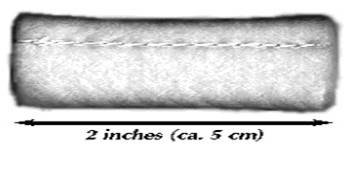
The Kursuf is a piece of cotton cloth, cotton wool, toilet paper or a tissue is folded so that it is a rectangular shape, the dimension of which is about 1” by 3” or 2.5 cm by 9 cm TISSUE: would be folded in half, then folded again to a quarter and then folded twice more. TOILET PAPER: 2 squares are taken, one on top of the other, then folded in half and then folded once more.
-
Discolored Menstrual Blood & When To Stop PrayingHanafi Fiqh > Seekersguidance.org Answered by Waseem Hussain Question: I find it rather difficultto determine the start and end of my menstrual cycle. Sometimes i see a very light colored discharge around the time my period is due. Sometimes the discharge continues for 2-3 days before a brownish discharge, followed by the regular red bleeding starts. At other times, i see some lightly colored particles in my discharge at one time, and then it stops, and the discharge becomes clear. But i would see it again after a couple of hours or a day, before the actual bleeding starts. The same happens in reverse towards the end of my cycle. Sometimes the whole cycle becomes even more than 10 days. Could you please explain in detail when should i stop praying, fasting etc. and when should i resume it? Answer: Walaikum Salam Warahmatullah, Each woman has her own menstrual cycle, some have it as 5 days others as 8 and so forth. and it changes from time to time. You are supposed to stop praying and fasting whenever you see discolored discharge, if it happens in days where it would be possible for you to have menstruation. You are supposed to resume prayer and fasting when the discharge becomes clear again or if your cycle goes beyond 10 days. Any cycle that exceeds past 10 days is returned to the habit, which is the last known valid menstruation. The days in between the habit and 10 days are then post-fact not treated as menstruation. A menstrual cycle cannot be more than 10 days. If your cycle goes beyond 10 days then you are no longer in menstruation, and you will have to resume prayer and fasting. The default is that anything but the clear discharge is considered blood. It is important to remember that the entire discharge does not need to be colored in order to be deemed blood. Meaning that if there is a mix of color in it, strands or spots of any color then that will be considered blood. So a spot of pink in it, or few strands of brown or anything like that will all be considered blood. If a woman gets this kind of discoloring all the time or it in other ways becomes normal for her then there may be scope for not considering it blood. However, you only experience the stated problem close to the start of the red blood or at the end of the red blood. Therefore, the issue you are describing seems to relate to the usage of sanitary pads or panty liners. These type of pads are fine to use, but one has to be careful about using them at the beginning and end of the menstrual cycle. Because they are considered to be placed far from the exit-point itself resulting in the discharge easily coming into contact with air. When the discharge comes into contact with air then it oxidizes resulting in the color changing. Therefore, you may see strands of color where there would in fact not have been any color at all. And that is probably what you are experiencing, both at the start and end of your cycle. What you should use instead, or on top of the pad, is a ‘kursuf’, which is a piece of cotton or other material that is placed right at the vaginal opening secured between the labial lips. It is placed such that the lips kind of clamp around it. Placing it in this manner minimizes the risk of oxidation and thereby one will be more accurately able to determine when the menstruation starts and ends. Using something that is 100% cotton is recommended, because the kursuf is placed at a sensitive area, and synthetic materials may iritate the skin. The kursuf should be about 2,5cm X 9 cm. If something too large is used then it may often loosen, which is why the kursuf is supposed to have such a small size. You should try using a kursuf for a few menstrual cycles and see if it helps. If it does not then please submit a new question. And Allah knows best, Waseem Hussain [birgivi, Dukhr al-Muta’ahhileen; Ibn `Abidin, Manh al-Warideen; Ibn Nujaym, Bahr al-Raiq] Checked & Approved by Faraz Rabbani Source
-
Khushúʹ is connected to the heart and khudhúʹ is connected to the parts of the body. Just as the heart should have tranquillity in it, serenity in it, that it should not wander here and there, similarly there should be tranquillity of the different parts of the body. From "For Friends" number 23
-
Let us aim for higher....there is no limit!
-
Which group are you from? Spiritually, in this world and well as the next, there will always only be three kinds of people; The very good ones, the very bad ones and those in between. In Surah Waqiáh, Allah Ta’ala categorizes the population of the hereafter as follows: (1) The forerunners (As-Sabiqoon)- the elite. (2) The people of the right (As-habul Yameen)- the moderate ones. (3) And the people of the left (As-habush shimaal)- the evil people. And in Surah Fatir (ayah:32), Allah Taála groups the inhabitants of the world in three as well: (1) The sinners (2) The Moderate group (3) And those who are foremost in doing good.
-
Welcome to the forum. I think you mean to say "contentment" instead of "contention"?
-
Five reasons to sleep with wudu Among the many Sunnats that relate to sleeping, making wudu before going to bed is one that yields much gain. There are many incentives for practicing this sunnah of Rasulullah (sallallahu’alayhi wasallam). Here under are a few of the incentives for one who sleeps with wudu: 1. The du’a of the Angels. Sayyiduna Ibn ‘Abbas (radiyallahu ’anhumu) reported that Nabi (sallallahu ‘alayhi wasallam) said: ‘Purify these bodies and Allah will purify you, for any slave who goes to sleep in a state of purity has an Angel that spends the night with him. Every time he turns over, [the Angel] says, ‘O Allah! Forgive Your slave, for he went to bed in a state of purity.’ (Al-Mu’jamul Awsat of Tabarani, Hadith: 5087) ‘Allamahs: Mundhiri and Dimyati (rahimahumallah) have declared the chain as good (Jayyid). 2. The soul will make sajdah under the ‘Arsh (Throne) of Allah Ta’ala. Sayyiduna Abud Darda (radiyallahu ’anhu) has said: ‘When a person sleeps, his soul (ruh) rises to the throne (‘Arsh) of Allah. If he slept with wudu, the soul is permitted to make sajdah (by the ‘Arsh of Allah). If he slept in the state of impurity, permission for sajdah is refused.’ (Kitabuz Zud of Ibnul Mubarak, Hadith: 1245. Also see: Fathul Bari, Hadith: 1149) 3. The reward of engaging in salah and dhikr the entire night. Imam Abu Murayah Al ‘Ijli (rahimahullah) said: ‘Whoever retires to bed in the state of wudu and falls off to sleep while engaging in the dhikr of Allah Ta’ala, his bed will be regarded as a Masjid. He will receive the reward of being in salah and dhikr until he awakens.’ The narration is suitable to quote as reported. (Musannaf ‘Abdur Razzaq, Hadith: 19837 and Fathul Bari, Hadith: 6311) 4. Be raised on the day of Qiyamah with Wudu The ‘Ulama state that one of the primary reasons for sleeping with wudu is to prepare for death: Sayyiduna Ibn ‘Abbas (radiyallahu’anhuma) advised: ‘Ensure that you spend the nights in wudu, for the souls will be raised in the condition [of purity] that they were taken in.’ (Musannaf ‘Abdur Razzaq, see Fathul Bari, Hadith: 6312 and ‘Umdatul Qari, Hadith: 247) 5. Protection from nightmares. Hafiz Ibn Hajar (rahimahullah) writes: ‘One who sleeps with wudu will see better dreams.’ (Fathul Bari, Hadith: 6311) Shaykhul Hadith Moulana Muhammad Zakariyya Kandehlawi (rahimahullah) says: ‘One who sleeps with wudu is saved from bad dreams.’ (Taqrir Bukhari 2/78) Lets take advantage of these super benefits of sleeping with wudu. A simple, yet so beneficial deed. In so doing, we won’t lose as we snooze! Al-Miftah
-
- 1
-
-
The Wife, an Amaanat - for Husbands to Meditate Written by Administrator We offer husbands a prescription which will ensure happiness in the home – a prescription which is designed to overcome incompatibility between spouses. It is the prescription of the Qur’aan the prescription of the Sunnah. Both husband and wife are the makhlooq (creation) of Allah Ta’ala. In His infinite wisdom, Allah Ta’ala has assigned different rights, duties and obligations to the variety of specimens of His makhlooq. Allah Ta’ala has assigned the wife to the care of the husband. She is His makhlooq whom He has placed in the custody of the husband. Allah Ta’ala has awarded custody of the wife to the husband by way of Amaanat (Sacred Trust), not by way of mielkiyyat (ownership). As such, the wife in the custody of her husband and under his jurisdiction is a Sacred Trust. She is the sole property of Allah Ta’ala – and of no one else. THE AMAANAT Normally, the rule of Amaanat is that the Ameen (Trustee) is under compulsory obligation to maintain and guard the Amaanat. He is not permitted to derive any personal benefit or use from or with the Amaanat. However, Allah Ta’ala in His infinite mercy has bestowed to the husband the right to derive comfort, rest, peace and benefit from the Sacred Trust we call The Wife. In the first instance the wife has been brought within the fold of the husband’s custody in the Name of Allah Azza Wa Jala. It is with Allah’s Name that the derivation of Benefit has been made Halaal. This permission to derive benefit from the Sacred Amaanat is the Nikah contract. When the husband accepts the Amaanat of the Wife from Allah Ta’ala, he solemnly pledges to His Khaaliq (Creator) that he will derive the permitted benefit from the Amaanat within the Divine Code prescribed by Allah’s Constitution, viz., the Shariah. When the husband accepts the Amaanat of Allah Azza Wa Jal at the Nikah ceremony, he sincerely, wholeheartedly and solemnly pledges to Allah Ta’ala that he will honour the Pledge and guard the Amaanat in exactly the manner in which Allah Ta’ala has commanded in His Shariah. He pledges to fulfil all the rights of the Amaanat. THE PLEDGE Now since the husband has made this pledge with Allah Ta’ala and taken the wife into his custody in Allah’s Name, he should understand that the slightest abuse of the sacred Trust is an act of great perfidy. Abuse of the Amaanat – failing in the observance of the Huqooq of the wife, verbally abusing her, physically assaulting her, mentally abusing her, leaving her in suspense and causing her any takleef whatsoever, are treacherous acts against the Pledge the husband had given to Allah Ta’ala. It is of imperative importance that the husband understands that Allah Ta’ala has assigned the wife to his custody not only for his sexual pleasure. There are numerous rights and obligations which the divine legalization of this benefit brings in its wake. Many husbands, due to gross ignorance of the requisites of the sacred Pledge by which they accept the Sacred Trust, labour under the massive misconception that they are accepting the Amaanat only for the derivation of the benefit of lawful conjugal relations. It is precisely due to this ignorance and misconception that they do not consider themselves bound by the demands of the Amaanat Pledge. Thus, the slightest annoyance, incompatibility, indifference and indiscretion by the wife culminates in dispute, argument, abuse and impatience with all the misery which daily every married couple suffers. ALLAH’S PROPERTY It is essential that the husband understands that when he deals with his wife, he deals with Allah’s property. Abusing Allah’s property is tantamount to treachery. It is a grave crime, the consequences of which cannot be escaped here in this world, nor in the Aakhirah. The husband has to necessarily reflect and meditate before he submits to his emotional dictates of impatience, and anger. Before he opens his mouth to emit a torrent of abuse or before he lifts his hand or before he acts disgustingly or spitefully, he should briefly meditate and remind himself that he is dealing with the property of Allah Ta’ala whom He has assigned to his custody. Even if the wife fails in the execution of her duties to her husband, he has to understand that in whatever he desires to implement in his endeavour for the acquisition of his lawful rights, he deals with Allah’s property. As such he can only refer to the limits prescribed by the Shariah. He may not trespass one iota beyond those limits. If he does, he comes within the purview of Allah’s Warning: “These are the prescribed limits of Allah. Whoever transgresses these limits, verily, he has committed great oppression on his own soul.” – Qur’aan HER ATTRIBUTES Incompatibility between the spouses, especially in this era when Islamic values and understanding have been eroded – when marriage is no longer regarded as a Pledge with Allah – when the aim is merely sexual gratification and when the lifestyle is almost totally in emulation of the libertine cult of the west, then what do you expect? When a man ventures into marriage, he should do so fully understanding the many pitfalls and hazards which accompany his acceptance of the Amaanat. Marriage is never a bed of roses as stupid people believe prior to embarking on this voyage. Someone asked Hadhrat Ali (radhiyallahu anhu) about marriage. He replied: “When you marry, you embark on the ship, and when the child is born, the ship sinks.” Furthermore, Rasulullah (sallallahu alayhi wasallam) has given the husband advance notice of two peculiarities of the wife: (1) She has been created from a crooked rib, and (2) She is Naaqisatul Aql (Deficient in intelligence). These two Allah-given attributes of the wife are the greatest mitigating factors to mellow her indiscretion and tempestuous emotional eruptions. They are in fact tacit commands for the husband to exercise caution and wisdom, and to act with circumspect when he deals with Allah’s Bandi – His Amaanat whom the husband has accepted in Allah’s Name. Her creation from Hadhrat Aadam’s rib and her deficiency in intelligence do not mean that she is stupid. These attributes merely apprize the husband of her natural quality of haste and short sightedness. She naturally blurts out hurtful words and acts with indiscretion. Her thinking process generally comes into operation after the action of her tongue. Now that Allah Ta’ala has already apprized the husband of these inborn traits of the Amaanat. He has assigned to the care of the husband, the latter has to be exceptionally careful when the wife lapses into indiscretion and short sightedness, If the husband develops by meditation the understanding that his wife is Allah’s property and His Amaanat, he will be more careful before he acts to find coolness for his anger and temper in torrents of verbal, physical and mental abuse. Whenever he feels constrained by his temper and other emotional dictates to sully the Amaanat in his care, then it is Waajib for him to ruminate on her being Allah’s property. HIS ABUSE When Allah Azza Wa Jal will question him, the emphasis will be on his abuse of Allah’s property, not on her indiscretion which led her to fail in observing his rights. The husband must understand that he is empowered to display his annoyance and anger, and to institute measures of punishment only in the way commanded by Allah Ta’ala for the goodness and welfare of the wife herself. The husband is not allowed by Allah Ta’ala to neglect the Amaanat by neglecting her moral and spiritual ta’leem and tarbiyat. Thus, the action which he has to implement even at the cost of the wife’s displeasure pertains to only the Law of Allah Ta’ala which places the husband under obligation to display annoyance in certain aspects. But, in the matter of his personal desires, likes and dislikes, it is imperative that the husband exercises the greatest patience and understanding. He will cultivate these virtues once he fully comprehends that he has Allah’s Amaanat in his custody and that he is dealing with Allah’s property, not with his personal property. He will have to answer for the abuse he commits on this Sacred Amaanat. If husbands always meditate on this dimension of the Nikah, i.e. they are dealing with Allah’s Property, Insha’Allah, much of the unhappiness will be prevented. An important and a very beneficial consequence of the husband’s toleration due to his understanding that he has Allah’s Property with him, is that Allah Ta’ala will bestow the wife with taufeeq to correctly discharge her obligations and fulfil the rights of the husband. The bottom line for a successful marriage and happiness is the Shariah and the Sunnah. The Majlis
-
- 1
-
-
Sajda-e-shukr Q: Please inform me about sajdah-e-Shukr. Which mazhabs says it is jaaiz and which says it is not? A: According to the hanafi madhab, if a person is blessed with any favour, then out of appreciation and gratitude to Allah Ta'ala, he should perform two rakaats salaah. If he suffices upon making a sajdah (which is called sajda-e-shukr), then according to the preferred view in the hanafi mazhab, it is permissible. However, one should refrain from making sajda-e-shukr after the Farz salaah so that people do not consider this as a sunnah. Sajda-e-shukr is also permissible according to the maaliki, shaafi and hambali mazhab . وسجدة الشكر مستحبة به يفتى لكنها تكره بعد الصلاة لأن الجهلة يعتقدونها سنة أو واجبة وكل مباح يؤدي إليه فمكروه قوله ( وسجدة الشكر ) كان الأولى تأخير الكلام عليها بعد إنهاء الكلام على سجدة التلاوة ط وهي لمن تجددت عنده نعمة ظاهرة أو رزقه الله تعالى مالا أو ولدا أو اندفعت عنه نقمة ونحو ذلك يستحب له أن يسجد لله تعالى شكرا مستقبل القبلة يحمد الله تعالى فيها ويسبحه ثم يكبر فيرفع رأسه كما في سجدة التلاوة سراج قوله ( به يفتى ) هو قولهما وأما عند الإمام فنقل عنه في المحيط أنه قال لا أراها واجبة لأنها لو وجبت لوجب في كل لحظة لأن نعم الله تعالى على عبده متواترة وفيه تكليف ما لا يطاق ونقل في الذخيرة عن محمد عنه أنه كان لا يراها شيئا وتكلم المتقدمون في معناه فقيل لا يراها سنة وقيل شكرا تاما لأن تمامه بصلاة ركعتين كما فعل عليه الصلاة والسلام يوم الفتح وقيل أراد نفي الوجوب وقيل نفي المشروعية وأن فعلها مكروه لا يثاب عليه بل تركه أولى وعزاه في المصفى إلى الأكثرين فإن كان مستند الأكثرين ثبوت الرواية عن الإمام به فذلك وإلا فكل من عبارتيه السابقتين محتمل والأظهر أنها مستحبة كما نص عليه محمد لأنها قد جاء فيها غير ما حديث وفعلها أبو بكر وعمر وعلي فلا يصح الجواب عن فعله بالنسخ كذا في الحلية ملخصا وتمام الكلام فيها وفي الإمداد (رد المحتار 2/119) فتاوى محمودية 7/475 Answered by: Mufti Zakaria Makada Checked & Approved: Mufti Ebrahim Salejee (Isipingo Beach)
-
Pearls of Wisdom: No.54 “Food for the Soul” SUBJECT: ANGER Allah, The Most Exalted, says: “Those who spend (in Allâh's Cause - deeds of charity, alms, etc.) in prosperity and in adversity, who repress anger, and who pardon men; verily, Allâh loves Al-Muhsinoon (the good doers).” (Qur’an 3:134) The Messenger of Allah (peace be upon him) is reported to have said; "The strong is not the one who overcomes the people by his strength, but the strong is the one who controls himself while in anger." (Hadith-Sahih Al-Bukhari) Note: Anger is a word, one letter short of Danger! It usually begins with madness and often results in regret. It is an emotion which if controlled, then the results will be positive. On the other hand if uncontrolled, then the outcome would be negative or detrimental. Many things cause one to become angry and it is very easy for us to let go of our tempers and blow into a rage. However we should try to remain as calm as possible and exercise restraint. The Prophet Muhammad (peace be upon him) advises us: “When one of you is angry while standing, let him sit down and if his anger goes away that is good; otherwise let him lie down.” (Hadith Abu Dawud) “A moment of patience, in a moment of anger, saves a thousand moments of regret!” www.eislam.co.za
-
So remember me in your du'a!
-
Poem worth remembering, very unfortunate that tempers flare up while fasting!
-
Translation: “And the scholars have a consensus that a woman shall not be an Imām for men” [Al Istidhkār, volume 2, page 77, Dār Iḥyā Al Turāth Al ‘Arabī] Ibn Qudāmah Al Maqdisī Raḥimahullah (d.620 AH) writes: وَلَا خِلَافَ فِيْ أَنَّهَا لَا تَؤُمُّهُمْ فِي الْفَرَائِضِ Translation: “And there is no difference of opinion that she shall not lead them in the obligatory Ṣalāh” [Al Mughnī, volume 2, page 414, (Cairo: Dārul Ḥadīth, 1995), ed. Muḥammad Sharaf Al Dīn and Muḥammad Al Sayyid] It should be noted that Ibn Qudāmah Al Maqdisī Raḥimahullah (d.620 AH) has made this statement after mentioning the views of Imām Abū Thawr Raḥimahullah (d.240 AH), and Imām Al Muzanī Raḥimahullah (d.264 AH). The great Shafi’ī’ scholar, Ibn Al Qaṭtān Raḥimahullah (d.628 AH) writes: وَاتَّفَقُوْا أَنَّ الْمَرْأَةَ لَا تَؤُمُّ الرِّجَالَ وَهُمْ يَعْلَمُوْنَ أَنَّهَا امْرَأَةٌ وَإِنْ فَعَلُوْا فَصَلَاتُهُمْ فَسَادَةٌ بِإِجْمَاعٍ Translation: “And they have agreed that a woman shall not be an Imām for men when they know that she is a woman, and if they do this, then their Ṣalāh is invalid through consensus” [Al Iqnā’ Fī Masāil Al Ijmā’, volume 1, page 144 (Cairo: Al Fārūq Al Ḥadithiyyah, 2003) ed. Ḥasan ibn Fawzā] ‘Allāmah Ibn Al Hummām Raḥimahullah (d.816 AH) writes وَبِدَلَالَةِ الْإِجْمَاعِ عَلَى عَدْمِ جَوَازِ إِمَامِتِهَا لِلرَّجُلِ Translation: “And through evidence of a consensus upon the impermissibility of her leading the Ṣalāh for men” [Fatḥul Qadīr, volume 1, page 312, (Peishawar: Maktabah Al Ḥaqqāniyyah, n.a)] ‘Allamah Badr Al Dīn Al ‘Aynī Raḥimahullah (d.885 AH) writes: وَفِي الْمُجْتَبَى يُتَمَسَّكُ فِي الْمَسْأَلَةِ بِالْإِجْمَاعِ وَالْمُرَادُ بِهِ إِجْمَاعُ الْمُجْتَهِدِيْنَ Translation: “And it is mentioned in Al Mujtabā [of Al Zahidī] that an evidence in the issue [of the impermissibility of women leading a mixed congregation] is consensus, and by consensus it is meant the consensus of the Mujtahid scholars” [Al Bināyah Sharḥul Hidāyah, volume 2, page 392 (Multan: Al Maktabah Al Ḥaqqāniyyah, n.a)] Ibn Ḥajar Al Haytamī Raḥimahullah (d.974 AH) writes: (وَلَا تَصِحُّ قُدْوَةُ رَجُلٍ) أَيْ ذَكَرٍ وَلَوْ صَبِيًّا (وَلَا خُنْثَى) مُشْكِلٌ (بِإِمْرَأَةٍ وَلَا خُنْثَى) مُشْكِلٌ إِجْمَاعًا فِي الرَّجُلِ بِالْمَرْأَةِ Translation: “And the the peforming of Ṣalāh of a man, i.e. a male even if it is a child, and [the peforming of Ṣalāh of] a mixed hermaphrodite, is impermissible behind a woman or a mixed hermaphrodite; by consensus in a man [performing Ṣalāh] behind a woman” [Tuḥfatul Muḥtāj, volume 1, page 289, (Beirut: Dārul Kutub Al ‘Ilmiyyah, 2011) ed. ‘Abdullah Maḥmūd] The great Shafi'ī' scholar, Qāḍī Ṣafad, Muḥammad ibn ‘Abdil Raḥmān Al Dimishqī Al ‘Uthmānī Raḥimahullah (d. post 780 AH) writes: وَلَا تَصِحُّ إِمَامَةُ الْمَرْأَةِ بِالرِّجَالِ فِي الْفَرَائِضِ بِالْإِتِّفَاقِ Translation: “And it is not permissible for a woman to be an Imām for men in the obligatory prayers by agreement [of the scholars]” [Raḥmatul Ummah Fī Ikhtilāf Al A’immah, page 53, Al Maktabah Al Tawfīqiyyah] Sheikh Ẓafar Aḥmad ‘Uthmānī Raḥimahullah (d.1394 AH) writes: وَلَكِنَّ الْمُجْتَهِدِيْنَ اسْتَنْبَطُوْا مِنْهَا بِذَوْقِهِمْ فَسَادَ صَلَاةِ الرِّجَالِ خَلْفَهُنَّ وَأَجْمَعُوْا عَلَى ذَلِكَ Translation: “However, the Mujtahid scholars extracted from this, based upon their methodology, the invalidity of the Salah of the men who perform Salah behind them (women), and they held a consensus over this” [i’lā Al Sunan, volume 4, page 252, (Karachi: Idāratul Qur’ān, 1414 AH)] The authors of Al Mawsū'ah Al Fiqhiyyah Al Kuwaytiyyah write: يُشْتَرَطُ لِإِمَامَةِ الرِّجَالِ أَنْ يَكُوْنَ الْإِمَامُ ذَكَرًا فَلَا تَصِحُّ إِمَامَةُ الْمَرْأَةِ لِلرِّجَالِ وَهَذَا مُتَّفَقٌ عَلَيْهِ بَيْنَ الْفُقَهَاءِ Translation: “To be an Imām for men [in Ṣalāh], it is a condition that the Imām is a man, thus it is impermissible for a woman to be an Imam for men, and this is agreed upon amongst the jurists” [Al Mawsū'ah Al Fiqhiyyah Al Kuwaytiyyah, volume 6, page 204, Wuzāratul Awqāf] It is worth noting that Imām Al Nawawī Raḥimahullah (d.676 AH) has also related a strong statement in support of the view of impermissibility, though he then goes on to quote the supposed statements of the three scholars in question. Commenting on the view of the impermissibility of women leading obligatory congregational Ṣalāh of men, he writes: هَذَا مَذْهَبُنَا وَمَذْهَبُ جَمَاهِيْرِ الْعُلَمَاءِ مِنَ السَّلَفِ وَالْخَلَفِ رَحِمَهُمُ اللهُ وَحَكَاهُ الْبَيْهَقِيْ عَنِ الْفُقَهَاءِ السَّبْعَةِ فُقَهَاءِ الْمَدِيْنَةِ التَّابِعِيْنَ وَهُوَ مَذْهَبُ مَالِكٍ وَأَبِيْ حَنِيْفَةَ وَسُفْيَانَ وَأَحْمَدَ وَدَاوُدَ Translation: “This is our view and the view of the majority of scholars from the early scholars and the late scholars, may Allah have mercy upon them, and Al Bayhaqī has related it from the seven jurists of Madīnah who were Tabi’ūn, and it is the view of [imām] Mālik, [imām] Abū Ḥanīfah, [imām] Sufyān [Al Thawrī], [imām] Aḥmad [ibn Ḥanbal], and [imām] Dāwūd [Al Ẓāhirī]” [Al Majmū’ Sharḥ Al Muhadhab, volume 4, page 151, (Jeddah: Maktabatul Irshād, n.a.) ed. Muḥammad Najīb Al Muti’ī’] Even if, perchance, the view of Imām Al Ṭabarī Raḥimahullah (d.310 AH) is established, a lengthy roster of scholars have mentioned that a dissenting opinion shall be invalidated by a consensus. ‘Allāmah Ibn Al Hummām Raḥimahullah (d.861 AH) writes: أَكْثَرُ الْحَنَفِيَّةِ وَالْمُحَقِّقُوْنَ مِنَ الشَّافِعِيَّةِ وَغَيْرِهِمْ لَا يُشْتَرَطُ لِحُجِّيَّتِهِ انْتِفَاءُ سَبْقِ خِلَافٍ مُسْتَقَرٍّ Translation: “The majority of the Ḥanafīs and the researchers from the Shāfi’ī’s and others do not make a condition for it (consensus) to be a proof that no difference of opinion settles before it” [Al Taḥrīr, volume 3, page 112, (Beirut: Dārul Kutub Al ‘Ilmiyyah, 1999) ed. ‘Abdullah Maḥmūd] ‘Allāmah Zarkashī Raḥimahullah (d.794 AH) writes: وَبِهِ قَالَ أَكْثَرُ الْحَنَفِيَّةِ مِنْهُمْ مُحَمَّدُ بْنُ الْحَسَنِ وَأَبُوْ يُوْسُفَ وَالْكَرْخِيُّ...قَالَ الْأُسْتَاذُ أَبُوْ مَنْصُوْرٍ "وَهُوَ قَوْلُ أَصْحَابِ الرَّأْيِ وَأَكْثَرِ الْمُعْتَزِلَةِ وَالْحَارِثِ بْنِ أَسَدٍ الْمُحَاسِبِيِّ وَأَبِيْ عَلِيِّ بْنِ خَيْرَان وَكَذَا حَكَاهُ عَنْهُمَا الْقَفَّالُ الشَّاشِيُّ وَقَالَ إِنَّهُ الْأَصْوَبُ وَاخْتَارَهُ الْإِصْطَخْرَيُّ وَالْقَاضِيْ أَبُو الطَّيِّبِ وَابْنُ الصَّبَّاغِ وَالرَّازِيُّ وَأَتْبَاعُهُ Translation: “And this is what has been said by the majority of the Ḥanafīs, from them Muḥammad ibn Al Ḥasan, Abū Yūsuf, and Al Karkhī…the teacher Abū Manṣūr said, ‘It is the view of the people of Al Ra’y and the majority of the Mu’tazilites and Al Ḥārith ibn Asad Al Muḥāsibī and Abū ‘Alī ibn Khayran’ and Al Qaffāl Al Shāshī has related it from them like this and has said, ‘It is the more correct view’ and it has been adopted by Iṣtakhray and Al Qāḍī Abū Al Ṭayyib and Ibn Al Sabbāgh and Al Rāzī and his followers” [Al Baḥr Al Muḥīṭ, volume 4, page 524 (Cairo: Dār Al Ṣafwah, 1988) ed. ‘Umar Sulaymān] Indeed, ‘Allāmah Ibn Al Hummām Raḥimahullah (d.861 AH) mentions that this consensus (one which has been preceded by a difference of opinion) shall be a consensus in which there is some doubt (Shubhah). Dr. Brown interprets this as a ‘probable consensus’ giving the indication that it holds little weight. In fact, the notion that this consensus has some doubt (Shubhah) in it means that one who denies it shall not be considered an apostate or misguided. Ibn Amīr Al Ḥāj Al Ḥalabī Raḥimahullah (d.879 AH) writes: بِمَنْزِلَةِ خَبْرِ الْوَاحِدِ فَإِنَّهُ لَا يَكْفُرُ جَاحِدُهُ وَلَا يُضَلَّلُ Translation: “It is equivalent to a single report, for indeed the one who denies it shall not be an apostate and shall not be considered misguided” [Al Taqrīr Wal Taḥbīr, volume 3, page 114, (Beirut: Dārul Kutub Al ‘Ilmiyyah, 1999) ed. ‘Abdullah Maḥmūd] As for following the action upon which this consensus has taken place, these scholars agree that it is necessary (wājib). Ḥāfiẓ Al Dīn Al Nasafī Raḥimahullah (d.710 AH) writes: (ثُمَّ إِجْمَاعُهُمْ عَلَى قَوْلِ مَنْ سَبَقَهُمْ فِيْهِ مُخَالِفٌ) فَإِنَّهُ بِمَنْزِلَةِ خَبْرِ الْوَاحِدِ فِيْ كَوْنِهِ مُوْجِبًا لِلْعَمَلِ غَيْرَ مُوْجِبٍ لِلْعِلْمِ Translation: “(Then their consensus upon a view in which a dissenter has passed) for indeed this is equivalent to a single in it being such that it necessitates action but not belief” [Kashful Muṣannif ‘Alal Manār, volume 2, page 194 (Karachi: Qadīmī Kutub Khānā, n.a)] All of the above is made stronger when we consider that a consensus was related by Imām Abū Bakr Al Jassās Raḥimahullah (d.370 AH), who lived during the time of Imām Al Ṭabarī Raḥimahullah (d.310 AH). Also, when there are differing views as to the actual position of Imām Abū Thawr Raḥimahullah (d.240 AH) and Imam and Al Tabari Rahimahullah (d.310 AH), it could be argued that there was no actual difference of opinion over the impermissibility of women leading men in obligatory congregational prayer. In this case, the consensus would be very strong indeed. Even if the views of the three scholars are established the way Dr. Brown claims, these views have been labelled as irregular (Shādh) by the scholars. In his commentary upon Mukhtaṣar Al Muzanī, the early Shafi’ī’ jurist Abul Ḥasan Al Māwardī Raḥimahullah (d.450 AH) writes after quoting Imām Al Shafi’ī’ Raḥimahullah’s ruling of impermissibility of women leading obligatory congregational prayer for mixed genders: وَهَذَا صَحِيْحٌ لَا يَجُوْزُ لِلرَّجُلِ أَنْ يَأْتَمَّ بِالْمَرْأَةِ بِحَالٍ فَإِنْ فَعَلَ أَعَادَ صَلَاتَهُ وَهَذَا قَوْلُ كَافَّةِ الْفُقَهَاءِ إِلَّا أَبَا ثَوْرٍ فَإِنَّهُ شَذَّ عَنِ الْجَمَاعَةِ فَجَوَّزَ لِلرَّجُلِ أَنْ يَأْتَمَّ بِالْمَرْأَةِ Translation: “And this is correct, it is impermissible for a man to perform Ṣalāh behind a woman under any circumstance. Hence, if he does it, he shall repeat his Ṣalāh, and this is the view of the overwhelming majority of jurists except Abū Thawr for indeed he has deviated from the group and has permitted for a man to perform Ṣalāh behind a woman” [Al Ḥāwī Al Kabīr, volume 2, page 326, (Beirut: Dārul Kutub Al ‘Ilmiyyah, 1994)] ‘Abdul ‘Azīz ibn Bazīzah Al Tūnisī Raḥimahullah (d. 606 – 673 AH) writes: وَشَذَّ قَوْمٌ مِنْهُمْ أَبُوْ ثَوْرٍ وَالطَّبَرِيُّ فَأَجَازُوْا إِمَامَتَهَا مُطْلَقًا لِلرِّجَالِ وَالنِّسَاءِ Translation: “A group have adopted an irregular opinion(Shādh), from them is Abū Thawr and Al Ṭabarī, thus they have permitted for her to be an Imām in general, for men and women” [Rawḍatul Mustabīn, volume 1, page 369 (Beirut: Dār Ibn Ḥazm, 2010), ed: ‘Abdul Laṭīf] ‘Allamah Badr Al Dīn Al ‘Aynī Raḥimahullah (d.885 AH) writes: وَشَذَّ أَبُوْ ثَوْرِ وَالْمُزَنِيُّ وَمُحَمَّدُ بْنُ جَرِيْرٍ الطَّبَرِيُّ فَأَجَازُوْا إِمَامَةَ النِّسَاءِ عَلَى الْإِطْلَاقِ لِلرِّجَالِ وَالنِّسَاءِ Translation: “Abū Thawr, Al Muzanī, and Muḥammad ibn Jarīr Al Ṭabarī have adopted an irregular opinion (Shādh) as they have permitted for a woman to be an Imām in general, for men and women” [Al Bināyah Sharḥul Hidāyah, volume 2, page 392 (Multan: Al Maktabah Al Ḥaqqāniyyah, n.a)] In fact, even the view that we have mentioned above that Imām Abū Thawr Raḥimahullah (d.240 AH), and Imām Al Muzanī Raḥimahullah (d.264 AH) had actually adopted has also been labelled irregular (Shadh) by the scholars. Ibn Ḥajar Al Haytamī Raḥimahullah (d.974 AH) writes: ...إِجْمَاعًا فِي الرَّجُلِ بِالْمَرْأَةِ إِلَّا مَنْ شَذَّ كَالْمُزَنِيْ Translation: “A consensus in a man [performing Ṣalāh] behind a woman except those who deviated such as Al Muzanī” [Tuḥfatul Muḥtāj, volume 1, page 289, (Beirut: Dārul Kutub Al ‘Ilmiyyah, 2011) ed. ‘Abdullah Maḥmūd] Adopting irregular (Shādh) opinions has been heavily criticised by the scholars. Imām Al Awzā’ī’ Raḥimahullah (d.157 AH) said: مَنْ أَخَذَ بِنَوَادِرِ الْعُلَمَاءِ خَرَجَ مِنَ الْإِسْلَامِ Translation: “Whoever takes the odd opinions of the scholars has left Islām” [Tārīkh Al Islām, volume 4, page 120, (n.a: Dārul Gharb Al Islāmī, 2003) ed. Bashār ‘Awwād Ma’rūf] Ibn ‘Abdil Barr Raḥimahullah (d.463 AH) has narrated from ‘Abdul Raḥmān ibn Mahdī Raḥimahullah (d.198 AH) that he said: لَا يَكُوْنُ إِمَامًا فِي الْعِلْمِ مَنْ أَخَذَ بِالشَّاذِ Translation: “He cannot be a scholar in the field of [islāmic] knowledge who takes irregular opinions (Shādh)” [Jāmi’ Bayān Al ‘Ilm Wa Faḍlih, volume 2, page 820, (Riyad: Dār Ibn Al Jawzī, 1994) ed. Abul Ashbāl] This is all beyond the consideration that the independent views of scholars such as Imām Al Ṭabarī Raḥimahullah (d.310 AH) should not be acted upon until their views are authentically established from them, which is not the case here as there is no explicit statement found from Imām Abū Thawr Raḥimahullah (d.240 AH) and Imām Al Ṭabarī Raḥimahullah (d.310 AH) while there are differences over their actual view. Ibn Amīr Al Ḥāj Al Ḥalabī Raḥimahullah (d.879 AH) writes: وَحَاصِلُ هَذَا أَنَّهُ امْتَنَعَ تَقْلِيدُ غَيْرِ هَؤُلَاءِ الْأَئِمَّةِ لِتَعَذُّرِ نَقْلِ حَقِيقَةِ مَذْهَبِهِمْ؛ وَعَدَمِ ثُبُوتِهِ حَقَّ الثُّبُوتِ لَا لِأَنَّهُ لَا يُقَلَّدُ Translation: “The summary of this is that it is impermissible to follow anyone besides these [four] scholars, due to it being difficult to record their actual views and due to them (views) not being established properly, not because they (the other Mujtahidūn) were not worthy of being followed” [Al Taqrīr Wal Taḥbīr, volume 2, page 451, (Beirut: Dārul Kutub Al ‘Ilmiyyah, 1999)] Despite Dr. Brown’s claims that all three scholars were Imāms of a school of Fiqh, in consideration of how Al Qaffāl Al Shāfi’ī’ Raḥimahullah (d.507 AH), Al Mazirī Raḥimahullah (d.536 AH), Al Kākī Raḥimahullah (d.749 AH), Al ‘Aynī Raḥimahullah (d.885 AH), and Imām Muḥammad Al Shawkānī Raḥimahullah (d.1250 AH), have portrayed their views, it is obvious that their schools of Fiqh were not codified properly and their actual views cannot be ascertained with certainty. The issue of the impermissibility of women leading congregational pray for mixed genders is some-what unique in the sense that three of the four Imāms from the four major schools of thought have explicitly mentioned that it is impermissible. Imām Mālik Raḥimahullah (d.179) has mentioned as related in Al Mudawwanah in the chapter of Ṣalāh: لَا تَؤُمُّ الْمَرْأَةُ Translation: “A woman shall not be an Imām” [Al Mudawwanah, volume 1, page 140 (Cairo: Darul Hadith, 2005), ed. ‘Amir Al Hazzār and ‘Abdullah Al Minshāwī] Imām Muḥammad ibn Al Ḥasan Al Shaybānī Raḥimahullah (d.189 AH) writes in Al Aṣl: لَا يَنْبَغِيْ لِلْمَرْأَةِ أَنْ تَؤُمَّ الرَّجُلَ Translation: “A woman should not be an Imām for a man” [Al Aṣl, volume 1, page 256, (Beirut: Dār Ibn Ḥazm, 2012) ed. Muḥammad Bwenukālin] Imām Muḥammad ibn Al Ḥasan Al Shaybānī Raḥimahullah (d.189 AH) has not mentioned a difference of opinion over this impermissibility. This ruling of impermissibility is mentioned under the chapter of Ṣalāh. At the beginning of the chapter of Ṣalāh, Imām Muḥammad ibn Al Ḥasan Al Shaybānī Raḥimahullah (d.189 AH) writes: قَدْ بَيَّنْتُ لَكُمْ قَوْلَ أَبِيْ حَنِيْفَةَ وَأَبِيْ يُوْسُفَ وَقَوْلِيْ وَمَا لَمْ يَكُنْ فِيْهِ اخْتِلَافٌ فَهُوَ قَوْلُنَا جَمِيْعًا Translation: “I have narrated (i.e. will narrate) for you the view of Abū Ḥanīfah, Abū Yūsuf, and my view. And wherever there is no difference of opinion [in the book], then it is our collective view” [Al Aṣl, volume 1, page 5, (Beirut: Dār Ibn Ḥazm, 2012) ed. Dr. Muḥammad Bwenukālin] The phrase ‘should not’ here refers to impermissibility as mentioned by a plethora of Ḥanafī jurists, including Imām Al Qudūrī Raḥimahullah (d.428 AH) who writes in Sharḥ Mukhtaṣar Al Karkhī: وَالْأَمْرُ بِتَأْخِيْرِهَا نَهْيٌ عَنِ الصَّلَاةِ إِلَى جَانِبِهَا وَخَلْفِهَا Translation: “The command of moving them (the women) back [in the rows of Ṣalāh] is a prohibition from performing Ṣalāh next to her or behind her” [sharḥ Mukhtaṣar Al Karkhī, أ/ق١٠٥/١, Al Maktabāt Al Hindiyyah] [Ghāyah Al Bayān, أ/ق٦٥/١, Fayḍullah Effendī] Shamsul A’immah Al Sarakhsī Raḥimahullah (d.483 AH)[5] writes in Al Mabsūṭ: الْمَرْأَةُ لَا تَصْلُحُ لِإِمَامَةِ الرِّجَالِ Translation: “A woman does not have the capability to be an Imam for men” [Al Mabsūṭ: volume 1, page 180 (Damascus: Dār Al Nawādir, 2013)] ‘Allāmah ‘Alī ibn Abī Bakr Al Murghīnānī Raḥimahullah (d.593 AH) writes: وَلَا يَجُوْزُ لِلرٍّجَالِ أَنْ يَقْتَدُوْا بِإِمْرَأَةٍ Translation: “It is impermissible for men to perform Ṣalāh behind a woman [as their Imam]” [Al Hidāyah Sharḥ Bidāyatul Mubtadī, volume 2, page 400, (Multan: Al Maktabah Al Ḥaqqāniyyah, n.a.) – From Al Bināyah Edition] This is supported by the statement of the master researcher Dr. Muḥammad Bwenukālin who writes: وَتُسْتَعْمَلُ أَلْفَاظُ "لَا يَنْبَغِيْ" "لَيْسَ يَنْبَغِيْ" بِمَعْنَى عَدْمِ الْجَوَازِ أَوِ الْبُطْلَانِ أَحْيَانًا Translation: “The words ‘should not’ ‘it is not appropriate’ are at times used for impermissibility or invalidation” [Muqaddimah of Al Aṣl, page 257, (Beirut: Dār Ibn Ḥazm, 2012) ed. Muḥammad Bwenukālin] This statement has been reiterated by Aḥmad ibn Muḥammad Al Naqīb in his book, Al Madhab Al Ḥanafī. [Al Madhab Al Ḥanafī, volume 1, page 378-379 (Riyad: Maktabah Al Rushd, 1998)] Imām Al Shāfi’ī’ Raḥimahullah (d.204 AH) said as quoted by Imām Al Muzanī Raḥimahullah in his Al Mukhtaṣar: وَلَا يَأْتَمُّ رَجُلٌ بِإِمْرَأَةٍ وَلَا بِخُنْثَى فَإِنْ فَعَلَ أَعَادَ Translation: “A man shall not perform Ṣalāh behind a woman nor a hermaphrodite, if he does so he shall repeat [the Ṣalāh]” [Mukhtaṣar Al Muzanī, page 37, (Beirut: Dārul Kutub Al ‘Ilmiyyah, 1997)] Imām Al Shafi’ī’ Raḥimahullah (d.204 AH) has emphatically written in Al Umm: وَلَا يَجُوْزُ أَنْ تَكُوْنَ إِمْرَأَةٌ إِمَامَ رَجُلٍ فِيْ صَلَاةٍ بِحَالٍ أَبَدًا Translation: “It is not permissible for a woman to be an Imām for a man in Ṣalāh under any circumstance at all” [Al Umm, volume 2, page 321, (n.a: Dārul Wafā, 2001) ed. Rif’at Fawzī] This was also the view of Imām Aḥmad ibn Ḥanbal Raḥimahullah (d.241 AH). ‘Allāmah Mardāwī Raḥimahullah (d.885 AH) writes: وَلَا تَصِحُّ إِمَامَةُ الْمَرْأَةِ لِلرَّجُلِ هَذَا الْمَذْهَبُ مُطْلَقًا قَالَ فِي الْمُسْتَوْعَبِ هَذَا الصَّحِيْحُ مِنَ الْمَذْهَبِ وَنَصَرَهُ الْمُصَنِّفُ وَاخْتَارَهُ أَبُو الْخَطَّابِ وَابْنُ عَبْدُوْسٍ فِيْ تَذْكِرَتِهِ وَجَزَمَ بِهِ فِي الْكَافِيْ وَالْمُحَرَّرِ وَالْوَجِيْزِ وَالْمُنَوَّرِ وَالْمُنْتَخَبِ وَتَجْرِيْدِ الْعِنَايَةِ وَالْإِفَادَاتِ وَقَدَّمَهُ فِي الْفُرُوْعِ وَالرِّعَايَتَيْنِ وَالْحَاوِيَيْنِ وَالنَّظَمِ وَمَجْمَعِ الْبَحْرَيْنِ وَالشَّرْحِ وَالْفَائِقِ وَإِدْرَاكِ الْغَايَةِ وَغَيْرِهِمْ وَهُوَ ظَاهِرُ كَلَامِ الْخَرْقِيِّ Translation: “And it is invalid for a woman to be an Imām for a man, this is the unconditional view of the Madhab. He has said in Al Mustaw’ab, ‘This is the correct view from the Madhab’, and the author has supported this, and Abul Khattāb has preferred this [as has] Ibn ‘Abdūs in his Al Tadhkirah, and this has been asserted in Al Kāfī and Al Muḥarrar and Al Wajīz and Al Munawwar and Al Muntakhab and Tajrīd Al ‘Ināyah and Ifādat, and he has put it first in Al Furū’ and the two Ri’āyah books and two Al Ḥāwi books and Al Naẓm and Majma’ Al Baḥrain and Al Sharḥ and Al Fāiq and Idrāk Al Ghāyah and others. It is the apparent of the statement of Khārqī” [Al Inṣāf Fī Ma’rifah Al Rājiḥ Minal Khilāf, volume 2, page 263-264, n.a.: n.a, 1955) ed. Muḥammad Ḥāmid Al Fayqī] Dr. Brown attempts to validate his stance by stating that “a cadre of Hanbali scholars had allowed women to lead women to lead men and women in the optional nightly prayers in Ramadan (Tarawih) if the women in question were learned in the Qur’an and all the available males ignorant”. [Misquoting Muhammad by Dr. Jonathan AC Brown, page 193 – Oneworld – ISBN 978-1-78074-420-9] Although a number of Ḥanbalīs have adopted this view, the view has been considered a weak view in the Ḥanbalī school of Fiqh by Ibn Qudāmah Al Maqdisī Raḥimahullah (d.620 AH). In fact, after a half-a-page discussion on the issue, Ibn Qudāmah Al Maqdisī Raḥimahullah (d.620 AH) concludes: ...تَحَكُّمٌ يُخَالِفُ الْأُصُوْلَ بِغَيْرِ دَلِيْلٍ فَلَا يَجُوْزُ الْمَصِيْرُ إِلَيْهِ Translation: “… [it] is a ruling which contradicts the principles without evidence, and thus it is impermissible to turn towards it” [Al Mughnī, volume 2, page 414, (Cairo: Dārul Ḥadīth, 1995), ed. Muḥammad Sharaf Al Dīn and Muḥammad Al Sayyid] Although Ḥāfiẓ Ibn Taymiyyah Raḥimahullah (d.728 AH) states that this is a famous narration from Imām Aḥmad ibn Ḥanbal Raḥimahullah (d.241 AH), he too does not mention any opposition to the consensus related by Ibn Ḥazm Al Ẓāhirī Raḥimahullah (d.456 AH) of it being impermissible for a woman to lead Ṣalāh in obligatory congregational prayers for mixed genders. [Naqd Marātib Al Ijmā’, page 290 (Beirut: Dār Ibn Ḥazm, 1998) ed. Ḥasan Aḥmad] [Majmū’ Al Fatāwā, volume 12, page 140, (Cairo: Dārul Ḥadith, 2006)] Perhaps not entirely related to our discussion, but in attempting to prove that patriarchy and later scholars negatively influenced women’s rights in Islām, Dr. Brown writes: “Abu Hanifah concluded that women did not need a male guardian’s permission to marry and this became the main stance on this issue in the Hanafi school.” [Misquoting Muhammad, page 197-198] In this passage, Dr. Brown has referenced an article written by Rudolf Peters titled ‘What does it mean to be an official Madhab? Ḥanafism and the Ottoman Empire’ The actual view of Imām Abū Ḥanīfah Raḥimahullah (d.150 AH) was that the marriage of a woman who marries herself to a man who is compatible for her without the permission of her guardian is valid and the guardians do not have a right to annul the marriage. However, if she marries a man who is not compatible for her, then her guardians shall have a right to rescind the marriage. In Al Asl, the most important book in the Ḥanafī school of Fiqh and the source of its rulings, Imām Abū Ḥanīfah Raḥimahullah (d.150 AH)’s opinion has been mentioned: وَإِذَا زَوَّجَتِ الْمَرْأَةُ بِكْرًا كَانَتْ أَوْ ثَيِّبًا نَفْسَهَا زَوْجًا بِشَاهِدَيْنِ وَهُوَ كُفْؤٌ لَهَا فَهُوَ جَائِزٌ ...وَإِنَّمَا يَبْطُلُ النِّكَاحُ إِذَا كَانَ غَيْرَ كُفْءٍ لَهَا Translation: “And when a woman, whether she is virgin or not, marries herself to someone and he is compatible for her, then it is permissible…and indeed the marriage shall be annulled [by the guardians] when he is incompatible for her” [Al Aṣl, volume 10, page 198, (Beirut: Dār Ibn Ḥazm, 2012) ed. Muḥammad Bwenukālin] Peters also affirms this when he quotes Multaqa Al Abhur, as he writes: “The authoritative rule, ascribed to Abu Hanifah, is that such a woman can validly contract her own marriage and that her marriage guardian can demand recission of the contract by the judge in the event she has married herself to a person who is not her coequal” By missing out that final crucial statement, Dr. Brown creates the impression that there is a huge difference between the view adopted by Imām Abū Ḥanīfah Raḥimahullah (d.150 AH) and the view adopted by one of his students. He then continues: “But when employing their sultanic right to pick which legal opinion to make state law, the Ottomans had opted for an obscure opinion from a solitary early Hanafi scholar who did require a woman to secure her guardian’s approval” [Misquoting Muhammad, page 198] It is unclear from Dr. Brown’s statement ‘a solitary Hanafi scholar’ whether he is referring to the opinion of Imām Muḥammad ibn Al Ḥasan Al Shaybānī Raḥimahullah (d.189 AH) or Imām Ḥasan ibn Ziyād Al Lu’lu’ī’ Raḥimahullah (d.204 AH). The opinion of Imām Muḥammad ibn Al Ḥasan Al Shaybānī Raḥimahullah (d.189 AH) was that the marriage of a woman who marries without the permission of her guardians shall be suspended upon the permission of her guardians, irrespective of whether the husband is compatible or not. If the guardians allow the marriage, it shall be valid. However, if the husband is compatible and the guardians do not allow the marriage, then the judge shall allow the marriage. [sharḥ Mukhtaṣar Al Ṭaḥāwī, volume 4, page 256, (Beirut: Dārul Bashāir Al Islāmiyyah, 2010), ed. Said Bakdash] According to Peters, this was the view imposed by the Ottoman Sultan. However, it would seem strange for Dr. Brown to refer to Imām Muḥammad ibn Al Ḥasan Al Shaybānī Raḥimahullah (d.189 AH) as ‘a solitary Hanafi scholar’, considering that he was one of, if not the, most celebrated Ḥanafī jurist in Islāmic history. It seems more probable that Dr. Brown was referring to the view of Imām Ḥasan ibn Ziyād Al Lu’lu’ī’ Raḥimahullah (d.204 AH), a view which, according to Peters, was not the view that the Ottoman Sultan imposed, despite what Dr. Brown has written. The opinion of Imām Ḥasan ibn Ziyād Al Lu’lu’ī’ Raḥimahullah (d.204 AH) was that the marriage of a woman who marries without the permission of her guardians to a man who is compatible shall be valid. In this case, the guardians shall not have a right to annul the marriage. However, if she marries a man who is incompatible without the permission of her guardians, then her marriage shall be invalid. Regardless of which of the two opinions Dr. Brown intends, he has labelled the opinion as ‘obscure’ – giving an impression to the innocent reader that the view is an irregular opinion. We shall present some reasons to show that neither of these opinions are obscure: 1- The opinion of Imām Muḥammad ibn Al Ḥasan Al Shaybānī Raḥimahullah (d.189 AH) is supported by an explicit Ḥadīth. The Prophet Ṣallallāhu ‘Alayhi Wasallam said: لَا نِكَاحَ إِلَّا بِوَلِيٍّ Translation: “There is no marriage except with [the permission of] a guardian” [sunan Al Tirmidhī, volume 2, page 568, (Beirut: Dār Al Risālah Al ‘Ālimiyyah, 2010) ed. Shaykh Shu’ayb Al Arnaout] In fact, the opinion of Imām Muḥammad ibn Al Ḥasan Al Shaybānī Raḥimahullah (d.189 AH) has been explicitly mentioned in Al Aṣl, the most important book in the Ḥanafī school of Fiqh and the source of its rulings: وَقَالَ مُحَمَّدُ بْنُ الْحَسَنِ لَا يَجُوْزُ النِّكَاحُ إِلَّا بِوَلِيٍّ وَإِنْ تَزَوَّجَتْ بِغَيْرِ أَمْرِ الْوَلِيِّ فَالنِّكَاحُ مَوْقُوْفٌ حَتَّى يُجِيْزَهُ الْوَلِيُّ أَوِ الْقَاضِيْ Translation: “[imām] Muḥammad ibn Al Ḥasan says, ‘Marriage is impermissible without [permission of] a guardian, if she marries without [the permission of] a guardian, then her marriage shall be suspended until the guardian allows it or the judge allows it” [Al Aṣl, volume 10, page 199, (Beirut: Dār Ibn Ḥazm, 2012) ed. Dr. Muḥammad Bwenukālin] 2- The opinion of Imām Ḥasan ibn Ziyād Al Lu’lu’ī’ Raḥimahullah (d.204 AH) was not an opinion adopted by the Ottomans alone, Ḥanafī jurists well before the Ottomans such as Ibn Al Hummām Raḥimahullah (d.861 AH) had adopted this opinion [Fatḥul Qadīr, volume 3, page 157, (Peishawar: Maktabah Al Ḥaqqāniyyah, n.a)] 3- Every opinion of the students of Imām Abū Hanifah Raḥimahullah (d.150 AH) was a narration from Imām Abū Hanifah Raḥimahullah (d.150 AH) himself. ‘Allāmah ‘Abdul Rashīd Al Walwāljī Raḥimahullah (d. post 540 AH) writes: قَالَ أَبُوْ يُوْسُفَ رَضِيَ اللهُ عَنْهُ مَا قُلْتُ قَوْلًا خَالَفْتُ فِيْهِ أَبَا حَنِيْفَةَ رَضِيَ اللهُ عَنْهُ إِلَّا قَوْلًا قَدْ كَانَ قَالَهُ وَرُوِيَ عَنْ زُفَرَ رَضِيَ اللهُ عَنْهُ أَنَّهُ قَالَ مَا خَالَفْتُ أَبَا حَنِيْفَةَ رَضِيَ اللهُ عَنْهُ فِيْ شَيْءٍ إِلَّا قَدْ قَالَهُ ثُمَّ رَجَعَ عَنْهُ Translation: “[imām] Abū Yūsuf, may Allah be pleased with him, said, ‘I have not said a statement in which I have contradicted [imām] Abū Ḥanīfah, may Allah be pleased with him, except that it was a statement that he himself had said’. It has been narrated from [imām] Zufar, may Allah be pleased with him that he said, ‘I have not contradicted [imām] Abū Ḥanīfah, may Allah be pleased with him in anything except that he himself had said and then moved away from it” [sharḥ ‘Uqūd Rasmil Muftī, page 371, (Beirut: Dārul Bashāir Al Islamiyyah, 2015), ed. Dr. Ṣalāḥ Abul Ḥāj] Aḥmad ibn Muḥammad Al Ghaznawī Raḥimahullah (d.593 AH) writes: رُوِيَ عَنْ جَمِيْعِ أَصْحَابِنَا مِنَ الْكِبَارِ كَأَبِيْ يُوْسُفَ وَمُحَمَّدٍ وَزُفَرَ وَالْحَسَنِ رَضِيَ اللهُ عَنْهُمْ أَنَّهُمْ قَالُوْا مَا قُلْنَا فِيْ مَسْأَلَةٍ قَوْلًا إِلَّا وَهُوَ رِوَايَتُنَا عَنْ أَبِيْ حَنِيْفَةَ رَضِيَ اللهُ عَنْهُ وَأَقْسَمُوْا عَلَيْهِ أَيْمَانًا غِلَاظًا Translation: “It has been narrated from all our elderly jurists such as [imām] Abū Yūsuf, [imām] Muḥammad, [imām] Zufar, [imām] Al Ḥasan, may Allah be pleased with them, that they said, ‘We have not held a view in any issue except that it was a narration from [imām] Abū Ḥanīfah, may Allah be pleased with him’ and they took strong oaths upon this” [Al Ḥāwī Al Qudsī, volume 2, page 563 (Beirut: Dār Al Nawādir, 2011) ed. Dr. Ṣāliḥ Al ‘Ayli] Accordingly, the opinions of the students of Imām Abū Hanifah Raḥimahullah (d.150 AH) hold a valid stance in the Hanafi school of Fiqh and cannot be labelled as obscure. An early proof for this is found in the Al Nawāzil of Abū Layth Al Samarqandī (d.373 AH), an influential Ḥanafī jurist. He writes: وَقَالَ نُصَيْرُ سَأَلْتُ شَدَّادًا فِيْ مَرَضِ الَّذِيْ مَاتَ إِنْ نَزَلَتْ بِنَا نَازِلَةٌ بَعْدَكَ وَنَحْنُ نَعْرِفُ قَوْلَ أَبِيْ حَنِيْفَةَ وَأَصْحَابَهَ رحمهم الله أَيَسَعُنَا أَنْ نعمل بِهِ وَنُفْتِيْ بِهِ قَالَ نَعَمْ قَالَ فَإِنْ اخْتَلَفُوْا قَالَ إِنْ كُنْتَ تَحْسُنُ أَنْ تَخْتَارَ فَاخْتَرْ مِنْ كَلَامِهِمْ وَإِنْ لَمْ تَحْسُنْ أَنْ تَخْتَارَ قَوْلُ أَبِيْ حَنِيْفَةَ أَنْجَى لَكَ Translation: “Nuṣayr [ibn Yaḥyā] said, ‘I asked Shaddād [ibn Ḥakῑm] during the illness in which he passed away, ‘If something (a Mas’alah) were to come upon us after your demise and we know the view of [imām] Abū Ḥanῑfah and his students, is it permissible for us to use it and issue Fatwā according to it?’ He replied, ‘Yes’, he (Nuṣayr) asked, ‘and if they have differed amongst themselves?’ He (Shaddād) replied, ‘If you have the capability to choose (you are from the first four categories of Fuqahā), then choose from their statements, and if you do not have the capability to choose (you are not from the first four categories of Fuqahā), then the view of [imām] Abū Ḥanῑfah is safest for you’” [Al Nawāzil, ا/ق۲٣٤, Al Maktabāt Al Hindiyyah] Shaddād ibn Ḥakīm Raḥimahullah (d.210 AH) was a student of Imām Abū Ḥanifah Raḥimahullah (d.150 AH) and was 7 years older than Imām Muḥammad ibn Al Ḥasan Raḥimahullah (d.189 AH). In conclusion, the Ottomans did not issue a Fatwā upon an ‘obscure’ view. It seems that Dr. Brown’s main purpose in presenting this argument was to show that the later scholars adopted views that were detrimental to the freedom of women, indicating that the same has occurred with the issue of prohibiting women from leading congregational prayer. This argument is flawed for the following reasons: 1- Imām Abū Ḥanīfah Raḥimahullah (d.150 AH) also added the stipulation that if a woman marries a man who is not compatible for her, then her guardians shall have a right to rescind the marriage. Thus, in terms of the role of a guardian in the marriage of a woman, there is not a huge difference between the views of Imām Abū Ḥanifah Raḥimahullah (d.150 AH), Imām Muḥammad ibn Al Ḥasan Raḥimahullah (d.189 AH), and Imām Ḥasan ibn Ziyād Al Lu’lu’ī’ Raḥimahullah (d.204 AH). 2- There was a reason as to why Imām Abū Ḥanīfah Raḥimahullah (d.150 AH)’s opinion was not adopted by the later Ḥanafī jurists. It was not to simply undermine the rights of women. Shamsul A’immah Al Sarakhsī Raḥimahullah (d.483 AH) writes: وَعَلَى رِوَايَةِ الْحَسَنِ رَحِمَهُ اللهُ تَعَالَى قَالَ إِذَا زَوَّجَتْ نَفْسَهَا مِنْ غَيْرِ كُفْءٍ لَمْ يَجُز النِّكَاحُ أَصْلًا وَهُوَ أَقْرَبُ إِلَى الْإِحْتِيَاطِ فَلَيْسَ كُلُّ وَلِيٍّ يَحْتَسِبُ فِي الْمُرَافَعَةِ إِلَى الْقَاضِيْ وَلَا كُلُّ قَاضٍ يَعْدِلُ Translation: “Based upon the narration of Al Ḥasan, may Allah have mercy upon him, he (Imām Abū Ḥanīfah) said, ‘If she marries herself to someone who is incompatible, then the marriage is completely invalid’. This [position] is more precautionary, for indeed, not every guardian can properly raise the issue to a judge and not every judge is just” [Al Mabsūt, volume 5, page 13 (Damascus: Dār Al Nawādir, 2013)] Thus, it was due to legitimate impracticalities in following the opinion of Imām Abū Ḥanīfah Raḥimahullah (d.150 AH) that another legitimate opinion in the Ḥanafī school of Fiqh (that was also a narration from Imām Abū Ḥanīfah Raḥimahullah (d.150 AH) himself) was adopted. It had nothing to do with undermining the rights of women. 3- The consensus related on the issue of the impermissibility of women leading congregational prayer has been related by the early scholars as well as we have elaborated above Concluding Remarks Although Dr. Brown has in this chapter tried to defend Islām from the attacks of the atheists and secularists, by choosing rare opinions in Sharī’ah, he has done more harm than good. This is because in order to appease the fickle-minded secularists, he has opposed a consensus of the scholars of Islām. It is evident to anyone who has read the chapter in question that even before writing the chapter, Dr. Brown had a predetermined opinion that he wanted to validate. He then went to great lengths in asserting and defending his predetermined opinion, even ignoring the legitimate criticism of the narration he has used as evidence for his opinion. Furthermore, Dr. Brown’s methodology is very questionable. When deciding the opinion he intends to base his ruling upon, he chooses the minority (supposed) opinion of three scholars, while ignoring the view of the majority. Yet when applying the laws of legal theory (Uṣūl Al Fiqh), he insists on holding onto the view of the majority. This is the insignia of those who are willing to choose any of the opinions of the scholars in order to justify their position. Women have undeniably been given their due rights in the religion of Islām. We respect and value our Muslim mothers and sisters who play an immense role in the success of Islām and the Muslims. It is strange that secularists hinge their campaign of ‘feminism in Islām’ upon hopes of gaining credence to allow a woman to lead men in congregational Ṣalāh. We conclude with the statement of the Prophet Ṣallallāhu ‘Alayhi Wasallam as narrated by Ḥaẓrat Abū Huraryrah Raḍiyallāhu ‘Anhu: خَيْرُ صُفُوفِ الرِّجَالِ أَوَّلُهَا وَشَرُّهَا آخِرُهَا وَخَيْرُ صُفُوفِ النِّسَاءِ آخِرُهَا وَشَرُّهَا أَوَّلُهَا Translation: “The best of the rows of men [in Ṣalāh] are the first ones and the worst are the last ones, and the best of the rows of women [in Ṣalāh] are the last ones and the worst are the first ones” [Ṣaḥīḥ Muslim, volume 2, page 257, (Damascus: Dārul Qalam, 2006)] As a final note, this article is not intended to be an ad-hominem attack on Dr. Jonathan A.C. Brown. We wish him well. With that being said, the chapter in reference needs to be revised. Due to a shortage of time, we have been able to provide only a short response. There are other points that Dr. Brown has made in this chapter that are also questionable, however, due to them being subsidiary issues and due to time constraints, we have decided to delay our response to them. Insha’Allah, we shall respond to them in due time. And Allah Ta’āla Knows Best Mu’ādh Chati Student Darul Iftaa Blackburn, England, UK Checked and Approved by, Mufti Ebrahim Desai. [1] Mufti Zameel Sahib’s article makes for a very interesting read as it demonstrates the weakness of this narration. Kindly note, however, that Al Walid ibn Jumay’ did not narrate from his grandfather Jumay’ at all. This was an error made by Al Mizzi in Tahdhib Al Kamal as pointed by Ibn Hajar Al Asqalani in Tahdhib Al Tahdhib. Bashar Awwad Ma’ruf has also pointed this out in his research on Tahdhib Al Kamal. And Allah knows best. جميع" جد الوليد بن عبد الله الزهري عن أم ورقة في امامتها النساء وعنه حفيده الوليد على اختلاف فيه قلت هذه الترجمة من الأوهام التي لم ينبه عليها المزي بل تبع فيها صاحب الكمال وليست لجميع هذا رواية في سنن أبي داود وإنما فيه عن الوليد بن عبد الله بن جميع حدثتني جدتي عن أم ورقة وهكذا في أكثر الطرق المروية في كثير من المسانيد والأبواب ووقع في بعض طرق الطبراني في المعجم الكبير حدثني جدي والظاهر أنه تصحيف للمخالفة وقد مشى الذهبي على هذا الوهم [Tahdhib Al Tahdhib, volume 2, page 113, (Cairo: Al Faru Al Hadithiyyah, 2009)] [2] Note: some did hold that women were also sent as prophets, such as Imam Al Qurtubi in his Tafsir. [3] (Al Tamimi, “Al Tabqat Al Saniyyah”, (Riyad: Dar Al Rifa’i’, 1983), v.1, pg.412.) [4] While there is a difference of opinion over whether ‘لا خلاف’ shall be validated as consensus, the quote shows that early Mujtahidin also related a consensus on this issue. [5] There is some difference of opinion over his death date, see: [Allamah Lucknawi, “Al Fawaid Al Bahiyyah”, (Karachi: Idaratul Qur’an, 1998) pg.207.]