ummtaalib
-
Posts
8,473 -
Joined
-
Days Won
773
Content Type
Profiles
Forums
Events
Everything posted by ummtaalib
-
It is not permissible to celebrate April Fools day. Mufti Ebrahim Desai FATWA DEPT. Askimam.org

-

Volunteer your time for an Islamic Cause
ummtaalib replied to ColonelHardstone's topic in General Islamic Discussions
http://www.central-mosque.com/index.php/Hadeeth/muslim-degeneration-its-only-remedy.html there appears to be no book at the link above...or am i supposed to do something to bring the pages? -
Islamic Dawah Academy's 22nd Annual Youth Conference 2015 Introduction: http://idauk.org/dawah/mp3/other/01ayc2015.mp3 Qirā'ah http://idauk.org/dawah/mp3/other/02ayc2015.mp3 Nashīd http://idauk.org/dawah/mp3/other/03ayc2015.mp3 Shaykh Mawlānā Yasir Nisar (Talk #1) http://idauk.org/dawah/mp3/other/04ayc2015.mp3 Qirā'ah http://idauk.org/dawah/mp3/other/05ayc2015.mp3 Nashīd http://idauk.org/dawah/mp3/other/06ayc2015.mp3 Mawlānā Farhan Vali (Talk #2) http://idauk.org/dawah/mp3/other/07ayc2015.mp3 Qirā'ah http://idauk.org/dawah/mp3/other/09ayc2015.mp3 Nashīd http://idauk.org/dawah/mp3/other/10ayc2015.mp3
-
Volunteer your time for an Islamic Cause
ummtaalib replied to ColonelHardstone's topic in General Islamic Discussions
InshaAllah will start and report here -
Staying Indoors after birth of a child Question Assalamalikum, I would like to know the period of stay indoors for a women who has delivered a child. As per what i have heard is that the peirod is 40 days as some women complete their nifas within 20 and some in more days. I have also heard that once when Abu Baker Siddique (R/A)asked the Prophet if his wife could accompany them when she had given birth to a child. The Prophet said that let her wait for a period of 40 days and then she is free to travel. Kindly confirm the authenticity of the above. Also i would like to know if it is obgligatory or sunnat for the women to stay indoors after childbirth. Answer (Fatwa: 644/490/D=1431) The blood which comes out after the delivery of a child is called nifas (postpartum period). Its maximum limit is forty days, the blood which continues after forty days is not nifas, it would be counted of istihadah. Some women experience blood less than forty days, for them this period is nifas. During nifas salah is completely exempted but fast is not forgiven, instead its qaza should be observed. During nifas going in mosque, doing tawaf, reciting the holy Quran or touching it is forbidden. Similarly, having intercourse is too forbidden. Apart from it, travelling or going somewhere is not forbidden according to Islam. Being harmful according to the health is medical precaution not Islamic ruling. Quote the whole hadith of Hadhrat Abu Bakar Siddiq (RA) with reference, then it will be answered. Allah (Subhana Wa Ta’ala) knows Best Darul Ifta, Darul Uloom Deoband Source
-
Q. Is it necessary for a woman to stay at home for forty days after giving birth? Does it have any basis in Shariah? (Question published as received) A. To consider it compulsory or necessary for woman to stay at home for forty days after giving birth, has no basis in Shariah. If it is done for medical or health reasons etc., it may be done without considering it to be compulsory or necessary in Shariah. In any case, a woman should not leave the home unnecessarily. And Allah Ta’ala Knows Best Mufti Ismaeel Bassa Confirmation: Mufti Ebrahim Desai Fatwa Department Jamiatul Ulama (KZN) Council of Muslim Theologians
-
Isaali-Thawab (Dedicating reward of Virtuous deeds)
ummtaalib replied to ummtaalib's topic in General Islamic Articles
Reciting Qur’an for the Deceased. Transmitting Rewards By Mufti Ebrahim Desai Q.) 1) What is the Islamic justification of the assumption that Quran Khawani for a deceased person benefits that person? Is there evidence of this practice during the life of the Holy Prophet, Sall-Allahu alayhi wa sallam? If not, why is it not a bid’at? How can this benefit the deceased person in the light of Q2 below? 2) What is the meaning of Isaal-e-Thawab? I have come across a hadith that read (paraphrased): After death only three things can benefit a person: 1) sadaqa 2) knowledge that he spread, 3) children who pray for him. What makes us believe that there are other ways to benefit the person who has deceased through Isaal-e-Thawaab? [Muhammad Basit] A.) 1) Ref. below 2. Isaal-e-Sawaab (to perform a virtuous act and grant the reward to any person, alive or deceased) is permissible. On numerous occasions, Nabi, Sall-Allahu alayhi wa sallam, advised the Sahabah, Radi-Allahu anhum, to give charity on behalf of the deceased. One specific incident is of Sayyidna Abu Talha, Radi-Allahu Anhu, when the Ayah, You cannot attain virtue until your spend what is beloved to you (Nisaa 4). Abu Talha gave his most valuable well and garden, Bir Haa as charity on behalf of his deceased mother. In fact, Rasulullah, Sall-Allahu alayhi wa sallam, slaughtered 100 sheep during his farewell Hajj and made intention for himself and all those (alive, deceased and to come) who bring faith on his prophethood. (Nasbur Raaya, Allama Zailee) Almighty Allah Taãla states in the Noble Qurãn, ‘O` you who believe! Obey Allah and His Rasul.’ The life of the Prophet, Sall-Allahu alayhi wa sallam, is indeed the best example for us to follow. During the time of the Prophet, Sall-Allahu alayhi wa sallam, many of his family members, his wives, daughters, uncles and his illustrious companions left the world whilst engaged in the most noble work and effort of uplifting the religion of Islam. Despite the Prophet’s deep love for them, he did not (on any single occasion) commemorate the innovative custom of inviting people on different intervals to recite the Quraan for Isaal-e-Sawaab. While we do believe in Isaal-e-Sawaab, however, the act of inviting people for Quran Khatam and Dhikr, etc. has taken much prominence and people regard it as compulsory. In principle, if any permissible act is regarded as compulsory in Shar’iah it becomes Bidat as that is distortion of Deen. Concerned and beloved ones should recite Quran or perform any act of virtue, i.e. give charity, etc. with sincerity and gift it to the deceased. That is closer to the Sunnah and more beneficial to the deceased than performing an act of Bidat which is of no benefit to the deceased, thus, defeating the actual purpose. And Allah Taãla Knows Best. Source -
Isal-Thawab (Your link to the Deceased) Whoever comes to this world has to depart and therefore everyone suffers the loss of a dear and near person at some point in his or her life. One method of reducing the grief felt over that loss is to constantly benefit the deceased through Isal al-Thawab, which means: to dedicate the reward of a particular nafl deed to someone; deceased or alive. Isal al-Thawab (to perform a virtuous act and dedicate the reward to any person, alive or deceased) is permissible and in fact (Mustahab) meritorious. There are basically 2 forms of Isal al-Thawab: 1. The conveying of the reward of (voluntary) charitable deeds. 2. The conveying of the reward of (voluntary) physical deeds that do not entail wealth, e.g. salat, fasting, dhikr, recitation of the holy Qur’an, tawaf of the Ka’abah, etc. The first form is unanimously acceptable by the Ahl al-Sunnah Wal-Jama’ah. The second form is correct according to the Hanafi and Hanbali Madhab and several Shafi’i and Maliki scholars as well. As for the reward of du’a (which is separate from the above), there is also unanimity of the scholars in its reward reaching and benefiting the deceased. (Refer al-Adhkar of Imam Nawawi) Hafiz ibn al-Qayyim rahimahullah states that if one accepts the charitable form of Isal al-Thawab and refutes the physical form, he should be asked: ‘What is the proof to show that the recitation of the holy Qur’an does not reach the deceased?’ Allamah Qurtubi says, ‘Just as the reward of charitable deeds benefit the deceased, similarly, the recitation of the holy Qur’an, Du’a and Istighfar (seeking forgiveness)also do the same, because all of these are regarded as sadaqah (charity) in Shari’ah.’ (al-Tazkirah, pg.71) He thereafter mentioned two narrations recorded in Sahih Muslim which prove that even salat and dhikr of Allah (tasbih, takbir and tahlil) were all classified as sadaqah by Rasulullah sallallahu’alaihi wasallam. Hence, there remains no dispute in whether the reward of Qur’anic recital benefits and deceased or not. Besides the above, we will now for academic reasons, mention some proofs that substantiate both forms of Isal al-Thawab. 1. Rasulullah sallallahu’alaihi wasallam slaughtered sheep during his farewell Hajj and made intention for himself and all those (alive, deceased and to come) who bring faith on his prophethood. (Sahih al-Bukhari) 2. Imam al-Bukhari has reported on the authority of Sayyiduna ‘Abdullah ibn ‘Abbas radiyallahu’anhu that Sayyiduna Sa’d ibn Ubadah radiyallahu’anhu was away when his mother passed away. When he returned, he asked Rasulullah sallallahu’alaihi wasallam, ‘Will it be of any benefit if I give charity on her behalf?’ Rasulullah sallallahu’alaihi wasallam replied in the affirmative. (Sahih al-Bukhari hadith2762) Hafiz ibn Hajar al-‘Asqalani rahimahullah states in his monumental commentary of Sahih al-Bukhari entitled, ‘Fath al-Bari’, ‘this hadith proves the permissibility of charity on behalf of the deceased and that the reward will reach him.’ (Fath al-Bari vol.5 pg.477 Hadith2761) 3. Sayyiduna ‘Abdullah ibn ‘Abbas radiyallahu’anhu reports a man once asked Rasulullah sallallahu’alaihi wasallam, ‘O Prophet of Allah! My father has passed away and he did not perform Hajj, can I perform Hajj on his behalf?’ Rasulullah sallallahu’alaihi wasallam enquired of him, ‘If your father had any debt, would you have paid it?’ The man replied, ‘Yes.’ Upon this, Rasulullah sallallahu’alaihi wasallam said, ‘In that case, the deen of Allah has more right.’ (Sunan al-Nasa’i hadith 26331) 4. A separate incident of a similar nature has been recorded by Imam al-Bukhari in his Sahih (hadith 6698). Hafiz Ibn Qayyim rahimahullah, the famous student of Hafiz Ibn Taymiyah rahimahullah, after quoting the above hadiths, states: ‘These quotations all concur with the fact that when the living carry out any deed on behalf of the deceased, the reward will reach him (benefit him)’ (Kitab al-Ruh pg.161) 5. Sayyiduna al-Lajlaj radiyallahu’anhu, a companion of Rasulullah sallallahu’alaihi wasallam, had bequeathed his son that after he leaves this world, he should recite the beginning and end of Surah al-Baqarah at the head side of his grave. Sayyiduna al-Lajlaj radiyallahu’anhu then mentioned that he heard this from Rasulullah sallallahu’alaihi wasallam. (al-Mu’jam al-Kabir of Imam al-Tabrani; Hafiz al-Haythami has regarded the narrators of this tradition as reliable – refer Majmu’ al-zawa’id vol.3 pg.44) 6. This has also been recorded to be the practice of Sayyiduna ‘Abdullah ibn ‘‘Umar radiyallahu’anhu. (Sunan al-Kubra of Imam al-Bayhaqi vol.4 pg.56). This narration has been classified as hasan (sound) by Imam al-Nawawi and Hafiz ibn Hajar (rahimahullah). (al-Adhkar pg.212 Hadith493; al-Futuhat al-Rabbaniyyah vol.3 pg.194) 7. An incident of Imam Ahmad ibn Hanbal has been recorded by Imam Abu Bakr al-Khallal in his Kitab al-Jami’ as well as in his booklet entitled, ‘Amr bil Ma’ruf Wa Nahi ‘An al-Munkar, and according to this, Imam Ahmad had approved of the recitation of the beginning and end of Surah al-Baqarah. (Refer Athar al-Hadith of al-Muhaddith Shaykh Muhammad Awwamah pgs.162-163) 8. ‘Allamah al-Qurtubi rahimahullah states that, ‘Some of our ‘Ulama have based the permissibility of Isal al-Thawab of the recitation of the Qur’an on the hadith of Sahih al-Bukhari (hadith 216, 1361) and Sahih Muslim wherein there is mention of Rasulullah sallallahu’alaihi wasallam placing fresh branches on 2 graves and He sallallahu’alaihi wasallam said, ‘Perhaps their punishment will be lightened through it as long as the branches do not dry up.’ (The ‘Ulama explain the reason for the punishment being repelled was the tasbih that those fresh branches will recite). This is also echoed by ‘Allamah Nawawi (rahimahullah) in his commentary of Sahih Mulim. (vol.1 pg.141.) ‘Allamah al-Qurtubi further states, ‘If the tasbih of trees can benefit the deceased, then why not the recitation of the Qur’an by a believer inAllah?’ (Al-Tazkirah pg.70) 9. Hafiz Ibn Hajar rahimahullah has mentioned in a reply to a query of whether the reward of recitation of the Qur’an reaches the deceased, that; it is mustahab (meritorious) for one to do this form of (Isal al-Thawab) abundantly. (refer Tawdih al-Bayan li wusul thawab al-Qur’an of Shaykh ‘Abdullah Siddiqui al-Ghumari pg.2) Besides these there are numerous other narrations of this nature. It thus becomes abundantly clear through the abovementioned ahadith that Isal al-Thawab is totally permissible in all its forms and is in fact a very virtuous deed. This is the view of the overwhelming majority of the classical scholars (Muhaddithin and Fuqaha) of Islam. (Refer Kitab al-Ruh of Ibn Qayyim pg.153; Fath al-Bari vol.5 pg.477 hadith2761; Sharh al-Sudur of Allama Suyuti pgs.402, 403 Dar ibn Kathir; al-Hidaya vol.1 pg.296-297; Fath al- Qadir vol.3 pg.65-66; Rad al-Muhtar vol.2 pg.243 – HM Saeed) 10. If after understanding the above, one still denies the validity of the physical form of Isal al-Thawab, then the following method can in no circumstance be refuted. That is that after one carries out a physical form of worship (i.e. Salat, fasting, recitation of the holy Qur’an, etc.), he should make a dua to Almighty Allah that Allah, firstly, accepts this noble deed and he should thereafter ask Allah to grant the reward to so and so person. In this way, if Allah accepts the dua, the reward will automatically be conveyed to that specific person alive or deceased. This method has been prescribed by great scholars like Imam Nawawi and Hafiz ibn Hajar rahimahumallah so as to remove all differences of opinion. It has already mentioned that there is no doubt in the deceased benefiting from the Duas of the living. In a narration of Sahih Muslim, Rasulullah sallallahu’alaihi wasallam has mentioned that one of the three things that will benefit the deceased is: the Dua of one’s pious children. (Sahih Muslim pg.4199) Lastly, I would like to mention that this issue is not something connected to beliefs, instead it is a secondary issue which is open to difference of opinion. (Fatawa ibn al-Salah vol.1 pg.149). Hence, no one can claim that either party is guilty of perpetrating an act of bid’ah (innovation), bearing in mind that the majority of the scholars accept all forms of Isal al-Thawab. (Refer Kitab al-Ruh) And Allah Ta’ala Knows Best al-miftah
-
The Respect of Imaam Maalik (Rahmatullahi Alaih) Imaam Maalik (Rahmatullahi Alaihi) possessed great love for the land of Madinah Munawwarah. This love was on account of the love he had for Rasulullah (Sallallahu Alaihi Wasallam). Allamah ibn Khalliqaan writes: “Imaam Maalik (Rahmatullahi Alaihi) never rode a conveyance in the blessed city of Madinah Munawwarah. Even at the time when he grew old and became extremely weak, he preferred to walk rather than being transported by a conveyance. When Imaam Maalik (Rahmatullahi Alaihi) was asked the reason, he mentioned: “I feel extremely difficult to ride on a conveyance in the mubaarak city of Madinah Munawwarah, whereas Rasulullah (Sallallahu Alaihi Wasallam) is buried beneath the ground.” (Muqaddamah of Awjaz pg. 83) (Ihyaaudden) يَا رَبِّ صَلِّ وَ سَلِّمْ دَائِمًا أَبَدًا عَلَى حَبِيبِكَ خَيرِ الخَلْقِ كُلِّهِمِ
-
Volunteer your time for an Islamic Cause
ummtaalib replied to ColonelHardstone's topic in General Islamic Discussions
inshaAllah i can start on "Muslim Degenaration..." book if not taken up? BTW please include us in the final du'a -
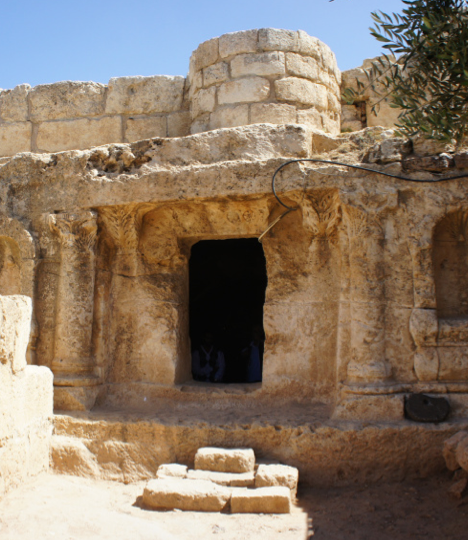
The Cave of Ashāb al-Kahf: Where and When? by Mufti Muhammad Taqi Usmani Source: ilmgate.org The location of the cave of the Ashab al-Kahf has been an issue of much conflict amongst the Ulama and researchers. Where is the cave situated in which Ashab al-Kahf slept for over 300 years? Some researchers have reported it to be in the city Ephesus, Turkey. Some have named a cave in Spain to be the cave of Ashab al-Kahf, and others have claimed it to be in Jordan, Syria, or Yemen. But a Jordanian researcher, Muhammad Taysir Zibyan, who was the editor of the magazine Al-Shari`ah, arrived in Pakistan in 1976, where he visited Darul Uloom in order to meet my father (Mufti Muhammad Shafi Usmani). It was there that he stated with great determination and full confidence that this cave has been discovered on a mountain near Amman. He further stated, “I have written an article to verify this.” In view of the proof and evidence he presented at that time, it seemed conceivable that the cave of the Ashab al-Kahf is most probably situated there. Brother Zibyan has now passed away, but has safely stored away his investigations in a book called Location of Ashab al-Kahf’s Cave, published by Darul Ii’tisaam. When did the incident of the People of the Cave take place? After briefly relating the incident of Ashab al-Kahf, the Qur’an also states that the people of that time decided to construct a mosque (at this site). According to the Holy Qur’an’s usual pattern , it does not state the historical or geographical details as to where or in which period this incident took place. Therefore, commentators and historians have disclosed their different views on the basis of historical narrations. Most researchers are inclined towards the fact that this incident took place some time after the divine ascension of Isa `alayhi al-salam from 100 AD to 300 AD. At that time, in this region, the reign of power was in the hands of an idol-worshiping Nabti king. But the effects of the Christian religion, which started off in Palestine, were gradually advancing towards this region. Some youngsters became devotees of this religion on the basis of these very effects. Then in the period in which these auspicious souls were absorbed in deep sleep, the followers of Christianity gradually freed this region from the Nabti rulers and succeeded in forming their own rule. The citizens here also accepted Christianity. It is known from some narrations that after learning about Ashab al-Kahf, the reigning king arrived at the cave to visit them but found them to be deceased. There is no mention of them being deceased in other narrations. This same incident has been narrated in some Christian narrations with little difference. It has been stated that the very first detailed narration of this incident was written in an article in the year 521 AH by an Iraqi soothsayer named Yaqub. This article was written in Syriac, then it was translated into Greek and Latin. According to him, this incident took place in Ephesus located in Asia Minor in the year 250 AD. There were seven people of the cave, and after spreading the word of Allah’s complete power, returned to sleep in the cave. (Britannica, 1950) Because Yaqub Sarughi stated that they “returned to sleep,” a lot of people hold the belief that Ashab al-Kahf are still living and will arise again near Qiyamah. Location of the cave of Ashab al-Kahf It has been narrated in some Christian sources that this incident took place near the city Ephesus in Turkey (the Islamic name for Ephesus is Tarsus). A cave in that city has said to be the cave of Ashab al-Kahf. Maybe the reason for Muslim commentators and historians identifying the place of Ashab al-Kahf in Ephesus is on the basis of these Christian sources. A narration by Abdullah ibn Abbas radiyallahu `anhu from Tafsir Ibn Jarir states, “The cave of Ashab al-Kahf is situated near ‘Ila’ in Jordan.” Many scholars of today have given preference to the fact that the cave is situated in Jordan on the basis of this narration and other evidence. Hadhrat Mawlana Hifz-ur-Rahman Suharwi has written a detailed account on this subject in Qasas al-Qur’an and, in the light of the relevant historical geographical proof, has proclaimed it is correct that the cave is actually in Jordan. Hadhrat Mawlana Sayyid Sulayman al-Nadwi has stated in Ardh al-Qur’an that the old city of Parra in Jordan is the Raqeem. My honorable father, Hadhrat Mawlana Muhammad Shafi, and Mawlana Abul-Kalam Azad are also inclined towards the cave being in Jordan. The result to their research is that the actual name of the famous historical city Parra was Raqeem. The Romans changed the name to Parra, and this cave is situated somewhere near there. But in 1953, Brother Zibyan somehow came across the fact that there is a certain cave in Amman, situated on a mountain, in which are some graves and corpses and that there is also a mosque on this site. Hence, he set out in search for this cave with one of his companions. But because this was somewhat off the common path, they had to cover some kilometers of rough land but were finally successful in reaching the cave. Brother Zibyan reports: “We were standing in front of a pitch black cave which was situated on a far away fallow land on a bare mountain. It was dark to such an extent that we found it difficult to enter. A shepherd let us know that there were some graves inside the cave containing old bones. The opening of the cave was in the south and there were two pillars on both sides, which had been made from a large rock. Suddenly my eyes fell on the carvings on the two pillars. Some Byzantine inscriptions were visible. The cave was covered by stones and debris. At a distance of about 100 meters, there was a small village named Rajeeb.” Brother Zibyan continued his research and approached the department of archaeological findings. Finally, an archaeologist named Rafiq Dajani concluded, after a lot of research, that this is in fact the cave of Ashab al-Kahf. Hence, in 1961, they began their excavation and research, and continued to discover such evidence which proved this conclusion correct. The following are a few of these : 1. The opening of this cave is in the south, and the following ayah justifies this: You would see the sun, when it rose, turning away from their Cave towards the right; and when it set, it bypassed them towards the left, and they were (lying) in the hollow thereof. (Qur’an, 18:17) The location of this cave is such that the sunshine never enters it at any time, but passes from the left and right when the sun sets and rises. And there is a spacious hollow inside the cave where the wind and light easily reach. 2. It has also been mentioned in the Qur’an that the villagers had in mind to construct a mosque on top of this cave. Accordingly, after removing the debris and rocks, a mosque was discovered directly above the cave, which had been constructed from old Roman style stone. Archaeologists have said that the mosque was made from stone and originally a place of worship in a Byzantine form, and was later converted into a mosque during the time of Abd al-Malik ibn Marwan. The polytheist king due to whose tyranny and oppression the Ashab al-Kahf sought shelter in the cave was, according to the theory of modern day researchers, the Roman emperor Trajan, who remained ruler from 98 AD till 117 AD. It is a well known fact that he used to subject rejectors of idolatry to severe hardships. It has been historically authenticated that in 106 AD, Trajan conquered the region of east Jordan and constructed the stadium of Amman. According to modern day researchers, the king during whose reign the Ashab al-Kahf stirred was called Theodosius II and he lived in the beginning of the 5th century. Upon the initial discovery of the cave, many coins were found scattered within, of which several are indeed from Trajan’s era which greatly supports the belief that this is the very cave of the Ashab al-Kahf. What is “Raqeem”? The Holy Qur’an has termed the Ashab al-Kahf as اصحاب الكهف و الرقيم (“…the people of Kahf and Raqeem”). What is “Raqeem”? Various opinions have been stated in its commentary, but the opinion of modern day researchers is that “Raqeem” is the name of the village in which these people originally resided. The cave is situated at a 100 meters distance from this point in a small village called Rajeeb. It is the opinion of Rafiq Dajani that this is an altered form of the name Raqeem, because the Bedouins of this area pronounce the ق as ج and the م as ب . Therefore, the ruling body of Jordan later officially titled this village as Raqeem. Several early scholars of geography have also indicated the village of Raqeem as being situated near Amman at one time. Therefore, the renowned geographer Abu Abdallah Muhammad bin Ahmad al-Muqaddasi, has stated in his book Ahsan al-Taqasim fi Ma’arifat al-Aqalim: “Raqeem is a city in east Jordan, close to Amman, in which a cave has been constituted together with several human corpses which are not altogether devoid of flesh.” Apart from this, Allamah Yaqut Hamawi (ra) has also issued forth a statement in a commentary based upon Raqeem : “In the suburbs of Damascus there is an Arabic state called Balqaa, and within it dwells a place close to Amman which these people regard as that of Kahf and Raqeem.” Brother Zibyan has made several statements from which it can be apprehended that the Muslims of the earlier eras believe the certain cave belonging to this area to be the very cave of Ashab al-Kahf. It has been narrated in regard to Hadhrat Ubada Ibn Samit radiyallahu `anhu that Hadhrat Abu Bakr radiyallahu `anhu sent a convoy to the Roman emperor. During this journey, on the route leading to Syria and Hijaz, he encountered a mountain named Jabal-ur-Raqeem in which there was a cave containing several corpses not totally devoid of flesh. In a commentary of Tafseer al-Qurtubi it has also been narrated in regard to Hadhrat Abbas radiyallahu `anhu that he too encountered this cave and declared it to be the very cave of Ashab al-Kahf. In Futuh al-Sham, Waqidee has narrated a lengthy account in relation to Hadhrat Saeed ibn Aamir. He was dispatched to Syria for participation in Jihad, but whilst proceeding along the way he forgot the route. After wandering about fruitlessly, he reached the mountain named Raqeem, and after careful scrutiny perceived it to be that of the Ashab al-Kahf. He informed his companions of his find and stated that this is the cave of the Ashab al-Kahf. Therefore, they performed prayers within it and entered the city of Amman. However, in the case of such an ancient incident it is very difficult to arrive at a final conclusion in regards to the correct location. But there is no doubt in the fact that up till this moment in time, out of the several sites the cave has been rumored to be located in, together with the large amount of circumstantial evidence discovered in relation to the cave, [the extent of evidence found for the site near Amman, Jordan is not found for any of the other sites.] Brother Zibyan has even compared this cave with the cave of Ephesus [in Turkey] and this comparison further confirms this hypothesis. Our visit to the Cave near Amman, Jordan This cave is situated seven miles south of the city of Amman. The central highway that stretches from Aqabah until Amman is at a distance of three kilometers from it. We reached this place at approximately nine o’clock in the evening. A road has now been constructed to enable cars to reach the peak of the mountain. After leaving the car, one slightly ascends to an expansive area in which there are several pillars belonging to an old fashioned construction. After crossing this area is the mouth of the cave and on its floor is a door post constructed out of broad stone. To enter the cave one must descend approximately two steps. Upon reaching this stage the cave is divided into three sections. One section stretches straight from the mouth in a northward direction, a second section branches off towards the east on the right hand side, and a third section branches off towards the west on the left hand side. In the eastern and western sections are eight constructed graves resembling coffins. On the eastern section is a grave with a small hole. If one peers into the hole, a human corpse can be clearly seen. If it is dark the attendant of the cave lights a candle and the inner view can be clearly observed. But the section that stretches straight to the north from the south is mainly flat; and regarding this, Brother Zibyan’s opinion is that this is the Fajwah referred to in the Qur’an: و هم في فجوة منه “…and they were (lying) in the hollow thereof.” (Qur’an, 18:17) According to Rafiq Dajani, when the excavation and clearing work commenced in 1961, a jaw of an animal was discovered lying around with one incisor and four molars intact. According to the thoughts of Brother Zibyan, this was the jaw belonging to the dog of Ashab al-Kahf. Furthermore, on this site a great number of coins belonging to the Roman era, Islamic era, Ottoman era, together with a clay bowl, a pearl necklace, a copper comb, and rings were also discovered lying scattered around. All of these things have now been gathered and placed on display in a cabinet and maintained within the northern wall of the cave which we have observed ourselves. In the eastern section of the cave is a small tunnel ascending upwards which resembles a chimney that expels smoke. This tunnel enters and leaves through the roof of the cave. A boulder was perceived to be buried in the upper opening of this tunnel. Usama Ibn Munqidh, a general belonging to Sultan Salahuddin Ayyubi’s army, coincidentally writes in hisKitab al-I’tibar, “I, together with 30 horsemen, entered this cave and performed prayers here, but there was a narrow tunnel that we did not enter.” Brother Zibyan is of the opinion that this is that very passage. After the cave was cleaned out and examined, several passages of writing were discovered on the walls in Greek and Kufic but the writing was not legible. Upon exiting from the cave, a round patch can be seen in the nearby area. The attendant has disclosed that at the time of the discovery of the cave, the trunk of an olive tree was flourishing. Rafiq Dajani has stated that this olive tree is one belonging to the era of the bedouins and nearby is a cave with a roof. When the excavation and clearing out initially commenced, the nearby elderly folk reported that this olive tree, until twenty years ago, was blooming and they used to consume its produce. The walls of an ancient mosque together with its niche can be clearly noticed, elevated several feet above the cave. At the time Brothers Zibyan and Rafiq Dajani initially reached the cave, the mosque could not be noticed. After excavating and clearing out the cave, the mosque was unveiled. This mosque is 10 meters in length and 10 meters in width. During the time the excavation work was being done, four pillars fashioned in the mode of the Roman era were discovered and several copper coins were discovered from the era of the Roman emperor Justin (517 AD – 527 AD). A small chamber, equivalent to one and a half meters, was also revealed whose roof was probably employed for the call to prayer. Several clay jugs were also discovered nearby which were probably used to perform ablution. An inscription was also perceived here, and it is evident from its inscript that this mosque was renovated during the time of Abu ‘l-Jaysh Khumarawayh (d. 895 AD), the son of Ahmad ibn Tulun. The experts have deduced from this entire collection that at first the Romans built a place of worship on this site. However, during the Islamic reign (possibly in the time of Abd al-Malik ibn Marwan), it was converted into a mosque but the Muslims did not supplement its length or width. At this time, the Jordan Department of Ancient Relics and the Department of Property focused specific attention with regards to this cave’s preservation. In addition, a new mosque was built nearby, an easier route was constructed for the comfort of visitors, and signs were installed inside the cave. In any case, the venture to [the site made mention of] in the great Qur’anic revelation is one of life’s most memorable experiences.
-
You mean the 1-27 points, i skimmed through them but could not find anything related to women in that section...
-
The Life and Wealth of Hadhrat Abu Bakr (Radhiallahu Anhu) عن أبي هريرة رضي الله عنه قال : قال رسول الله صلى الله عليه و سلم ما نفعني مال قط ما نفعني مال أبو بكر قال فبكى أبو بكر وقال يا رسول الله هل أنا ومالي إلا لك يا رسول الله (ابن ماجة ص10) Hadhrat Abu Hurayrah (Radhiallahu Anhu) reports that Rasulullah (Sallallahu Alaihi Wasallam) said: No person’s wealth benefitted me as much as the wealth of Hadhrat Abu Bakr Siddeeq (Radhiallahu Anhu). Upon hearing this, Hadhrat Abu Bakr Siddeeq (Radhiallahu Anhu) wept profusely and said, “O Rasulullah (Sallallahu Alaihi Wasallam), certainly my entire life and wealth belongs to you.” يَا رَبِّ صَلِّ وَ سَلِّمْ دَائِمًا أَبَدًا عَلَى حَبِيبِكَ خَيرِ الخَلْقِ كُلِّهِمِ
-
Ya Rabbi Ummati! Question Where is the narration located regarding the Prophet sallalaahu alayhi wassalam uttering ‘Ya rabbi ummati ummati’ in tahajjud ? Answer Sayyiduna ‘Abdullah ibn ‘Amr (radiyallahu’anhuma) reported that once Rasulullah (sallallahu’alayhi wasallam) recited the verse in which Nabi Ibrahim (‘alayhis salam) said: ‘O my Rabb, indeed they have misled many people, whoever followed me is from me…’ Thereafter he recited the verse in which Nabi ‘Isa (‘alayhis Salam) said: ‘If you punish them, then they are surely your bondsmen. And if You forgive them then You are indeed most Forgiving, most Merciful.’ Then Rasulullah (sallallahu’alayhi wasallam) raised his hands, cried and said: ‘O Allah! my Ummat, my Ummat!’ When Jibril (‘alayhis salam) came, he was informed of the reason. Allah Ta’ala said to Jibril (‘alayhis salam): ‘O Jibril! Go back to Muhammad (sallallahu’alayhi wasallam) and tell him we shall please you, and not displease you regarding your Ummah.’ (Sahih Muslim, hadith: 498) And Allah Ta’ala Knows best, Answered by: Moulana Muhammad Abasoomar hadithanswers يَا رَبِّ صَلِّ وَ سَلِّمْ دَائِمًا أَبَدًا عَلَى حَبِيبِكَ خَيرِ الخَلْقِ كُلِّهِمِ
-
- 1
-

-
-
-
-
-
Traditional Islamic Learning at Ilm Essentials What is Ilm Essentials? Traditional Islamic Learning Ilm Essentials is a part-time online distance learning program designed for brothers and sisters who wish to start learning traditional Islamic Sciences, but cannot study full-time. All of our courses and programs are taught live, allowing real-time interaction between the student and teacher. Essentials Program The Essentials Program is a 1-year course geared toward those who would like to gain the knowledge necessary to live their lives in accordance with the Shariah and Sunnah. The program focuses on the core fundamentals that every Muslim should be know. All course material will be presented in English, with minimal reference to the original Arabic texts. View the Essentials Program course outline. Short Courses and Seminars Throughout the year, we offer a number of short courses and seminars covering important topics which are not directly addressed in the Essentials Program. Topics include the Fiqh of Food and Drink, Fiqh of Menstruation, History and Compilation of the Quran, Importance of Following Traditional Scholarship, Understanding Tasawwuf and others. The best way to stay up-to-date on upcoming seminars is to join our email list. How are the Classes taught? Online Teaching All classes are taught using the online learning tool WizIQ.com. Students can view the class materials through the online whiteboard and listen to the class lecture through their computer speakers or headphones. The chat feature is used for questions. Students will need a computer and high-speed internet access (2.5 Mbps+). Recordings will be available in case students miss a session. Why Ilm Essentials? Alhamdulillah, there are already a number of programs and classes available through which students can study the different Islamic Sciences. Every program has certain advantages and benefits and students should evaluate each against their circumstances. Below are a few salient features of the Ilm Essentials program: – Classes are taught live, without the reliance on pre-recorded sessions. – Traditional teaching methodology. – Focus on establishing a firm foundation in the core Islamic Sciences. – Emphasis on practical application of knowledge and using it as a means of moving closer to Allah Most High. – Moderate class pace, allowing students to master key concepts. Ilm Essentials
-
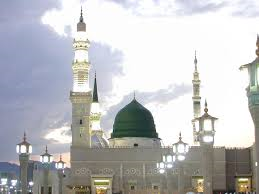
THE MUSK OF MADINAH MUNAWWARAH By Maulana Khalid Dhorat There are thousands of minute air vents in the Green Dome – the most attractive feature of Masjid al-Nabawi, beneath which the Best of Creation, Muhammad ibn ‘Abdullah (Sallallahu ‘Alaihi Wa Sallam) is entombed. From here, an invisible spray of an indescribable type of heavenly musk is being constantly showered upon the worshippers seated in Masjid an-Nabawi and upon those residing in the Illuminated City. This musk immediately puts you into a serene and tranquil mode, almost as if you were in a therapeutic spa. Aggressive people mysteriously become calm, edgy and restless people become confident, the weak and sickly suddenly become energetic and the lazy suddenly have an urge to exert themselves in prayers. Madinah brings out the best in you. Those visitors who did not experience this feeling probably landed up in Manhattan, instead of Madinah. Those who did not return home with some of this “musk” probably frequented the Taiba Centre more than the blessed sanctuary (raudah mubaarak). Why shouldn’t there be musk when the piece of earth directly touching the noble body of the Best of Creation (Sallallahu ‘Alaihi Wa Sallam) is more virtuous than even the Throne of the Almighty? Tradition tells us that the place between his (Sallallahu ‘Alaihi Wa Sallam)’s resting place and his pulpit is from the gardens of Paradise. Thus, there is Paradise in Madinah, but there will be no Madinah in Paradise. Ultra-Prime property, which even kings and billionaires cannot buy or reserve, is a 5-minute respite in this place, marked by greenish carpets, called the Raudatul Jannah. This was the place most frequently stepped upon by the Leader of the Prophets (Sallallahu ‘Alaihi Wa Sallam), upon whose body not a fly sat, whose sight was as sharp at night as in the day, who would be sheltered by clouds wherever he walked, for whom the tree stump upon which he (Sallallahu ‘Alaihi Wa Sallam) took support, wept when being replaced by a pulpit, to whom animals complained of the abuse of their owners, and whose body always emitted a fragrance of amber and musk which a passerby could smell for days thereafter. It is this unexplainable feeling of peace and serenity, of finding a shoulder to lean on, of refreshing one’s physical and spiritual self, that millions worldwide will make a trip to the Illuminated City, year after year. Madinah played host to Best of Creation (Sallallahu ‘Alaihi Wa Sallam) 1400 years ago, and today it still plays host to Muslims worldwide. Wherever you stay – in a five star hotel or in a modest apartment, – whatever you eat, and wherever you go in the Illuminated City, you are a guest of the Best of Creation. Cost of the Trip If anyone is in doubt on whether to make bookings for this holy trip due to the price, here are two reasons why a trip to Madinah is a super bargain, even if it costs R100 trillion. Firstly, every prayer in Masjid al-Nabawi is multiplied by 50 000. So if you stayed for eight days in the Illuminated City and performed 40 prayers, then this is equal to 2 million prayers. If a single return trip to your local Masjid would cost you R15-, this alone would amount to 30 million rands. Secondly, Muslims visit Madinah to convey their greetings and salutations directly to the Best of Creation (Sallallahu ‘Alaihi Wa Sallam). It is the belief of every Muslim that the soul of the Best of Creation (Sallallahu ‘Alaihi Wa Sallam) is physically returned to his noble body whenever an angel delivers their salutations to him from any far off land, or it is presented directly before him, without the medium of an angel. Every time we convey our greetings within earshot of his noble resting place, he (Sallallahu ‘Alaihi Wa Sallam) recognises our voice and replies to us. This is a physical meeting separated by only a wall, not a symbolic one. It is like conveying a gift to a beloved via a representative, or bringing it personally. The two can never be the same. Many of us cannot hear the answer just as we cannot hear the answer of the Almighty to our prayers, but some pious people were given the privilege of audibly hearing the answer of the Prophet (Sallallahu ‘Alaihi Wa Sallam), in his own voice, from within the sanctuary. For the more elect, the blessed hand miraculously emerged to be greeted and kissed, which the people around witnessed. Visiting the blessed mausoleum after the death of the Best of Creation (Sallallahu ‘Alaihi Wa Sallam) is like visiting the Best of Creation (Sallallahu ‘Alaihi Wa Sallam) in his lifetime. It is an act of supreme loyalty and allegiance to the unseen Prophet with whom we have an unbreakable bond. Do we only speak over the telephone to our long-time overseas friends, or do we also yearn to meet them in person? Understand your visit to the Illuminated City in this light, and no other way. The Best of Creation (Sallallahu ‘Alaihi Wa Sallam) is so appreciative of this visit that he has promised us his intercession and a drink from the Pond of Kauthar from his own blessed hands on the day of Judgement, in return for this visit. In fact, the Best of Creation (Sallallahu ‘Alaihi Wa Sallam) has promised us that if anyone visited him after his demise with the sole reason of visiting him – not for shopping, holidaying or socialising, – then such person will have a right to approach him on the Day of Judgement and request for his intercession. Can any amount of money buy such a privilege, which translates in to a visa to Paradise itself? Never. So never calculate this trip in terms of human currency. Let no one fool you in to believing that the intercession of the Best of Creations (Sallallahu ‘Alaihi Wa Sallam) as akin to Shirk (associating partners with the Almighty). Our concept of Intercession is not like the Christian concept of Atonement. Intercession is not a licence for anyone to sin at will and wish for salvation through intercession. Everyone is still answerable for their actions, but our repentance alone cannot cool the wrath of the Almighty and open the doors of Paradise for all. This needs a special intermediary who holds an elevated status in the eyes of the Almighty. All power lies only with the Almighty, and all our prayers are addressed solely to Him. If any right of intercession is to be granted to anyone at all, it will only happen through the permission of the Almighty. Purpose of the Trip A trip to Madinah is not only like making reservations for Paradise itself, but to reserve our place next to the Best of Creation (Sallallahu ‘Alaihi Wa Sallam) himself therein. It’s a noble journey, but this purpose is sometimes not realised by its visitors, and nor by some of those living in the City. I say this in all humility because in my recent trip to this extraordinary place, I seen beggars outside the Masjid al-Nabawi, when the limitless treasury of the Almighty was just a few meters away. I seen people anxious to stuff their luggage with as much Abayas as possible in order to sell back home, when this trip can not be measured in terms of rands. I’ve smelt the fragrance of the blood of the martyrs at ‘Uhud, and also the stench of the taxis who rip off their passengers. I’ve seen the grandeur of the buildings around the Masjid al-Nabawi, and the poverty and slums hidden within it. I’ve seen people fill up their plates like Table Mountain at the breakfast buffet, when children are dying of hunger in Syria. I’ve seen people approach the noble sanctuary of the Best of Creation (Sallallahu ‘Alaihi Wa Sallam) with utmost reverence, and also the attitude of those who think such people are idiots. I’ve felt the warmth and the hospitality of the Madinites, and the bitterness of the racism practiced by some Arabs. I’ve seen the look of yearning on the faces of many who visit Jannatul Baqi (The cemetery of Madinah) to be buried therein, and also the attachment of those whose purpose in life is only to shop till they drop. I’ve seen people saving up money for years upon years just to smell the air of Madinah, and agents who will promise them the Hilton, but give them the Dumpton instead. I’ve also seen sincere agents who offer a good deal, and visitors who think that they bought the hotel itself. They will rip open the carpets, steal the hand shower and make the agent beg for his money many years after the trip itself. Sadly, I’ve also heard the sighs of those who are so poor that that they have no hope whatsoever of visiting this City, and those who visit the City four times a year simply to boast of their travels. Madinah is becoming modernised day by day, but let not the sincere be discouraged. The Illuminated City can be modernised as much as it wants to, but our love and reverence for the Best of Creation (Sallallahu ‘Alaihi Wa Sallam) will never diminish; the Hajj and Umrah packages can be exorbitant, but our salutations are still taken free of charge from anywhere in the world directly to the Best of Creation (Sallallahu ‘Alaihi Wa Sallam); the icy wind at the time of Tahajjud can chill our bones, but the hospitality of those offering iftaar in Masjid an-Nabawi at the time of Maghrib will warm any heart; the Persian rugs may wear out in the Masjid, but never the quality of our prayers; the landmarks of Islam can be bulldozed and sealed off in the City, but never will it check the progress of Islam; Jannatul Baqi can be closed most of the time, but our rewards will still reach the deceased; the Arabic language can be corrupted, but never will the Qur’an and Sunnah be altered; and lastly, the kurtahs and abayahs can become as fashionable and fancy as possible, but it will never alter the piety in our hearts. Madinah makes the dream of Islam triumphing over the entire world once again, possible. Lastly, just as you become comfortable in Madinah Munawwarah, you will have to leave it. This parting is always an emotional and heartbreaking one. It is as if we are leaving a living person behind who played an excellent host for our duration in his City. However, we have three ways in which we can always have a link with the Best of Creation (Sallallahu ‘Alaihi Wa Sallam) wherever we are. This is certainly not by the new jewellery or exotic perfumes we bring back, but: 1) Emulating his noble example in our life and spreading Islam; 2) By reciting a minimum of 100 salawaat upon him daily; and 3) By always having the delicious dates of Madinah (my favourite is ajwah andmabroom) Jamiat
-
Q. Can a husband have conjugal relations with his wife during menses? (Question published as received) A. It is prohibited for a husband to have conjugal relations with his wife during menses. Allah Ta’ala mentions in the Quran: “They ask you (O Muhammad ٍSallallahu Alayhi Wa Sallam) concerning menstruation. Say, “It is impure so leave (conjugal relations with) women during (their period of) menstruation and do not go unto them (do not have conjugal relations with your wives) until they are cleansed (until the menstrual cycle is complete)” (Surah Baqara 2; 222) And Allah Ta’ala Knows Best Mufti Ismaeel Bassa Confirmation: Mufti Ebrahim Desai Fatwa Department Jamiatul Ulama (KZN) Council of Muslim Theologians
-
Superstitions regarding Pregnant Women and the Solar/Lunar Eclipse
-
Brother CH, I cannot find anywhere regarding whether women too should perform nafl salaah since men would be doing salaah in jama'at...please post here if you have anything on this...jazakallah