
ummtaalib
-
Posts
8,477 -
Joined
-
Days Won
773
Content Type
Profiles
Forums
Events
Everything posted by ummtaalib
-
 Askimam.org Answer If your query is about pubic hair, it would not be permissible since this will entail a female looking into the private part of another female. This is not permissible according to the Shari'ah. If your question relate to those hair which you can remove, e.g. moustaches, beard, etc. then in this specific situation, it will be permissible. However, it is not permissible for female to trim/cut hair of the head. and Allah Ta’ala Knows Best Mufti Ebrahim Desai
-
- 2
-

-
Hazrat Mawlana Syed Abul Hasan Ali sahab Nadwi's (rah) Books
ummtaalib replied to dr76's topic in Islamic Books
Jazakallaahu khayran for this. Moving it to books section (sorry dr sahib, members are restricted from posting in this section) -
Juz Seventeen Sūrah al-Ambiyā’ This sūrah narrates the stories of many prophets to highlight the central message of Islam and the urgency with which one must turn to it. This is captured in the following āyahs. اقْتَرَبَ لِلنَّاسِ حِسَابُهُمْ وَهُمْ فِي غَفْلَةٍ مُّعْرِضُونَ Closer draws unto men their reckoning: and yet they remain stubbornly heedless (of its approach). (Al-Ambiyā’, 21:1) The moment of reckoning will come unannounced to each one of us. And for humanity as a whole, too, it keeps coming closer. Yet we are too preoccupied with all the distractions to pay attention. كُلُّ نَفْسٍ ذَائِقَةُ الْمَوْتِ ۗ وَنَبْلُوكُم بِالشَّرِّ وَالْخَيْرِ فِتْنَةً ۖ وَإِلَيْنَا تُرْجَعُونَ Every human being is bound to taste death; and We test you (all) through the bad and the good (things of life) by way of trial: and unto Us you all must return. (Al-Ambiyā’, 21:35) Both the good and the bad things in life are just a test. Those who remember Allāh all the time, are grateful in the case of the first and patient in the case of the second, and never cross the boundaries set by Him in all situations in life, will be winners. Others will be losers. وَنَضَعُ الْمَوَازِينَ الْقِسْطَ لِيَوْمِ الْقِيَامَةِ فَلَا تُظْلَمُ نَفْسٌ شَيْئًا ۖ وَإِن كَانَ مِثْقَالَ حَبَّةٍ مِّنْ خَرْدَلٍ أَتَيْنَا بِهَا ۗ وَكَفَىٰ بِنَا حَاسِبِينَ But We shall set up just balance-scales on Resurrection Day, and no human being shall be wronged in the least: for though there be (in him but) the weight of a mustard-seed (of good or evil), We shall bring it forth; and none can take count as We do! (Al-Ambiyā’, 21:47) Nothing will escape this accounting. We should never belittle a good deed, nor be careless about committing a seemingly minor sin. For all our good and bad deeds, big and small, will be in our books of accounts. The Mission of the Islamic State الَّذِينَ إِن مَّكَّنَّاهُمْ فِي الْأَرْضِ أَقَامُوا الصَّلَاةَ وَآتَوُا الزَّكَاةَ وَأَمَرُوا بِالْمَعْرُوفِ وَنَهَوْا عَنِ الْمُنكَرِ ۗ وَلِلَّهِ عَاقِبَةُ الْأُمُورِ (They are) those who, if We give them power in the land, establish Ṣalāh, pay Zakāh, enjoin the right and forbid wrong. And with Allāh lies the fate of all matters. (Al-Ḥajj 22:41) This is the mission statement for the Islamic government. As Yūsuf Ali writes: “‘Enjoining the right and forbidding the wrong’ is an essential duty of the Muslim Ummah and one of the main purposes for which it has been raised.” In contrast the secular democracy, far from making these the main goal of government, would not even permit their pursuit.
-
Praise - Hazrat Maulana Yunus Patel (Rahmatullahi 'alayh)
ummtaalib replied to amaturrahmaan's topic in Matters of the Heart
Jazaakillaahu khayran! Further related posts HERE -
Laylatul Qadr (The Night of Power) Crowning Glory Laylatul Qadr is the crowning glory of the holy month of Ramadhaan. It is associated with the sending down of the Qur’an Majeed, the last Book of Allah on His last Prophet Muhammad (Sallallaahu Alayhi Wasallam), for the guidance of mankind. The Qur’an Majeed describes this Night. إِنَّا أَنزَلْنَاهُ فِي لَيْلَةِ ٱلْقَدْرِ وَمَآ أَدْرَاكَ مَا لَيْلَةُ ٱلْقَدْرِ لَيْلَةُ ٱلْقَدْرِ خَيْرٌ مِّنْ أَلْفِ شَهْرٍ تَنَزَّلُ ٱلْمَلاَئِكَةُ وَٱلرُّوحُ فِيهَا بِإِذْنِ رَبِّهِم مِّن كُلِّ أَمْرٍ سَلاَمٌ هِيَ حَتَّىٰ مَطْلَعِ ٱلْفَجْرِ “We have indeed revealed this (message) in the Night of Power: And what will explain to you what the Night of Power is? The Night of Power is better than a thousand months. Therein come down the Angels and the Spirit (Jibraeel) by Allah’s permission, on every errand: Peace! This until the rise of Morn!” (Surah 97) The Night of Power is the night of spiritual bliss. Our Nabi (Sallallaahu Alayhi Wasallam) is reported to have said concerning Ramadhaan: “Verily this month has come to you; and therein is a night which is better than a thousand Months. Whosoever is deprived of it, is deprived of all good; and none is deprived of its good except a totally unfortunate person”. (Ibn Majah) “Whosoever stands up (in prayer) at the Night of Power out of faith and hopeful of reward, all his past sins will be forgiven.”(Targhib) Better than a thousand months A thousand months are equivalent to 83 years and 4 months. Fortunate is the person who spends this night in prayer. The man or woman, who prays for the whole night during this Night, will deserve blessings and reward for the period as if he or she had been praying for eighty three years and four months consecutively. Since the Night of Power is better than one thousand months no one can actually measure the extent as to how much better it is. Exclusive The Holy Prophet Muhammad (Sallallaahu Alayhi Wasallam) said: “Laylatul Qadr has been bestowed by Allah to my Ummah (People). It was not given to any people before this.” (Dur-Mansoor). How manifest and replete the special bounties and mercies of Allah Ta’ala are upon this Ummat is quite really beyond imagination. It will therefore be extremely foolish to allow ourselves to be deprived of these great blessings at the expense of sheer laziness and a few hours of extra sleep. Which Night is it? Although there are different reports in different traditions regarding the exact night, it is almost unanimous that the blessed night occurs in one of the last ten nights of Ramadhaan and more probably in one of the last ten odd nights i.e. 2lst, 23rd, 25th 27th or 29th night. The popular opinion is, however, in favour of the 27th Night of Ramadhaan but that is not absolutely certain. The traditions indicate that it is to be sought in one of the last ten nights and preferably in the last three odd nights. It was therefore the practice of the Holy Prophet (Sallallaahu Alayhi Wasallam) and his companions to make I’tikaaf in the Mosque for the whole time offering Divine service during the last ten days of Ramadhaan. Hazrath Aisha (Radhiallaahu Anha) reported that the Apostle of Allah said: “Search for the Blessed Night in the odd (nights) from the last ten (nights) of Ramadhaan” (Bukhari). Hazrath Aisha has narrated another saying: “I asked: O Messenger of Allah! Tell me if I were to find a Night of Power, what should I recite therein?” Holy Prophet Muhammad (Sallallaahu Alayhi Wasallam) advised her to recite: Al-laa-hum-ma in-na-ka ‘afoow-wan tu-hib-bul-’af wa fa-fu ‘an-ni. O Allah! You are Forgiving, You love forgiveness, so forgive me. (Bukhari). Special attention should therefore be given to the excessive recitation of this dua on the blessed night. Furthermore one may engage in lengthy rakaats of Tahajjud salaat, Tilaawat of the Qur’an, Dua, Zikr, etc. The worship and the vigil of the Night of Power are a treat to the soul. The heart tends to melt into tears of heartfelt gratitude. The body is in a state of angelic ecstasy The soul strives to reach nearer to Almighty Allah. In this holy month of Ramadhaan let us strive to seek the Night of Power and its bliss. May Allah reward us with His bountiful blessings. Aameen. Source: Jamiatul Ulama
-
Aameeeen..thumma aameen! InshaAllah. We look forward to the posts...and just so you know, only the first five posts need approving.
-
Juz Sixteen Sūrah Al-Kahf This sūrah starts in the fifteenth juz and is concluded in the sixteenth. It is highly recommended that we recite it every Friday. Several ahadith promise that those who do so will be protected from the deceptions of Dajjāl. The Dajjāl will be a person who personifies deception. His will be an era of extreme trials and tribulations for the believers. We are asked to always pray for protection against those trials. While the Dajjāl has not yet appeared, we are indeed living in an age when dajjālic deceptions are increasingly manifest all around us. The story of the People of the Cave is narrated in āyahs 9-26. These were young people for whom their faith was all important. They lived at a time when the people of faith were being persecuted by a ruthless king. They could not fight him, nor could they surrender to him. So they took refuge in a cave. They put their affair in the Hands of Allāh and He saved them from persecution through a miraculous sleep that lasted for three centuries. The story of Prophet Mūsā and Khiḍr is narrated in āyahs 60-82. Its most important moral is that things are not always what they appear to be. We should not be deceived or disheartened by the events that unfold before us every day. What seems to be an imperfect world is actually a perfect testing ground. The story of Dhul Qarnayn is told in āyahs 83-98. He was a powerful, just, and Allāh fearing king. Two actions of his are specially highlighted. 1) His declaration that he would punish the unjust and deal kindly with the virtuous. This makes moral purpose and virtue as the yardstick with which to measure any ruler. In contrast secular western democracy holds that the government has no business deciding morality or virtue. 2) He refused to tax the people for a national project even when the tax was offered by the people. This was obviously not for the purpose of improving his chances of reelection; it was the extension of morality and virtue to the economic field. Here are reflections on some āyahs from this sūrah. InshāAllāh َلَا تَقُولَنَّ لِشَيْءٍ إِنِّي فَاعِلٌ ذَٰلِكَ غَدً إِلَّا أَن يَشَاءَ اللَّهُ ۚ وَاذْكُر رَّبَّكَ إِذَا نَسِيتَ And never say about anything, “I shall surely do this tomorrow,” without (adding), “If Allāh so wills.” And remember your Lord if you forget. (Al-Kahf, 18:23-24). Here is the background for this āyah. The account of the Seven Sleepers, the encounter between Prophet Mūsā and Khiḍr, and the story of the king Dhul Qarnayn were unknown to the Arabs. The Quraysh of Makkah were advised by Jewish scholars in Madinah to ask the Prophet ﷺ about them as a test of the authenticity of his prophethood. He promised to answer the question the next day expecting the revelation to come by that time. This sūrah was the answer. (This was a most brilliant answer that not only gave details about them, but also applied their stories to the situation at hand to show that the Quraysh were on the side of wrong in the stories about right and wrong. Unfortunately obstinacy kept the Quraysh and the Jews from accepting the Truth.) This sūrah was the answer, but it was delayed by two weeks. The two anxious weeks were a Divine reminder of an important message mentioned in this āyah. We should never announce plans about the future as if we control it. Rather we should qualify these by the words, inshāAllāh (If Allāh wills). There was a time when in the Western world, the phrase God willing, carried the same message. Today the secularized discourse shies away from acknowledging that we do not control the future. And even when it does acknowledge that, it refuses to acknowledge that the control belongs to God. So “God willing” is replaced by any number of clumsy expressions, whose common concern is to avoid mentioning God, like “If fate decrees,” “If the wind blows right,” “Hope it’s my lucky day,” “Barring some unforeseen (circumstance/ incident/accident),” “If things work out,” and “If things go according to plan.” Superstition also reigns supreme as people normally say “knock on wood” or “keep your fingers crossed.” We should not give in to this secular madness. We need to bring inshāAllāh2 (and God willing) back to our everyday discourse—on every continent and in every language of the world. For wherever we are and whatever language we speak, the future is always totally in the Hands of Allāh. Extremism وَاصْبِرْ نَفْسَكَ مَعَ الَّذِينَ يَدْعُونَ رَبَّهُم بِالْغَدَاةِ وَالْعَشِيِّ يُرِيدُونَ وَجْهَهُ ۖ وَلَا تَعْدُ عَيْنَاكَ عَنْهُمْ تُرِيدُ زِينَةَ الْحَيَاةِ الدُّنْيَا ۖ وَلَا تُطِعْ مَنْ أَغْفَلْنَا قَلْبَهُ عَن ذِكْرِنَا وَاتَّبَعَ هَوَاهُ وَكَانَ أَمْرُهُ فُرُطًا Keep yourself content with those who call their Sustainer morning and evening, seeking His countenance, and let not your eyes overlook them, seeking the splendor of the worldly life. And do not obey the one whose heart We have made heedless of Our remembrance, and who has followed his desire and whose behavior has exceeded the limits. (Al-Kahf, 18:28) Here is the most profound—and ignored—truth about extremism. Those who do not remember Allāh end up following their own desires and go to extremes in satisfying them. It all starts from a single minded devotion to the splendor of this worldly life. Extremism is thus a direct and inevitable result of materialism and unbelief. And turning to Allāh—and away from obedience to our lusts and greed—is the only way to fight it. Recently the spelling of this expression has received undue attention due to some misconceptions about the meaning of the phrase when “inshā” is written together in English (as opposed to “in shā”). The fact is that readers of English tend to pronounce and understand it in the same manner when written as “inshallāh” or “inshāAllāh» or «in shaa Allāh.» In all cases they clearly understand it to mean «If Allāh wills.» So all are valid forms as affirmed by many scholars. The Life of this World. وَاضْرِبْ لَهُم مَّثَلَ الْحَيَاةِ الدُّنْيَا كَمَاءٍ أَنزَلْنَاهُ مِنَ السَّمَاءِ فَاخْتَلَطَ بِهِ نَبَاتُ الْأَرْضِ فَأَصْبَحَ هَشِيمًا تَذْرُوهُ الرِّيَاحُ ۗ وَكَانَ اللَّهُ عَلَىٰ كُلِّ شَيْءٍ مُّقْتَدِرًا Set forth to them the similitude of the life of this world: It is like the rain which we send down from the skies: the earth’s vegetation absorbs it, but soon it becomes dry stubble, which the winds do scatter: it is (only) Allāh who prevails over all things. (Al-Kahf,18:45) All the pleasures and riches of this world are short-lived. Here today, gone tomorrow. How foolish that one should make them the yardstick to measure success in life. This comment follows the account of the encounter of two characters: a rich non-believer and a poor believer. The latter was not at all impressed by the riches of the former and was much concerned about his unbelief and ungratefulness towards Allāh. The former refused to listen to him and was destroyed. This āyah captures the moral of the story. That encounter continues today and so does the need for remembering the story and its moral. The Greatest Loss قُلْ هَلْ نُنَبِّئُكُم بِالْأَخْسَرِينَ أَعْمَالًا. الَّذِينَ ضَلَّ سَعْيُهُمْ فِي الْحَيَاةِ الدُّنْيَا وَهُمْ يَحْسَبُونَ أَنَّهُمْ يُحْسِنُونَ صُنْعًا. أُولَٰئِكَ الَّذِينَ كَفَرُوا بِآيَاتِ رَبِّهِمْ وَلِقَائِهِ فَحَبِطَتْ أَعْمَالُهُمْ فَلَا نُقِيمُ لَهُمْ يَوْمَ الْقِيَامَةِ وَزْنًا Say, “Shall We tell you about the greatest losers in respect of (their) deeds? Those are the ones whose effort in the worldly life has gone in vain, while they think they are doing well. Those are the ones who rejected the signs of their Sustainer and (the concept of ) meeting with Him, so their deeds have gone to waste, and We shall assign to them no weight at all.” (Al-Kahf, 18:103-105) Good deeds without the right motives are a waste. Motives are the soul of every action. In turn motives are driven by belief. When belief in Allāh and the Hereafter is absent then one’s good deeds are soulless. This is an all important reminder that we need to purify both our intentions and our actions. If we do not seek rewards from Allāh in the Hereafter, we’ll surely not get them. The Blessed People أُولَٰئِكَ الَّذِينَ أَنْعَمَ اللَّهُ عَلَيْهِم مِّنَ النَّبِيِّينَ مِن ذُرِّيَّةِ آدَمَ وَمِمَّنْ حَمَلْنَا مَعَ نُوحٍ وَمِن ذُرِّيَّةِ إِبْرَاهِيمَ وَإِسْرَائِيلَ وَمِمَّنْ هَدَيْنَا وَاجْتَبَيْنَا ۚ إِذَا تُتْلَىٰ عَلَيْهِمْ آيَاتُ الرَّحْمَٰنِ خَرُّوا سُجَّدًا وَبُكِيًّا Those are the people on whom Allāh bestowed His grace, the prophets from the progeny of ’Ādam, and of those whom We caused to board (the Ark) along with Nūḥ, and from the progeny of Ibrāhīm and Isrā’īl ( Jacob), and (all of them were) whom We guided and selected. When the āyahs of The Raḥmān (The All-Merciful) were recited before them, they used to fall down in Sajdah (prostration), while they were weeping. (Maryam, 19:58) In sūrah al-Fātiḥah we make the dua to be shown the path of those on whom Allāh bestowed His grace. Here the same exact word is being used to tell us that the prophets were the people who were so favored. So anyone sincerely looking to find Allāh’s true favors and blessings should be following in the footsteps of the prophets. And the thing to note in their behavior is their attitude toward the words and commands of Allāh. Falling down in sajdah with tears of love and awe in their eyes captures their willing and loving devotion to Allāh and His commands. We can judge where we stand with reference to Allāh’s true blessings and grace, by seeing where we stand in relationship to Allāh’s words and commands. Reflections on Āyahs of Sajdah (Prostration) This is one of the fourteen āyahs of sajdah in the Qur’ān. These āyahs are themselves a reminder of the miracle of the Qur’ān. When reciting any of these āyahs, or listening to their recitation, inside the ṣalāh or outside, believers always perform sajdah. That simple act of prostration that we do not think much of is in reality an extraordinary event. To realize that we can ask if anyone can produce a book such that whenever readers reach a certain point in it they will perform a prescribed act of devotion. All of them. All the time. We can challenge the multibillion dollar publishing empires to pool all their resources and marketing talents to produce such a book. They will fail. For only the Words of Allāh can command such devotion. There is another important message here. We cannot approach the Qur’ān as another book, to be critically evaluated and judged and selectively accepted or rejected based on one’s understanding. This is the way an Orientalist will approach the Qur’ān. But for a Muslim these āyahs set the tone for all our interaction with it; it is one of total and loving submission. Importance of Ṣalāh فَخَلَفَ مِن بَعْدِهِمْ خَلْفٌ أَضَاعُوا الصَّلَاةَ وَاتَّبَعُوا الشَّهَوَاتِ ۖ فَسَوْفَ يَلْقَوْنَ غَيًّا Then came after them the successors who neglected Ṣalāh and followed their lusts and desires. So they will soon face Destruction. (Maryam, 19:59) This emphasis on Ṣalāh came in Makkah (in the 5th year of Prophethood) about five years before the five daily prayers were ordained. After narrating the stories of many prophets, we are told how deviations came in their followers. The prophets had shown the Straight Path. With the passage of time, their followers were overcome by lusts and turned away from this path. And the first error they committed, which finally led to this tragic result, was being negligent in ṣalāh. A famous hadith gives the same message. Ṣalāh is the pillar of dīn, the Islamic way of life. Whoever destroys it destroys his dīn. In other words one cannot build an Islamic life, an Islamic community, an Islamic institution, or an Islamic government while neglecting or weakening this pillar. In one of his circulars Sayyidnā ʿUmar ibn al-Khaṭṭāb sent instructions to all his administrators saying, “In my opinion, ṣalāh is the most important of your obligations. Whoever takes good care of it and safeguards it safeguards his religion and whoever neglects it will neglect other things even more.” He then added instructions about the times for the five ṣalāhs and admonition against dozing off before Isha. This letter from the ruler of a vast empire to the officials of his government—shall we call it Executive Order?—gives us a lot to reflect upon. For ṣalāh is among the most emphasized
-
Wa'alaykumus salaam warahmatullaahi wabarakaatuh! Alhamdulillah that dr sahib considered driving by IT (I am now so glad i left that invite), it is indeed an honour! However dr sahib, may we make an earnest request you inshaAllah make it a habit of not just driving by, but benefiting our readers with your most beneficial posts. This is an appeal from the depth of our hearts. We pray Allah ta'ala bless you with all the khayr of this world and the Hereafter and we request your du'as for us all and the success of this small effort on IT which we were blessed with just under two years ago. Chai? inshaAllah intizaam one day...
-
Assalaamu 'alaykum Welcome to the forum sister sidra yaseen! Sorry the picture had to be removed. Please read forum rules Here InshaAllah you will benefit the forum!
-
Our friends can either be the rope that ties us to our faith in Allah, or the knife that cuts any connection we had with our Creator. They are blessings, they are tests. Ask yourself, who are your friends? And more importantly, what kind of friend are you? “You can do it!” “I have faith in you!”; “C’mon don’t be a wimp”; "Here, try one”; “If you say no, people will think you’re weird”; “Don’t hang out with those boring, ‘religious’ guys!” Whether you are in school, college, university, or working in the corporate world, these are the voices of many of the people you interact with. In our teenage culture, which exaggerates the idea of personal freedom and excessive entertainment, you are exposed to Peer Pressure. You know You are a Victim of Peer Pressure when…. Most teenagers fall into flirting, clubbing, smoking, cursing, cheating, stealing, bullying, gambling, drinking, drugs, pornography and other immoral practices due to negative peer pressure. You know you are a victim of this pressure when you: are curious to try something new because "everyone's doing it"; want to be liked, to fit in, to look cool; worry that others will think you are weird or a coward if you resist; say and do things in the group which you would not do on your own; wish your parents should stay out of your ‘social life’; do something without questioning the outcome. Beat the Pressure: Tips to Try! A) Before the Pressure Strikes Know your values, beliefs and limits Ask yourself 'What are my boundaries?'’ before anything happens. Know what pleases and offends Allah. He is the One who created you, sustains you, and helps you. Study your faith and clarify your limits of ‘fun’ so you can resist the pressure with confidence. Prepare your Strategy Plan ahead of time what you can say and do in difficult situations. If your friend invites you to a party on a Friday night, you can imagine what you may encounter. If, at the party, someone cracks open a can of beer and offers you a swig, what will you do? Having a strategy will help you shun the pressure and keep your honour intact. Steer Clear of Potential Trouble Usually we know with whom, when and where the pressure to do wrong can emerge. Avoid late night outings, including malls, movies, parties, and clubs, especially with friends who don’t share your values. Watch out for places where gender-mixing takes place. Choose who you Hang Out with * You become like those you hang out with. As the Prophet Muhammad (peace be upon him) once said, “A person is likely to follow the faith of his friend, so look (carefully) whom you choose to befriend.” [Ahmad] * Don’t belong to the ‘popular crowd’. The quarrels, competition, fads, and deception involved in the ‘popular crowd’ are not worth the image. Choose your friends based on character, not popularity or status. * Friends who are not sincere and do not love you for your principles, will gradually lure you into an artificial world of false hopes. Either help these friends change gently, or abandon their company before it’s too late! Participate in the Community! There are immense benefits of getting involved with your local food bank, seniors’ home, children’s program, anti-racism group, newspaper, library, Mosque, Muslim youth group, or any other project that helps society. For instance, you: * avoid wasting time just ‘hanging out’ with your friends; * enhance your skills and talents; * meet people who share the same values and enjoy the same activities; * gain confidence to influence others through positive peer pressure; * earn rewards from Allah! Don’t Kill your Eyes: Watch less TV! Yes, it’s tough to escape peer pressure, especially when your friends keep talking about the clothes, the music and the stars they watch on TV. Today, TV defines teen culture. TV, with its barrage of alluring ads and captivating shows, tells you how to dress and act, what is cool and sexy, and what is ‘in’ and ‘out’. Let Islam, not TV, decide your dress code, morals, and values. ‘Goofy’ Teachers, ‘Dumb’ Parents, ‘Preachy’ Imams can help! Teachers, parents, Imams, and counsellors—a group of potential friends we often ignore—can be the first line of defence. When you feel weak in your relationship with Allah or find yourself in a tough situation, be smart—consult them! Make Dua! Ask Allah to help you resist the pressures around you. B) When Facing the Pressure Think about the consequences of every action. Use wisdom, not emotion. Say ‘No’ with courage. Make it clear how you feel about the situation. Explain why. It may be an opportunity to invite your friends to the Islamic way of life. Use Humour. Throw out a funny line to ease the tension and show how you feel! “I don’t drink. I can’t afford to kill my brain cells. Unfortunately, I only have a few left as it is!” Suggest a better idea. “Why don’t we play some hockey, instead of watching that movie? It’ll save us some money too!” Remember Allah, your best Friend! He is there to help you. The Prophet told his close companion: “By Allah! Whoever gives up something for the sake of Allah, Allah will replace it with something better than it!” Are Your Friends Worth it?...Use the Checklist to find out! Does your friend fit these traits of a sincere, loving, and true friend? Does he help you become a better and productive person? It’s a mistaken belief that a ‘good friend likes you for what you are’. A sincere friend inspires you, either with words or actions, to improve your personality and situation. In a beautiful analogy, the Prophet likened the company of a sincere friend to visiting a perfume seller. Every time you visit the perfume seller, you benefit from his shop: You get some perfume as a present, or you buy some from him or, at the least, you obtain a beautiful fragrance from his company. [bukhari & Muslim] Is she like a mirror to you? The Prophet stated, “The believer is like a mirror to other believers (in truthfulness).” [Abu Daud]. Like a mirror, your friend gives you an honest image. She forgives your mistakes, but does not hide or exaggerate your strengths and weaknesses. Do his manners and lifestyle remind you of Allah? Once the Prophet was asked, “What person can be the best friend?” “He who helps you remember Allah, and reminds you when you forget Him,” he counselled. The Prophet(saw) was further asked, “Who is the best among people?” He replied, “He who, when you look at him, you remember God”. Such a friend reflects qualities of love, mercy, honesty, service, patience, optimism, professionalism, and the entire lifestyle taught by Islam. Does he love you solely for the sake of Allah? The bonds we form at work, school and in the neighbourhood may whither over time if they are not built for the right reason. Friendship based on Islamic principles is sincere and everlasting, since it is strengthened by a higher purpose and fervent faith. Do you feel comfortable and secure in her presence? If your friend’s company makes you feel guilty about the things you do and thoughts you share, you must question the benefit of this relationship. Consider the wise saying: “Being alone is better than having an evil companion and having a sincere companion is better than being alone.” If your friend does not like you for the beauty of your character, intelligence, morality, and sincerity, you deserve better! “And keep yourself content with those who call on their Lord morning and evening, seeking His Countenance, and let not your eyes pass beyond them to those who seek the pomp and glitter of this life.” [18:28] Courtesy: www.everymuslim.net
-
- 2
-
-
Juz Fifteen This juz begins with Sūrah al-Isrā’ (also known as Sūrah Banī Isrā’īl). The very first āyah establishes the permanent, irrevocable importance of Masjid al-Aqṣā for Muslims. It refers to the miraculous night journey of Prophet Muḥammad ﷺ from Makkah to Jerusalem and from there to the high heavens for a meeting with Allāh, Most High. The second part of this journey is known as Mi’rāj or Ascension. This second part is mentioned later in Sūrah an-Najm (53). The five daily prayers were ordained during Mi’rāj and are referred to in āyah 78 in this sūrah. This event took place toward the end of the Makkan period and signified the beginning of a new era where Islam would be established as a state. Thus important commandments for collective life were given in this sūrah in āyahs 22-39. The beginning and ending āyahs of this section are given below. Tawḥīd لَّا تَجْعَلْ مَعَ اللَّهِ إِلَٰهًا آخَرَ فَتَقْعُدَ مَذْمُومًا مَّخْذُولًا Do not set up any other deity besides Allāh, otherwise you will find yourself disgraced and forsaken. (Al-Isrā’, 17:22) ذَٰلِكَ مِمَّا أَوْحَىٰ إِلَيْكَ رَبُّكَ مِنَ الْحِكْمَةِ ۗ وَلَا تَجْعَلْ مَعَ اللَّهِ إِلَٰهًا آخَرَ فَتُلْقَىٰ فِي جَهَنَّمَ مَلُومًا مَّدْحُورًا This is part of that knowledge of right and wrong which your Sustainer has revealed to you. Hence, do not set up any other deity besides Allāh, lest you be cast into hell, blamed (by yourself ) and rejected (by Him)! (Al-Isrā’, 17:39) The list begins and ends with the reminder that we must not worship anyone except Allāh alone. Corrupt practices have corrupt ideas behind them and to remove the corruption from our lives, we must begin with the purification of our ideas and beliefs. Thus tawḥīd is the all important belief. A talk of “good deeds” is meaningless without it. Tawḥīd is the cornerstone of Islamic life, and shirk (polytheism) is its exact opposite. It follows that it must be a Muslim’s top most concern to avoid shirk of all forms in his beliefs and practices. Parental Rights وَقَضَىٰ رَبُّكَ أَلَّا تَعْبُدُوا إِلَّا إِيَّاهُ وَبِالْوَالِدَيْنِ إِحْسَانًا ۚ إِمَّا يَبْلُغَنَّ عِندَكَ الْكِبَرَ أَحَدُهُمَا أَوْ كِلَاهُمَا فَلَا تَقُل لَّهُمَا أُفٍّ وَلَا تَنْهَرْهُمَا وَقُل لَّهُمَا قَوْلًا كَرِيمًا. وَاخْفِضْ لَهُمَا جَنَاحَ الذُّلِّ مِنَ الرَّحْمَةِ وَقُل رَّبِّ ارْحَمْهُمَا كَمَا رَبَّيَانِي صَغِيرًا Your Sustainer has decreed that you worship none but Him, and do good unto your parents. If any one of them or both of them reach old age, do not say to them: uff (a word or expression of anger or disgust) and do not scold them, and address them with respectful words. And, out of kindness, lower to them the wing of humility, and say: “My Sustainer! Bestow on them your Mercy just as they cherished me in childhood.” (Al-Isrā’, 17:23-24) These āyahs set the bar for kindness to parents so high that no one can ever be complacent about it and think that they have done all that they should have done. And to compensate for our shortcomings, we should be regularly praying for our parents as mentioned in the second āyah. It should be kept in mind that parents have rights even when they are non-Muslims. In the hierarchy of rights, parental rights are the greatest among all the rights of other human beings. But they are subservient to the rights of Allāh. Thus one cannot revoke obedience to Allāh under the command of his or her parents. Although even in that situation politeness is required. Being Spendthrift وَآتِ ذَا الْقُرْبَىٰ حَقَّهُ وَالْمِسْكِينَ وَابْنَ السَّبِيلِ وَلَا تُبَذِّرْ تَبْذِيرًا. إِنَّ الْمُبَذِّرِينَ كَانُوا إِخْوَانَ الشَّيَاطِينِ ۖ وَكَانَ الشَّيْطَانُ لِرَبِّهِ كَفُورًا And render to the kindred their due rights, as (also) to those in want, and to the wayfarer: But squander not (your wealth) in the manner of a spendthrift. Verily spendthrifts are brothers of the satans; and the Satan is very ungrateful to his Sustainer. (Al-Isrā’, 17:26-27) There are two related terms used in the Qur’ān regarding improper spending. Tabdhīr, used here, is spending on projects for which no spending is justified. Isrāf, mentioned elsewhere, is spending extravagantly on projects which are in themselves permissible. Both are condemned. Unfortunately, both are very common in the Muslim world today. The extravagant spending in weddings and celebrations, so common today one might think that it was normal or fine, is just one example of this epidemic. Killing Children for Fear of Poverty وَلَا تَقْتُلُوا أَوْلَادَكُمْ خَشْيَةَ إِمْلَاقٍ ۖ نَّحْنُ نَرْزُقُهُمْ وَإِيَّاكُمْ ۚ إِنَّ قَتْلَهُمْ كَانَ خِطْئًا كَبِيرًا Do not kill your children for fear of poverty. We provide sustenance to them and to you, too. Killing them is a great sin indeed. (Al-Isrā’,17:31) This also refers to abortions. While the āyah refers to the economic motive, as it was the common motive in pre- Islamic Jāhiliyyah, it is obvious that killing for other reasons is no more permissible. Birth control for fear of poverty, as a personal or national project, is also prohibited in Islam. Adultery and Fornication وَلَا تَقْرَبُوا الزِّنَا ۖ إِنَّهُ كَانَ فَاحِشَةً وَسَاءَ سَبِيلًا Do not even go close to fornication. It is indeed a shameful act, and an evil way to follow. (Al-Isrā’, 17:32) Islam does not just prohibit all extramarital sex, it also closes the doors that may lead to it. That is why what is prohibited here is getting close to fornication. This means it is obligatory to stay away from things that can excite the desires and situations that can make extramarital sex possible or easy. The problem today is that while societies still claim that they want to eliminate adultery, they insist on leaving open all the channels that lead to it. Their strategies make as much sense as putting a pot full of water on the stove and turning on the stove, then prohibiting the production of steam. Today’s media based commercial and cultural propaganda campaigns have put all their energy in exciting sexual desires because they help sell. The same can be said about the music industry, fashion industry, film industry, and all sorts of businesses that make money from exploitation of lust. This is the first time in history that the inviting picture of a woman has been placed on every square inch of available space. Coeducation and free mixing in general which have become commonplace today and are considered as marks of human progress, all stoke the fires that lead to fornication and adultery and all sorts of sexual perversions. The pot is full and the heat setting is at the highest level. Is it any wonder that steam production is also at the highest levels? Quite expectedly those who have chosen to declare fueling the fires as a fundamental human right have taken fornication off the list of crimes. This makes the statistics not look as bad, but does not change anything in reality. The destruction of family life, which has reached epidemic proportions, is a direct result of this attitude. Islam’s call is to end this fatal contradiction and self delusion. Solve the problem at its roots. Close the doors that lead to sexual anarchy. It is a shame that the Muslim world, in large parts, has also become deaf to this Qur’ānic message with the result that the graphs of incidents of sexual crimes are at an all time high and going up. This is another reminder that our problems will not be solved until we start listening to the Qur’ān. Murder وَلَا تَقْتُلُوا النَّفْسَ الَّتِي حَرَّمَ اللَّهُ إِلَّا بِالْحَقِّ ۗ وَمَن قُتِلَ مَظْلُومًا فَقَدْ جَعَلْنَا لِوَلِيِّهِ سُلْطَانًا فَلَا يُسْرِف فِّي الْقَتْلِ ۖ إِنَّهُ كَانَ مَنصُورًا And do not take any human being’s life—(the life) which Allāh has willed to be sacred—otherwise than in (the pursuit of ) justice. Hence, if anyone has been slain wrongfully, We have empowered his heir (to exact a just retribution); but even so, let him not exceed the bounds of equity in (retributive) killing. Surely, he will be helped (in a just retribution). (Al-Isrā’, 17:33) Killing is permitted only in the execution of a legal sentence,in a just war, or in legitimate self-defense. The overriding concern for justice demands that we avoid excesses in both directions: in letting murderers go unpunished, or going beyond limits in punishing the murderer and even others merely suspected of capital crimes. We see both extremes in the world today. Murderers go unpunished as capital sentence is considered too harsh. Yet killing men, women, and children on mere suspicions using remote killing mechanisms (like drones) is considered legitimate, even virtuous. Vain Pursuits وَلَا تَقْفُ مَا لَيْسَ لَكَ بِهِ عِلْمٌ ۚ إِنَّ السَّمْعَ وَالْبَصَرَ وَالْفُؤَادَ كُلُّ أُولَٰئِكَ كَانَ عَنْهُ مَسْئُولًا And pursue not that of which you have no knowledge; verily, (your) hearing and sight and heart—all of them—will be called to account for it (on Judgment Day). (Al-Isrā’, 17:36) This is banning idle curiosities, vain pursuits, and all pointless uses of our faculties of sense and intellect. This is the stuff that fills up most of the modern media and countless hours in Internet surfing, chatting, and texting. Social networks have taken this human weakness to an entirely new plane. This is a reminder that our use of our faculties must be made with a heavy sense of responsibility and accountability before Allāh. Only this sense of ultimate accountability can prevent us from misusing these God given faculties. Arrogance وَلَا تَمْشِ فِي الْأَرْضِ مَرَحًا ۖ إِنَّكَ لَن تَخْرِقَ الْأَرْضَ وَلَن تَبْلُغَ الْجِبَالَ طُولًا And walk not on earth with haughty self-conceit: for, verily, you can never rend the earth asunder, nor can you ever grow as tall as the mountains! (Al-Isrā’, 17:37) This is meant to cut the megalomaniacs of all grades to size. A six foot tall human being walking arrogantly on the face of this vast earth, in comparison to which he is nothing more than a speck, makes an interesting spectacle. Let us be honest—and be humble.
-
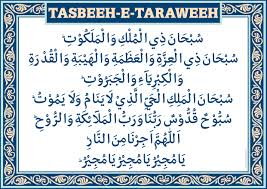
Could you please tell me about Tasbeeh of Taraweeh? Answer: askimam In the name of Allah, Most Gracious, Most Merciful Assalaamu `alaykum waRahmatullahi Wabarakatuh Tasbīh al-Tarāwīh Traditionally, in each tarwīhah, the mustahabb break between each set of four rak’ahs of the Tarāwīh prayer, the Muslims of different regions, especially in Makkah and Madīnah, observed different acts of worship. The Muslims in Makkah used to make tawāf of the Ka’bah during each tarwīhah, whereas those in Madīnah, unable to make tawāf, would pray an additional four rak’ahs instead. However, during the tarwīhah, a person may recite the Qur’ān, tasbīh (Subhān Allāh), tahmīd (Alhamdulillāh), tahlīl (Lā ilāha illallāh), pray nawāfil individually, send durūd (blessings) on the Prophet صلى الله عليه وسلم, or simply remain silent. This is mentioned by the fuqahā’ and ‘ulamā’ in their books, including al-Mabsūt,[1] al-Muhīt al-Burhānī,[2] Badā’i’ al-Ṣanā’i’,[3] Mukhtārāt al-Nawāzil,[4] al-Fatāwā al-Tātārkhāniyyah,[5] Ghunyat al-Mutamallī,[6] Nihāyat al-Murād,[7] Fath Bāb al-‘Ināyah,[8] Majma’ al-Anhur,[9] Imdād al-Ahkām,[10] and Fatāwā Rahīmiyyah.[11] Surprisingly, none of the abovementioned books mention any masnūn or mustahabb du‘ā’ for the tarwīhah, including the du‘ā’ commonly read by Muslims in several Masjids, many of which advertise the du‘ā’ on large printed banners. This du‘ā’, commonly known as the “Tarāwīh Du‘ā’,” is as follows: سُبْحانَ ذِي الْمُلْكِ وَالْمَلَكُوتِ سُبْحانَ ذِي الْعِزَّةِ وَالْعَظْمَةِ وَالْهَيْبَةِ وَالْقُدْرَةِ وَالْكِبْرِياءِ وَالْجَبَرُوْتِ سُبْحانَ الْمَلِكِ الْحَيِّ الَّذِيْ لا يَنامُ وَلا يَمُوتُ سُبُّوْحٌ قُدُّوْسٌ رَبُّنا وَرَبُّ المْلائِكَةِ وَالرُّوْحِ اللَّهُمَّ أَجِرْنا مِنَ النّارِ يا مُجيرُ يا مُجيرُ يا مُجيرُ Exalted is the Possessor of the hidden and the manifest dominion. Exalted is the Possessor of Might, Greatness, Reverence, Power, Pride, and Majesty. Exalted is the Master, the Living, the one who neither sleeps nor dies. All-perfect, All-holy, Our Lord, and the Lord of the angels and the souls. O Allāh, grant us refuge from the Hellfire. O Granter of refuge, O Granter of refuge, O Granter of refuge. Unfortunately, a thorough search of the books of ahādīth, tafāsīr, fiqh, etc. did not reveal a single mention of this du‘ā’ anywhere. However, some parts of the above du‘ā’ are mentioned in several books of tafsīr as the tasbīh of the angels.[12] Yet, none of the books, whether of tafāsīr or any other Islāmic science, have narrated this exact du‘ā’ in any context, let alone as the “Tarāwīh Du‘ā’.” Apparently, the basis for any specific du‘ā’ for the tarwīhah stems from Imām Ibn ‘Ābidīn mentioning in Radd al-Muhtār[13] that one should recite the following du‘ā’ three times: سُبْحانَ ذِي الْمُلْكِ وَالْمَلَكُوْتِ سُبْحانَ ذِي الْعِزَّةِ وَالْعَظْمَةِ وَالْقُدْرَةِ وَالْكِبْرِياءِ وَالْجَبَرُوْتِ سُبْحانَ الْمَلِكِ الحَيِّ الَّذِي لا يَمُوْتُ سُبُّوْحٌ قُدُّوْسٌ رَبُّ الْمَلائِكَةِ وَالرُّوْحِ لا إلَهَ إلاَّ اللهُ نَسْتَغْفِرُ اللهَ نَسْأَلُكَ الْجَنَّةَ وَنَعُوْذُ بِكَ مِنَ النّارِ Exalted is the Possessor of the hidden and the manifest dominion. Exalted is the Possessor of Might, Greatness, Power, Pride, and Majesty. Exalted is the Master, the Living, the one who does not die. All-perfect, All-holy, Our Lord, and the Lord of the angels and the souls. There is no god except Allāh. We ask Him for forgiveness, we ask Him for Paradise, and we seek refuge in Him from the fire. Surprisingly, even Imām Ibn ‘Ābidīn did not quote the words of the “Tarāwīh Du‘ā’.” In Ṭawāli’ al-Anwār,[14] Imām ‘Ābid al-Sindhī has also narrated the same words as Imām Ibn ‘Ābidīn. Although neither have claimed the the du‘ā’ they quote as sunnah or mustahabb, Khayr al-Fatāwā[15] mentions reading the above-mentioned du‘ā’ as mustahabb based on the text in the Radd al-Muhtār. Furthermore, both Imām Ibn ‘Ābidīn and Imām ‘Ābid al-Sindhī quote the du‘ā’ from Imām Quhustānī. Imām Ibn ‘Ābidīn, when quoting Imām Quhustānī, states that the du‘ā’ is mentioned in Manhaj al-‘Ibād. On the other hand, Imām ‘Ābid al-Sindhī quotes Imām Quhustānī mentioning Mafātīh al-‘Ibād as the source of the du‘ā’. In Jāmi’ al-Rumūz,[16] Imām Quhustānī mentions the source of the du‘ā’ as Manāhij al-’Ībād. Regardless of whether the correct name of the book is Manhaj al-‘Ibād, Manāhij al-‘Ibād, or Mafātīh al-‘Ibād, it is not a reliable book in establishing any preference for the recitation of this du‘ā’, let alone in each tarwīhah, nor does Imām Quhustānī, from whom others narrate, attach any special reward to it. Therefore, it is incorrect to regard the “Tarāwīh Du‘ā’” as sunnah or mustahabb. Although the actual words of the du‘ā’ are not problematic, one should realize that it is simply mubāh (permissible), nothing more. In addition, if one wishes to act according to the recommendations or practices of our pious predecessors, then one may recite the du‘ā’ mentioned by Imām Quhustānī, also quoted from him by Imām Ibn ‘Ābidīn and Imām ‘Ābid al-Sindhī, the wordings of which are different from the words of the “Tarāwīh Du‘ā’.” Furthermore, Imām Gangohī’s[17] practice was to recite: سُبْحانَ اللهِ وَالْحَمْدُ لِلَّهِ ولا إلَهَ إلاَّ اللهُ واللهُ أَكْبَرُ Exalted is Allāh and all-praises be to Allāh. There is no god besides Allāh, and Allāh is the Greatest. Nonetheless, one should be fully aware that there is no sunnah or mustahabb du‘ā’ for each tarwīhah. Rather, one should engage tasbīh, tahmīd, nawāfil, durūd, etc. or simply remain silent, as quoted earlier from several books of fiqh. However, if he/she wishes to recite the du‘ā’ quoted from Imām Quhustānī or even the “Tarāwīh Du‘ā’,” then it is permissible as long as he/she accepts that it is simply mubāh, realizes that it does not hold any special merit, does not look down on the one who does not recite it, and does not give the impression to others as if it is sunnah or mustahabb through, for example, hanging posters of the du‘ā’ in the Masjid. And Allah knows best Wassalaamu `alaykum Ml. Abrar Mirza, Student Darul Iftaa Checked and Approved by: Mufti Ebrahim Desai Darul Iftaa, Madrassah In'aamiyyah [1] [الانتظار بين كل ترويحتين] وهو مستحب هكذا روي عن أبي حنيفة رحمه الله تعالى لأنها إنما سميت بهذا الاسم لمعنى الاستراحة وأنها مأخوذة عن السلف وأهل الحرمين فإن أهل مكة يطوفون سبعا بين كل ترويحتين كما حكينا عن مالك رحمه الله تعالى (البسوط للسرخسي، كتاب الصلاة، باب التراويح، الفصل الرابع: 2/132؛ الفكر) [2] وكلما يصلي ترويحة ينتظر بين الترويحتين قدر ترويحة... فالانتظار بين كل ترويحتين مستحب بمقدار ترويحة واحدة عند أبي حنيفة رحمه الله تعالى وعليه عمل أهل الحرمين غير أن أهل مكة يطوفون بين كل ترويحتين سبعا وأهل المدينة يصلون بدل ذلك أربع ركعات وأهل كل بلدة بالخيار يسبحون أو يهللون أو يكبرون أو ينتظرون سكوتا (المحيط البرهاني، كتاب الصلاة، الفصل الثالث عشر: 2/250؛ إدارة) [3] ومنها أن الإمام كلما صلى ترويحتة قعد بين الترويحتين قدر ترويحة يسبح ويهلل ويكبر ويصلي على النبي صلى الله عليه وسلم ويدعو (بدائع الصنائع، كتاب الصلاة، صلاة التراويح: 1/648؛ إحياء التراث) [4] ويقعد بين كل ترويحتين مقدار ترويحه الخامس في الوتر ثم هو مخير فيه إن شاء سبح وإن شاء هلل وإن شاء صلى (على النبي صلى الله عليه وسلم) وإن شاء سكت وأهل مكة يطوفون بين ترويحتين أسبوعا (مختارات النوازل، كتاب الصلاة، فصل في التراويح: ص 95؛ العلمية) [5] فالانتظار بين كل ترويحتين مستحب بمقدار ترويحة واحدة عند أبي حنيفة وعليه عمل أهل الحرمين غير أن أهل مكة يطوفون بين كل ترويحتين أسبوعا وأهل المدينة يصلون بدل ذلك أربع ركعات وأهل كل بلدة بالخيار يسبحون أو يهللون أو ينتظرون سكوتا (الفتاوى التاتارخانية، كتاب الصلاة، الفصل الثالث عشر: 1/654؛ إدارة القرآن) [6] (فيجلس بين كل ترويحتين مقدار ترويحة) أي بين كل أربع ركعات وأربع ركعات مقدار أربع ركعات وكذا بين الآخرة والوتر وليس المراد حقيقة الجلوس بل المراد الانتظار وهو مخير فيه إن شاء جلس ساكتا وإن شاء هلل أو سبح أو قرأ أو صلى نافلة منفردا وهذا الانتظار مستحب لعادة أهل الحرمين فإن عادة أهل مكة أن يطوفوا بعد كل أربع أسبوعا ويصلوا ركعتي الطواف وعادة أهل المدينة أن يصلوا أربع ركعات... فثبت من عادة أهل الحرمين الفصل بين كل ترويحتين ومقدار ذلك الفصل وهو مقدار ترويحة فكان مستحبا لأن ما رآه المؤمنون حسنا فهو عند الله حسن (غنية المتملي، فصل في النوافل، تراويح: ص 404؛ سهيل) [7] قال في فتح القدير قيل ينبغي أن يقول والمستحب الانتظار بين الترويحتين وأهل المدينة كانوا يصلون بذلك أربع ركعات فرادى وأهل مكة يطوفون بينهما أسبوعا ويصلون ركعتي الطواف إلا أنه روى البيهقي بإسناد صحيح أنهم كانوا يقومون على عهد عمر رضي الله عنه... وأهل كل بلدة يسبحون أو يهللون أو ينتظرون سكوتا أو يصلون أربعا فرادى وإنما المستحب الانتظار لأن التراويح مأخوذة من الراحة فيفعل ذلك تحقيقا لمعنى الاسم وكذا هو متوارث انتهى (نهاية المراد، التراويح: ص 649؛ البيروتي) [8] (على كل ترويحة) أي أربع ركعات وقيل خمس تسليمات (جلسة بقدرها) لتوارث ذلك من السلف وكذا قبل الوتر هكذا روي عن أبي حنيفة لأنها إنما سميت بالترويحة للاستراحة فيفعل ذلك تحقيقا لمعنى الاسم ثم إن أهل مكة تطوف سبعا بين كل ترويحتين كما حكي عن مالك وأهل المدينة يصلون فرادى أربعا بدل ذلك وأهل كل بلدة بالخيار يسبحون أو يهللون أو ينتظرون سكوتا أو يصلون فرادى (فتح باب العناية، كتاب الصلاة، فصل في صلاة التراويح: 1/342؛ الأرقم) [9] (وجلسة بعد كل أربع بقدرها) أي بقدر أربعة من ركعاتها ولو قال وانتظار بقدرها لكان أولى فإن بعض أهل مكة يطوفون بين كل ترويحتين وأهل المدينة يصلون بدل ذلك أربع ركعات وأهل كل بلدة بالخيار يسبحون أو يهللون أو ينتظرون سكوتا (مجمع الأنهر، كتاب الصلاة، باب الوتر والنوافل، فصل: 1/136؛ إحياء التراث) [10] (إمداد الأحكام، كتاب الصلاة، فصل في التراويح: 1/624؛ كراتشي) [11] (فتاوى رحيمية، كتاب الصلاة، مسائل تراويح: 6/245؛ الإشاعت) [12] وأخرج ابن جرير وأبو نعيم في الحلية عن سعيد بن جبير أن عمر بن الخطاب سأل النبي صلى الله عليه و سلم عن صلاة الملائكة فلم يرد عليه شيئا فأتاه جبريل فقال إن أهل السماء الدنيا سجود إلى يوم القيامة يقولون : سبحان ذي الملك والملكوت وأهل السماء الثانية ركوع إلى يوم القيامة يقولون سبحان ذي العزة والجبروت وأهل السماء الثالثة قيام إلى يوم القيامة يقولون : سبحان الحي الذي لا يموت (الدر المنثور، سورة البقرة، الآية 30: 1/113-114؛ الفكر) ثم ينزل الجبار في ظلل من الغمام (البقرة 210) والملائكة يحمل عرشه يومئذ ثمانية وهم اليوم أربعة أقدامهم على تخوم الأرض السفلى والأرضون والسموات إلى حجزهم والعرش على مناكبهم لهم زجل بالتسبيح فيقولون : سبحان ذي العزة والجبروت سبحان ذي الملك والملكوت سبحان الحي الذي لا يموت سبحان الذي يميت الخلائق ولا يموت سبوح قدوس رب الملائكة والروح سبحان ربنا الأعلى الذي يميت الخلائق ولا يموت فيضع عرشه حيث يشاء من الأرض (المرجع السابق، سورة الزمر، الآية 10: 7/258) قال: وينزل الجبار، عز وجل، في ظُلَل من الغمام والملائكةُ، ولهم زَجَل مِنْ تسبيحهم يقولون سبحان ذي الملك والملكوت، سبحان رب العرش ذي الجبروت سبحان الحي الذي لا يموت، سبحان الذي يميت الخلائق ولا يموت سُبّوح قدوس، رب الملائكة والروح، قدوس قدوس، سبحان ربنا الأعلى، سبحان ذي السلطان والعظمة، سبحانه أبدًا أبدًا (تفسير ابن كثير، سورة البقرة، الآية 210: 1/567؛ الطيبة) ثم ينزلون على قدر ذلك من التضعيف، حتى ينزل الجبار، عَزَّ وجل، في ظُلل من الغمام والملائكة، فيحمل عرشه يومئذ ثمانية -وهم اليوم أربعة -أقدامهم في تخوم الأرض السفلى والأرض والسموات إلى حُجْزَتَهم والعرش على مناكبهم، لهم زجل في تسبيحهم، يقولون: سبحان ذي العرش والجبروت، سبحان ذي الملك والملكوت، سبحان الحي الذي لا يموت، سبحان الذي يميت الخلائق ولا يموت، سُبُّوح قدوس قدوس قدوس، سبحان ربنا الأعلى، رب الملائكة والروح، سبحان ربنا الأعلى، الذي يميت الخلائق ولا يموت، فيضع الله كرسيه حيث يشاء من أرضه (المرجع السابق، سورة الأنعام، الآيات 70-73: 3/284-285) قال ابن عباس: حملة العرش ما بين كعب أحدهم إلى أسفل قدميه مسيرة خمسمائة عام، ويروى أن أقدامهم في تخوم الأرضين، والأرضون والسموات إلى حجزهم، وهم يقولون سبحان ذي العزة والجبروت، سبحان ذي الملك والملكوت، سبحان الحي الذي لا يموت، سبوح قدوس رب الملائكة والروح (تفسير البغوي، سورة الغافر، الآيات 5-7: 7/139-140؛ الطيبة) حدثنا ابن حميد، قال: حدثنا يعقوب القمي، عن جعفر بن أبي المغيرة، عن سعيد بن جبير... فأتاه جبريل فقال: يا نبي الله، سألك عُمر عن صلاة أهل السماء؟ قال: نعم. فقال: اقرأ على عمر السلام، وأخبره أن أهل السماء الدنيا سجودٌ إلى يوم القيامة يقولون:"سبحان ذي الملك والملكوت"، وأهل السماء الثانية ركوعٌ إلى يوم القيامة يقولون:"سبحان ذي العزة والجبروت"، وأهل السماء الثالثة قيامٌ إلى يوم القيامة يقولون"سبحان الحي الذي لا يموت (تفسير الطبري، سورة البقرة، الآية 30: 1/472-473؛ الرسالة) ثم نزل أهلُ السموات على عدد ذلك من التضعيف، حتى نزل الجبار في ظُلل من الغمام والملائكة، ولهم زجَلٌ من تسبيحهم يقولون:" سبحان ذي الملك والملكوت! سبحان ربّ العرش ذي الجبروت! سبحان الحي الذي لا يموت! سبحان الذي يُميت الخلائق ولا يموت! سبوح قدوس، رب الملائكة والروح! قدّوس قدّوس! سبحان ربنا الأعلى! سبحان ذي السلطان والعظمة! سبحانه أبدًا أبدًا (المرجع السابق، سورة البقرة، الآية 210: 4/267) ثم نزل أهل السموات على قدر ذلك من الضعف حتى نزل الجبار في ظلل من الغمام والملائكة، ولهم زجل من تسبيحهم، يقولون: سبحان ذي الملك والملكوت، سبحان رب العرش ذي الجبروت، سبحان الحي الذي لا يموت سبحان الذي يميت الخلائق ولا يموت، سبوح قدوس رب الملائكة والروح، قدوس قدوس، سبحان ربنا الأعلى سبحان ذي الجبروت والملكوت والكبرياء والسلطان والعظمة سبحانه أبدا أبدا (المرجع السابق، سورة الفجر، الآيات 20-23: 24/419) [13] قوله ( بين تسبيح ) قال القهستاني فيقال ثلاث مرات سبحان ذي الملك والملكوت سبحان ذي العزة والعظمة والقدرة والكبرياء والجبروت سبحان الملك الحي الذي لا يموت سبوح قدوس رب الملائكة والروح لا إله إلا الله نستغفر الله نسألك الجنة ونعوذ بك من النار كما في منهج العباد ا هـ (رد المحتار، كتاب الصلاة، باب الوتر والنوافل: 2/46؛ الفكر) [14] (ويخيرون) في هذا الانتظار (بين تسبيح) في القهستاني يقول سبحان ذي الملك والمكوت سبحان ذي العزة والعظمة والقدرة والكبرياء والجبروت سبحان الملك الحي الذي لا يموت سبوح قدوس رب الملائكة والروح لا إله إلا الله نستغفر الله نسألك الجنة ونعوذ بك من النار كما في مفاتيح العباد انتهى وقال الحلبي وإن شاء هلل أو سبح انتهى فأفاد به أن كل ذكر من تسبيح أو تحميد أو تكبير أو حوقلة أو مذاكرة علم يقوم مقام ذلك والله أعلم (طوالع الأنوار، كتاب الصلاة، باب الوتر والنوافل: 2/299-300/ب-أ؛ مخطوط) [15] (خير الفتاوى، كتاب الصلاة، فصل في التراويح: 2/521؛ إمدادية) [16] فإن لكل بلدة أن يسبح أو يهلل كما له أن يسكت كما في المحيط (بقدرها) أي الترويحة فقال ثلاث مرات سبحان ذي الملك والملكوت سبحان ذي العزة والعظمة والقدرة والكبرياء والجبروت سبحان الملك الحي الذي لا يموت سبوح قدوس رب الملائكة والروح لا إله إلا الله نستغفر الله نسألك الجنة ونعوذ بك من النار كما في مناهج العباد (جامع الرموز، كتاب الصلاة، فصل في الوتر والنوافل: 1/215؛ سعيد) [17] (فتاوى دارة العلوم ديوبند، كتاب الصلاة، الباب الثامن، الفصل الرابع: 4/246، 248؛ الإشاعت)
-
Remember the Ummah in your Duas
ummtaalib replied to ummtaalib's topic in General Islamic Discussions

-
Question Could you please let me know what is Sunnat in doing Musafa (Shaking Hands) & Muaenka (Hugging) 1. Musafa first & Muaenka second or vice versa. 2. How many times do we need to do Muaenka 3 times or only 1 time. 3. How to answer to Jazakallah Answer In the Name of Allah, the Most Gracious, the Most Merciful. As-salāmu ‘alaykum wa-rahmatullāhi wa-barakātuh. It is sunnah to make Musafahah using both hands. It has been narrated in Sahih al-Bukhari that Rasullullah Sallallahu Alayhi Wa Sallam made Musafahah with Hadhrat ‘Abdullah Ibn Mas’ood Radhiyallahu ‘Anhu while the palm of Hadhrat ‘Abdullah Ibn Mas’ood Radhiyallahu ‘Anhu was between the two palms of Nabi Sallallahu Alayhi Wa Sallam.[1] ‘Allamah Anwar Shah Kashmiri Rahimahullah states: “The complete Sunnah in it (i.e. Musafahah) is that it be done with two hands. But the sunnah will also be achieved with one hand (though incomplete). [2] Musafahah and Mu’aanaqah are two different actions that are to be practiced upon at their different times. The practice of doing Musafahah has been narrated from the Ahadith as one that was prevalent on a general day-to-day basis. Whilst Mu’aanaqah is proven only at certain occasions such as leaving on a journey, returning from a journey, meeting somebody after very long and due to intense affection and love.[3] The actual practice of showing one’s affection is making Salaam. The practices of Musafahah and Mu’aanaqah serve as a means of perfecting the Salaam. Anyone one of these two are enough for this purpose. The practice of making both Musafahah and Mu’aanaqah together with Salaam within one meeting is not proven from Sunnah.[4] However, if one does so without any attribution to or intention of Sunnah, there is leeway in doing so. Due to the fact that both these practices in one meeting cannot be found in the Sunnah, there is no Sunnah method known regarding which of the two shall precede the other. Mu’aanaqah means to embrace somebody, bringing one’s neck into contact with another person’s.[5] It is Sunnah to make Mu’aanaqah once only. The practice of making Mu’aanaqah thrice is not proven from Sunnah.[6] Firstly, it is important to understand that the term ‘Jazakallah’ as a phrase of gratitude is derived from the Hadith. However, as understood from the Ahadith, the correct method of saying this is ‘Jazakallahu Khaira’ (meaning: may Allah recompense you with good). Sayyiduna Usamah bin Zayd Radiyallahu ‘anhuma reports that Nabi Sallalahu ‘alayhi wa sallam said: “Whoever says ‘Jazaka Allahu Khaira’ to the one who has done good to him, has certainly extolled him in praise.” [7] As far as the response to this is concerned, it is appropriate to either say ‘Aameen’ or ‘Wa Iyyaaka’ (meaning: the same be to you). And Allah Ta’āla Knows Best Nabeel Valli Student Darul Iftaa Lusaka, Zambia Checked and Approved by, Mufti Ebrahim Desai. www.daruliftaa.net askimam [1] صحيح البخاري (8/ 59) [دار المنهاج] وقال ابن مسعود: «علمني النبي صلى الله عليه وسلم التشهد، وكفي بين كفيه» وقال كعب بن مالك: «دخلت المسجد، فإذا برسول الله صلى الله عليه وسلم، فقام إلي طلحة بن عبيد الله يهرول حتى صافحني وهنأني» [2] فيض الباري على صحيح البخاري (6/ 204) [العلمية] واعلم أن كمالَ السنة فيها أن تكونَ باليدين، ويتأدَّى أصلُ السنة من يدٍ واحدةٍ أيضًا. [3] أحسن الفتاوى (8/410) [أيج أيم سعيد] [4] أحسن الفتاوى (8/410) [أيج أيم سعيد] [5] أحسن الفتاوى (8/407) [أيج أيم سعيد] [6] فتاوى محمودية (19/118) [الفاروقية] أحسن الفتاوى (9/77) [أيج أيم سعيد] حاشية ابن عابدين (رد المحتار) (6/ 380) [أيج أيم سعيد] (قَوْلُهُ وَكَذَا مُعَانَقَتُهُ) قَالَ فِي الْهِدَايَةِ وَيُكْرَهُ أَنْ يُقَبِّلَ الرَّجُلُ فَمَ الرَّجُلِ أَوْ يَدَهُ أَوْ شَيْئًا مِنْهُ أَوْ يُعَانِقَهُ وَذَكَرَ الطَّحَاوِيُّ أَنَّ هَذَا قَوْلُ أَبِي حَنِيفَةَ وَمُحَمَّدٍ، وَقَالَ أَبُو يُوسُفَ لَا بَأْسَ بِالتَّقْبِيلِ وَالْمُعَانَقَةِ لِمَا رُوِيَ «أَنَّهُ - عَلَيْهِ الصَّلَاةُ وَالسَّلَامُ - عَانَقَ جَعْفَرًا حِينَ قَدِمَ مِنْ الْحَبَشَةِ وَقَبَّلَهُ بَيْنَ عَيْنَيْهِ» وَلَهُمَا مَا رُوِيَ " «أَنَّهُ - عَلَيْهِ الصَّلَاةُ وَالسَّلَامُ - نَهَى عَنْ الْمُكَامَعَةِ» ؟ " وَهِيَ الْمُعَانَقَةُ «وَعَنْ الْمُكَاعَمَةِ» وَهِيَ التَّقْبِيلُ، وَمَا رَوَاهُ مَحْمُولٌ عَلَى مَا قَبْلَ التَّحْرِيمِ، قَالُوا الْخِلَافُ فِي الْمُعَانَقَةِ فِي إزَارٍ وَاحِدٍ أَمَّا إذَا كَانَ عَلَيْهِ قَمِيصٌ أَوَجُبَّةٌ لَا بَأْسَ بِهِ بِالْإِجْمَاعِ وَهُوَ الصَّحِيحُ اهـ. [7] سنن الترمذي ت بشار (3/ 557) [العلمية] 2035 - حَدَّثَنَا الحُسَيْنُ بْنُ الحَسَنِ الْمَرْوَزِيُّ بِمَكَّةَ، وَإِبْرَاهِيمُ بْنُ سَعِيدٍ الجَوْهَرِيُّ، قَالاَ: حَدَّثَنَا الأَحْوَصُ بْنُ جَوَّابٍ، عَنْ سُعَيْرِ بْنِ الخِمْسِ، عَنْ سُلَيْمَانَ التَّيْمِيِّ، عَنْ أَبِي عُثْمَانَ النَّهْدِيِّ، عَنْ أُسَامَةَ بْنِ زَيْدٍ قَالَ: قَالَ رَسُولُ اللهِ صَلَّى اللَّهُ عَلَيْهِ وَسَلَّمَ: مَنْ صُنِعَ إِلَيْهِ مَعْرُوفٌ فَقَالَ لِفَاعِلِهِ: جَزَاكَ اللَّهُ خَيْرًا فَقَدْ أَبْلَغَ فِي الثَّنَاءِ.
-
- 1
-
-
Question Is the famous tasbih of tarawih mentioned in the Hadith? i.e, Subhana Dhil Mulki Wal Malakut……….. Answer I haven’t seen mention of this in Hadith books. Some Fuqaha (Jurists) have quoted it as a suggested form of tasbih, among other things that a person could engage in, between every set of 4 rak’ats of tarawih. (Raddul Muhtar, vol.2 pg.46) One may recite this or any other form of tasbih, dhikr etc as long as it’s not considered binding or sunnah. And Allah Ta’ala Knows best, Answered by: Moulana Muhammad Abasoomar Hadithanswers
- 1 reply
-
- 1
-
-
Juz Fourteen Message of Sūrah al-Ḥijr Sūrah al-Ḥijr was revealed in the early Makkan period. In fact it contains the āyah that ordered the beginning of public call to Islam. (Al-Ḥijr, 15:94). It contains stories of the nations of previous prophets. These nations refused to accept the call of the prophets and were destroyed. Stories of Prophets Ibrāhīm, Lūṭ, Shuʿayb, and Ṣāliḥ are mentioned. The sūrah ends with two important commands. A) Ignore the riches of the world لَا تَمُدَّنَّ عَيْنَيْكَ إِلَىٰ مَا مَتَّعْنَا بِهِ أَزْوَاجًا مِّنْهُمْ وَلَا تَحْزَنْ عَلَيْهِمْ وَاخْفِضْ جَنَاحَكَ لِلْمُؤْمِنِينَ (So) turn not your eyes (longingly) towards the worldly benefits which We have granted unto some of those (that deny the truth), and neither grieve over those (who refuse to heed you), but spread the wings of your tenderness over the believers. (Al-Ḥijr 15:88) The riches of this world can become a barrier to accepting and following the truth. They are a distraction that could cause a believer to stray from the Straight Path. While we do seek Allāh’s blessings in worldly provisions, we should never look at the worldly possessions of others with envy. This āyah is the strongest antidote to the rat race. B) Stay the course until the last minute وَاعْبُدْ رَبَّكَ حَتَّىٰ يَأْتِيَكَ الْيَقِينُ And serve your Lord till the Inevitable (death) comes unto you. (Al- Ḥijr 15:99) Our commitment to submit to Allāh should not be a fad, a temporary emotional reaction, or a seasonal act (like only in Ramadan). It is a lifelong devotion from which we should not waver despite all the highs and lows of life. The goal is to reach the end of our life in a state of total submission to our Creator. Humble Biological Beginnings خَلَقَ الْإِنسَانَ مِن نُّطْفَةٍ فَإِذَا هُوَ خَصِيمٌ مُّبِينٌ He has created man from a sperm-drop; and behold this same (man) becomes an open disputer! (An-Naḥl, 16:4) In many places in the Qur’ān we are reminded of our very humble biological beginnings as a check on the tendency to rationalize and philosophize our refusal to obey the commands of our Creator. Remembering how our own life started may give us the perspective so we do not get carried away with our superficial academic arguments. Just visualize a drop of semen arguing with the Creator of the universe. How Allāh Creates إِنَّمَا قَوْلُنَا لِشَيْءٍ إِذَا أَرَدْنَاهُ أَن نَّقُولَ لَهُ كُن فَيَكُونُ Whenever We will anything to be, We but say unto it Our word “Be”—and it is. (An-Naḥl, 16:40) Allāh created this world out of nothing. How? Through His command: Be, and it was. The resurrection will be the same way. There is absolutely nothing to stop Allāh’s Will from coming into reality. It occurs precisely when and how He decides it to take place. A very powerful Hadith Qudsī says it so beautifully: “Allāh says: O My Slaves! All of you are lost except those whom I guide. So ask Me for guidance, I will guide you. And all of you are poor save those whom I enrich. So ask Me, I will give you. All of you are sinners except those whom I save. So he who seeks forgiveness from Me knowing that I am the one with the power to forgive, I will forgive him and it does not bother Me (how many I forgive). And if your first and your last, your living and your dead, your youthful and your exhausted, gather together to have hearts as the heart of the most righteous of My slaves that will not increase My domain by even so much as the wing of a mosquito. And if your first and your last, your living and your dead, your youthful and your exhausted gather together to have hearts as the heart of the most wretched of My slaves that will not diminish My kingdom by even so much as the wing of a mosquito. And if your first and your last, your living and your dead, your youthful and your exhausted gather together on one ground and each one of you prays to Me for all his desires and I give everyone what they are asking for that will not diminish from My kingdom except as much as the water withdrawn from the ocean if you were to immerse a needle in it. This is because I am Jawwād (the Bountiful) and Mājid (the Glorious). I do what I will. My grant is a word and my punishment is a word. My only command to anything when I intend it is that I say to it “Be” and it is.” Asking those Who Know وَمَا أَرْسَلْنَا مِن قَبْلِكَ إِلَّا رِجَالًا نُّوحِي إِلَيْهِمْ ۚ فَاسْأَلُوا أَهْلَ الذِّكْرِ إِن كُنتُمْ لَا تَعْلَمُونَ We did not send (messengers) before you other than men whom We inspired with revelation. So, ask the people (having the knowledge) of the Reminder (the earlier Scriptures), if you do not know. (An- Naḥl, 16:43) This āyah tells us that those who do not know should ask those who do. While the reason for this is so self-evident, it is amazing how many people insist on doing the opposite when it comes to religious knowledge. Islam does not have a formal church like the Catholic Church for example. However it does not mean that everybody has equal knowledge, or equal right to offer religious opinions regardless of the state of their knowledge. Those who do not know should first acknowledge that they do not know and then should inquire from those who do. This principle is the basis for following the imams in matters of fiqh. This āyah also informs us that all messengers were men. The essential human equality between the genders (see below) does not call for a negation of their different roles in life. Right and Wrong: Most Comprehensive Āyah إِنَّ اللَّهَ يَأْمُرُ بِالْعَدْلِ وَالْإِحْسَانِ وَإِيتَاءِ ذِي الْقُرْبَىٰ وَيَنْهَىٰ عَنِ الْفَحْشَاءِ وَالْمُنكَرِ وَالْبَغْيِ ۚ يَعِظُكُمْ لَعَلَّكُمْ تَذَكَّرُونَ Allāh enjoins justice and kindness, and giving to relatives (their due rights), and forbids lewdness and abomination and wickedness. He exhorts you so that you may take heed. (An-Naḥl, 16:90) This āyah encapsulates the most important Islamic teachings and has been called the most comprehensive āyah dealing with right and wrong. Three things top the list of do’s: Justice, good behavior, charity. Three top the list of don’ts: Obscenity, injustice, oppression. These teachings are so important to building the Islamic community that we must keep them in front of us all the time. That is why ʿUmar ibn ʿAbdul ʿAzīz, known generally as the fifth rightly guided khalīfah, and who was a great scholar in his own right, started the practice of including this āyah in the Jumuah khuṭbah. This wonderful practice continues to date. ʿAdl means justice with friend and foe alike. This is the bedrock of Islamic polity. ʿAdl also implies iʿtidāl or following the middle path and avoiding all extremes. Needless to say it includes avoiding the extremes that are propagated in the name of moderation. Iḥsān means going the extra mile. Giving people more than their due. This is what brings beauty and warmth in relationships. It also means acting with the consciousness that Allāh is watching. That would naturally bring out the best of us in every deed. The third command deals with good family relations, which Islam has elevated to a very high level among virtues. That is why it has been separately mentioned here although it would be covered by the first two in a general way. Faḥshā’ covers all obscenities and acts of lewdness. This is everything that nurtures and excites lust. Munkar is a general term that refers to all those evils that sensible human nature would abhor, whether lying, cheating, exploiting others, or committing the acts that Allāh has declared as sins. It is the antonym of maʿrūf which literally means “well-known” and refers to acts known to be good by the Islamic community. Baghy refers to acts of oppression. These three prohibitions cover the entire agenda for moral reform. As Sufi masters explain there are three faculties in human nature whose balance is the goal of self reform. These are desires, intellect, and anger. Thus of the three dont’s mentioned here, the first deals with out-of-control cravings, the second with an intellect suppressed (by Satanic inspirations or otherwise), and the third with out-of-control anger. Essential Equality between Men and Women مَنْ عَمِلَ صَالِحًا مِّن ذَكَرٍ أَوْ أُنثَىٰ وَهُوَ مُؤْمِنٌ فَلَنُحْيِيَنَّهُ حَيَاةً طَيِّبَةً ۖ وَلَنَجْزِيَنَّهُمْ أَجْرَهُم بِأَحْسَنِ مَا كَانُوا يَعْمَلُونَ Whoever, male or female, has acted righteously, while being a believer, We shall certainly make him live a good life, and We shall bestow on such their reward according to the best of their actions. (An-Naḥl, 16:97) Islam asserts that men and women have separate spheres for their endeavors in this life. But underlying this separateness is a basic moral and human equality. This is mentioned here. When each one of them performs the right deeds based on their station in life, they will get the reward of a pure, enjoyable, and rewarding life here and best recompense in the Hereafter, regardless of their gender. Calling to Islam ادْعُ إِلَىٰ سَبِيلِ رَبِّكَ بِالْحِكْمَةِ وَالْمَوْعِظَةِ الْحَسَنَةِ ۖ وَجَادِلْهُم بِالَّتِي هِيَ أَحْسَنُ ۚ إِنَّ رَبَّكَ هُوَ أَعْلَمُ بِمَن ضَلَّ عَن سَبِيلِهِ ۖ وَهُوَ أَعْلَمُ بِالْمُهْتَدِينَ Invite (people) to the way of your Sustainer with wisdom and good counsel. And argue with them in the best of manners. Surely, your Sustainer knows best the one who deviates from His way, and He knows best the ones who are on the right path. (An-Naḥl, 16:125) This is the essential guidance for anyone engaged in calling others to Islam. We must call others to Islam with wisdom and using the best manners. Even when we have to enter a debate with the non-believers, it must be done in a most beautiful way. Ḥikmah (wisdom) implies, among other things, intellectual strength of the argument being presented. Al-Mawʿidhat al-Ḥasanah implies speaking with sincerity, kindness, and compassion. The entire call to Islam should be such that any open minded person could realize that the caller is a well wisher who is driven by a sincere desire to help them and that the arguments he is presenting make sense. Further the caller to Islam should never be provoked into unseemly behavior by stubborn opponents. Stories of the Prophets in the Qur’ān illustrate all these points in action.and humble servant of Allāh instead of the mad scientist out to maximize his power and profits. He would know that Allāh created the universe to serve us and created us to serve Him.
-
Leaving the Musjid to Perform Sunnah Ghusal Q: If one sitting in sunnah i’tikaaf left the masjid with the intention of sunnat ghusal on Friday, will the I’tikaaf break? A: The I’tikaaf will break. ( وحرم عليه ) أي على المعتكف اعتكافا واجبا أما النفل فله الخروج لأنه منه له لا مبطل كما مر ( الخروج إلا لحاجة الإنسان ) طبيعية كبول وغائط وغسل لو احتلم ولا يمكنه الاغتسال في المسجد كذا في النهر (الدر المختار مع رد المحتار 2/444-445, الفتاوى الهندية 1/212) Answered by: Mufti Zakaria Makada Checked & Approved: Mufti Ebrahim Salejee (Isipingo Beach)
-
-
Juz Thirteen Sūrah Yūsuf Sūrah Yūsuf is unique among Qur’ānic narratives as the entire sūrah is devoted to the story of Prophet Yūsuf. Further, his story, unlike other stories, is not mentioned anywhere else. The sūrah is filled with moral lessons, for which a good tafsīr should be consulted. Here are only some of those lessons. In-between Muslims اقْتُلُوا يُوسُفَ أَوِ اطْرَحُوهُ أَرْضًا يَخْلُ لَكُمْ وَجْهُ أَبِيكُمْ وَتَكُونُوا مِن بَعْدِهِ قَوْمًا صَالِحِينَ “Let us kill Yūsuf, or throw him at some place on earth, and thus your father’s full attention will be devoted for you alone, and after doing that, you may become a righteous people.” (Yūsuf, 12:9) The brothers of Prophet Yūsuf were Muslims. They were driven by jealousy and not by an ideological conflict. But this jealousy led them to commit serious wrongs. Torn between their negative emotions and their sense of right and wrong, they were the in-between Muslims. They must have felt the pricks of conscience in formulating their evil plan. This is how they assuaged their guilt feeling. “Do this one wrong now, and afterward lead a virtuous life.” Anyone resorting to the same justification for any wrong should realize the hollowness of this logic. Human Nature This sūrah gives extremely valuable insights into human nature. It also tears apart the idea that good people are above lusts and desires or that there can be such a thing as platonic love. This idea only helps remove the safeguards thereby making succumbing to those desires easier. This is the story of a Prophet, whose innocence is attested to by the Qur’ān. Yet it also says clearly that he could have succumbed to the lust, except for the help from Allāh. The following āyahs make it very clear. وَلَقَدْ هَمَّتْ بِهِ ۖ وَهَمَّ بِهَا لَوْلَا أَن رَّأَىٰ بُرْهَانَ رَبِّهِ ۚ كَذَٰلِكَ لِنَصْرِفَ عَنْهُ السُّوءَ وَالْفَحْشَاءَ ۚ إِنَّهُ مِنْ عِبَادِنَا الْمُخْلَصِينَ She certainly desired him, and he might have desired her, had he not seen the proof from his Lord. Thus We did, to turn evil and lewdness away from him. Surely, he was one of Our chosen servants. (Yūsuf, 12:24) قَالَ رَبِّ السِّجْنُ أَحَبُّ إِلَيَّ مِمَّا يَدْعُونَنِي إِلَيْهِ ۖ وَإِلَّا تَصْرِفْ عَنِّي كَيْدَهُنَّ أَصْبُ إِلَيْهِنَّ وَأَكُن مِّنَ الْجَاهِلِينَ He (Yūsuf ) said, “My Lord, the prison is dearer to me than what these women invite me to do. If You do not turn their guile away from me, I might yet yield to their allure and become one of those who are unaware (of right and wrong). (Yūsuf, 12:33) وَمَا أُبَرِّئُ نَفْسِي ۚ إِنَّ النَّفْسَ لَأَمَّارَةٌ بِالسُّوءِ إِلَّا مَا رَحِمَ رَبِّي ۚ إِنَّ رَبِّي غَفُورٌ رَّحِيمٌ And yet, I am not trying to absolve myself: for, verily, man’s inner self does incite (him) to evil, and saved are only they upon whom my Sustainer bestows His grace. Certainly, my Sustainer is the Most- Forgiving, Very-Merciful. (Yūsuf 12:53) In the first āyah Allāh is saying that Prophet Yūsuf might have desired her. In the second āyah Prophet Yūsuf is seeking Allāh’s help against their seduction since without that help he might yield to their allure. The third āyah is a general observation about human nature which has inclinations to evil. The idea that human beings can be reformed against their nature is a fantastic one. This story should liberate us from such illusions. The proper moral reform consists in recognizing human nature and eliminating the opportunities for it taking the wrong course. The attraction between the sexes is an important force of nature, which makes family life possible, which is the basic unit of society. When it spills outside marriage, it becomes a destructive force, which must be curbed. And the way to do that is to restrict the exposure and opportunities for interaction between the sexes in those situations. Hence the laws of hijab and the restrictions against free-mixing, which are based on a perfect knowledge of the human nature. All those who try to water them down are working against the forces of nature. It should also be noted that Zulaykha was older than Prophet Yūsuf. He had entered their house as a child to be possibly adopted as a son. This removes any grounds for relaxation of the requirements of hijab for an older (as opposed to an old) woman. As long as the two are of marriageable age, the restrictions are to be observed. Sermon in the Prison قَالَ لَا يَأْتِيكُمَا طَعَامٌ تُرْزَقَانِهِ إِلَّا نَبَّأْتُكُمَا بِتَأْوِيلِهِ قَبْلَ أَن يَأْتِيَكُمَا ۚ ذَٰلِكُمَا مِمَّا عَلَّمَنِي رَبِّي ۚ إِنِّي تَرَكْتُ مِلَّةَ قَوْمٍ لَّا يُؤْمِنُونَ بِاللَّهِ وَهُم بِالْآخِرَةِ هُمْ كَافِرُونَ. وَاتَّبَعْتُ مِلَّةَ آبَائِي إِبْرَاهِيمَ وَإِسْحَاقَ وَيَعْقُوبَ ۚ مَا كَانَ لَنَا أَن نُّشْرِكَ بِاللَّهِ مِن شَيْءٍ ۚ ذَٰلِكَ مِن فَضْلِ اللَّهِ عَلَيْنَا وَعَلَى النَّاسِ وَلَٰكِنَّ أَكْثَرَ النَّاسِ لَا يَشْكُرُونَ. يَا صَاحِبَيِ السِّجْنِ أَأَرْبَابٌ مُّتَفَرِّقُونَ خَيْرٌ أَمِ اللَّهُ الْوَاحِدُ الْقَهَّارُ. مَا تَعْبُدُونَ مِن دُونِهِ إِلَّا أَسْمَاءً سَمَّيْتُمُوهَا أَنتُمْ وَآبَاؤُكُم مَّا أَنزَلَ اللَّهُ بِهَا مِن سُلْطَانٍ ۚ إِنِ الْحُكْمُ إِلَّا لِلَّهِ ۚ أَمَرَ أَلَّا تَعْبُدُوا إِلَّا إِيَّاهُ ۚ ذَٰلِكَ الدِّينُ الْقَيِّمُ وَلَٰكِنَّ أَكْثَرَ النَّاسِ لَا يَعْلَمُونَ I have abandoned the way of those who do not believe in Allāh, and who are deniers of the Hereafter. And I follow the creed of my forefathers Ibrāhīm (Abraham), Isḥāq (Isaac), and Yaʿqūb ( Jacob). It is not conceivable that we should (be allowed to) ascribe divinity to anyone beside Allāh: this is (an outcome) of Allāh’s bounty unto us and unto all mankind – but most people are ungrateful. O my companions in imprisonment! Which is more reasonable: (belief in the existence of numerous divine) lords, each of them different from the other—or (in) Allāh, the One God, who holds absolute sway over all that exists? All that you worship instead of Allāh is nothing but (empty) names which you have invented—you and your forefathers—(and) for which Allāh has bestowed no warrant from on high. Sovereignty belongs to none but Allāh. He has ordained that you shall not worship anyone but Him. This is the only right path. But most of the people do not know. (Yūsuf 12:37-40) This is a very powerful sermon that passionately appeals to our ingrained sense of truth and falsehood to show the truth of the universal call of Islam. Prophet Yūsuf, like all prophets, is constantly on the lookout to call people to Allāh. He gets an opportunity when the inmates approach him for interpretation of their dreams. With great wisdom and passion he uses the occasion to deliver them the message. It is a penetrating question, which can be posed to all the polytheists of the world: “Which is more reasonable: (belief in the existence of numerous divine) lords, each of them different from the other—or (in) Allāh, the One God, who holds absolute sway over all that exists?” It is telling that this important part of the story is completely missing from the narrative in the Torah, which otherwise has many historical details (names, places, numbers) not mentioned in the Qur’ān. Such details are a characteristic of human story telling. On the other hand the Qur’ān ignores such details and focuses totally on telling the stories to highlight the guidance for humanity inherent in them. Tawakkul وَقَالَ يَا بَنِيَّ لَا تَدْخُلُوا مِن بَابٍ وَاحِدٍ وَادْخُلُوا مِنْ أَبْوَابٍ مُّتَفَرِّقَةٍ ۖ وَمَا أُغْنِي عَنكُم مِّنَ اللَّهِ مِن شَيْءٍ ۖ إِنِ الْحُكْمُ إِلَّا لِلَّهِ ۖ عَلَيْهِ تَوَكَّلْتُ ۖ وَعَلَيْهِ فَلْيَتَوَكَّلِ الْمُتَوَكِّلُونَ And he said, “O my sons, do not enter (the city) all of you from the same gate; rather, enter from different gates. And I cannot help you in any way against (the will of ) Allāh. Sovereignty belongs to none but Allāh. In Him I place my trust, and all those who trust should trust in Him alone.” (Yūsuf, 12:67) For security reasons Prophet Yaʿqūb (Jacob) asked his sons not to travel together. But after advising them of the necessary precaution, he made it very clear that his trust was not in his prudence but in Allāh. This is a lesson in the very important concept of tawakkul: We should take the best steps needed based on our knowledge and understanding, then leave the results to Allāh. Tawakkul means making and executing the plans to the best of our ability and then putting our trust in Allāh to make our plans and actions bring out the desired outcomes. This is Islam’s middle way between the extremes of taking matters completely in our hands or leaving them altogether and hoping for desired outcomes without any effort. Tawakkul ends worries and anxieties without compromising on our plans and actions. Forgiveness قَالَ لَا تَثْرِيبَ عَلَيْكُمُ الْيَوْمَ ۖ يَغْفِرُ اللَّهُ لَكُمْ ۖ وَهُوَ أَرْحَمُ الرَّاحِمِينَ He said, “No reproach upon you today! May Allāh forgive you, and He is the Most- Merciful of all those who show mercy. (Yūsuf, 12:92) قَدْ أَحْسَنَ بِي إِذْ أَخْرَجَنِي مِنَ السِّجْنِ وَجَاءَ بِكُم مِّنَ الْبَدْوِ مِن بَعْدِ أَن نَّزَغَ الشَّيْطَانُ بَيْنِي وَبَيْنَ إِخْوَتِي (My Lord) favored me when he released me from the prison, and brought you from the countryside after Satan had caused a rift between me and my brothers. (Yūsuf, 12:100) This is the greatness of the Prophetic character, an example in both forgiveness and thankfulness. After all the ordeals through which his brothers had put him as a young child, he forgave them. And the forgiveness referred to in the first āyah mentioned above was really meant as we can see in the second āyah quoted above. Prophet Yūsuf, instead of blaming his brothers, simply referred to whatever happened to the inspirations of Satan. When Prophet Muḥammad ﷺ conquered Makkah and he was in a position to take revenge from the Quraysh leaders who had left no stone unturned in hurting him and his followers for more than a decade, he used the same words to forgive them. Prophet Yūsuf had faced three great tribulations. First, he was mistreated by his brothers. Second, he had to withstand long separation from his parents. Third, he was unjustly put in prison. Here in summing up his story he is giving a profound lesson in thankfulness. First, he reversed the order making the last incident the most important and the first, which had started it all and for which his brothers were directly responsible, the least. Second, he focused not on the ordeal but on the ending of the ordeal. He thanked Allāh for helping him get out of the prison, and for bringing back his parents and family. No complaints about his long ordeal, no ill feeling about his brothers. Only thanks and rejoicing. Knowledge, Wisdom, Blindness أَفَمَن يَعْلَمُ أَنَّمَا أُنزِلَ إِلَيْكَ مِن رَّبِّكَ الْحَقُّ كَمَنْ هُوَ أَعْمَىٰ ۚ إِنَّمَا يَتَذَكَّرُ أُولُو الْأَلْبَابِ Now, can the one who knows that whatever has been revealed to you from your Lord is the truth, be equal to one who is blind? But only men of understanding heed. (Ar-Raʿd, 13:19) Allāh’s guidance has been mentioned in many places as the light. This light makes the believers see the truth as truth. Others are in utter darkness and therefore they cannot see it. That is, they are blind to it. Worldly Provisions اللَّهُ يَبْسُطُ الرِّزْقَ لِمَن يَشَاءُ وَيَقْدِرُ ۚ وَفَرِحُوا بِالْحَيَاةِ الدُّنْيَا وَمَا الْحَيَاةُ الدُّنْيَا فِي الْآخِرَةِ إِلَّا مَتَاعٌ Allāh expands the provision for whom He wills and narrows it (for whom He wills). And they (who are given abundance) rejoice in the life of this world—even though, as compared with the life to come, the life of this world is nothing but a fleeting pleasure. (Ar-Raʿd, 13:26) Too many people get deceived into thinking that their economic achievements are a result of their own smarts. This āyah should help destroy this myth. A person who truly believes in this statement will always be thankful to Allāh for all his provisions and earnings, will not be tempted by ḥarām sources of income, and will be a contented person. Peace of Mind الَّذِينَ آمَنُوا وَتَطْمَئِنُّ قُلُوبُهُم بِذِكْرِ اللَّهِ ۗ أَلَا بِذِكْرِ اللَّهِ تَطْمَئِنُّ الْقُلُوبُ The ones who believe and their hearts are peaceful with the remembrance of Allāh. Listen, the hearts find peace only in the remembrance of Allāh. (Ar-Raʿd, 13:28) This is the real recipe for achieving that elusive peace of mind. Remembrance of Allāh (dhikr) brings one closer to Allāh. And as one gets closer to Allāh his worries and anxieties are replaced by tranquility and contentment. Dhikr is the food for the soul. Nothing else would satisfy a healthy soul. On the other hand a sick soul may not be able to digest it, but it will find nothing else either that can provide proper nourishment for it. That is why the āyah first says that the guidance of Allāh is for those whose hearts find peace in the remembrance of Allāh. In other words those who have healthy souls. Then it tells that real peace lies only in the remembrance of Allāh. Conquering Nature? اللَّهُ الَّذِي خَلَقَ السَّمَاوَاتِ وَالْأَرْضَ وَأَنزَلَ مِنَ السَّمَاءِ مَاءً فَأَخْرَجَ بِهِ مِنَ الثَّمَرَاتِ رِزْقًا لَّكُمْ ۖ وَسَخَّرَ لَكُمُ الْفُلْكَ لِتَجْرِيَ فِي الْبَحْرِ بِأَمْرِهِ ۖ وَسَخَّرَ لَكُمُ الْأَنْهَارَ. وَسَخَّرَ لَكُمُ الشَّمْسَ وَالْقَمَرَ دَائِبَيْنِ ۖ وَسَخَّرَ لَكُمُ اللَّيْلَ وَالنَّهَارَ It is Allāh Who has created the heavens and the earth and sends down rain from the skies, and with it brings out fruits wherewith to feed you; it is He Who has made the ships subject to you, that they may sail through the sea by His command; and the rivers (also) has He made subject to you. And He has made subject to you the sun and the moon, both diligently pursuing their courses; and the night and the day has He (also) made subject to you. (Ibrāhīm 14:32-33) Here is the cure for the delusion of modern science that it is conquering nature. We constantly hear how man has conquered the earth and is now out to conquer space. The apparent control over rivers and seas, mountains and deserts, and plants and animals that mankind seems to exert, the astounding ability with which the powers of the sun and the moon have been harnessed to serve human needs, the wonderful inventions that seem to put gigantic forces of nature at our disposal-all of these result from His Will. It is Allāh who created the universe and it is He who has granted us control over it. (And whenever He wills, He takes it back as well.) Instead of congratulating ourselves for “conquering” it, we should be thanking Allāh for granting us this domination. The disasters that modern science has produced, especially the environmental disaster, are a result of its delusion. A scientist informed by this āyah will be freed from this debilitating sickness that is threatening the humanity. He would act responsibly, knowing that he is accountable before Allāh for how he uses the domination given to him as a test. He would be a grateful and humble servant of Allāh instead of the mad scientist out to maximize his power and profits. He would know that Allāh created the universe to serve us and created us to serve Him.
-
Opinions Of The Scholars Imam Abu Hanifa, Imam Shafi’i, and Imam Ahmad (rahmatullahi alaihim) are unanimous that twenty rak’ats are to be performed for taraweeh during Ramadan. There are different opinions recorded from Imam Malik (rahmatullahi alaih): one states twenty rak’ats; another is of thirty-six rak’ats, about which Imam Malik (rahmatullahi alaih) said, ”This is our former opinion;” and a third view is of thirty-eight rak’ats. There is also an opinion which states forty-one rak’ats (Bidayat al-Mujtahid 1:210). ‘Allama ‘Ayni (rahmatullahi alaih) mentioned the second of view of thirty-six rak’ats to Imam Malik’s (rahmatullahi alaih) more popular opinion. What becomes clear at this point is that none of the four prominent Imams held a view of taraweeh being less than twenty rak’ats. Twenty is the minimum number mentioned, and the reason for Imam Malik’s (rahmatullahi alaih) view of thirty-six is that it was the practise of the people of the noble city of Makkah to perform tawaf (circumambulation) of the Ka’bah after every four rak’ats of taraweeh. During the pause between each four rak’ats of taraweeh, the people of the illuminated city of Madinah would observe an extra four rak’ats of prayer in place of the tawaf. (see al-Mughni 2:167) Therefore, since taraweeh was performed as twenty rak’ats, consisting of five sets of four rak’ats (each set called a ‘tarweeha’), the people of Madinah would perform an extra four rak’ats after every tarweeha, bringing the total number of extra rak’ats to sixteen. Sixteen extra rak’ats plus the twenty rak’ats of taraweeh make thirty-six rak’ats. Hence, the actual number of tak’ats of Taraweeh was twenty even according to Imam Malik (rahmatullahi alaih). ************* Views of the Scholars Imaan Qurtubi radhiallahu anhu states: “Twenty rakaats taraweeh and three rakaats witr is the most authentic narration.” Imaam Nawawi radhiallahu anhu states: “Taraweeh is a unanimously accepted sunnah of the Muslims. It is twenty rakaats”. “The pandemonium that the Ghair Muqallideen (people who do not follow any Mazhab) had started for the past hundred years was never heared of in the Islamic world before……… Similarly from the time of Umar radhiallahu anhu upto the emergence of this sect there was no masjid in the world where eight rakaats of Taraweeh was performed……”. (Moulana Habib ur Rahmaan Azmi).
-
The practice of the Messenger of Allah (salallahu 'alayhi wa sallam) In a narration it is stated that the Messenger of Allah (Allah bless him and give him peace) performed twenty rak’ahs in tarawih.[24] The chain of this narration is weak. However, it is a well established principle in the sciences of Hadith and Fiqh that if a hadith possesses a weak chain but is supported by the general practice of the Ummah in the era of the Companions and the Followers (Tabi’in) then that hadith will be considered authentic.[25] Mawlana Habib al-Rahman Al-A’zimi has mentioned that this albeit weak narration is supported by the following points: (1) The fact that the general practice of the Muslims in the era of Sayyiduna ‘Umar (may Allah be pleased with him) conformed to it, (2) this remained the practice even in the era of Sayyiduna ‘Ali (may Allah be pleased with him), (3) all of the four madhhabs concur with it and (4) the fact that the entire Ummah has been practicing upon it till this day. These are sufficient reasons to strengthen this narration and raise it to the level of authenticity. (Rak’ate Tarawih, pg. 60) Interestingly, Imam Ibn Abi Shaybah, under the chapter of “The number of rak’ahs to be performed in Ramadan”, first quotes the practice of twenty rak’ahs from ten different Companions and Followers (Tabi’i) and thereafter cites the narration of twenty rak’ahs from the Messenger of Allah (Allah bless him and give him peace).[26] This probably means he was alluding to the strength of this narration.
-
Tarawih - Proof For 20 Rak'ats
-
Q. Is it true that we are supposed to recite Dua e Jameelah on the fifteenth Ramadaan? What is the significance of this? A.There is no virtue mentioned in the Hadith with regards to reciting Dua–e-Jameelah on the 15th Ramadaan nor is there any virtue recorded in authentic sources for the Dua itself. A person should rather engage in Duas that are recorded in the Hadith. And Allah Knows Best Fatwa Department Jamiatul Ulama (KZN) Council of Muslim Theologians
-
- 1
-