
ummtaalib
-
Posts
8,467 -
Joined
-
Days Won
773
Content Type
Profiles
Forums
Events
Everything posted by ummtaalib
-

-
Youth Dilemmas Are you a follower or leader? Selling Your Paradise for Someone Else’s World By Mufti Abdur Rahman ibn Yusuf As we get older, we gain more experience of life and particular situations. Having these experiences in life is important. How we deal with these situations allows us to discover the consequences of our decisions and we learn to modify our future reactions appropriately. Generally, once people see that certain actions lead to a bad outcome, and assuming that their minds are mature and they have a concern about their life and, more importantly, their life in the hereafter, they will immediately cease those actions in order to avoid the bad outcome. Similarly, if someone performs an action which brings about a good outcome, they will become inspired to continue acting in that way. A simple example of this is smoking. Many young people contemplate smoking because they are invited to smoke by the people around them, be it by irresponsible older siblings/cousins or others in their family, or by ’friends,’ if the person is socialising with the wrong type of people. Ask any smoker who has been smoking for a long time and it is guaranteed that the overwhelming majority will say that smoking is a very bad thing and they wish they had never started, but stopping is now very difficult because it has become so infused in their system and the urge to smoke is so great. As the saying goes “once a smoker, always a smoker”. Unfortunately, this realisation only comes with hindsight and experience, once it is too late. Now, if a young person heard this from a smoker, the question is will it deter them from trying to smoke? If the person is not a ‘follower,’ if they make their own decisions for themselves, then they may be deterred from trying. Unfortunately, the problem we have is that most people are followers rather than leaders, and are unlikely to be deterred by what they hear from someone more experienced than them if they are following the wrong examples. Essentially, it can be said most people are followers and only some are leaders. To expand further, someone is always there to set the trends. A lot of the time, these ‘trend-setters’ are intelligent people but their intelligence is sometimes applied to the wrong things. They then start encouraging other people, who are followers rather than leaders, to get involved. Outwardly, these leaders who encourage others towards negative things may appear to be successful and seemingly enjoying themselves, and so people are tempted to follow their examples to gain the same success and enjoyment that they appear to have. This applies to older people as much as it does to youngsters. However, Allah does not want us to follow these people blindly; He wants every one of us to think for ourselves. The guidance in the Qur’an and hadith are there for everyone. One scholar said that the worst types of people are those who sell their hereafter for someone else’s dunya (life in this world); a hadith says something very similar to this. In other words, to allow someone else to enjoy themselves in this world, people will sacrifice their own life of the hereafter. They may feel that they themselves are getting some enjoyment too, but deep inside, they know that what they are doing is wrong and they feel a sense of remorse or guilt, but because of the need to conform, they will continue with it regardless. The role of parents here is crucial. If parents advise their children on certain matters but, for whatever reason, they just don’t value their opinion or trust their advice (which is a very common problem between parents and teenagers), then the children should go and seek advice from another responsible adult. This could be an older cousin, an uncle or an aunt, anyone who is responsible and who they are able to talk to comfortably, openly and honestly. It should be noted that parents will always have their children’s best interests at heart, but unfortunately, sometimes young people do not understand this. As a twelve or thirteen year old, they think they know about things and what is best for them and parents ‘just don’t understand’. If a third party (a responsible adult) was watching this interaction between a parent and child, they would be able to tell straightaway that the child simply does not understand and lacks experience. As an adult, the question is how to get this message across to the child. This is a problem across all communities and has always been an issue. The difference in this day and age is that now, there is no sense of community supervision. In the past, adults would essentially police the youth wherever they were. These adults felt this was an obligation and a duty of theirs, and society benefited from it. Young people would be guided by the adults in the whole community, not just by their parents. The message they received at home would be reinforced by the guidance received from the wider community. Unfortunately, in this day and age, even if someone’s child is misbehaving in the mosque, it is difficult for an adult to tell that child anything as parents now are very intolerant when it comes to other people saying anything to their children. It is true that some people do not know how to deal with unruly children, but many parents do not like anyone ever telling their children anything, regardless of the manner in which it is done, because in their eyes, their children are angels and cannot do anything wrong. One key message adults need to get across to younger people is that they are still learning and developing an understanding of life, of people and of the world in which we live. Parents have seen more of the world, and are more aware of the potential dangers and pitfalls awaiting their children, so what can seem like a harsh regime of strict parenting is, in fact, parents doing what all parents instinctively do—protecting their children. In fact, for those of us who were born and/or raised here in the UK, USA or the west in general, I can guarantee that when we have children of our own (or as our young children grow older), we will be more strict with them than our parents were with us, and especially so if your own parents were not raised in this country. The reason for this comes from our experience of knowing what goes on at school, college etc. and also generally in the society in which we now live. We have experienced this culture and pressure for ourselves and will try to protect our own children from its bad influences. So my advice to young people is simple—do not sell your hereafter for someone else’s worldly pleasure. This is particularly true for those people who are seen as ‘leaders’. If you know people are following your example then you have a big responsibility. It is reported in one hadith that our beloved Prophet (Allah bless him and give him peace) said, “The one who shows the right way will get a reward for everyone who follows that right way”. Although each individual who follows will get their own reward, the one who showed them or led them to the right way will also be rewarded for the actions of the followers. For example, if you encourage some friends to go out for da’wa (inviting people to the path of Allah) for any number of hours or days, you will also get the reward for your friends going and for every act of worship which is done by them during those days. By the same token, if you invite someone to do something wrong like vandalising someone’s property, drinking, taking drugs, smoking, clubbing and likewise, you (as well as them) will be considered a sinner for their actions. Allah Most High says in Surat al-Nas: “Say, I seek refuge with the Lord of Mankind; the King of Mankind; the God of Mankind; From the evil of the whisperer who withdraws (when Allah’s name is pronounced); The one who whispers into the hearts of people; Whether from among the Jinn or Mankind” (114:1–6). The whisperer who retreats at Allah’s name is Shaytaan, but the final verse here tells us that there are also people that whisper to others, encouraging them into wrong actions. This can be done by persuasion, by belittling those who abstain from bad actions and in other ways which make it difficult for someone to refuse, even though they know what they are being encouraged to do is wrong. What we must ask ourselves is do we want to be human Shaytaans? By encouraging others to do bad things, you become no better than a human manifestation of Shaytaan. It can start off with something small (like skipping school or putting something that does not belong to you in your pocket) and you may not think it is too bad or too serious but, gradually, it will inevitably lead to worse things. A friend of mine works in a young offenders’ institute. Having spoken with many of these young offenders to determine the cause of the behaviour which led to them being in this institution, he found that most of them pinpointed their parents as the main cause of them going to jail. By this, they meant that there was a lack of proper discipline at home, they had parents who were too soft with them and let them do whatever they wanted. One prisoner, who was there for stealing and shop-lifting, remarked that when he was a child and went to other people’s houses, his mum never made a big deal out of him taking other children’s toys from their houses. This is a common thing we see all the time, even with our own children; when we visit people with children, our child may like one of the toys at the house they are visiting. When it is time to leave, the child will want to take the toy with them and a generous (or embarrassed) host will probably say to let them have it. Unless the child’s parent is strict at this point, the child will expect to be able to be able to take toys whenever they visit another house. Similarly, in the case of this young offender, because his mother didn’t stop this behaviour, it then moved on from toys to picking pockets and shoplifting. What he was saying was that his mother almost made it acceptable to take things which were not his. This can even lead to negative effects on siblings, and in this particular case, this individual eventually got his sister involved. He now blames his mother for his situation, and wishes she had been stricter with him. When your parents are strict with you, you think they are being unreasonable. As I mentioned before, if there is conflict between you and your parents about how strict they are, seek a second opinion from someone who is older and wiser than you but whom you trust. Ask if they think your parents are being unreasonable or just trying to protect you and preserve you from getting involved in bad things. The reward for someone who can preserve themselves from bad things when they are in their youth is as great as that for someone who is a just ruler. Being a just ruler is very difficult because you have so much power to do almost anything you wish. This is narrated in the famous hadith of the seven groups of people to whom Allah will grant shade on the Day of Judgement when there will be no shade other than that under His throne. Each of these seven groups will have achieved something difficult, and one of these groups will be those who used to be focussed on worshipping Allah during their youth. Adults find it a challenge to worship and remember Allah, so to manage it during your youthful life when there are many temptations in your path which you must resist is a considerable achievement. These youths will still socialise with friends, play sports and enjoy themselves but they also remember to perform salat, keep good company, don’t mislead others, enjoy the halal and abstain from the haram etc. For this achievement, Allah will reward them with His shade on the Day of Judgement. If you can preserve your youth, the rest of your life will be preserved. If that message doesn’t resonate with you at the moment and seems difficult to believe, speak to some older people. If you know someone older who has led a life which you think is what you want, then that is even better. If only we could go to a prison and ask those people there how they ended up there and the lessons they would like to pass on, but for them it is now too late. Once you start getting into bad habits, it is very difficult to extract yourself because your desire takes control over you. Eventually, this leads to you becoming bolder, careless and reckless, and sooner or later, you end up in a place you do not want to be. One final request I would like to make is to ask you to be careful with how you use the opportunities (the bad or doubtful) that are available to you out there. Always question things and ask experienced people if they think something is good or bad. If your heart is already inclined towards (or even against) something, you are inherently biased when judging its merits so you should always get another opinion. Social internet sites can be very dangerous, especially if you start interacting with someone you know nothing about. Rather than simply chatting, it has now progressed to a stage where people are sending pictures of themselves to one and another or uploading them where anyone can see them. Picture exchanges are taking place between girls and boys without anybody realising how long these pictures will be available publicly and who will see them. These systems rob people of their modesty and honour, but nobody is compelling you to use them. Always think about what you are posting before doing so. If you don’t need a Facebook account (or any other kind of social media account) then do not have one just to appear cool. You don’t want to be in the situation where you end up ignoring your own parents who are in the same room as you, because you are too busy chatting online, whether it is Facebook, WhatsApp or anything else. Indeed, this is one of the signs of the Day of Judgement and our beloved Prophet Muhammad (Allah bless him and give him peace) said “a time will come when a person distances his parents but will bring close his friends”. Unfortunately, we are seeing this in our households today, but just because it is prophecy doesn’t mean we have to be part of it too. Being good to relatives has a great benefit, and in this regard, the Prophet (Allah bless him and give him peace) said “if someone wants a better quality life, with more sustenance and provision, then they should be good with their relatives”. If there are no good things which you are involved in, the minimum should be to attend Islamic classes or lectures, spend time inviting others to the deen, read a good Islamic book and pray at least one prayer in the mosque each day. This will give your iman a good boost and bring you great benefit. This is the only way you can stay strong and safe, as well as being able to socialise in an Islamic way. May Allah give all of us the right guidance—Amin Transcribed by Bilal Raja Edited by Ahmed Limbada zamzam academy
-
Question My husband wants me to wear nail polish all the time. I had read somewhere that you have to take it off for your prayers, and this would then be very cumbersome for me. I don’t understand the logic of this ruling either. If you wear henna, it stains your hands and nails, and water cannot get under the dye to your skin for several weeks, but we know that henna is allowed, and has been worn for ages. What is the difference that makes nail polish not allowed, and therefore what might you suggest as an alternative that I could do to please my husband that won’t make my life difficult at the same time? Answered by: Mufti Abdurrahman ibn Yusuf Assalamu alaykum Actually, nail polish is very different from henna. Nail Polish is like paint which forms a barrier on the nails so that water can not get to them, whereas wetting the nails is necessary in wudu and ritual bathing. Henna, on the hand, does not form a coating but changes the pigment of the skin and nails, hence, does not stop the water from reaching the nails or skin. In terms of an alternative, the most preferred is henna, since it has been recommended by the Prophet (upon him be peace). Since, a woman does not pray during menses, the problem of nail polish being a barrier for wudu would not arise during that time. However, if it was applied during that period it would have to be removed for the ritual bathing afterwards. Explain these points to your husband and hopefully he will understand the complication with nail polish. And Allah knows best. Wassalam, Mufti Abdurrahman ibn Yusuf zamzam academy
- 1 reply
-
- 1
-

-
Question: I have a problem… In the month of May I started on 8th and finished on 14th. In May I started 28th which means that there wasn’t a 15 day gap of Purity. This means that i am in istihadha. However, I do not know what I have to do. Does this mean i can pray as long as I do my wudhu for each prayer for all the 7 days that I am on for? Or does it mean that I can pray until my 15 days gap have been done and then for the rest of the days i can’t pray? I’m not sure. I need to know… Jzk. Normal days that I’m on for is 7 days! Answered by Umm Yusuf Abdul Sattar Verified by Mufti Abdur Rahman ibn Yusuf In the name of Allah, Most Compassionate, Most Merciful In situations of abnormal bleeding, we use a woman’s previous cycles to help her determine which part of her bleeding is menstruation, which is purity, and which is istihada. Istihada is that blood that a woman experiences that is not menstruation. During istihada, a woman is obligated to complete her ritual obligations, such as fasting and praying. With the information you have provided, we would assign six days as menstruation and eighteen days as purity. The bleeding you experienced from May 8 – 14 will be menstruation. The bleeding you are currently experiencing will be applied toward your normal eighteen days of purity, which will be counted from May 14 – June 1. After completing the allotted purity, you will consider the next six days menstruation. You should continue to apply the pattern of six days blood and eighteen days purity as long as you experience irregular bleeding. Should anything change, you should consult with a scholar, as the rulings are based on a specific set of circumstances. We also recommend keeping a detailed record of bleeding (regular and irregular) and purity, including dates and times. Lastly, the current bleeding is dysfunctional uterine bleeding (istihada), during which you should continue to pray, with a fresh ablution for each prayer time. You can also refer to “The Laws of Menstruation, Postnatal Bleeding & Dysfunctional Uterine Bleeding,” for more information. Feb. 23 – Feb. 27 – 4 Blood 24 Days Tuhr March 23 – 29 – 6 Blood 16 Days Tuhr April 14 – 20 – 6 Blood 18 Days Tuhr May 8 – 14 – 6 Blood 14 Days Tuhr May 28 – Blood 4B, 24T, 6B, 16T, 6B, 18T, 6B, 14T, Blood (Joins) Take 6B, 18T as habit and apply that. So May 8 – May 14 is menstruation. And May 14 – June 1 will be purity. Then take next 6 days as menstruation. Answered by Umm Yusuf Abdul Sattar zamzam academy
-
- 1
-
-
Gift for New Muslims (Basics of Islam) Gift_NewMuslims_Print.pdf
- 1 reply
-
- 1
-
-
Question After almost 1 and a half year I embraced Islam. I just don't like to make dua for my parents during Tashad (due to bad treatment in past from parent). Answer My question is that is it a sin if I stop making dua for them? Bismillahir Rahmanir Raheem Assalaamu alaikum wa rahmatullah May Allah bless you with piety (Taqwa) and purity, strong Imaan,forgiveness of sins, have mercy on you, elevate your status, and bless you with knowledge of Deen and generosity. Ameen! Islam is the religion of Mercy, Peace and Blessing. Its teachings emphasize kind heartedness, help, sympathy, forgiveness, sacrifice, love and care. If we understand it correctly, we will wish it for everyone, including our family and fellow human beings. Kindly review this article http://islameasy.org/K_Islam_Mercy.php Observing Islam and achieving salvation in the eternal life hereafter is an individual’s choice – a personal matter. A Muslim has true love and obedience of Allah Almighty. Since Allah commands good treatment of parents and fellow human beings, A Muslim is also kind to them, for the sake of Allah’s pleasure. There are limits to obedience for anyone if that comes against our obedience to Allah, who is the Creator of everyone! These two aspects are not contradictory, so there should be no confusion. Why do you think practicing Islam is disrespect to parents or Non-Muslims? In the life hereafter, no one will be able to save other person. Everyone is responsible for her own faith and actions. Practicing Islam is not a sin even if one has gone against her parents’ wishes. You will find it truly amazing that the answer comes direct from God, in the Holy Qur’an, Chapter 31, Verses 14-15 14. And We have enjoined on man (to be dutiful and good) to his parents. His mother bore him in weakness and hardship upon weakness and hardship, and his weaning is in two years - give thanks to Me and to your parents, unto Me is the final destination. 15. But if they (both) strive with you to make you join in worship with Me others that of which you have no knowledge, then obey them not, but behave with them in the world kindly, and follow the path of him who turns to Me in repentance and in obedience. Then to Me will be your return, and I shall tell you what you used to do. Islam teaches respect, sympathy and tolerance. Kind treatment of parents is a quality of the believer. The Quraan and Ahaadith are replete with orders and advices of being obedient to one's parents. Allah states, "And worship Allah and do not ascribe any partner to Him and be favorable to parents." (Banu Israaeel). The Prophet (Sallallaahu Alayhi Wasallam) said, "Paradise lies under the feet of the mothers." It is clear from the above quotations that one should respect their parents and be favorable to them. The ruling is general. It includes parents who are Muslims as well as non-Muslims. Asma (Radhiallaahu Anha)states that her mother was a non-Muslim and came to visit her, she enquired from the Prophet (Sallallaahu Alayhi Wasallam) if she can enjoin ties with her non-Muslim mother. The Prophet (Sallallaahu Alayhi Wasallam) replied, "Yes". (Bukhari vol.2) Maintaining ties with non-Muslim parents or relatives presents one with an ideal situation to convey the etiquettes of Islam in a practical way. It is also important to point out that in dealing with non-Muslim parents or relatives, one must not compromise in one's Islamic values and principles. It is incorrect to obey anyone against the orders of Allah. Finally, there is no compulsion in religion. Islam is the continuation of the same original message brought by all previous prophets. And Allah knows best. Ask Alimah Forum
-
-
Question: Is it permissible to take photos and videos on holidays etc? Answer: In the Name of Allah, the Most Gracious, the Most Merciful. At the outset, one must know that Islam forbids making pictures of animate beings (i.e. humans and animals). Severe punishments have been mentioned in the ahaadith for making pictures (of animate beings). Consider the following ahaadith: Abdullah Ibn Masood (Radiyallaahu Anhu) narrates that the Messenger (sallallaahu alaihi wa sallam) said, “The people who will receive the worst punishment in the sight of Allah will be those who make pictures.” (Bukhari and Muslim) Aisha (Radiyallaahu Anha) narrates that once the Messenger (sallallaahu alaihi wa sallam) entered (her house) while there was a curtain with pictures in the house. (Upon seeing it) his face changed and he removed the curtain. He then said, “The people who will receive the worst punishment on the day of judgement will be those who make these pictures.” (Bukhari) Ibn Abbas (Radiyallaahu Anhu) narrates that he heard Messenger (sallallaahu alaihi wa sallam) saying, “Everyone who makes pictures will be in Hellfire. A creature will be created for every picture that he made. It (the creature) will then punish him in Hellfire.” (Bukhari and Muslim) Based on the above, it is not permissible to make pictures of animate beings. Regarding taking photos with a camera and taking videos with a camcorder, it is not permissible to do so according to the majority of the scholars, as both of these acts fall under making pictures. Some scholars, however, deem it permissible to take photos with a digital camera provided that the photo is not printed on paper and also to take videos with a camcorder. According to these scholars, capturing an image on a digital camera and capturing video on a camcorder do not fall under making pictures, as these machines do not make/record images, they merely record digital bytes of data (in the case of digital camera) and electronic video signal (in the case of camcorder). Similarly, images and video displayed on a screen do not fall under the definition of pictures as envisaged in the ahaadith according to these scholars. However, printing the digital image on paper is not permissible even according to these scholars, as doing so falls under making pictures. From the two views, the first view (i.e. that it is not permissible to take photos and to capture videos regardless of whether a digital camera/camcorder is used or a non-digital camera/camcorder and regardless of whether the image is printed on paper or merely displayed on screen) is the more precautionary view, especially considering the severe punishment mentioned in the ahaadith. It is also the view of the majority of the scholars of the Indo-Pak subcontinent. The discussion above is in regards to taking pictures and videos of animate beings (humans and animals). As for taking pictures and videos of inanimate objects (such as trees, mountains, buildings, cars, etc.), it is permissible. And Allah knows best. Mufti Faizal Riza Darul Ifta Australia www.mufti-online.net
-
Oops! Its only a dog! True Incident: The incident took place in South Asia. A man was offering salah in his house. He was praying as fast as he could as many of us do. All of a sudden, he heard the door behind him open. Since, someone entered the room, he started making his ruku and sujud longer. Upon completion of the salah, he looked back to see who it was. To his amazement, it was a dog!
-
Just too many Muslims Everywhere! Two men were on a plane on a business trip when a Muslim couple boarded the plane and were seated right in front of them. The two men, eager to have some fun, started talking loudly. "My boss is sending me to Saudi Arabia", the one said, "But I don't want to go...too many Muslims there!" The Muslim couple noticeably heard and grew uncomfortable. The other guy laughed, "Oh, yeah, my boss wanted to send me to Pakistan but I refused...WAY too many Muslims!" Smiling, the first man said, "One time I was in Iran but I HATED the fact that there were so many Muslims!" The couple fidgeted. The other guy responded, "Oh, yeah...you can't go ANYWHERE to get away from them...the last time I was in FRANCE I ran into a bunch of them too!" The first guy was laughing hysterically as he added, "That is why you'll never see me in Indonesia...WAY too many Muslims!" At this, the Muslim man turned around and responded politely, "Why don't you go to Hell?", he asked, "I hear there's not very many Muslims THERE!"
-
Smart Student PUPIL – “Would you punish me for something I didn`t do?” TEACHER – “Of course not.” PUPIL – “Good, because I haven`t done my homework.”
-
Points to assist a Declining Marriage The Hadith questions the manhood of a person who beats his wife up during the day and derives pleasure from her during the night. Good marriages require patience, kindness, humility, sacrifice, empathy, love, understanding, forgiveness, and hard work. Following these basic principles should help any marriage to improve. The essence of them all can be summed up in one sentence: Always treat your spouse the way you would like to be treated. Amidst busy schedules and tasks on the parts of both women and men, Muslim husbands and wives tend to forget the real reasons behind marriage and likewise the rights of each other. Subsequently, they deprive themselves, their mates and their children of the happiness and tranquillity that is the bedrock of a successful family. This unbalanced vision towards a couple’s ideal relationship is bad enough to plunge the family into a situation laden with troubles and worries. Negative Relationship between Husband & Wife Some Muslim spouses relate to each other like adversaries rather than life time partners. The husband assumes the position of dictator, and whatever he says is not law. The wife on the other hand feels that she must squeeze everything she can out of her husband. Some wives do not express their gratitude to their husbands irrespective of how much the man may do for her. Instead they adopt an attitude of ‘never enough’ and make the husband feel like a failure if he does not provide every want and desire their extravagant lifestyles dictate. Some husbands speak very harshly to their wives, humiliate them, and even physically abuse them. Their wives have no voice or opinion in family matters. Moreover certain husbands become so cold and miserly that even the basic expenditure for the house is difficult to come by. Nikah - A divine institution The Nikah bond has been divinely established for the welfare and upkeep of a healthy and progressive community. This divine prescription has been unjustly utilised as a vehicle to perpetrate oppression, deception, humiliation, and abuse. Allah Ta’ala describes marriage very differently in the Noble Quran: ‘And from his signs are, He created for you wives from among yourselves, so that you may live in tranquillity with them, and instilled love and mercy between your (hearts) . . . “(30:21) Head of the Home The position Islam has accorded to the man as the head of the home is a responsibility which will be accounted for, rather than a privilege which should be abused. We are taught to treat our wives well. Rasulullah (sallallahu alayhi wasallam) has reported to have said: ‘The person possessing the most perfect faith is one who has excellent behaviour, and the best among you are those who are best towards their wives" (Mishkat) Be Partners in Decision Making Follow the principle of ‘Shura," (consultation) and make decisions as a family. Implementing this Sunnah within the home increases harmony and love between family members. It will also assist in enhancing trust and loyalty between spouses and the children. Abuse Abstain totally from every form of emotional, mental, or physical abuse to your spouse. Watch Your Words Be very careful what you say when you are upset. The wounds afflicted to the heart of a person by words will never heal and remain a lifelong memory. Sometimes you will say things that you would never say when you were not angry. Apply the directives found in the Hadith for suppression of anger. Work Together in the House Rasulullah (sallallahu alayhi wasallam) consistently assisted his wives with household chores. When Rasulullah (sallallahu alayhi wasallam) did not consider the housework trivial, how can we today obligate our wives to all the house work and much more? Communication is Important Talk to each other, communicate, have a dialogue, but do it respectfully. Husbands and wives need to talk to each other. It is better to deal with problems early and honestly than to let them pile up until they explode. Live Simply Do not envy or cast your gaze towards those spouses who seem to be living a more luxurious life than your family. Be pleased with what you have. The grass will always look greener on the other side. The wealthiest person is the one who has attained contentment of heart. To develop the quality of contentment, look at those people who have less than you, not those who have more. Repeatedly thank Allah Ta’ala for the many blessings in your life. Admit Your Mistakes When you make a mistake, admit it. When your mate makes a mistake, excuse him or her easily. If possible, never sleep angry with each other. Past Problems Everything that has happened is history. Repent for the past and live for the future. Do not focus discussion on the past unless it is something that will make both of you laugh. The Duaa for a blissful marriage: "Allahumma rabana hab lana min azwaajinaa wa zurriyyatina qurrata a-ayun waj-alna lil muttaqeena imaama" (O Allah! grant us such wives and offspring who will be a source of coolness for our eyes, and make us leaders of the Allah-Fearing) Islaaminfo
-
-
-
AishaZaynap, sorry but I had to delete the other two posts because of the faces though the messages were very good....and I also uploaded the picture so it does not disappear....and i wonder why your posts needed approving, inshaAllah will get it checked
-
-
-
-
-
-
Split from inspiring stories and moved to Muslimah section
-
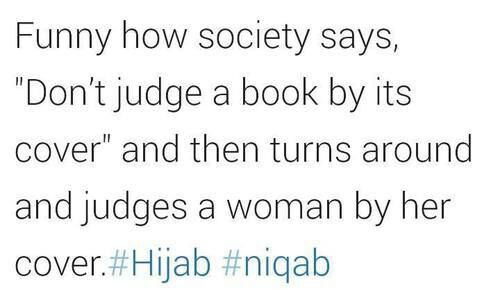
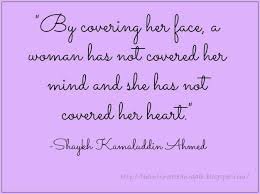
A Lesson of Faith Bismillahir Rahmaanir Raheem This is a true story: In France, after picking groceries in the supermarket, a Niqabi sister stood in the line to pay. After a few minutes, her turn came up at the checkout counter. The checkout girl was a non-Hijaabi Muslim girl, who began to scan the items of the Niqabi sister, one by one. After a while, she looked at her with arrogance and said: “We have many problems in this country and your Niqab (Face-veil) is one of them! We, immigrants, are here for trade and not to show our Deen or history! If you want to practice your Deen and wear Niqaab, then go back to your Arab country and do whatever you want!" The chaste Niqabi sister stopped putting her groceries in the bag and lifted up her Niqaab… The checkout girl was in total shock. The Niqabi girl, who was blonde with blue eyes, told her: "I am French, from pure French descent, not an Arab immigrant. This is my country and THIS IS MY ISLAM. You born Muslims sold your Deen and we bought it from you!" ________________________ Allah Ta’ala says: “…AND IF YOU TURN AWAY, HE WILL REPLACE YOU WITH ANOTHER PEOPLE; THEN THEY WILL NOT BE THE LIKES OF YOU.” [sURAH MUHAMMAD 47 : 38] gemsofguidance
- 1 reply
-
- 1
-
-
Remember them in your Duas And for our brothers and sisters suffering in And anywhere else in the world. gemsofguidance
-
-
(Click on post to enlarge)